Why Is My American Buttercream Grainy? Causes and Quick Fixes
Why Won't Frosting Stick to My Cake? Crumbs, Temperature and Texture
Updated Nov 21, 2026
Frosting won't stick when loose crumbs, a warm or wet cake surface, or a frosting that is too stiff or too soft get in the way. A thin crumb coat, chilled until firm, fixes most of it, as long as the cake is fully cool and dry on the surface. Getting the frosting to a soft, spreadable texture does the rest.
Frosting needs a clean, cool, dry surface and a soft, spreadable texture. When it won't stick, one of these is usually behind it:
Loose crumbs on the cut sides or top, which roll into the frosting.
A cake that's still warm, so the frosting melts and slides.
A wet surface, from condensation on a chilled or frozen cake.
A greasy or sticky top, common on oil-based cakes and cakes stored wrapped.
Frosting that's too stiff, which drags and tears the cake.
Frosting that's too soft, which slumps and slides off the sides.
The fix for most of them is the same two steps: a crumb coat and a short chill.
Recipe of the week, one tip that saves you time and one deal from the shop. Unsubscribe in one click.
The next issue goes out on Thursday, November 26.
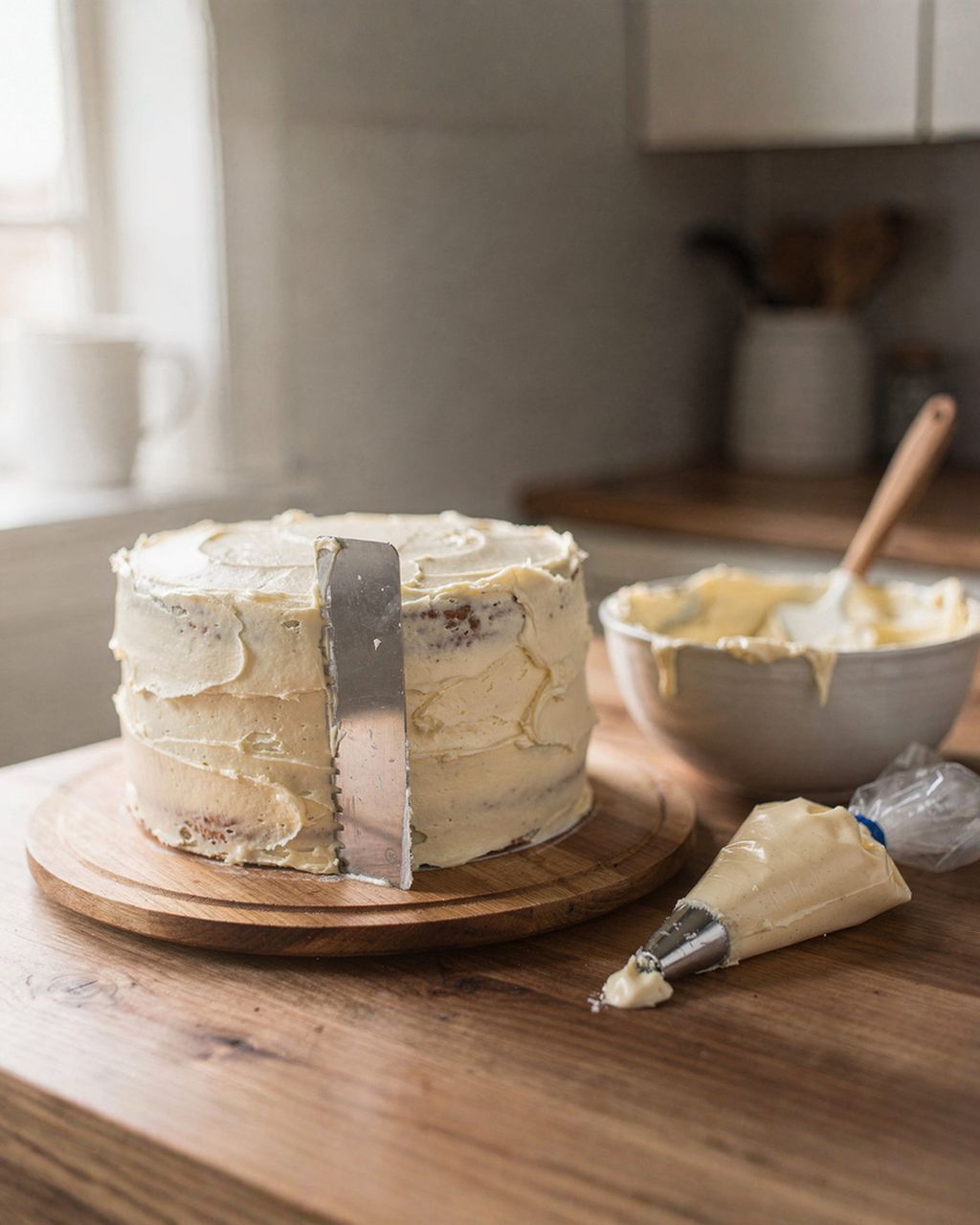
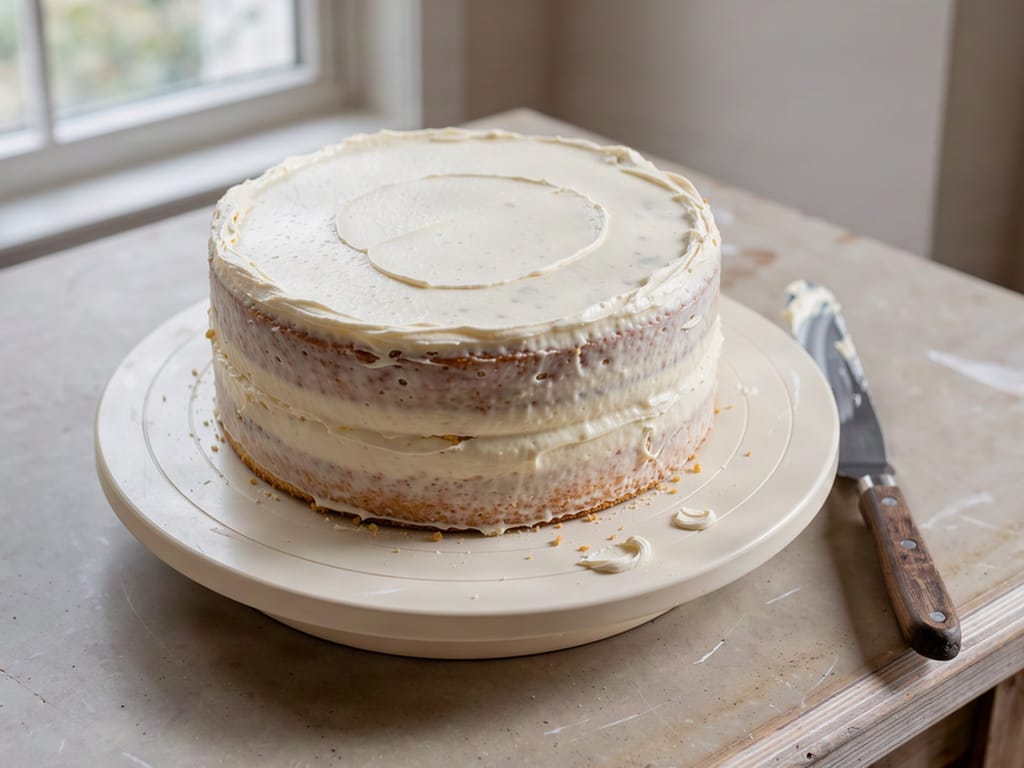
A crumb coat is a thin layer of frosting spread over the whole cake to glue down the crumbs. You don't need it to look neat.
Brush loose crumbs off the layers with a dry pastry brush.
Spread a thin layer of frosting over the top and sides. Scrape most of it off again. The cake can show through.
Keep a separate bowl for this frosting, so crumbs don't get into the main batch.
Chill the cake in the fridge until the crumb coat is firm to the touch.
Spread the final layer. It now slides over a smooth, firm base and sticks.
Our guide to frosting a cake for straight sides and sharp edges covers the final coat in detail.
Too warm. Even slightly warm cake melts buttercream from underneath, and it slides. Cool layers completely on a rack. Thick layers take longer than you'd think.
Chilled is good, wet is not. A cool cake is easier to frost because it's firm and makes fewer crumbs. But a cake straight from the freezer gathers condensation as it warms, and frosting won't grip a wet surface. Let frozen layers thaw still wrapped, so the moisture forms on the wrap and not on the cake. Our guide to freezing cake layers covers wrapping and thawing.
Sticky or greasy top. Some cakes, especially oil-based ones and cakes stored wrapped overnight, develop a tacky top skin. Trim it off with a serrated knife when you level the layer, or crumb coat it and chill.
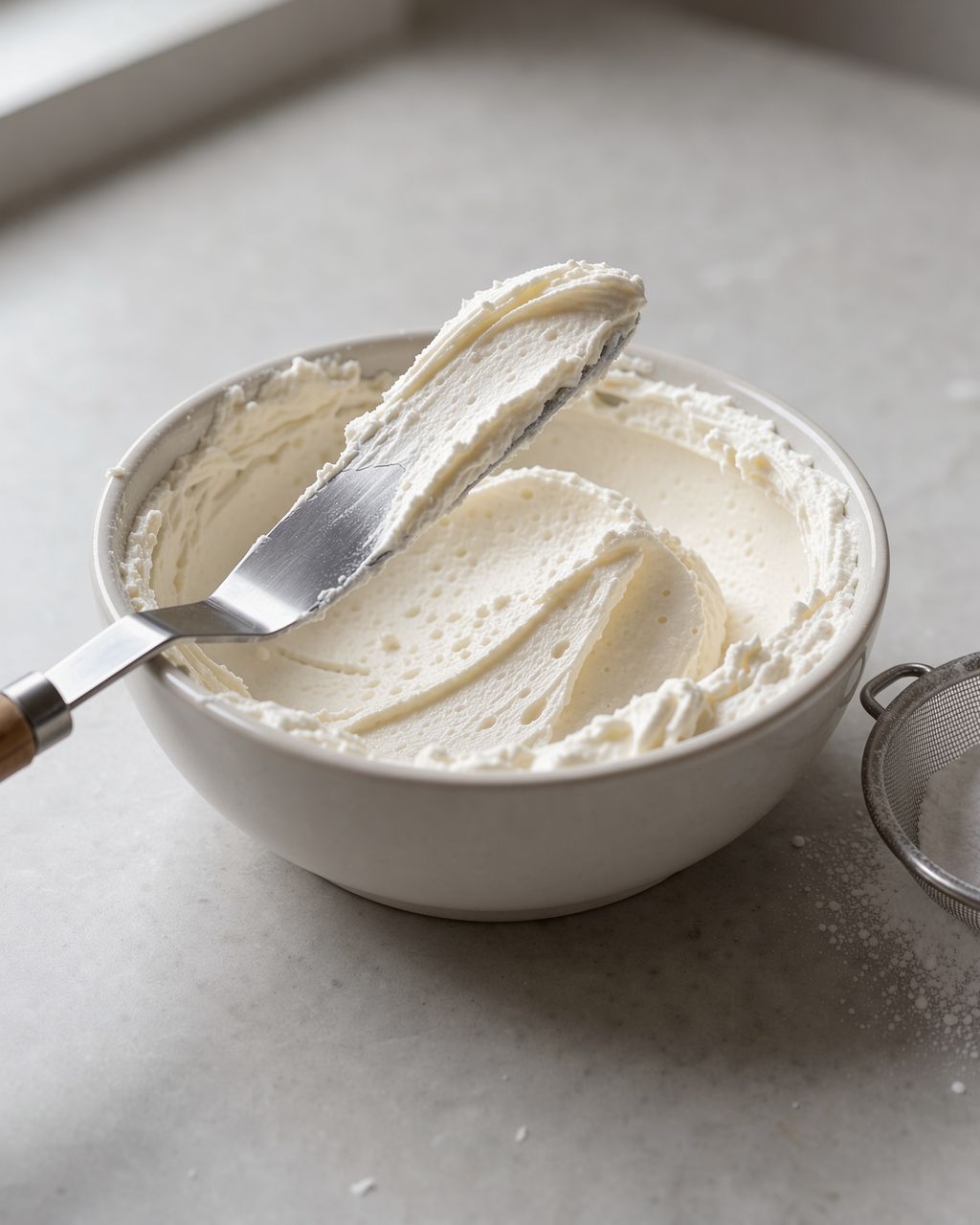
Too stiff. If the frosting tears the cake or pulls up crumbs, it needs loosening. Beat in milk or cream a teaspoon at a time, or let chilled frosting soften at room temperature and re-beat it. It should spread like soft butter.
Too soft. If it slumps down the sides, it's too warm or too wet. Chill the bowl for a short while and beat again, or add a little sifted powdered sugar to American buttercream.
Spreading technique. Put a generous mound of frosting on the top and push it outward with an offset spatula, keeping a layer of frosting between the spatula and the cake. Scraping the spatula directly on bare cake is what lifts crumbs.
If your frosting is grainy as well as stiff, the sugar is often the problem. Our guide to choosing a buttercream compares how each type spreads.
Frosting that slides off once the cake is finished is usually about heat.
A warm room softens buttercream, and whipped cream and cream cheese frostings soften fastest. Keep the cake cool, and see our guide to frostings that hold up out of the fridge.
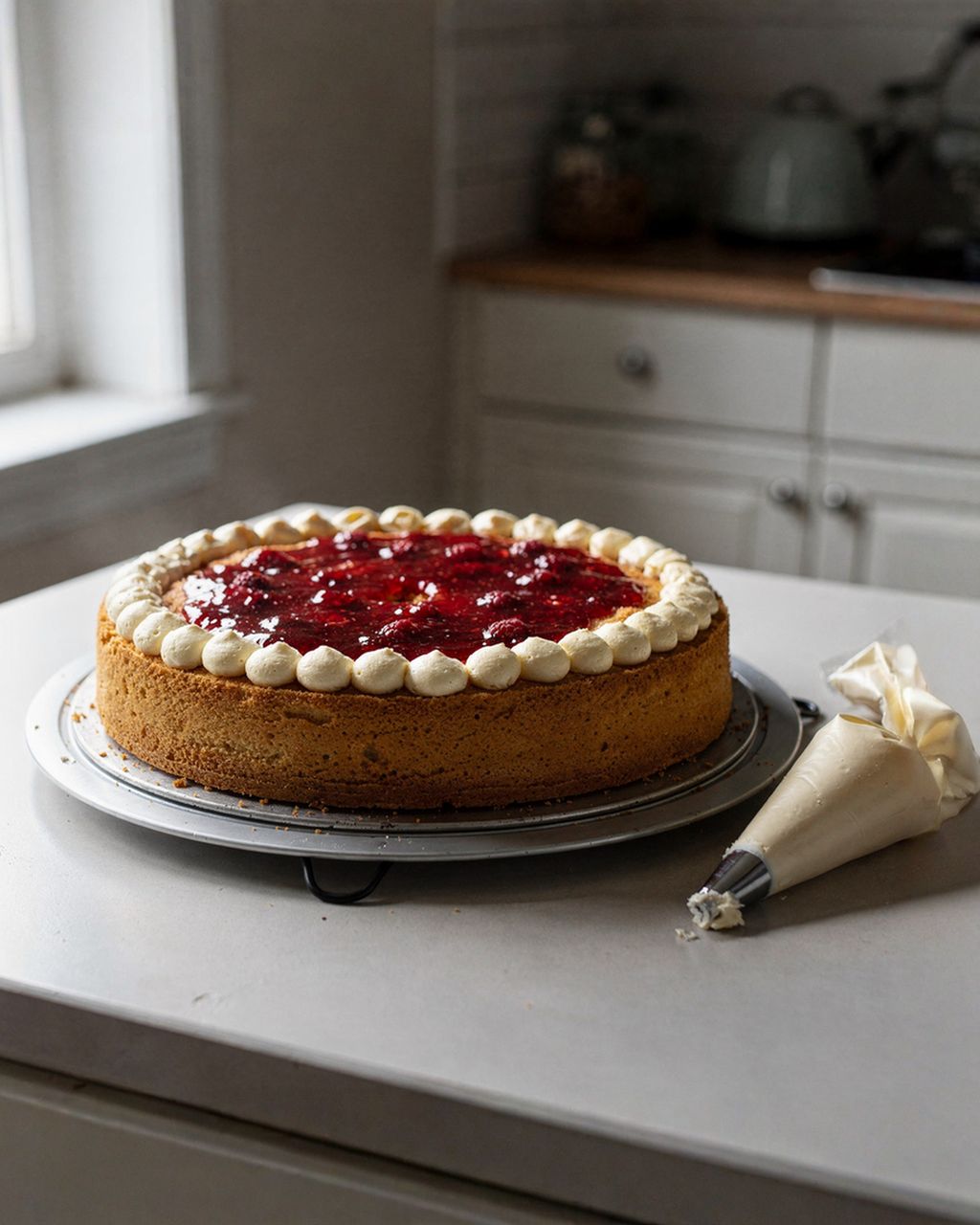
Soft filling between layers pushes out and lets the layers slip. Pipe a ring of stiffer buttercream around the edge of each layer first, as a dam, then fill inside it.
Domed layers rock and slide. Level them before stacking.
Whipped cream frosting needs stabilizing to hold on the sides. Our guide to stabilized whipped cream shows how.
Frostings made with cream cheese, whipped cream or custard are perishable, so keep those cakes covered, in the fridge. FoodSafety.gov's rule for perishable food is no more than 2 hours out of the fridge in total, including the time you spend frosting, or 1 hour if the room is above 32 °C (90 °F).
Layers fully cool, leveled and brushed free of crumbs.
No condensation on the surface.
Frosting soft and spreadable, not stiff and not runny.
A thin crumb coat, chilled until firm, in the fridge.
A generous final layer, pushed across rather than scraped onto the cake.
A cool room, or a cool spot, while you work.
Usually because of loose crumbs, a cake that is still warm, or a surface that is wet with condensation. A frosting that is too stiff also drags instead of sticking. Brush off crumbs, apply a thin crumb coat and chill it before the final layer.
A crumb coat is a thin first layer of frosting that glues down loose crumbs. You chill it until firm, then spread the final layer over it, which stays clean and sticks well.
The cake or the room is too warm, or the frosting is too soft. Chill the cake, firm up the frosting with a little more powdered sugar or a short spell in the fridge, and keep the finished cake cool, in the fridge if the frosting contains cream cheese, whipped cream or custard.
It's easier to frost a cake that is chilled but not frozen solid. A frozen cake gathers condensation as it warms, and the water makes frosting slide. Thaw it wrapped, so the moisture forms on the wrap, then frost.
The frosting is too stiff, or you're pressing the spatula onto bare cake. Soften the frosting with a teaspoon of milk, use plenty of it, and push it across the top rather than scraping the cake.
One recipe worth heating the oven for, one tip, and one deal from the shop. Nothing else.