How Far Ahead Can You Make a Yule Log? Fridge, Freezer and a Timeline
Why Is My Yule Log Dry or Rubbery? Fixing the Sponge
Updated Nov 20, 2026
A yule log sponge turns dry when it is overbaked, even by two or three minutes, or has too much flour, and it turns rubbery when the egg foam was underbeaten or knocked flat while folding, so the sponge bakes tight instead of airy. A thin sheet, a hot oven, a short bake and a gentle fold give a soft, springy log.
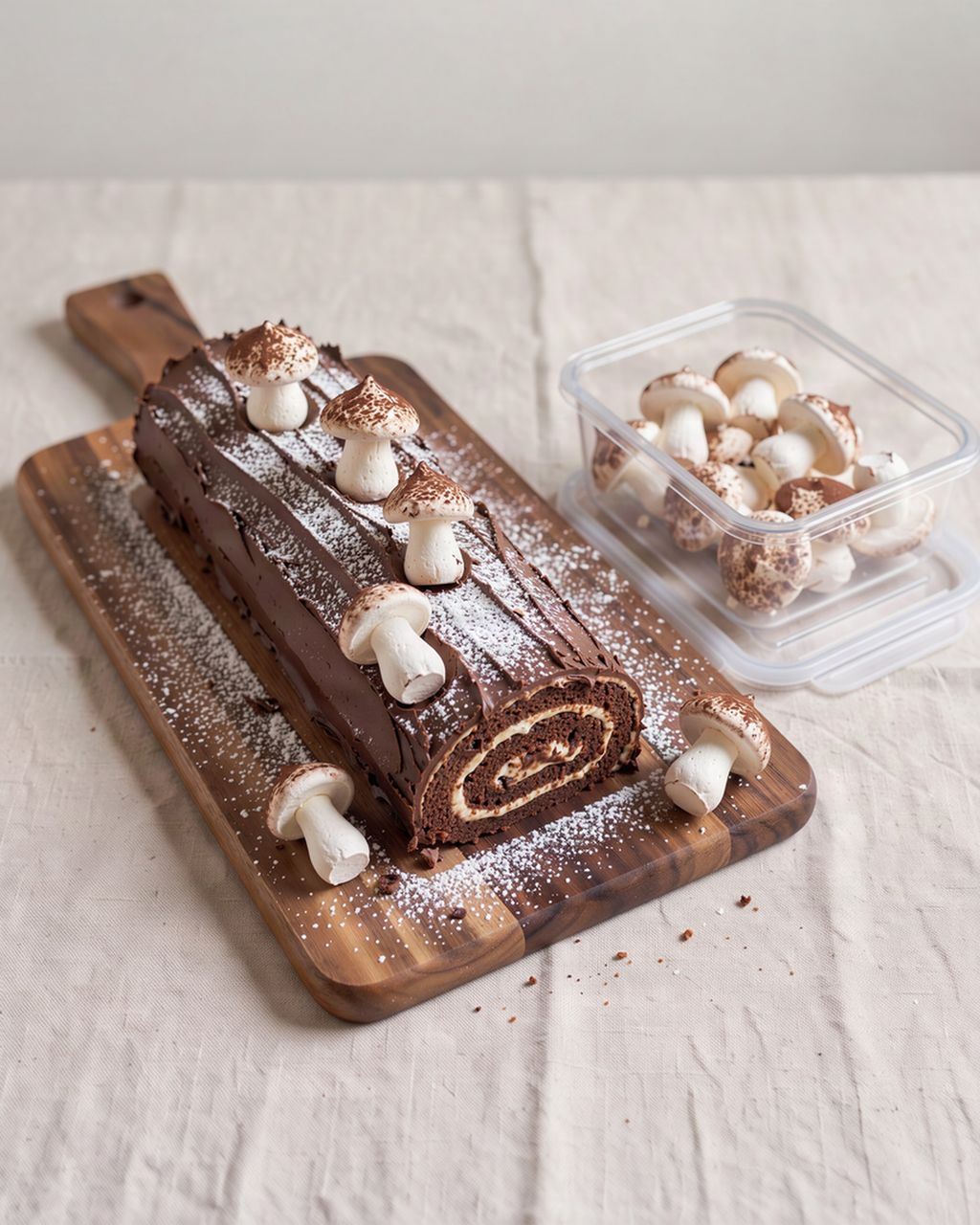
A yule log, or bûche de Noël, is a rolled sheet sponge with a filling, covered to look like a log. When it goes wrong, it is usually the sponge.
Dry: crumbly, dull, tastes of flour, often with hard edges. Usually overbaked or too much flour.
Rubbery: springy like a bath sponge, tight, chewy, sometimes with a dense, wet layer at the bottom. Usually a deflated egg foam, overmixing, or underbaking.
Cracked: the sponge snaps as you roll it. Mostly overbaking, a thick sheet, or rolling it cold. We cover that fully in sponge cake for a Swiss roll: how to bake and roll it without cracks, so here we stick to texture.
Dry and rubbery can happen together: an underbeaten foam bakes into a tight sponge, and then you bake it longer because it doesn't look done.
A yule log sponge is a thin sheet, roughly 1 cm (½ in) thick once baked. It has very little moisture to lose, so every minute counts.
Our Swiss roll guide bakes it at 200 °C (390 °F) conventional, or 180 °C (355 °F) fan, for 8–10 minutes, and up to about 12 minutes for a thicker sheet.
Slow baking at a low temperature takes longer and dries it more.
An oven that runs hot, sometimes by 10 °C or more, overbakes a thin sheet in minutes. An oven thermometer is worth having.
When it is done: the surface is just golden (for chocolate sponge, look at the shine rather than the color), it springs back when you press it, and the edges are only just coming away from the paper. Start checking a minute or two before the recipe says.
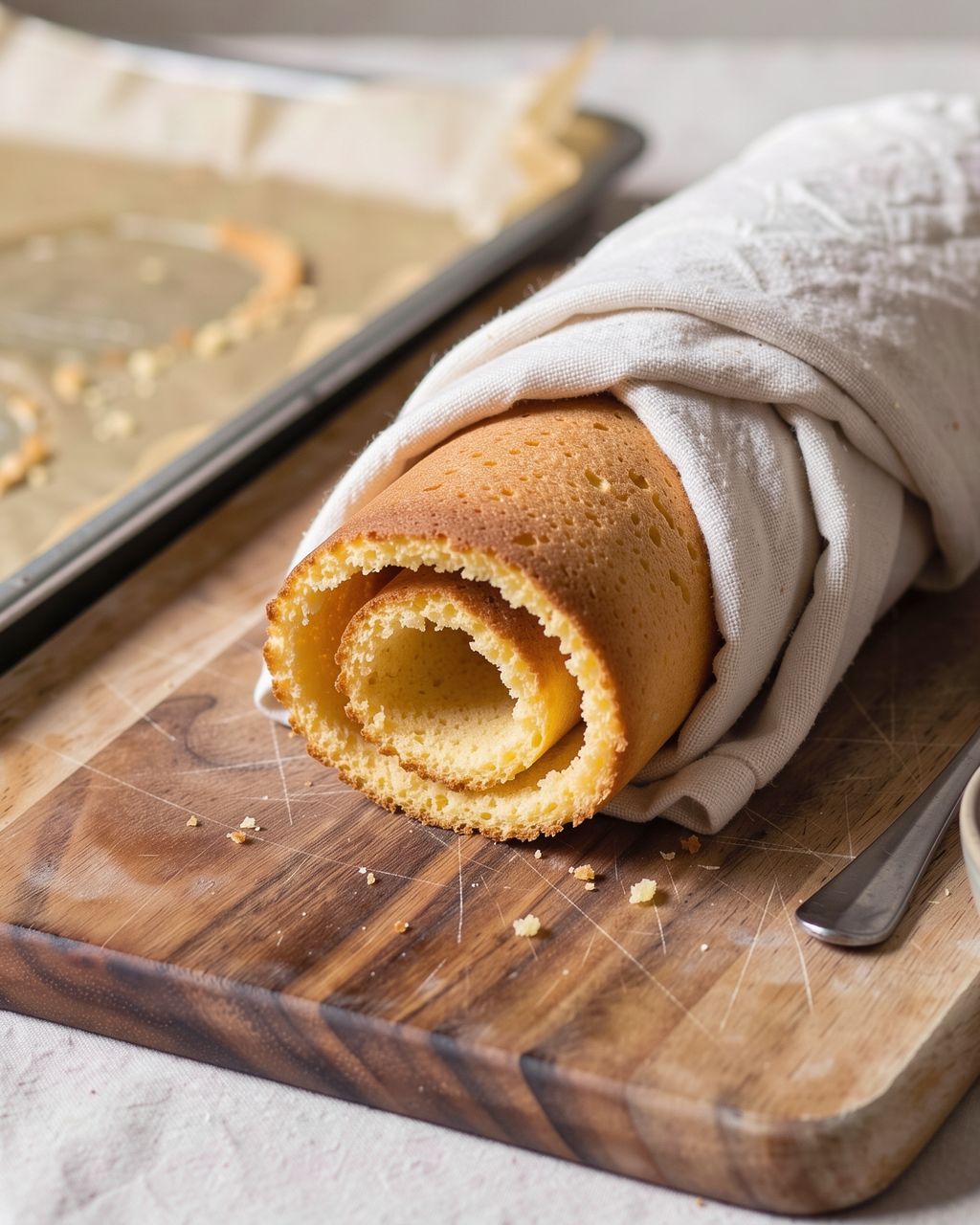
After baking: turn it straight out onto a towel or parchment and roll it while warm. A sponge left uncovered on the pan keeps drying in its own heat.
Too much flour. Sheet sponges for rolling are low in flour and high in egg. Our Swiss roll guide uses roughly 1 egg to 20–25 g of flour. More flour gives a drier, more cake-like sponge that is stiff and breaks. Measure by weight; a US cup (236.6 ml) of all-purpose flour is about 125 g, and a metric cup (250 ml) about 132 g, but scooped cups often hold more. Our cups and spoons to grams calculator converts.
Cocoa counts as flour. In a chocolate yule log, cocoa powder replaces part of the flour. If you add cocoa on top of the full amount of flour, the sponge turns dry and dusty. Take out the same weight of flour.
Thin edges. Spread the batter evenly into the corners. Thin edges bake first, go crisp and dry, and start cracks. Trim them off before rolling.
Most yule log sponges get their lift from whisked eggs, not from baking powder. The foam is the structure. If it is weak, the sponge is tight and rubbery.
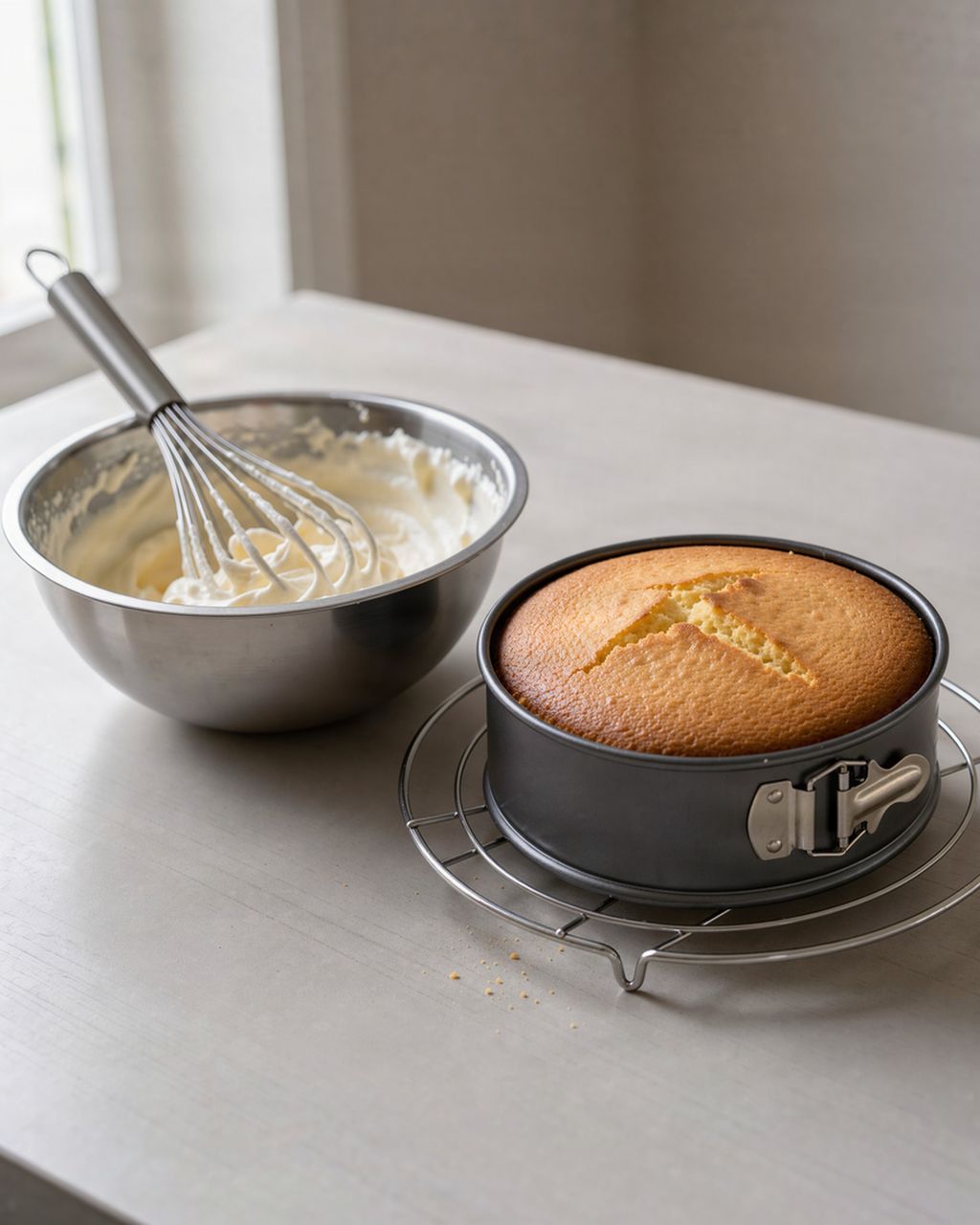
Underbeaten whole eggs. Whisk eggs and sugar until the foam is pale, thick, has roughly tripled in volume, and falls from the whisk in a ribbon that sits on the surface for a few seconds. With a hand mixer that can take 5–10 minutes; go by the ribbon, not the clock. Our guide to sponge cake batter shows how long to whip.
Overbeaten egg whites. In separated-egg sponges, whites beaten past stiff peaks turn dry and grainy. They don't fold in smoothly, so you stir longer, knock the air out, and end up with lumps of white and a rubbery sponge. Stop at glossy, firm peaks; see how to tell whipped egg whites are ready.
Underbeaten whites have the same end result as underbeaten eggs: too little air, a flat, chewy sheet.
Recipe of the week, one tip that saves you time and one deal from the shop. Unsubscribe in one click.
The next issue goes out on Thursday, November 26.
Even a perfect foam turns rubbery if you mix it hard after the flour goes in.
Sift the flour over the foam in two or three additions.
Fold with a large spatula or balloon whisk, cutting down through the middle and turning the batter over, while you turn the bowl.
Stop as soon as no dry flour shows. Overfolding deflates the foam and develops gluten, both of which make it chewy.
Melted butter or oil (if the recipe has it) should be warm, not hot, and folded into a little of the batter first, then back into the rest. Poured straight in, it sinks and makes a dense, greasy layer.
Spread briefly. A few strokes with an offset spatula; every extra stroke loses air.
Bake right away. Egg foam doesn't wait.
An underbaked sponge is damp and gummy rather than airy, and it may stick to the paper. If your sponge tears when you peel the paper away and feels tacky, it needed another minute or two. Next time, look for the spring-back test before you take it out.
Once it is filled, a yule log needs time in the fridge, covered, for the filling to set and the sponge to soften. How far ahead you can make it, and how long a cream-filled log keeps, depends on the filling. For fillings that hold up in a roll, see stabilized whipped cream and firm whipped ganache.
A rubbery yule log sponge usually comes from an egg foam that was underbeaten or deflated during folding, so there is too little air in the batter. Overmixing after the flour goes in and underbaking can make it chewy too.
A dry yule log is almost always overbaked. A thin sheet sponge bakes in about 8–12 minutes, and two extra minutes are enough to dry it out. Too much flour, thin edges and leaving it to cool uncovered make it worse.
Bake it hot and short, roll it while warm in a towel, and brush it with a little sugar syrup before filling. Wrapping the filled log and chilling it covered also lets the filling soften the sponge.
Yes, partly. Brush the sponge with a light sugar syrup, flavored with coffee, orange or rum if you like, then fill it, roll it and chill it covered in the fridge for a few hours so the moisture spreads.
A yule log cracks mainly because the sponge was overbaked, too thick, or rolled after it cooled. Our guide to sponge for a Swiss roll covers how to bake and roll it without cracks.
One recipe worth heating the oven for, one tip, and one deal from the shop. Nothing else.