Why Is My Pavlova Weeping? Syrup Beads, Leaks and How to Stop Them
Why Is My Pavlova Chewy? Crisp Shell vs Marshmallow Center
Updated Nov 20, 2026
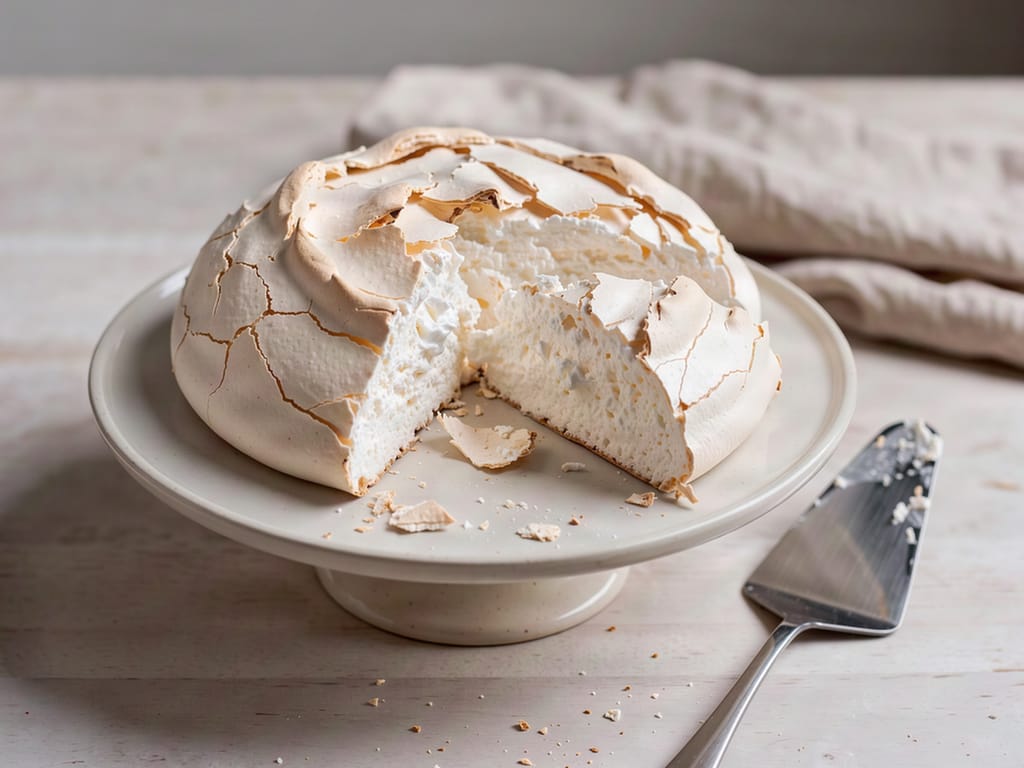
A pavlova should be chewy in the middle: the soft, marshmallow-like center under a crisp shell is what separates it from a plain meringue. If the outside is chewy or sticky too, the shell was underbaked, cooled too fast in a humid kitchen, or soaked up moisture after baking. Cornstarch, vinegar, oven temperature and drying time decide where your pavlova lands between crisp and chewy.
Yes, in the middle. A good pavlova has three layers of texture:
a thin, crisp, dry shell on the outside
a soft, chewy, marshmallow-like center
a slightly sunken top that holds the cream and fruit
That soft center is what makes a pavlova a pavlova rather than a meringue nest. So if you cut into it and find something like marshmallow, you did it right.
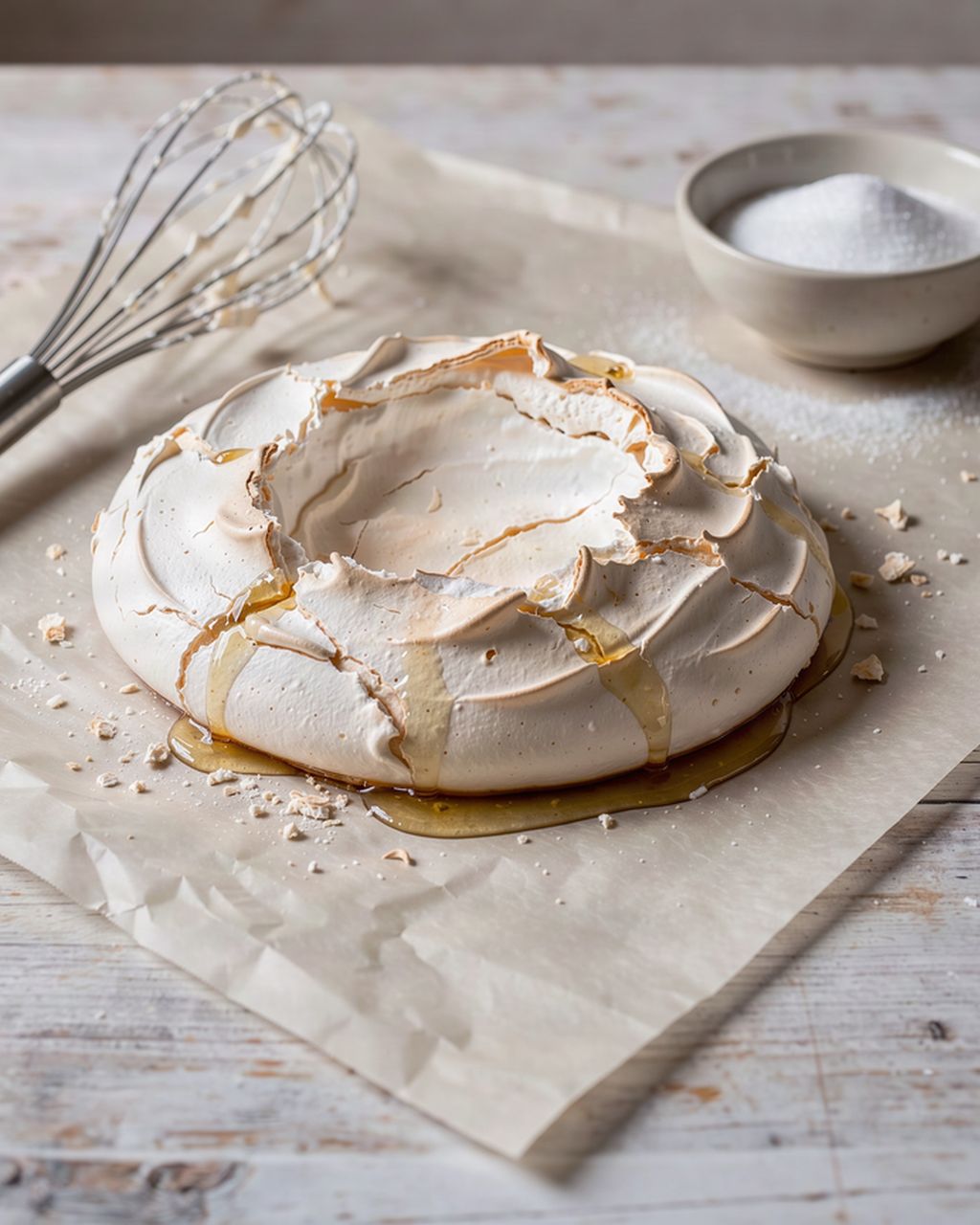
What is not right is a shell that bends instead of cracking, sticks to your fingers or turns leathery. That means the outside never dried properly, or it took on moisture again afterwards.
A chewy or sticky shell almost always comes down to moisture.
Underbaked. The shell needs long, slow drying. If it comes out too soon, it stays soft and turns chewy as it cools.
Cooled too fast. Taken straight from the oven into a warm, steamy kitchen, the shell draws in moisture right away.
Humid air. Sugar is hygroscopic: it pulls water from the air. On a rainy day, even a well-baked shell can go chewy within hours.
Stored in the fridge or topped too early. The fridge is humid, and whipped cream and juicy fruit soften the shell from above.
Too little sugar or undissolved sugar. Less sugar gives a softer meringue, and undissolved sugar turns to syrup that makes the surface sticky.
We cover sticky, cracked and collapsed pavlova in our guide on why pavlova cracks and turns sticky.
Most pavlova recipes add a little cornstarch (cornflour in the UK and Australia) and vinegar or lemon juice to the finished meringue. Bakers use them to keep the center soft and marshmallowy:
Cornstarch binds some of the water in the foam, so the inside stays moist and stable instead of drying out or weeping. Recipes usually use ¼–½ teaspoon per egg white, and no more than about 1 teaspoon; more can taste chalky.
Acid helps stabilize the egg white foam, and many bakers find it gives a softer, more tender center.
How much they matter is debated. The Australian Women's Weekly says they can help give a marshmallowy center but doubts they make much difference, and puts dissolving the sugar and baking properly first. In practice:
For a softer, chewier center: keep the cornstarch and vinegar in, and shape the pavlova tall and wide.
For a crisper result: leave them out, shape it lower and dry it longer. You will move toward a plain meringue, like our crisp meringue kisses.
Temperature and time decide how much of the pavlova turns crisp.
Bake low. About 100–120 °C (212–248 °F) in a conventional oven dries the shell without coloring it. Much above about 140 °C (285 °F) conventional, the meringue tends to puff, crack and color before the shell has dried. With a fan oven, set it a little lower; our article on fan vs conventional ovens explains why.
Bake long. A full-size pavlova usually needs well over an hour. The Australian Women's Weekly gives about 1½ hours of drying at a really low temperature for an average pavlova.
Dry it in the oven. When the time is up, turn the oven off and leave the pavlova inside until it is completely cold, with the door closed or just ajar. This slow cooling finishes drying the shell and helps reduce cracking.
Do not open the door early. Each opening lets in cooler, damper air.
If the shell comes out chewy, you can put it back: another 15–20 minutes at about 100 °C (212 °F), then cool it in the oven again, often crisps it up.
Recipe of the week, one tip that saves you time and one deal from the shop. Unsubscribe in one click.
The next issue goes out on Thursday, November 26.
Sugar is the other lever. The Australian Women's Weekly uses about 55 g of sugar per egg white as its classic pavlova ratio (in US measures, roughly ¼ cup of superfine sugar), and notes that more sugar gives a crisper, drier meringue, while less gives a softer one.
Use caster sugar (superfine in the US) and whisk until it has fully dissolved, or the extra sugar turns into sticky syrup instead of crispness.
Pavlova is made with French meringue: whites whipped raw with sugar, then baked. Swiss and Italian meringues are heated during mixing and behave differently in the oven; our guide to French, Swiss and Italian meringue explains when to use each. The long bake heats the whole pavlova, but the soft center is less thoroughly cooked than a dry meringue shell. If you are baking for someone pregnant, very young, elderly or immunocompromised, use pasteurized egg whites (check the carton says they whip) or dried egg white. Pasteurized liquid whites can whip to less volume, so whisk a little longer.
Most pavlovas that were perfect at midnight are chewy by lunch because of how they were kept.
Store the bare shell airtight at room temperature, in a large box or a cake tin, once it is completely cold.
Keep it out of the fridge. The humid air there softens the shell quickly.
Top it at the last moment. Whip the cream and prepare the fruit ahead, keep them covered in the fridge, and assemble just before serving.
Choose drier fruit if it has to stand: berries, kiwi and passion fruit pulp are classics; very juicy fruit soaks the shell faster.
If it does go chewy, nobody at the table will complain about marshmallow and cream. If the shell is truly soggy, break it up with the cream and fruit and serve it as Eton mess.
Yes, in the middle: a classic pavlova has a crisp, dry shell and a soft, marshmallow-like center. Only a chewy or sticky outside is a fault, usually from underbaking or humidity.
The shell did not dry out enough, either because it was underbaked or because it drew in moisture as it cooled or while it was stored. Bake it longer at a low temperature, cool it in the turned-off oven and store it airtight, not in the fridge.
The marshmallow center comes from a thick meringue that is baked only until the outside sets, so the inside stays moist. Cornstarch and vinegar, which most pavlova recipes add, help keep that center soft and stable.
Shape it thinner, leave out the cornstarch and vinegar, and bake it longer at a low temperature until dry. At that point you have a crisp meringue base rather than a classic pavlova.
Sugar in the meringue pulls moisture from the air, so a shell left uncovered or stored in the fridge softens and turns chewy overnight. Keep the bare shell in an airtight container at room temperature and add cream and fruit just before serving.
One recipe worth heating the oven for, one tip, and one deal from the shop. Nothing else.