How to Season Cast Iron in the Oven: Oil, Temperature and Time
Why Is My Cast Iron Sticky After Seasoning? Causes and the Fix
Updated Nov 21, 2026
Cast iron turns sticky after seasoning when too much oil went on, or when it was not heated long or hot enough to fully harden into seasoning. Lodge's fix is simple: put the pan back in the oven upside down at 230–260 °C (450–500 °F) for another hour, or until the stickiness is gone. Next time, wipe the oil off until the pan looks almost dry.
Seasoning is oil that has been heated until it bonds to the iron and hardens into a thin, slick layer. Food scientists call this polymerization. If it goes right, the pan feels dry, smooth and slightly glossy. If it goes wrong, it feels tacky, like a sticky note.
Lodge, the American cast-iron maker, gives two causes for a sticky or gummy finish:
Too much oil. A thick coat can't harden all the way through. The top sets, the oil underneath stays soft, and it pools and beads, especially where the pan was facing up.
Too little heating time. The oil started to set but didn't finish. A short bake or an oven that ran cool leaves it halfway between oil and seasoning.
A few other things make it worse:
The oven was cooler than the dial. Ovens can run hotter or cooler than the dial says, so a "250 °C" oven may be lower.
The pan was facing up. Oil runs down and collects in the base. Lodge bakes pans upside down for this reason.
Oil on the outside and handle. These parts are easy to over-oil, and they come out sticky too.
Seasonal baking plans, tested recipes and kitchen tricks that save you time. Unsubscribe in one click.
Lodge's fix is to finish the job:
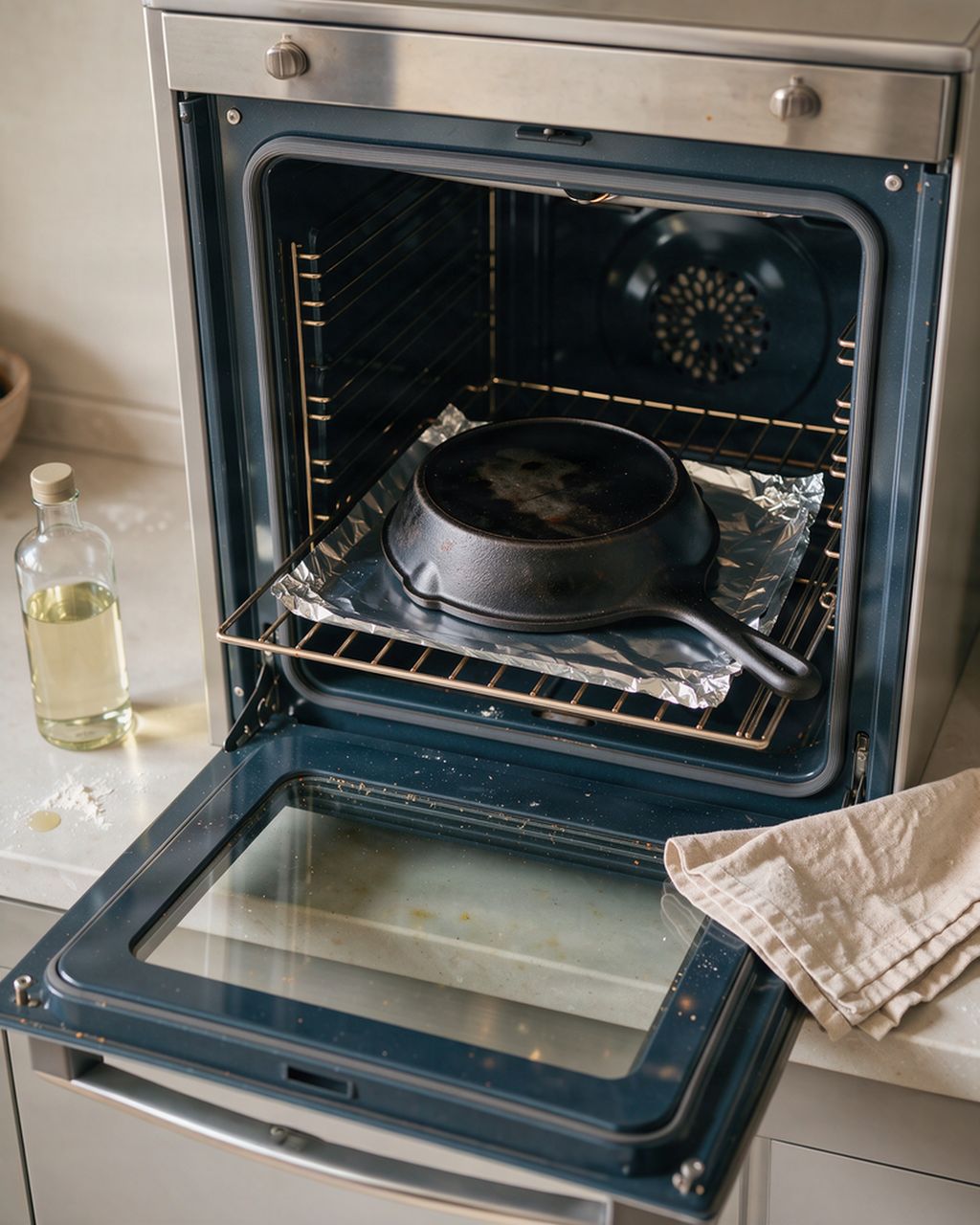
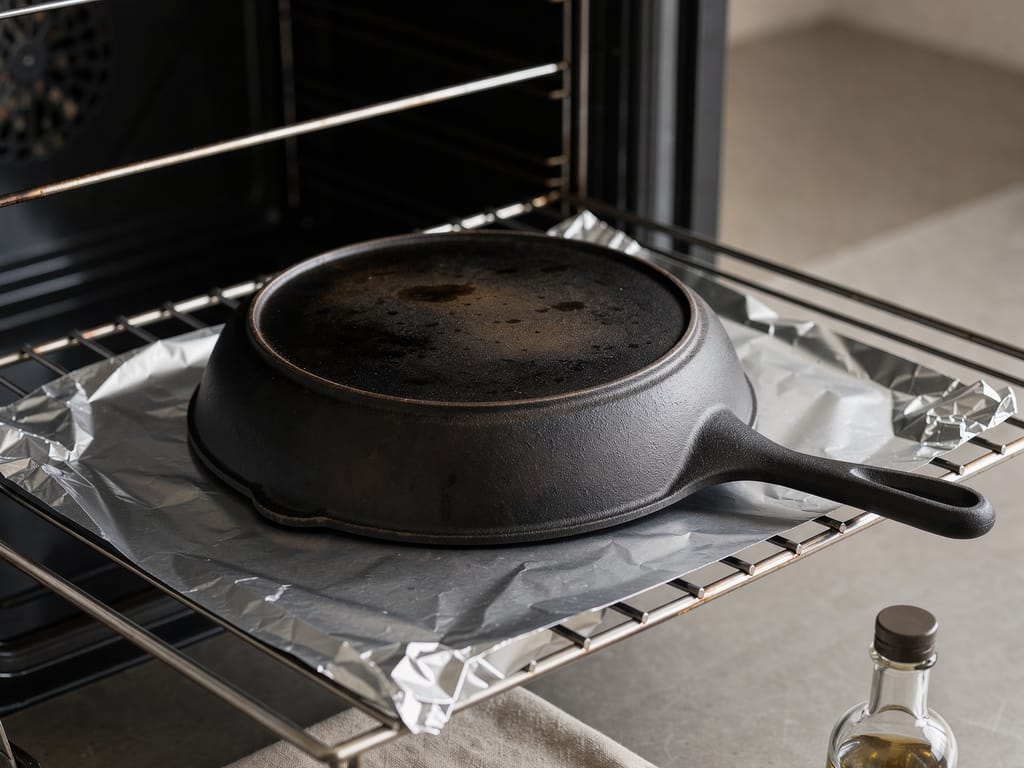
Heat the oven to 230–260 °C (450–500 °F). Lodge gives 230–260 °C (450–500 °F) and doesn't say whether that means a fan or conventional oven. If your oven tops out lower, use its highest setting. Our oven temperature converter helps with °F, °C and gas marks.
Put foil on the lower rack to catch any drips.
Set the pan upside down on the middle rack.
Bake for an hour. Lodge says to repeat, "or until the stickiness is gone".
Turn the oven off and let the pan cool inside.
Most lightly sticky pans come out dry and darker after one round.
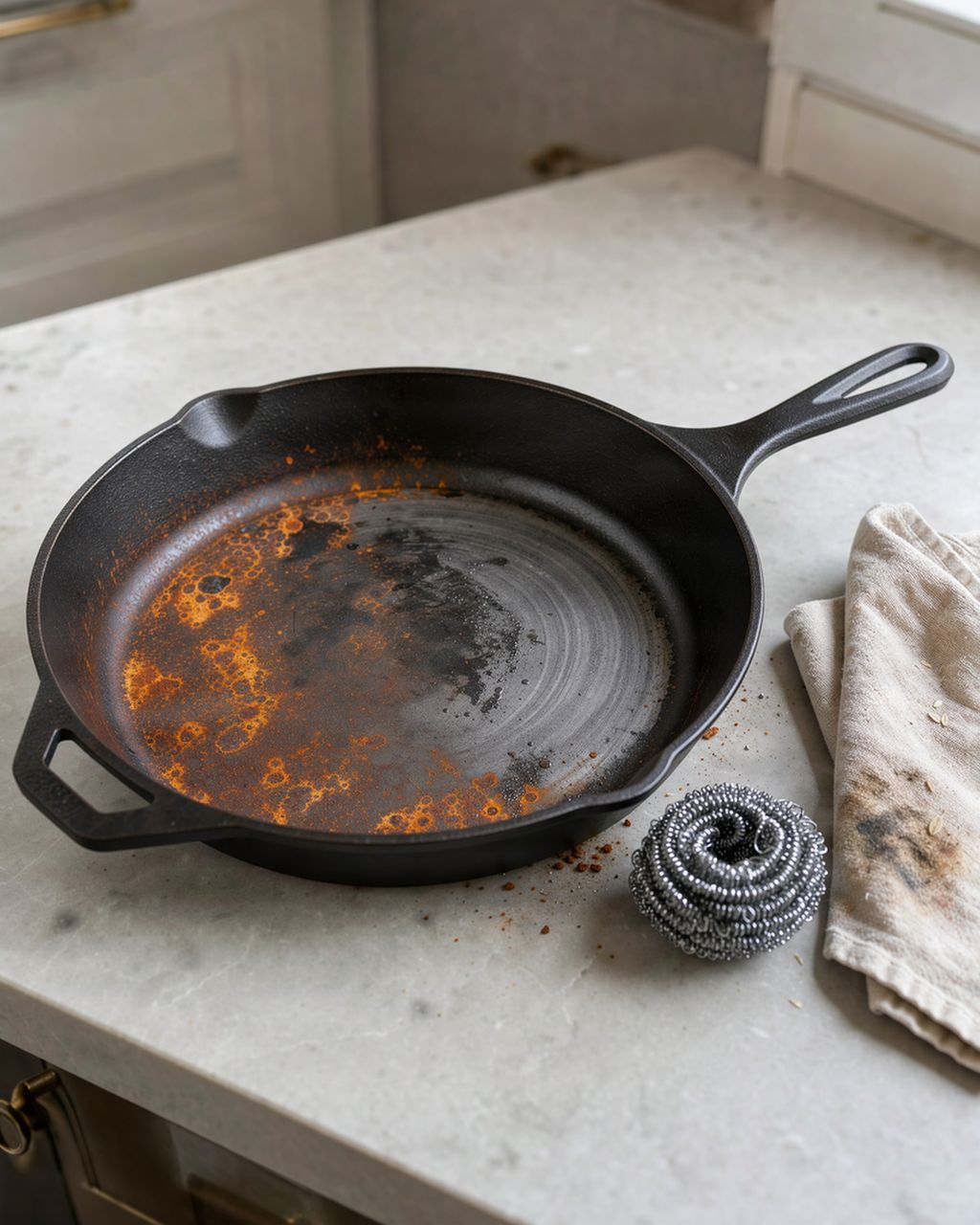
If the stickiness won't bake off: a thick, gummy layer, often brown and blotchy, can be easier to remove than to cure. Scrub the sticky parts with hot soapy water and steel wool. Lodge says removing some seasoning at this stage is fine, because you are about to re-season. Dry the pan completely, warm it on low heat for a few minutes to drive off the last moisture, then season again with a much thinner coat.
This is where nearly all sticky pans start. Lodge's guidance is a coat thin enough that it doesn't drip or run when you tilt the pan.
In practice:
Pour about a teaspoon of oil onto the pan, not a puddle.
Rub it over every surface with a lint-free cloth or paper towel: inside, outside and handle.
Then wipe it off again with a clean cloth, as if you had put too much on by mistake. The pan should look nearly dry, with a faint sheen and no shiny wet patches.
A thin coat seems like too little to do anything. It isn't. Several thin, well-baked layers make a harder finish than one thick layer, and they don't go sticky.
Lodge's test kitchen uses vegetable oil, melted shortening or canola oil, and recommends oils with a high smoke point. In Europe, sunflower oil is the everyday neutral oil and is used the same way.
Neutral vegetable oils are cheap and forgiving. Use them thinly.
Shortening and lard have long been used on cast iron, and rendered pork lard is a Czech kitchen staple. Melt them and apply them as thinly as oil.
Flaxseed oil is popular online for a hard finish, but some cooks report it flaking later. Lodge does not list it.
Butter is not for seasoning. Its milk solids burn.
The oil matters far less than the amount. Any of these goes sticky if it is applied thickly.
Some pans go tacky not after seasoning but in everyday use:
Oiling after washing, then storing it. A thick layer of oil left on a cold pan slowly turns gummy. After washing, dry the pan on low heat, rub in a few drops of oil, and wipe it back until it looks dry.
Sugary or starchy residue. Glazes, sauces and batters leave a film that feels sticky. Wash with hot water, a brush and a little dish soap, then dry and oil as above.
Old oil in storage. A pan stored for months with a heavy film of oil can feel tacky or smell stale. Wash it and bake it as in the fix above.
If the pan also has orange spots, it is rusting rather than sticky. That needs scrubbing back to clean iron and re-seasoning.
Properly seasoned cast iron:
feels dry and smooth to the touch, never tacky;
looks dark and evenly satin, though Lodge says patchy color is normal on new seasoning;
leaves no oil on a paper towel when you wipe it.
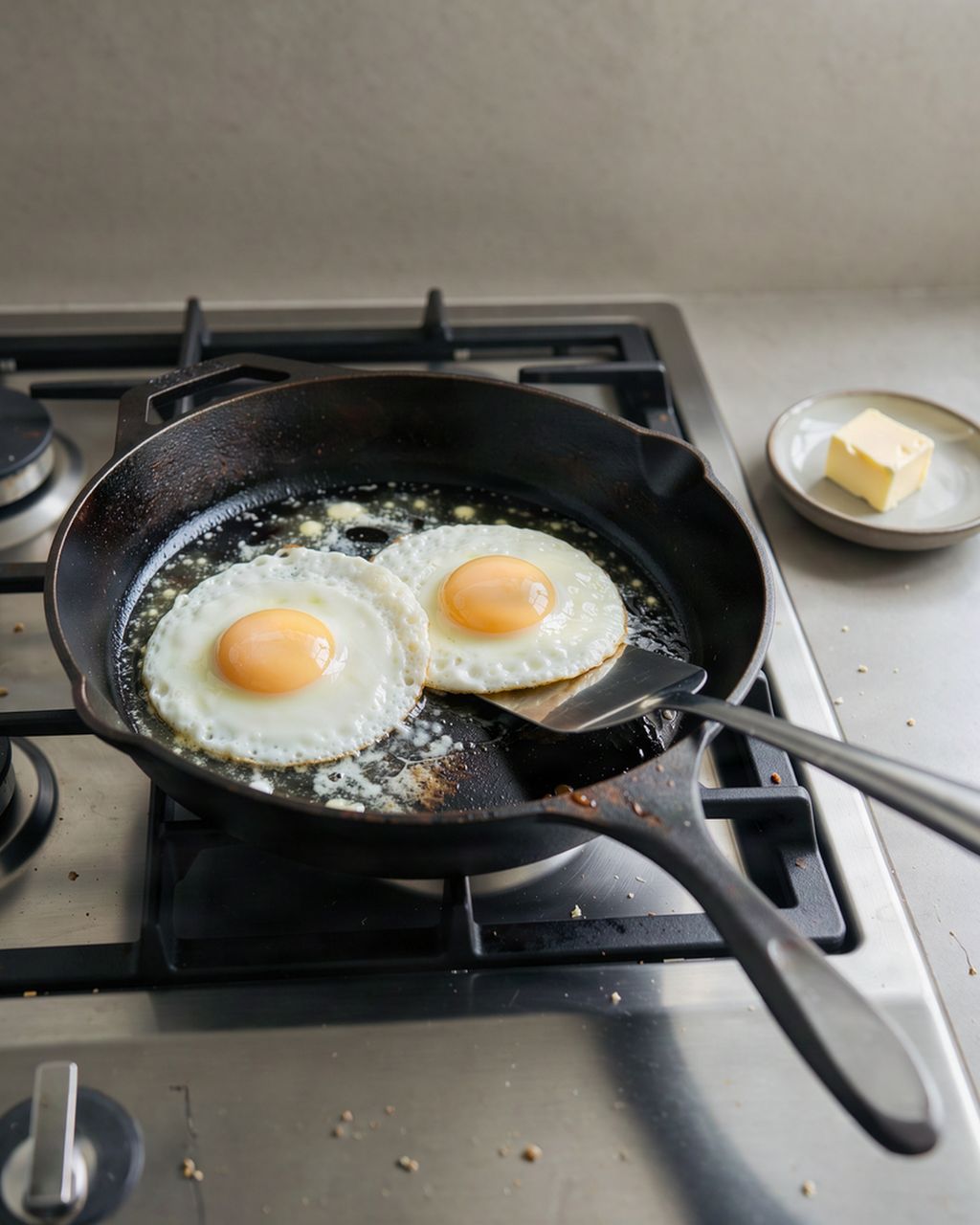
Seasoning keeps building every time you cook with fat. Frying, roasting and shallow-frying in the pan are the best ways to improve it. If you bake in cast iron, our bundt pan guide covers how cast-iron bakeware compares with other materials.
Cast iron is sticky after seasoning because too much oil was left on it, or it was not baked long or hot enough for the oil to harden. Lodge says to bake it upside down at 230 to 260 °C (450 to 500 °F) for another hour, or until the stickiness is gone.
Fix sticky cast iron by baking it again upside down at 230 to 260 °C (450 to 500 °F) for an hour, with foil on the rack below. If thick, gummy patches remain, scrub them off with hot soapy water and steel wool, dry the pan, and re-season with a very thin coat.
Use far less oil than you think: Lodge says the coat should be thin enough that it doesn't drip or run when you tilt the pan. Rub it on, then buff it off with a clean cloth until the pan looks almost dry.
You can, but the tacky layer collects dust and food bits and doesn't release food well. It is better to bake the pan once more until the surface is dry and smooth.
Cast iron feels sticky after cooking when oil was left on it to dry at low heat, or when sugary food residue is still on the surface. Wash it, dry it fully over low heat, and wipe on only a very thin layer of oil.
One recipe worth heating the oven for, one tip, and one deal from the shop. Nothing else.