How to Measure Flour Without a Scale: Spoon and Level, Explained
Why Do Europeans Bake by Weight Instead of Using Cups?
Updated Nov 21, 2026
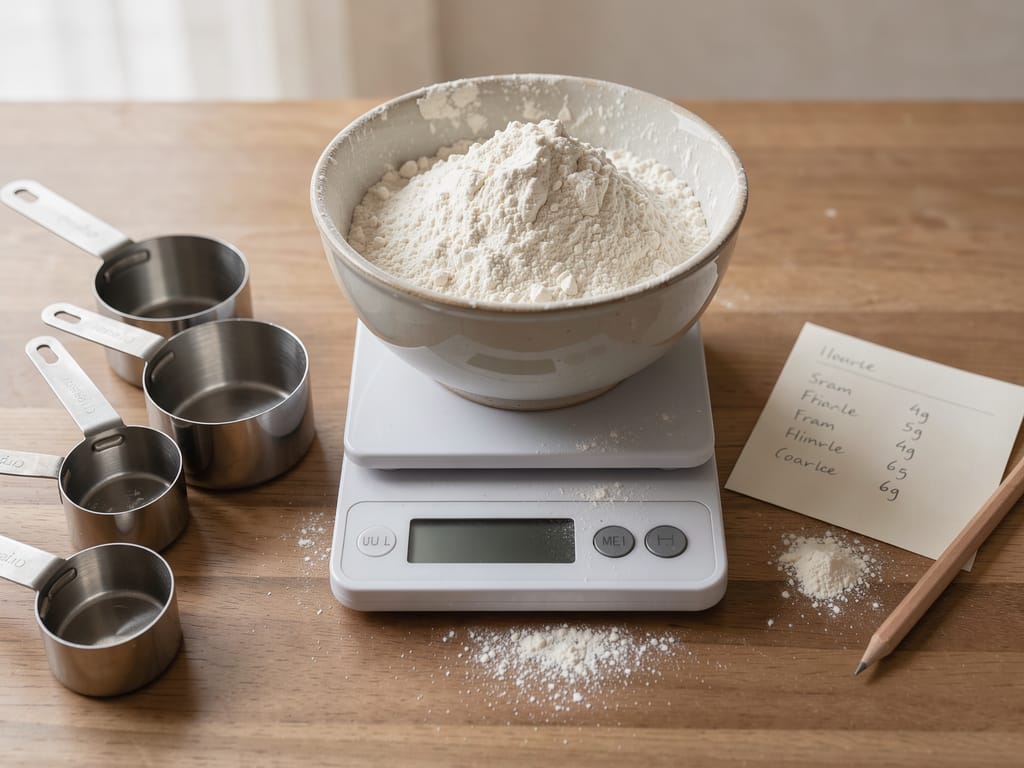
Most Europeans bake by weight because their recipes have long been written in metric grams, and a kitchen scale is simply more accurate than a cup: a US cup (236.6 ml) of flour can weigh anywhere from about 120 g to 150 g, depending on how you fill it and whose chart you follow. Weighing is also quicker, uses fewer dishes and makes scaling a recipe easy. Americans use cups largely out of habit and history.
Three reasons, roughly in order of importance:
The recipes are written that way. Most of Europe uses the metric system for everything, and recipes give flour, sugar and butter in grams. A scale is the obvious tool.
It's more accurate. Weight doesn't depend on how tightly an ingredient is packed. Volume does.
It's easier. You weigh everything into one bowl, there are fewer cups to wash, and halving or doubling a recipe is simple arithmetic.
In Czech kitchens, a digital scale sits next to the mixer as a matter of course, and older family recipes are written in dkg (dekagrams): 25 dkg of flour is 250 g.
Seasonal baking plans, tested recipes and kitchen tricks that save you time. Unsubscribe in one click.
Yes, and flour shows it best.
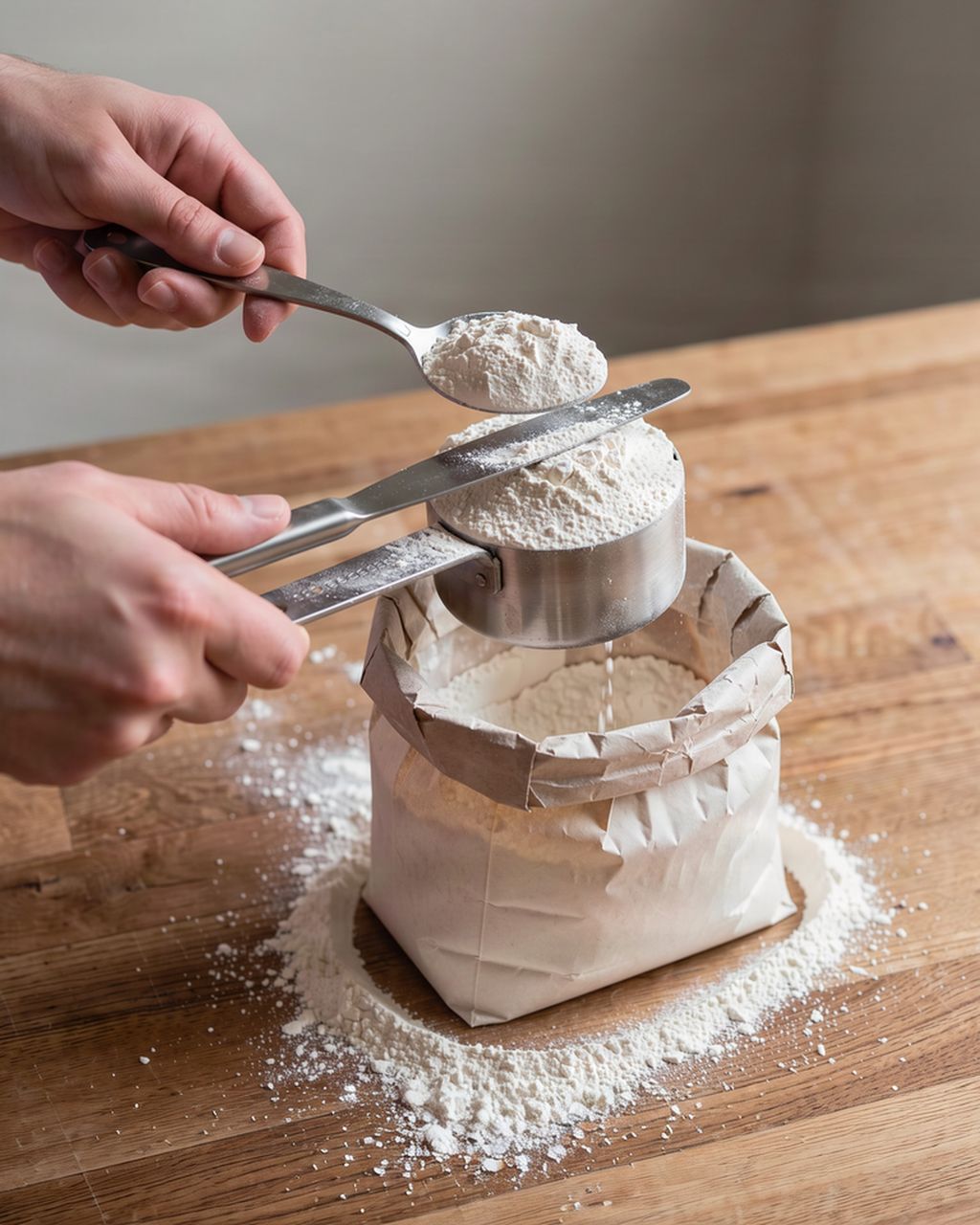
A US cup (236.6 ml) of all-purpose flour, spooned in and leveled, weighs about 125 g. Scooped straight from the bag, the same cup commonly weighs 140 to 150 g. Recipe writers don't agree either: King Arthur Baking counts a US cup as 120 g, spooned and leveled, while America's Test Kitchen uses 142 g, measured by dip and sweep.
That's a spread of a fifth or more for the same "1 US cup", enough to turn a tender cake dry or a soft dough stiff. A basic kitchen scale is accurate to a gram or two, every time.
Other ingredients vary by volume too:
Brown sugar depends on how firmly it's packed.
Chopped nuts, chocolate chips and grated cheese depend on piece size.
Cocoa powder and powdered sugar clump and settle.
Our page on 1 US cup of flour in grams shows how much the figures vary.
Mostly history and habit.
American home cooking settled on volume measures early. In the late 1800s, cookbook writers such as Fannie Farmer of the Boston Cooking-School are usually credited with popularizing level, standardized cup and spoon measurements, which was a big step up from "a teacup of flour" or "butter the size of an egg". Those measures stuck.
When most of the world moved to metric, everyday US cooking didn't, so cups and spoons stayed. Professional American bakers weigh, and many US recipe sites now give grams alongside cups.
Britain is a useful middle case. Traditional British recipes weighed ingredients in ounces and pounds long before metric, so British home bakers have long used scales. Modern British recipes give grams.
"Europeans bake by weight" is mostly true, with some exceptions:
Liquids are usually measured in millilitres with a jug, though many bakers weigh milk and water too, since 1 ml of water weighs 1 g.
Small amounts such as baking powder, salt and spices go in teaspoons, or in sachets. Our guide to European baking sachets explains the standard sizes.
Scandinavian recipes often measure flour and sugar in decilitres.
Australia uses a 250 ml metric cup alongside grams.
Czech hrnkové recipes, "mug" cakes made with an ordinary mug as the measure, are a popular shortcut. Our guide to converting mug recipes to grams covers them.
Eggs are counted, not weighed, almost everywhere.
You don't need much:
A digital kitchen scale that reads in 1 g steps and has a tare (zero) button.
Tare as you go. Put the bowl on, press tare, add flour, press tare, add sugar, and so on.
Use grams, not ounces, if the recipe gives both. They are finer and easier to scale.
For tiny amounts, like yeast or salt in a small batch, use measuring spoons or a scale that reads in 0.1 g.
Once you're used to it, weighing is faster than cups. There's no fluffing, spooning or leveling, and one bowl to wash.
Going either way, convert ingredient by ingredient, because a cup of flour and a cup of sugar weigh very different amounts.
All-purpose flour: 125 g per US cup, 132 g per metric cup (250 ml).
Granulated sugar: 200 g per US cup, 211 g per metric cup.
Butter: 227 g per US cup; a US stick is 113 g.
Our cups and spoons to grams tool covers the common baking ingredients. For whole recipes, see our guides to converting US recipes to metric and converting European recipes to US measures.
Because European recipes are written in metric weights and a scale is more accurate than a cup. Flour, sugar and nuts pack differently every time you scoop them, but 200 g is always 200 g.
Yes. A US cup of flour can vary by 20% or more depending on how it's filled, while a basic kitchen scale is accurate to a gram or two. That difference decides whether a cake is moist or dry.
Mostly tradition. American home recipes were standardized around level cup and spoon measures in the late 1800s and early 1900s, and the US never switched to metric for everyday cooking.
Some do. Swedish and Norwegian recipes often measure flour in decilitres, Australia uses a 250 ml metric cup, and Czech home recipes sometimes use a mug. But most European baking recipes give grams.
Each ingredient has its own weight per cup. All-purpose flour is about 125 g per US cup and granulated sugar 200 g. Our cups and spoons to grams tool converts the common baking ingredients.
One recipe worth heating the oven for, one tip, and one deal from the shop. Nothing else.