Why Do Europeans Bake by Weight Instead of Using Cups?
How to Measure Flour Without a Scale: Spoon and Level, Explained
Updated Nov 21, 2026
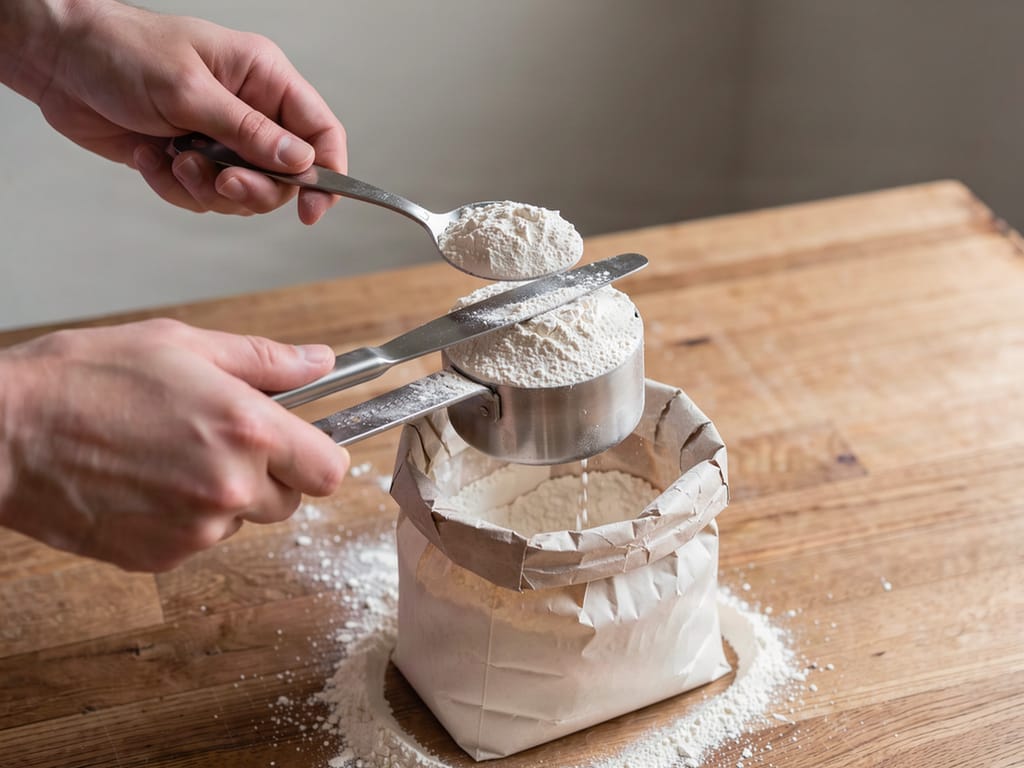
To measure flour without a scale, fluff it, spoon it lightly into a dry measuring cup until it overflows, and level it with a straight edge without pressing or tapping. Done that way, a US cup (236.6 ml) of all-purpose flour weighs about 125 g and a metric cup (250 ml) about 132 g. Scooping straight from the bag packs in much more.
The method King Arthur Baking and many other American recipe writers use:
Fluff the flour in the bag or tub with a spoon. Flour settles and packs down as it sits.
Spoon it into a dry measuring cup until it heaps over the top. Don't pack it, and don't shake or tap the cup.
Level it by sweeping a straight edge, such as the back of a knife, across the rim.
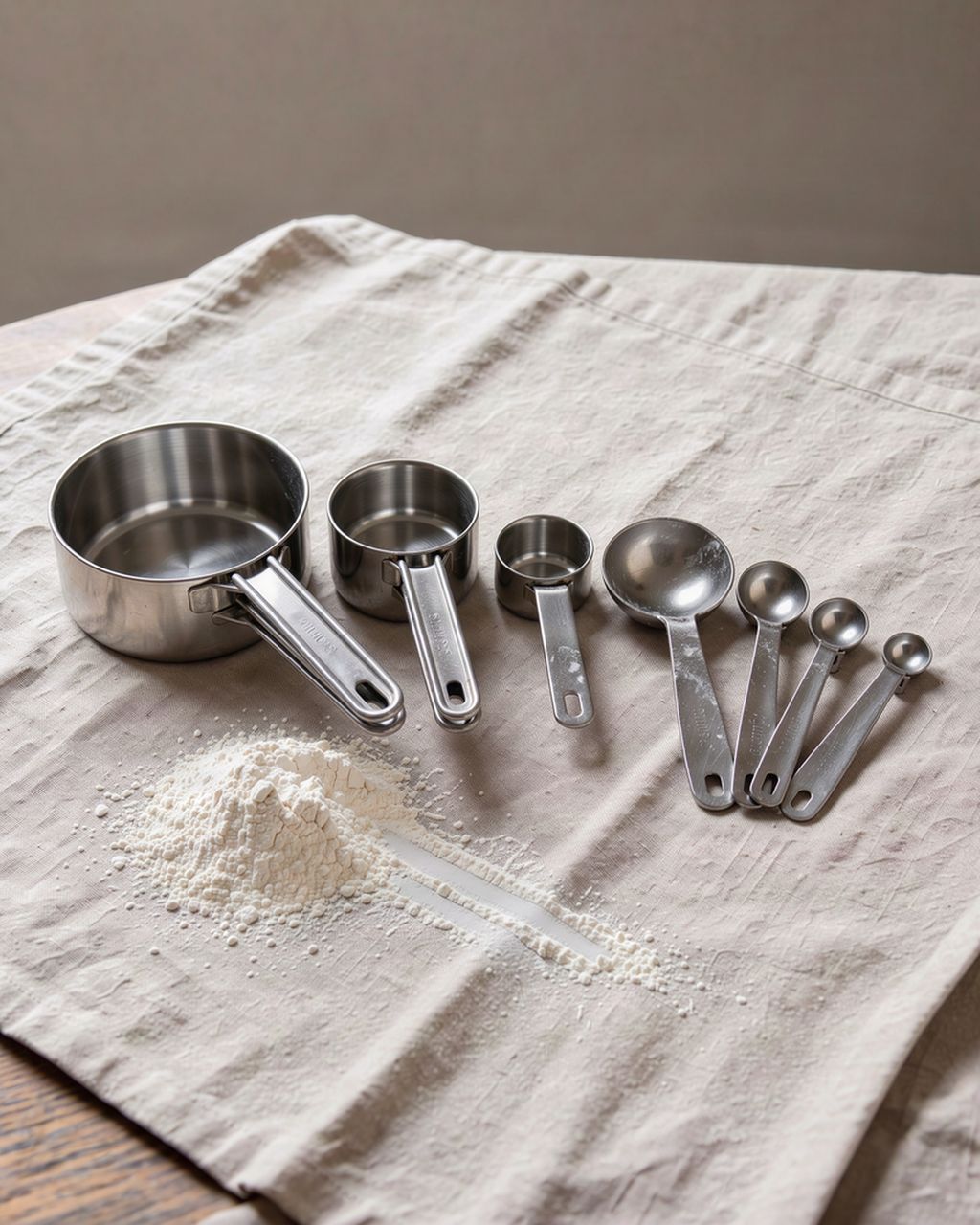
Use the right cup. Dry measuring cups are made to be filled to the brim. A liquid measuring jug can't be leveled, so it's less accurate for flour.
Done this way, our cups and spoons to grams tool uses 125 g of all-purpose flour per US cup (236.6 ml) and 132 g per metric cup (250 ml). For a single cup, see 1 US cup of flour in grams.
Seasonal baking plans, tested recipes and kitchen tricks that save you time. Unsubscribe in one click.
Dipping the cup into the bag and sweeping it level, often called dip and sweep, packs flour into the cup. In baking tests, a scooped US cup commonly weighs around 140 to 150 g, against about 125 g spooned. That's up to a fifth more flour.
Too much flour is a common reason baked goods come out:
dry, dense or crumbly
domed and cracked, in cakes and quick breads
stiff and tough, in bread and pizza dough
thick and cakey, in cookies and brownies
If a recipe has always turned out dry for you, how you fill the cup is the first thing to check.
It depends on the cup, the flour and the method.
US cup (236.6 ml), spooned and leveled: about 125 g of all-purpose flour.
Metric cup (250 ml), spooned and leveled: about 132 g. Australia and some other countries use this cup.
Scooped: often 140 g or more.
Recipe sources don't agree either. King Arthur Baking counts a US cup of all-purpose flour as 120 g, spooned and leveled, while America's Test Kitchen counts a cup as 142 g, measured by dip and sweep. When a recipe gives grams, follow the grams. When it gives only cups, check how the source measures. If you can't tell, spoon and level.
Not sure which cup your recipe means? Our guide to the US cup vs the metric cup explains how to tell. Older British recipes that mention a cup may mean an imperial cup of about 284 ml (half a pint), though older sizes vary. Most British recipes give weights.
The order of words matters:
"1 US cup sifted flour": sift first, then spoon the sifted flour into the cup and level. Sifting adds air, so a cup holds noticeably less flour.
"1 US cup flour, sifted": measure first, then sift. You get the full amount.
"1 US cup flour, packed": rarely used for flour, but it means press it in.
Many modern recipes don't need sifting at all, but some delicate cakes do. Cake flour, whole wheat flour and almond flour weigh different amounts per cup than all-purpose flour, so use their own figures from our cups and spoons to grams tool.
For small amounts, tablespoons are more accurate than fractions of a cup.
1 level tablespoon of all-purpose flour: about 7.9 g. See 1 tablespoon of flour in grams.
A US cup: 16 tablespoons, and a tablespoon is 3 teaspoons.
So 30 g of flour is about 4 level tablespoons, and 50 g about 6. Use proper measuring spoons, not table cutlery, which varies a lot in size. Level them the same way as a cup.
European recipes usually give flour in grams, which is hard without a scale. Divide by 125 to get US cups of spooned all-purpose flour, or use our cups and spoons to grams tool for any amount.
Czech recipes sometimes use a hrnek (mug) instead, and older ones give dkg (dekagrams, 10 g each). Our guide to converting mug recipes to grams explains both.
European flours also differ from American ones. Czech hladká mouka (fine "smooth" flour) is close to all-purpose flour, and our guide to flour numbers matches the rest.
Use the spoon-and-level method: fluff the flour, spoon it into a dry measuring cup until heaped, then sweep off the excess with a knife. Don't scoop with the cup, press it down or tap it.
Spooned and leveled, a US cup (236.6 ml) of all-purpose flour weighs about 125 g and a metric cup (250 ml) about 132 g. Recipe writers use anything from about 120 g to 140 g, which is why weighing is more reliable.
Spoon it. Scooping the cup straight into the bag compresses the flour, and a scooped US cup can weigh 140 g or more, which makes baked goods dry and dense.
Follow the wording. '1 US cup sifted flour' means sift first, then measure, which gives less flour. '1 US cup flour, sifted' means measure first, then sift.
A US cup is 16 tablespoons. A level tablespoon of all-purpose flour weighs about 7.9 g.
One recipe worth heating the oven for, one tip, and one deal from the shop. Nothing else.