How to Convert European Recipes to US Cups, °F and Pan Sizes
How to Convert US Recipes to Metric: Cups to Grams, Sticks, °F and Pans
Updated Nov 20, 2026
To convert a US recipe to metric, weigh dry ingredients by ingredient (a US cup of all-purpose flour is 125 g, granulated sugar 200 g, butter 227 g, and a stick of butter 113 g), turn liquid cups into milliliters at 236.6 ml each, and turn °F into °C for a conventional oven, so 350 °F becomes about 175 °C. Pan sizes in inches need a quick check too, because a 9-inch pan is about 23 cm. Here is how we convert American recipes in a Czech kitchen, and why a scale beats every chart.
American recipes measure dry ingredients by volume: cups and spoons. Metric recipes weigh them. A cup is a volume, so what it weighs depends on what is in it. A US cup of flour is much lighter than a US cup of sugar, and a cup of butter is heavier than both.
So you need one figure per ingredient. A US cup is 236.6 ml, a US tablespoon about 14.8 ml and a teaspoon about 4.9 ml. Australian readers, take note: your standard tablespoon is 20 ml, so when a US recipe says a tablespoon, use 15 ml or three teaspoons rather than your own tablespoon.
Our cups and spoons to grams calculator does the sums for you, for both US and metric cups.
Seasonal baking plans, tested recipes and kitchen tricks that save you time. Unsubscribe in one click.
These are the figures we use. The first four match our calculator; the rest are USDA FoodData Central figures, so treat them as about.
All-purpose flour (plain flour in the UK): 125 g per US cup, 132 g per metric cup, 7.9 g per level tablespoon. More on the cup of flour in grams page.
Granulated sugar: 200 g per US cup, 211 g per metric cup. Caster sugar is a fine swap by weight.
Butter: 227 g per US cup, about 14 g per tablespoon.
Honey: 21 g per tablespoon, so a US cup is about 340 g.
Bread flour: about 137 g per US cup.
Whole-wheat flour (wholemeal in the UK): about 120 g per US cup.
Brown sugar, firmly packed: about 220 g per US cup.
Powdered sugar (icing sugar), unsifted: about 120 g per US cup.
Unsweetened cocoa powder: about 86 g per US cup.
Rolled oats: about 81 g per US cup.
The flour figures assume the American method: spoon the flour into the cup and level it with a knife. Many home cooks scoop straight from the bag, which packs the flour and adds a good deal more. If a recipe comes out dry or tough, that is the usual reason.
US butter is sold in sticks, and recipes count them. Each stick is printed with tablespoon marks on the wrapper.
1 stick = 113 g = 4 oz = 8 tablespoons = ½ US cup.
½ stick = about 57 g = 4 tablespoons.
2 sticks = 227 g = 1 US cup.
1 pound (4 sticks) = about 454 g.
European butter usually comes in 250 g blocks, a little more than 2 sticks. If a recipe needs 2 sticks, cut about 23 g off a 250 g block. The tablespoon of butter in grams page has the small amounts.
Liquids convert straight to milliliters, so you don't need to weigh them:
1 US cup = 236.6 ml, about 237 ml.
¾ cup = about 177 ml. ½ cup = about 118 ml. ⅓ cup = about 79 ml. ¼ cup = about 59 ml.
1 fluid ounce = about 29.6 ml.
Milk weighs about 244 g per US cup and heavy cream about 238 g (USDA), close enough to the milliliter figure that a jug works fine. US heavy cream is at least 36% fat; in the UK, use whipping cream (35% or more) or double cream; elsewhere in Europe, look for cream of 33% fat or more and check the label.
One trap: ounces and fluid ounces are different. Ounces (oz) measure weight, 28.35 g each. Fluid ounces (fl oz) measure volume. If a US recipe gives chocolate or cheese in ounces, weigh it: 4 oz is about 113 g, 8 oz about 227 g.
US recipes assume a conventional oven, with top and bottom heat, unless they say convection. To convert, subtract 32, multiply by 5 and divide by 9. For a fan oven, we then take off about 20 °C. Rounded to the nearest 5 degrees:
150 °C conventional (300 °F), 130 °C fan.
165 °C conventional (325 °F), 145 °C fan.
175 °C conventional (350 °F), 155 °C fan.
190 °C conventional (375 °F), 170 °C fan.
205 °C conventional (400 °F), 185 °C fan.
220 °C conventional (425 °F), 200 °C fan.
Most European ovens offer both modes. If yours is fan only, use the fan figure and check a few minutes early. The oven temperature converter covers other temperatures and gas marks, and our guide to fan vs conventional ovens explains when each setting works better.
US pans are measured in inches across the top. The common ones:
8-inch round or square = about 20 cm.
9-inch round = about 23 cm. European springforms come in 22 and 24 cm; either is close.
9 × 13 inch rectangular pan = about 23 × 33 cm.
9 × 5 inch loaf pan = about 23 × 13 cm.
10-inch tube or Bundt pan = about 25 cm.
A small difference in diameter is a bigger difference in area. A 26 cm springform, a very common size in Czech kitchens, has about 30% more area than a 9-inch pan, so a 9-inch batter baked in it comes out thinner and needs less time. Either scale the batter up or check early. The cake pan size converter works out the factor for round, square and rectangular pans.
Most US recipes assume large eggs. A US large egg weighs about 50 g out of the shell, according to USDA data. In Europe, eggs are graded by weight in the shell, and a US large egg is closest to a European size M (53–63 g in the shell). If you only have size L, the difference rarely matters in a recipe with one or two eggs. In a recipe with six, weigh them: about 50 g of beaten egg per US large egg.
Every cup figure here is an average. Two people filling the same cup with flour can be 20 g or more apart, and brown sugar changes completely with how hard you pack it.
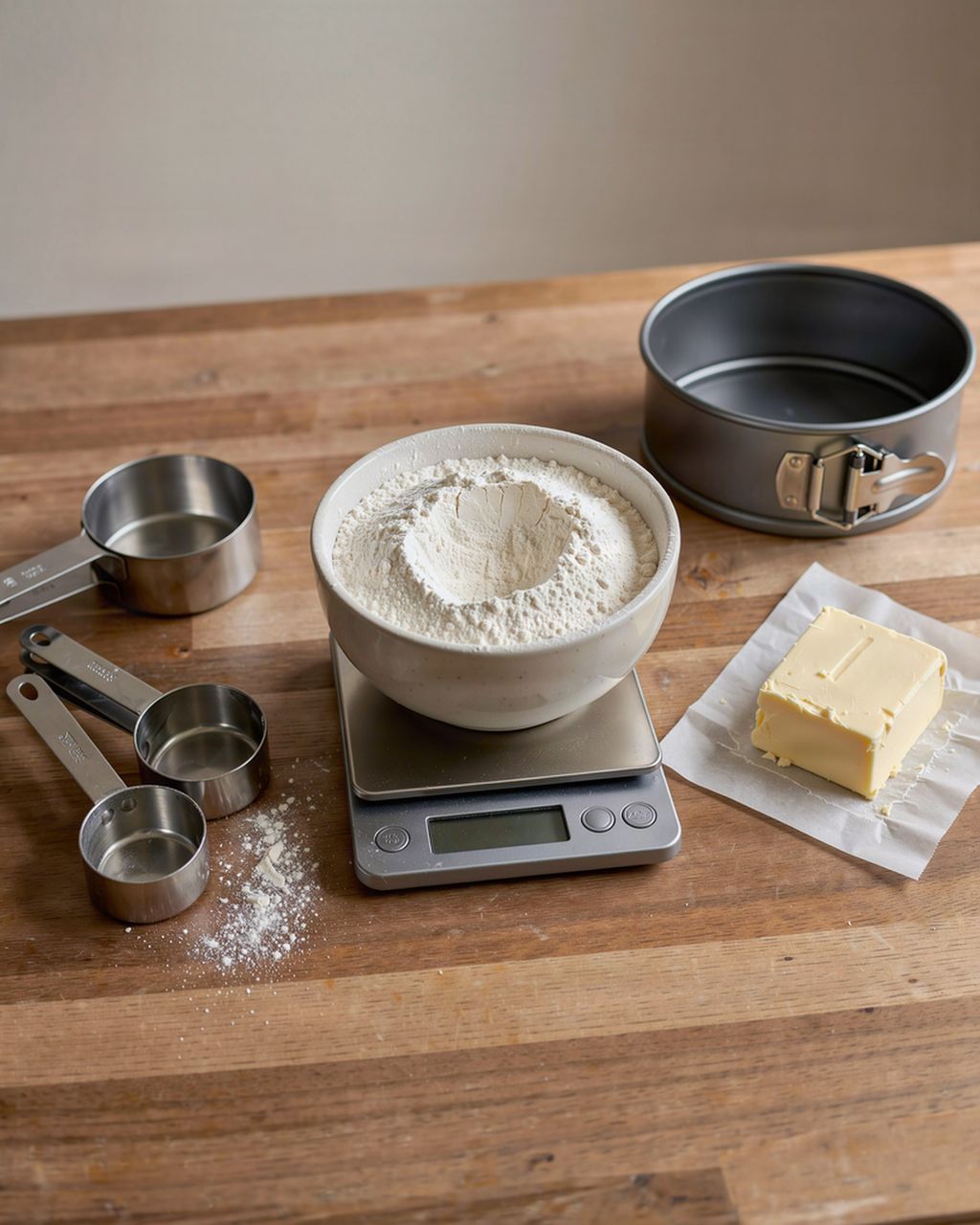
The simplest fix is to convert the recipe once, write the grams in the margin, and weigh from then on. Put the bowl on the scale, press tare, add 125 g of flour, press tare, add 200 g of sugar. You get the same result every time, you wash fewer cups, and you can scale the recipe up or down by simple multiplication.
One US cup (236.6 ml) of all-purpose flour weighs about 125 g when spooned into the cup and leveled. A metric cup (250 ml) holds about 132 g.
A US stick of butter weighs 113 g, which is 4 oz or 8 tablespoons. Two sticks make a US cup, 227 g, and four sticks make a pound, about 454 g.
350 °F is about 175 °C in a conventional oven. In a fan oven, set about 155 °C, because US recipes assume conventional heat unless they say convection.
A 9-inch round cake pan is about 23 cm across. The nearest common European springform sizes are 22 and 24 cm, and a 9 by 13 inch pan is about 23 by 33 cm.
No, a US cup is 236.6 ml and a metric cup, used in Australia, Canada and New Zealand, is 250 ml, though older Canadian recipes may use a 227 ml cup. For flour and sugar the difference is about 7 to 11 g per cup, which is one more reason to weigh.
A US cup of firmly packed brown sugar weighs about 220 g, according to USDA data. Loosely filled, the same cup holds far less, so always pack brown sugar when a US recipe says a cup.
One recipe worth heating the oven for, one tip, and one deal from the shop. Nothing else.