Red Cabbage: How to Cook It Fresh or from a Jar and How to Season It
Why Does Red Cabbage Turn Blue When You Cook It? And How to Fix It
Updated Nov 21, 2026
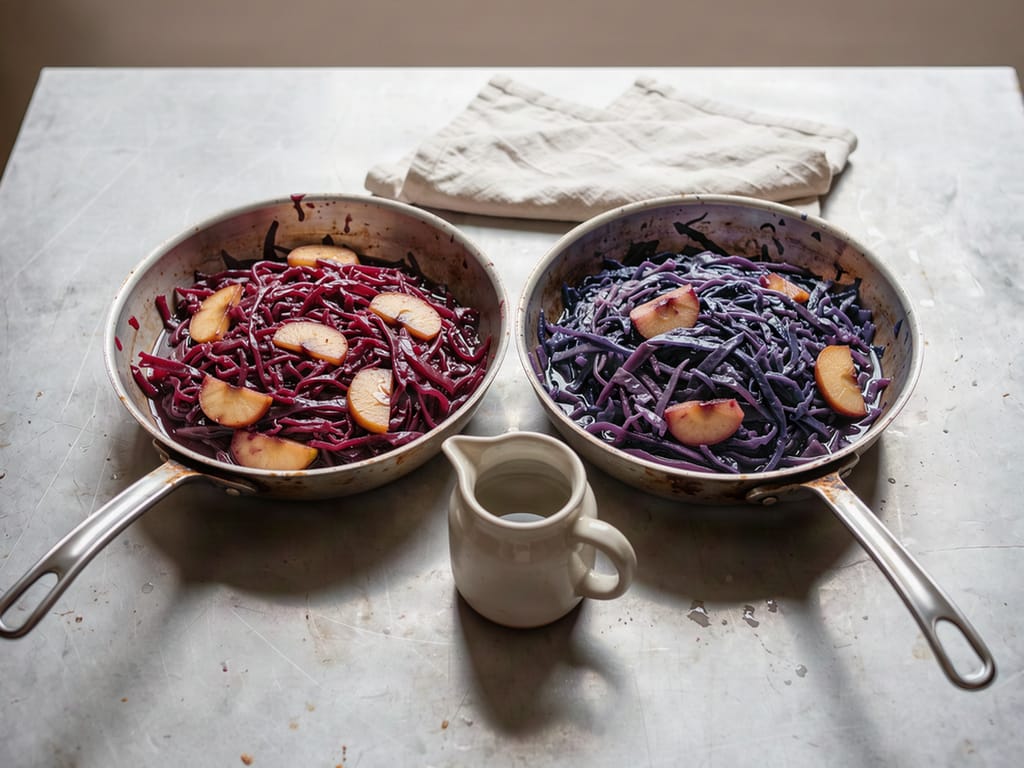
Red cabbage turns blue because its purple pigments, anthocyanins, change color with acidity: they are red in acid and turn blue, and then green, as the pot becomes neutral or alkaline. A splash of vinegar, lemon juice or tart apple brings the red back within a minute. That is why Czech and German red cabbage is traditionally cooked sweet-sour.
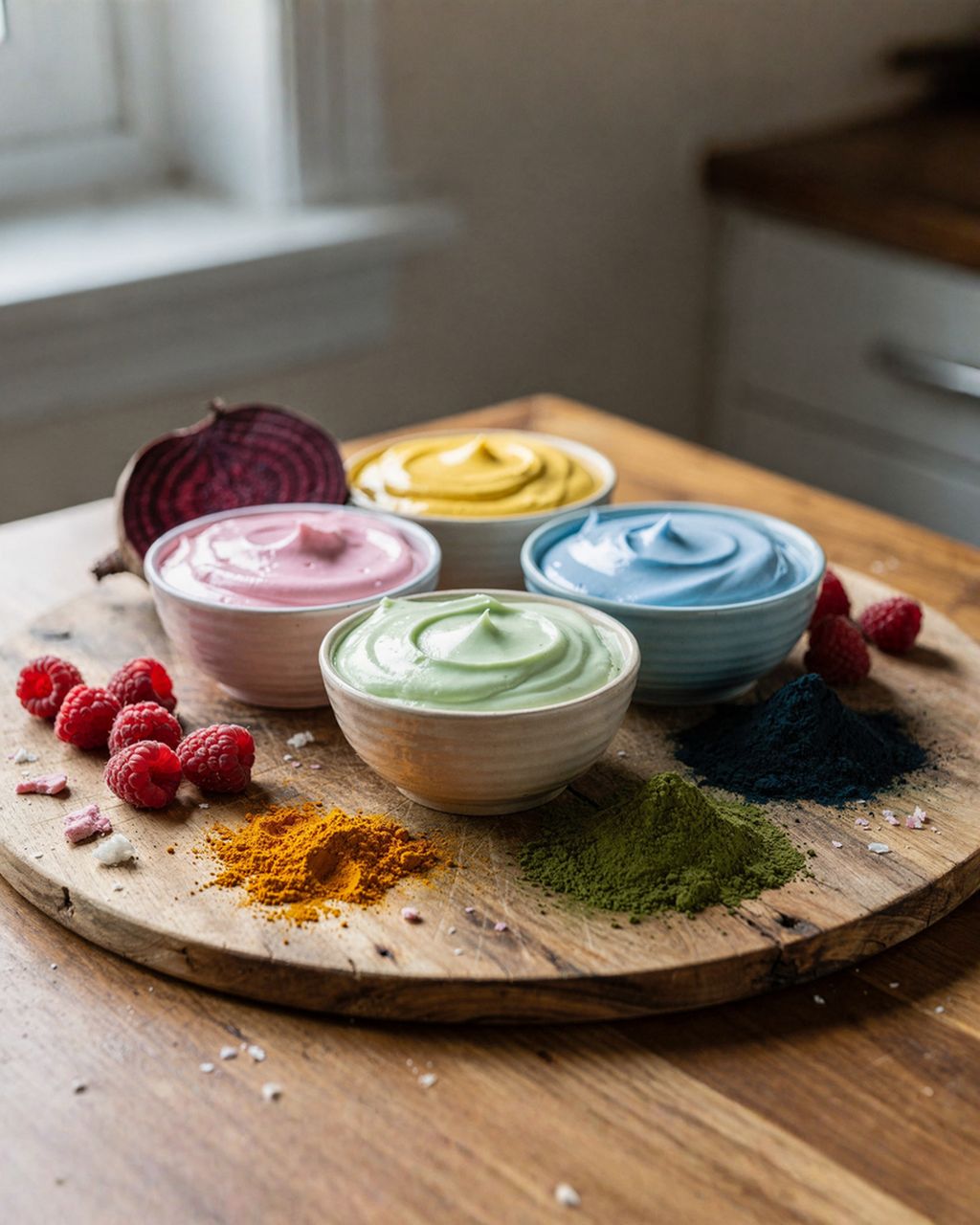
Red cabbage gets its color from anthocyanins, the same family of pigments found in blueberries, blackcurrants and red grapes. In red cabbage they act as a natural pH indicator, which is why school chemistry classes use cabbage water to test acids and bases.
The rough color scale:
Clearly acidic (vinegar, lemon juice): bright red to pink.
Mildly acidic: red-purple, the color most people expect.
Neutral (plain water): violet to blue-purple.
Alkaline (baking soda): blue, then green, then yellowish.
Raw red cabbage sits in the purple middle. Cook it in plain water or with sweet ingredients only, and it slides toward blue. Nothing has gone wrong with the cabbage. It is telling you the pot is not acidic.
The fix takes a minute:
Add acid a little at a time. Start with a tablespoon of vinegar for a family-size pot. Red wine vinegar and apple cider vinegar both suit it. Lemon juice works too.
Stir and wait. The color shifts almost at once, from blue-violet back to red-purple.
Taste. Acid changes the flavor as well as the color. If it is now too sharp, a pinch of sugar or a spoon of redcurrant jelly balances it.
If the cabbage went green after baking soda, acid will pull the color back toward red, but the soda will already have softened the leaves. Next time, leave the soda out.
Most blue cabbage comes from one of these:
No acid in the pot. Cabbage braised in water or stock with only sugar or sweet apple has nothing to keep it red.
Sweet apples or apple juice without vinegar. Apple is classic, but sweet varieties don't bring enough acid on their own. Use a tart cooking apple, or add vinegar as well.
Adding the acid too late. Cabbage that sits in plain liquid for a long time goes deep blue first. It will still come back, but it is easier to add some acid at the start.
Baking soda. Some old recipes add a pinch to soften vegetables. With red cabbage it turns the pot blue-green.
Slightly alkaline tap water. Hard tap water is often a little alkaline. With only a small amount of liquid it matters less, but it can nudge the color the same way.
Leftover cabbage can also look bluer the next day, especially where it touches potatoes or dumplings. A little extra vinegar when you reheat it brings it back.
Pink is the other end of the same scale. Red cabbage turns bright pink or magenta when there is a lot of acid: a generous pour of vinegar, plenty of lemon juice, or a long soak in a vinegar dressing.
Pink cabbage is fine to eat. If it tastes too sharp, balance it rather than trying to change the color back:
Add a pinch of sugar or a spoon of redcurrant jelly, a classic partner for braised red cabbage.
Add a little fat. A knob of butter or a spoon of goose or duck fat softens sharpness in braised cabbage.
Cook it a little longer with the lid off, so some of the sharpness cooks away with the steam.
If you want the deep purple-red most people expect, aim for gently sweet-sour. Add vinegar in small amounts and taste as you go, rather than pouring in a recipe's whole amount at once.
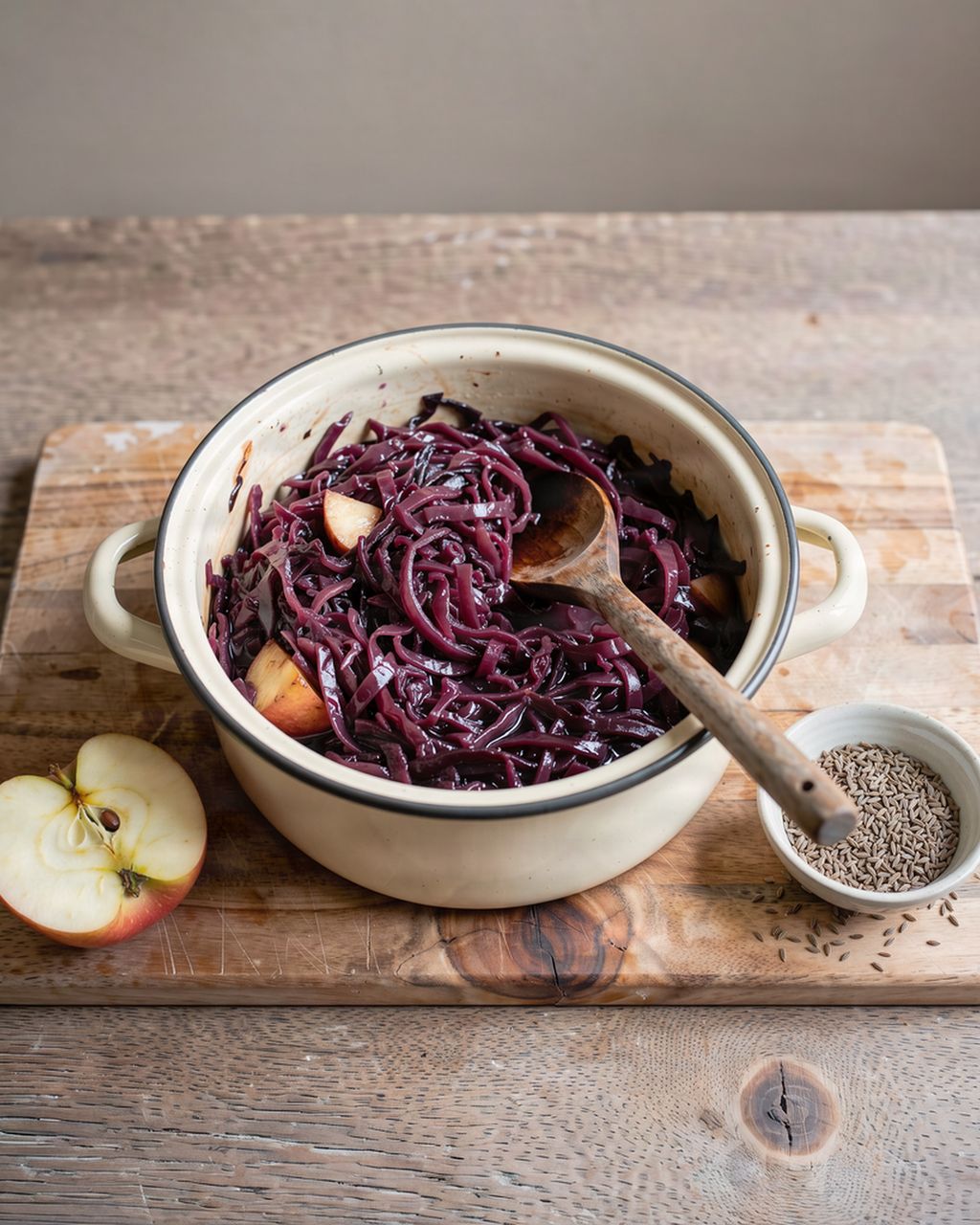
In Czech kitchens, červené zelí (braised red cabbage) is the partner for roast duck, goose and pork, served with knedlíky (Czech dumplings). It is cooked low and slow with onion softened in fat, caraway, sugar and vinegar, sometimes with grated apple or a splash of red wine. The vinegar is not optional. It sets the sweet-sour flavor and keeps the deep red-purple color.
German cooking does the same thing under several names. Northern Germany tends to say Rotkohl (red cabbage), many central and south-western regions say Rotkraut, while Bavaria, Württemberg and parts of Austria often say Blaukraut (blue cabbage). It is the same vegetable. The name only hints at the color you get when there is less acid in the pot.
Our guide to cooking red cabbage fresh or from a jar covers the Czech method, and the St. Martin's Day menu shows how it is served with goose and dumplings.
Recipe of the week, one tip that saves you time and one deal from the shop. Unsubscribe in one click.
The next issue goes out on Thursday, November 26.
Raw red cabbage behaves the same way:
Dress it with acid. A vinegar or lemon dressing turns shredded red cabbage brighter, closer to magenta. A creamy dressing with no acid can leave it dull or bluish.
Toss early. Shredded cabbage dressed with vinegar and salt brightens as it sits. Keep it covered, in the fridge, until you serve it.
Watch what it touches. The pigment bleeds. Red cabbage stirred into a potato salad or a pale mayonnaise dressing can streak it blue or violet. Mix it in at the last minute or serve it on the side.
The blue color itself doesn't change the flavor. What changes the flavor is the reason behind it: blue cabbage usually lacks the acid that makes red cabbage taste bright, so it tastes flat or overly sweet. Once you add vinegar to fix the color, the taste usually comes right too.
Color also has nothing to do with whether the cabbage is safe. Blue, red or purple, it is the same vegetable cooked under different conditions.
Red cabbage turns blue when the cooking liquid is not acidic enough, because its anthocyanin pigments are red in acid and blue in neutral to alkaline conditions. Add vinegar, lemon juice or tart apple and it turns red again.
Keep red cabbage red by cooking it with acid from the start: a splash of vinegar or red wine, some lemon juice, or tart apple. Add more acid at the end if it starts to look violet.
Red cabbage turns green when it meets something clearly alkaline, such as baking soda, which pushes the anthocyanin pigments past blue toward green and yellow. Acid brings it back, though baking soda also softens the texture.
Yes, red cabbage that has turned blue is a color change, not spoilage, and it is the same vegetable. It may taste flatter, which the same splash of vinegar fixes.
Bavaria, Württemberg and parts of Austria often call red cabbage Blaukraut, meaning blue cabbage, while northern Germany says Rotkohl and many central and south-western regions say Rotkraut. It is the same vegetable, and the color on the plate depends on how much acid goes in.
Red cabbage pigment bleeds into anything it touches, and on neutral or alkaline foods such as potatoes, dumplings or egg it often shows as blue or blue-green. Serve it next to, not on top of, pale foods, or add a little more acid to the cabbage.
One recipe worth heating the oven for, one tip, and one deal from the shop. Nothing else.