Macarons Cracking and No Feet? 8 Causes and How to Fix Them
Why Are My Macarons Hollow? Oven, Meringue, Macaronage and Baking Time
Updated Nov 20, 2026
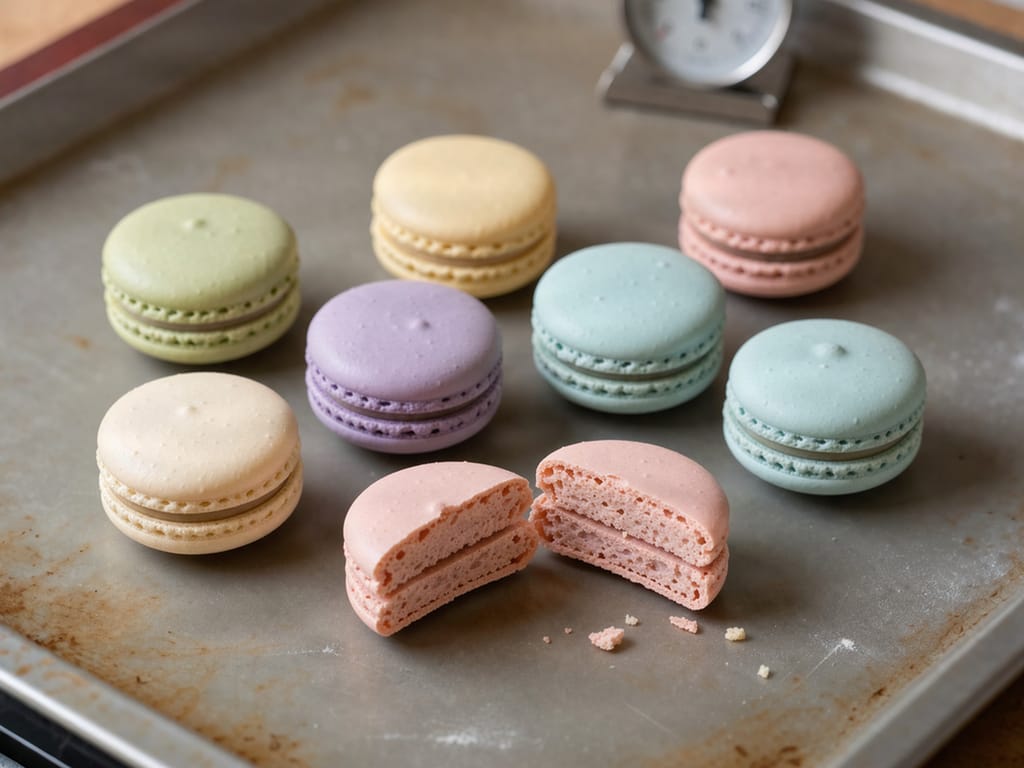
Macarons turn out hollow when the shell sets before the inside does: most often they are underbaked and the soft interior collapses as they cool, or the oven runs too hot so the top sets and lifts away from a still-wet center. A weak or overwhipped meringue, batter mixed too much or too little, and too long a rest add to it. Break one shell open, read the hollow, and change one thing per tray.
Break a cooled shell in half and look at where the gap is and what the inside looks like. It narrows down the cause.
Big air pocket right under the dome, inside soft or sticky: underbaked. The interior shrank as it cooled.
Big air pocket, tops browned, feet tall or bulging, maybe cracks: the oven is too hot. The top set and lifted off.
Pale shells, short feet, gap and a gummy layer: the oven is too cool or the bake too short.
Irregular holes and tunnels throughout: air left in the batter, from undermixing or not rapping the tray.
Thin, flat shells with a gap: overmixed batter or a weak meringue.
Hollow only in some shells on the tray: uneven heat. The back or one side of the oven runs hotter.
Our article on macarons cracking and no feet covers cracks, feet and lopsided shells. Here we go deeper into hollows.
A macaron shell is a crisp top over a soft, chewy interior. If you take them out before the inside has set, the interior keeps steaming as they cool, shrinks, and pulls away from the top.
Shells of 3.5–4 cm (about 1½ in) usually need roughly 12–16 minutes at 140–150 °C (285–300 °F) in a fan oven, or a little hotter on conventional top-and-bottom heat.
The test: nudge a shell gently. If the top wobbles on its feet, it needs more time. If it stays put, it is done.
Another check: done shells release cleanly from the mat or paper once fully cool. Sticky bottoms mean underbaked.
If your shells are pale and the hollows are soft inside, add 1–2 minutes before you change the temperature. A slightly longer bake at the same temperature often solves it.
Macarons are sensitive to as little as 5–10 °C. Many home ovens run hotter or cooler than the dial says, sometimes by 10 °C or more, which is huge here.
Too hot: the shells rise fast, the feet grow tall, and the top crust sets before the inside has caught up. When the interior settles, the top stays up and a hollow forms. You often also see browning, cracks or bulging feet.
Too cool: the shells bake slowly and the inside stays wet. They collapse inward as they cool.
What to do:
Put an oven thermometer in the middle of the oven and preheat for 20–30 minutes. Set the dial by the thermometer, not the other way around.
Bake one tray at a time on the middle rack.
If shells are hollow and browned, lower the temperature by 5–10 °C and bake a little longer.
If they are hollow and pale, give them more time, or a few degrees more heat.
A strong fan can blow the tops dry before the inside is done. If your fan is fierce, try conventional heat a few degrees higher; our oven temperature converter helps.
Bake a test tray of 4–5 shells first. It costs you very little batter.
The meringue is the structure of the shell.
Overwhipped meringue turns dull, dry and grainy. It is full of air that the batter can't hold. The shells puff up high in the oven, then fall back inside and leave a hollow.
Weak meringue, whipped too little or too fast, has large unstable bubbles. Shells spread and don't set evenly.
Aim for a thick, glossy meringue with a firm peak that stands up on the upturned whisk. Stop there. Whip at medium speed rather than full, and add the sugar gradually. Our guide to whipped egg whites shows the stages.
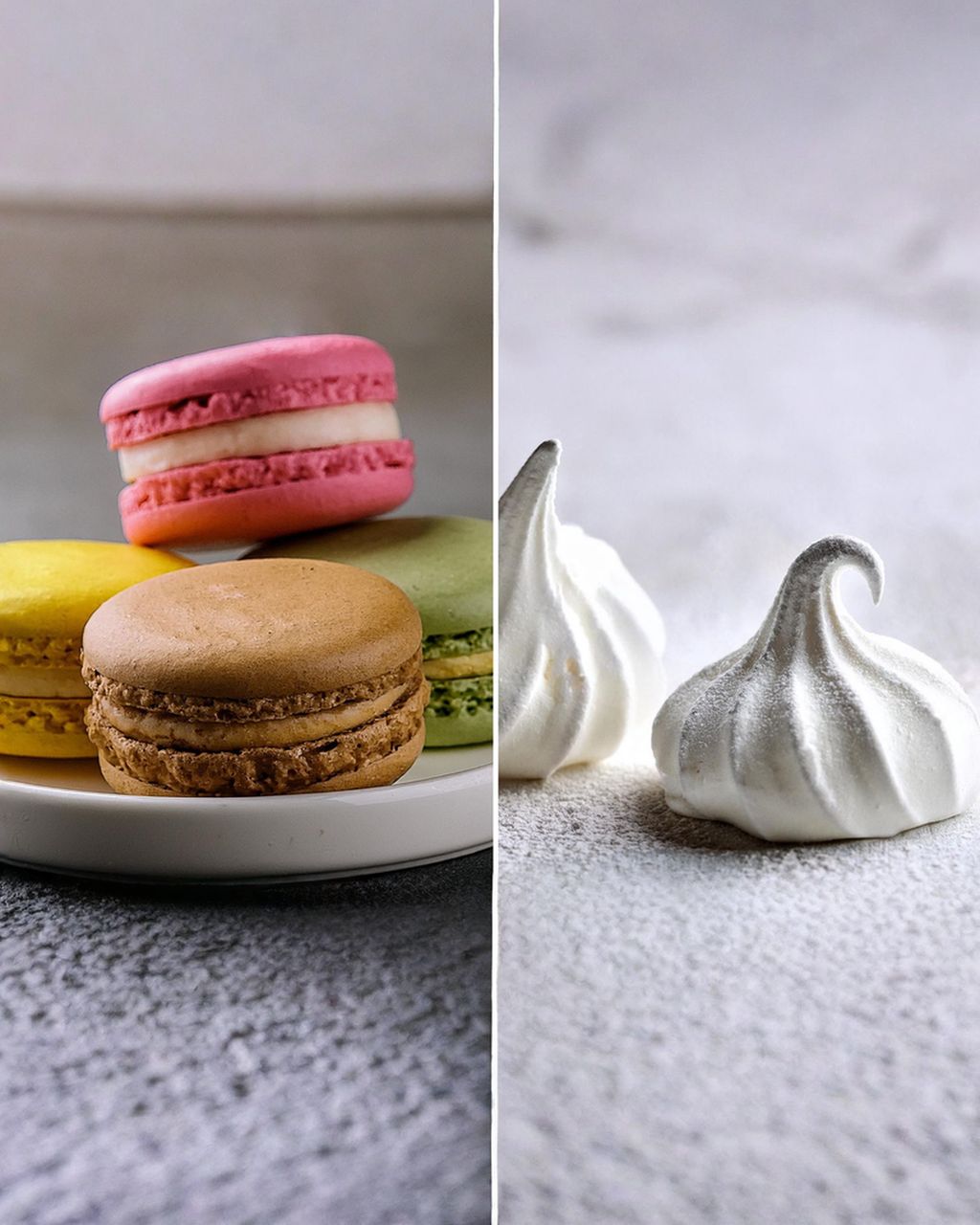
Many bakers who fight hollows switch to Italian meringue, made with hot sugar syrup, because it is more stable. See French, Swiss or Italian meringue. A little dried egg white powder mixed into the sugar also firms up a French meringue.
Recipe of the week, one tip that saves you time and one deal from the shop. Unsubscribe in one click.
The next issue goes out on Thursday, November 26.
Macaronage is folding the almond-sugar mixture into the meringue and pressing out some of the air.
Undermixed: thick batter, the ribbon breaks, shells have peaks and big air pockets that leave irregular hollows.
Overmixed: thin, runny batter that spreads into flat shells that can collapse into a gap.
The batter is ready when it falls from the spatula in a continuous, thick ribbon that sinks back into the surface within about 10–20 seconds. Test often; you can mix more, but you can't unmix.
Rap the tray firmly on the counter 3–4 times after piping and pop any bubbles with a toothpick. Trapped air expands in the oven and leaves holes.
Resting lets a skin form so the steam escapes through the feet. Rest until the surface is matte and doesn't stick to a fingertip, usually 20–60 minutes depending on humidity. Resting for hours can make the skin so firm that the shell rises unevenly.
Almond flour: use finely ground almond flour from blanched almonds, sifted with the powdered sugar. Oily or coarse flour makes heavy, uneven shells that are more prone to gaps.
Liquid coloring adds water. Use gel or powder.
Surface: a thin, flat baking mat or parchment on a heavy tray bakes evenly. Very thick silicone insulates the bottoms, so they bake more slowly than the tops. See silicone mat or parchment for macarons.
Once you have full shells, fill them, keep them covered in the fridge, and let them mature for a day. For the full method from weighing to filling, follow our step-by-step macarons guide.
Macarons are hollow when the outer shell sets before the interior has baked and dried, leaving a gap under the top. The usual causes are underbaking, an oven that runs too hot or too cool, and a meringue that was overwhipped or too weak.
Yes, underbaking is one of the most common causes. The soft inside hasn't set, so it shrinks and pulls away from the top as the shells cool. Bake them until the tops no longer wobble on their feet when nudged.
Yes. Too much heat makes the shells rise fast and the tops set early, so the inside can't keep up and a hollow forms under the dome. Hot ovens also give browned tops, cracks and lopsided feet.
It can. Overmixed batter is thin and loses too much air, so shells spread and can collapse into a gap. Undermixed batter keeps large air pockets that also leave hollows, so aim for a batter that flows in a thick ribbon.
Yes, hollow macarons are perfectly fine to eat, just less pretty and a bit more fragile. Filling them and letting them mature covered in the fridge for a day softens the shells, but it doesn't fill the hollow.
One recipe worth heating the oven for, one tip, and one deal from the shop. Nothing else.