Choux Pastry Dough for Fruit Dumplings: Method, Ratios and Why They Don't Fall Apart
Why Are My Dumpling Wrappers Tearing? Dry Wrappers, Fillings and Dough
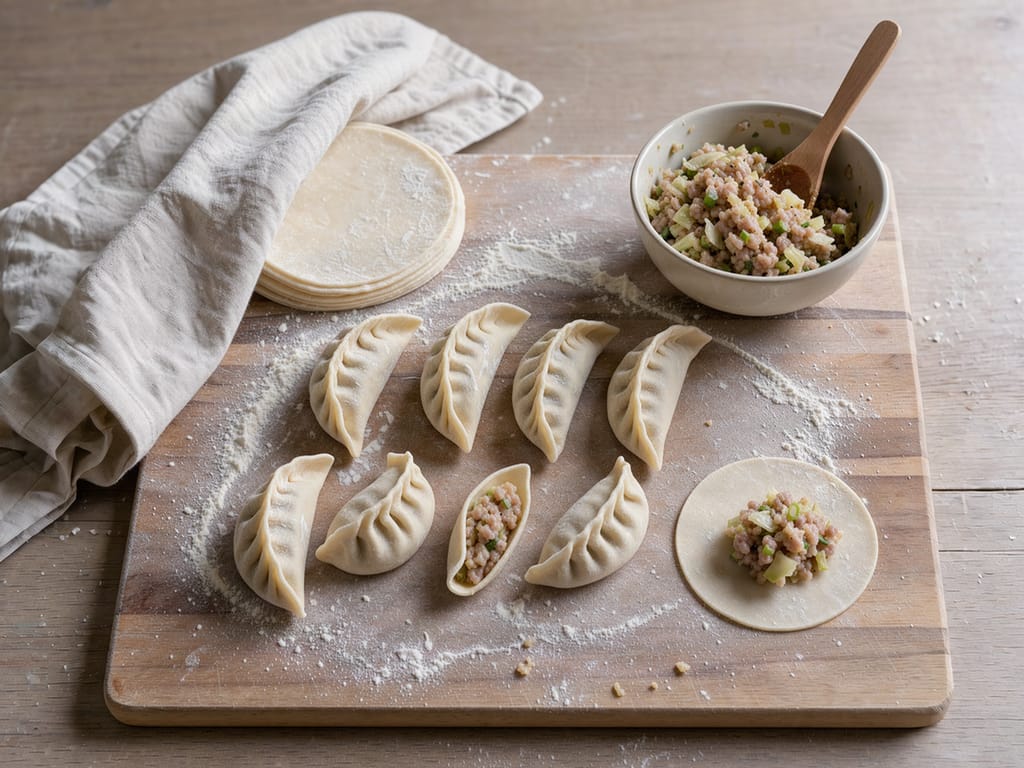
Updated Nov 21, 2026
Dumpling wrappers tear when they dry out, are overfilled, or a wet filling soaks through them. Keeping wrappers covered, using less filling and squeezing water out of the vegetables fix most tears. Here is how to handle store-bought and homemade wrappers.
Dumpling wrappers tear when they dry out, are overfilled, or have a wet filling soaking through them. With homemade dough, a dough that is too stiff or hasn't rested also cracks when you pleat it.
This is about wrappers for Chinese and Japanese-style dumplings: potstickers, jiaozi and gyoza. Match the problem:
Cracks along the edges or pleats: the wrapper dried out.
Splits when you fold it over the filling: too much filling, or a stiff wrapper.
Soggy, then torn on the bottom: the filling is too wet.
Tears in the pan or the pot: stuck to the pan, boiled too hard, or moved too soon.
Wrappers stuck together in a stack: thawed in their packet and got damp, or not dusted.
Store-bought wrappers are thin and dry out in minutes once the packet is open. Dry edges crack and won't seal.
Take out only a few wrappers at a time and keep the rest under a clean, slightly damp tea towel or in the packet.
Cover finished dumplings with a towel too.
If wrappers come frozen, thaw them in the fridge in their sealed packet, so they don't sweat and stick together.
If they have already stuck, separate them gently while they are cold, peeling from the edge.
Most store-bought wrappers are dusted with starch to stop sticking. That starch makes them harder to seal, so wet the edge with a fingertip of water before folding. Use just a little; too much water makes the edges slippery.
Overfilling is the most common cause of split wrappers. A standard round wrapper holds only about a heaped teaspoon to a scant tablespoon of filling, depending on its size. More than that, and the dough stretches thin around the pleats and splits during cooking.
A wet filling is the other big one:
Salt and squeeze watery vegetables. Cabbage, such as napa cabbage, and zucchini release a lot of water. Chop them, toss with a little salt, leave them for a while, then squeeze hard in a towel.
Drain anything thawed or canned.
Chill the filling, covered, in the fridge, so it is firmer and easier to wrap.
Bind it. A little cornstarch or potato starch in the filling helps hold juices. Our stir-fry guide explains how starch works in Chinese cooking.
Keep the filling away from the edge of the wrapper. Grease or juice there stops the seal.
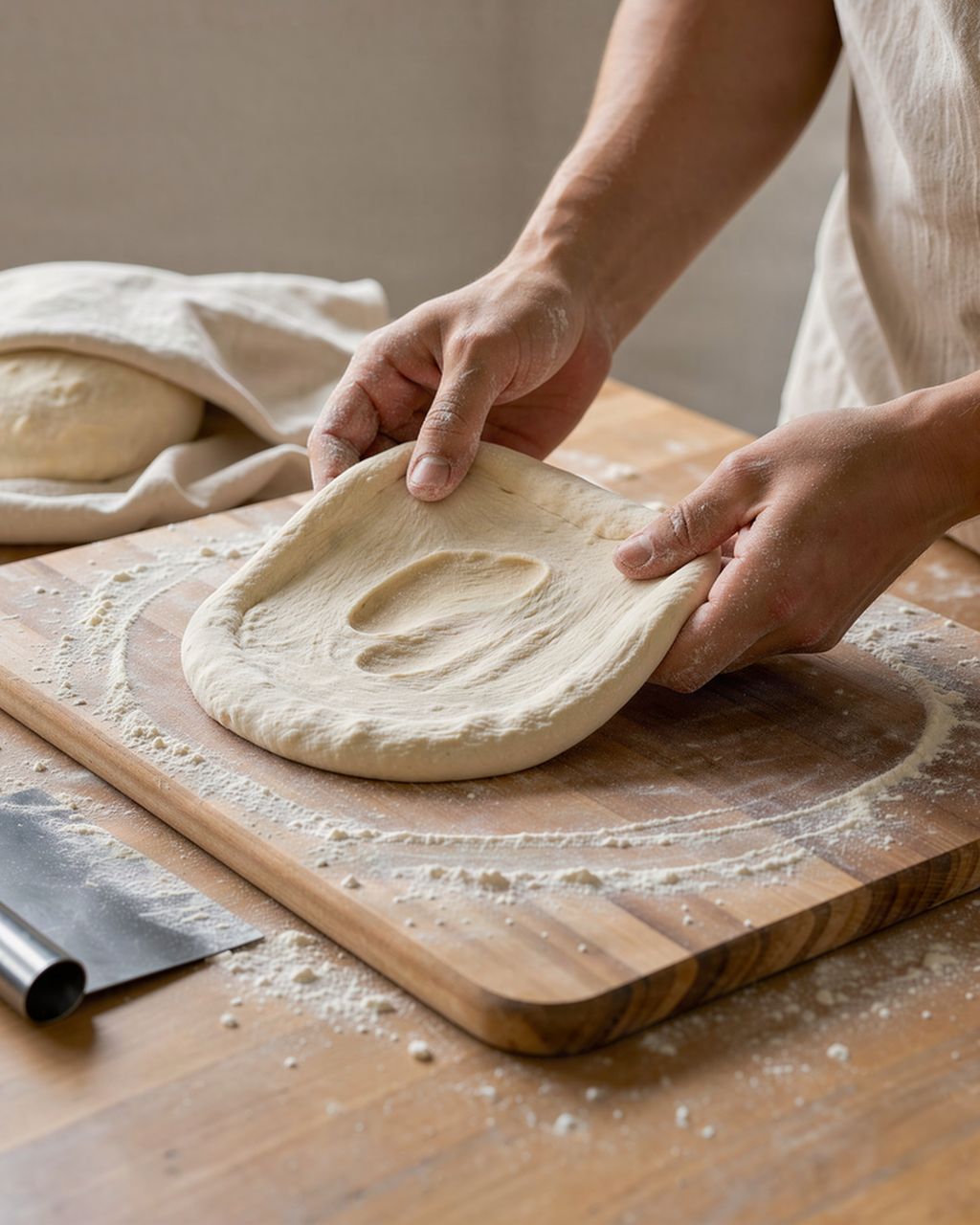
Homemade dumpling dough is just flour and water, usually all-purpose or plain flour. Problems come from the balance of the two and from resting.
Too stiff: it cracks when pleated. Knead in a little more water.
Too soft or sticky: it tears as you lift it. Knead in a little more flour.
Not rested: freshly kneaded dough is elastic and springs back. Cover it and let it rest before rolling, at room temperature, so it relaxes.
Rolled unevenly: many cooks roll the edges thinner and leave the center thicker, which gives a strong base under the filling and thin pleats.
Many cooks make potsticker dough with just-boiled water from the kettle, which gives a softer, more pliable dough, and dough for boiled dumplings with cold water, which gives a chewier one. High-protein bread flour makes a springier dough that can be harder to roll thin; see types of flour for what each is good for.
Dust your board with starch rather than more flour if you can. Flour gets absorbed and dries the dough.
Dumplings that were perfect when wrapped can still tear while cooking:
Stuck to the pan. For potstickers, the pan needs enough oil and heat before the dumplings go in, and they should be left alone until the bottoms release. A good nonstick or well-seasoned pan helps.
Boiled too hard. A rolling boil knocks dumplings against each other. Many cooks add a splash of cold water each time it boils up, to keep the boil gentle.
Crowded. Leave room in the pot or pan.
Moved too early. Fresh dumplings are fragile. Lift them with a slotted spoon or a thin spatula, not tongs.
If dumplings stick to the plate or tray before cooking, dust it with starch or line it with baking paper.
Most dumpling fillings are raw meat, so they need to cook through, not just look done on the outside.
USDA FSIS sets the safe minimum internal temperature for ground pork, such as ground pork in a classic filling, at 71 °C (160 °F), and for ground chicken or turkey at 74 °C (165 °F). For fish fillings, the FoodSafety.gov chart (USDA and FDA) gives 63 °C (145 °F); for mixed fillings such as pork and shrimp, cook to the highest temperature of the ingredients used, here 71 °C (160 °F) for the pork. Check the largest dumpling, and one from the most crowded part of the pan, with a food thermometer pushed into the center of the filling. USDA FSIS warns that color alone is not a reliable sign that ground meat is safely cooked.
Small, evenly filled dumplings cook through more reliably than overstuffed ones, which is another reason not to overfill.
Recipe of the week, one tip that saves you time and one deal from the shop. Unsubscribe in one click.
The next issue goes out on Thursday, November 26.
A good seal keeps the filling in and the wrapper whole. Whatever fold you use, the basics are the same:
Put the filling in the center, in a compact mound, with a clean border all round.
Wet half the edge with a fingertip of water.
Fold and press out the air as you seal. Trapped air expands when the dumpling cooks and can burst it.
Pinch the top first, then pleat or press along each side towards the ends.
Check the corners, which are where most dumplings open.
A simple half-moon, pressed firmly, holds just as well as fancy pleats. Pleats look good and help potstickers sit flat in the pan, but they also give the wrapper more places to crack if it is dry. Set finished dumplings on a starch-dusted tray, not touching each other, and keep them covered. If you are not cooking them straight away, refrigerate the tray at 4 °C (40 °F) or below and cook within a day, or freeze the dumplings on the tray until firm, then bag them and cook straight from frozen. USDA FSIS advises not leaving raw meat at room temperature for more than 2 hours, or more than 1 hour if the room is above 32 °C (90 °F).
Keep dumpling wrappers covered so they don't dry out, don't overfill them, squeeze the water out of vegetables, and seal the edge with a little water. Cook them at a gentle boil or in a hot, oiled pan.
Dumpling wrappers won't seal when they are dry, dusted with starch or greasy at the edge. Wet the edge lightly with a fingertip of water and keep the filling well away from it.
Dumpling wrappers turn sticky when they get damp, often from thawing outside their sealed packet or from a wet filling. Thaw them in the fridge in the packet and dust the tray with starch.
Dumplings burst when they are overfilled, have air trapped inside, or are boiled too hard. Fill them less, press out the air while sealing, and keep the water at a gentle boil.
Homemade wrappers are softer and more forgiving to pleat, while store-bought wrappers are thinner and dry out faster. Both work well if you keep them covered and don't overfill them.
One recipe worth heating the oven for, one tip, and one deal from the shop. Nothing else.