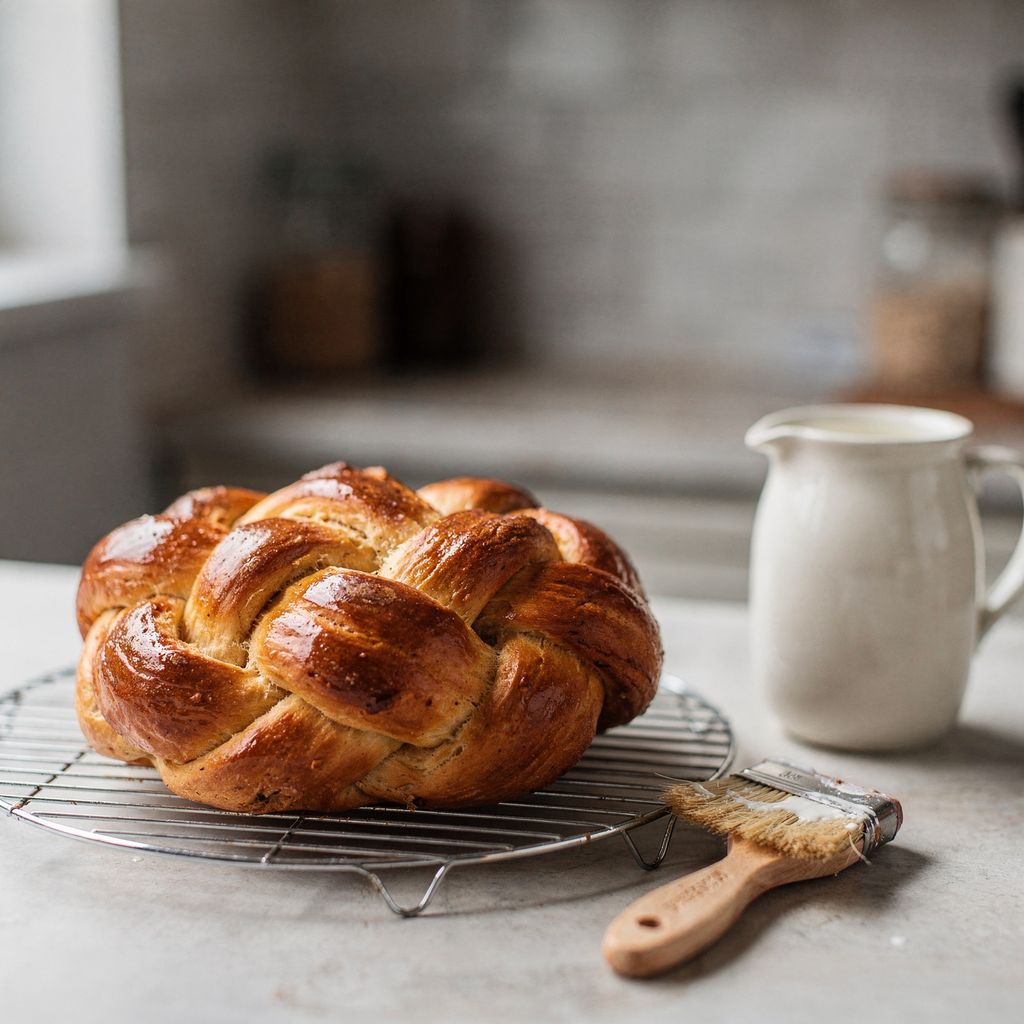
Mom's christmas braid
What to Brush on Egg-Free Vánočka for Shine and Color
Updated Sep 18, 2026
For egg-free vánočka (Czech Christmas braid), your best bet is unsweetened soy milk with a teaspoon of maple syrup — of everything you're likely to have on hand, this combo gives the richest color and a nice shine at the same time. Plant milk alone, cream, a starch glaze, or aquafaba all work too, but each does something different: one brings color, another brings shine, a third helps almonds stick. Here's what to brush on, in what ratio, and when, so your loaf doesn't come out of the oven pale as a plain bun.
Egg wash on the surface does three things at once: its protein browns together with sugar, the fat from the yolk adds shine and a richer golden color, and the dried layer acts like glue for the almonds on top. Once you know which of these three things you actually need, picking a substitute takes ten seconds.
Color comes down to the Maillard reaction, and that needs protein and sugar together. Hence the simple breakdown:
Egg white gives mostly shine and almost no color.
Egg yolk gives rich color and, thanks to its fat, a deeper, almost lacquered shine.
Whole egg is the compromise that does both — which is why it's the most common choice.
So a substitute needs to deliver at least two of those three qualities. That immediately explains why plain water doesn't work (nothing to brown) and why plain oil doesn't work either (no protein). We covered this in more detail in our article on why yeasted dough gets brushed with egg.
Without eggs, these substitutes work: soy milk with maple syrup, plain unsweetened plant milk on its own, cream or whole milk, a starch glaze, aquafaba with syrup, and sugar syrup brushed on only after baking.
Soy milk + maple syrup (2 tbsp : 1 tsp) — the best balance of color and shine. Soy, along with pea milk, is one of the plant milks highest in protein, and the syrup supplies the sugar. According to tests by the baking site King Arthur Baking, this pairing beat out every other plant-based option: syrup alone made the bake too dark, while soy milk alone came out too light.
Unsweetened soy or pea milk on its own (2 tbsp) — a nice golden color with shine comparable to an egg wash; you'd add syrup mainly for a richer color. The simplest option when you don't want to mix anything.
Whipping cream or whole milk — the fallback when you've simply run out of eggs but still eat dairy. The fat in cream gives a darker, almost lacquered surface, while milk gives a softer, lighter finish.
Starch glaze (1 tsp starch per 100 ml water, brought to a simmer) — the shiniest of all the options, but almost no color. Works best as a duo: milk before baking for color, starch glaze right after baking for shine.
Aquafaba (chickpea brine) — gives a mild shine on its own but almost no color; without a teaspoon of syrup mixed in, it's not really worth using.
Sugar syrup or honey diluted 1:1 with water, applied only after baking — gives shine and a tacky surface that almonds can grip. This thick, it has no business on raw dough — it would burn; before baking, dilute it at least 1:2.
Treat almond milk as a last resort. Of all the common plant milks, it has the least protein — around 0.4 g per 100 ml — making it the weakest choice for browning; King Arthur didn't even include it in their tests, only conceding it'll "do in a pinch." With a teaspoon of syrup stirred in, you'll get at least a pale golden finish.
If your vánočka keeps coming out pale no matter what, stir a pinch of instant coffee or cocoa powder into the milk. You won't taste it, but the crust will come out two shades darker.
2 tablespoons of milk and 1 teaspoon of syrup is enough for one loaf — making more is wasted effort.
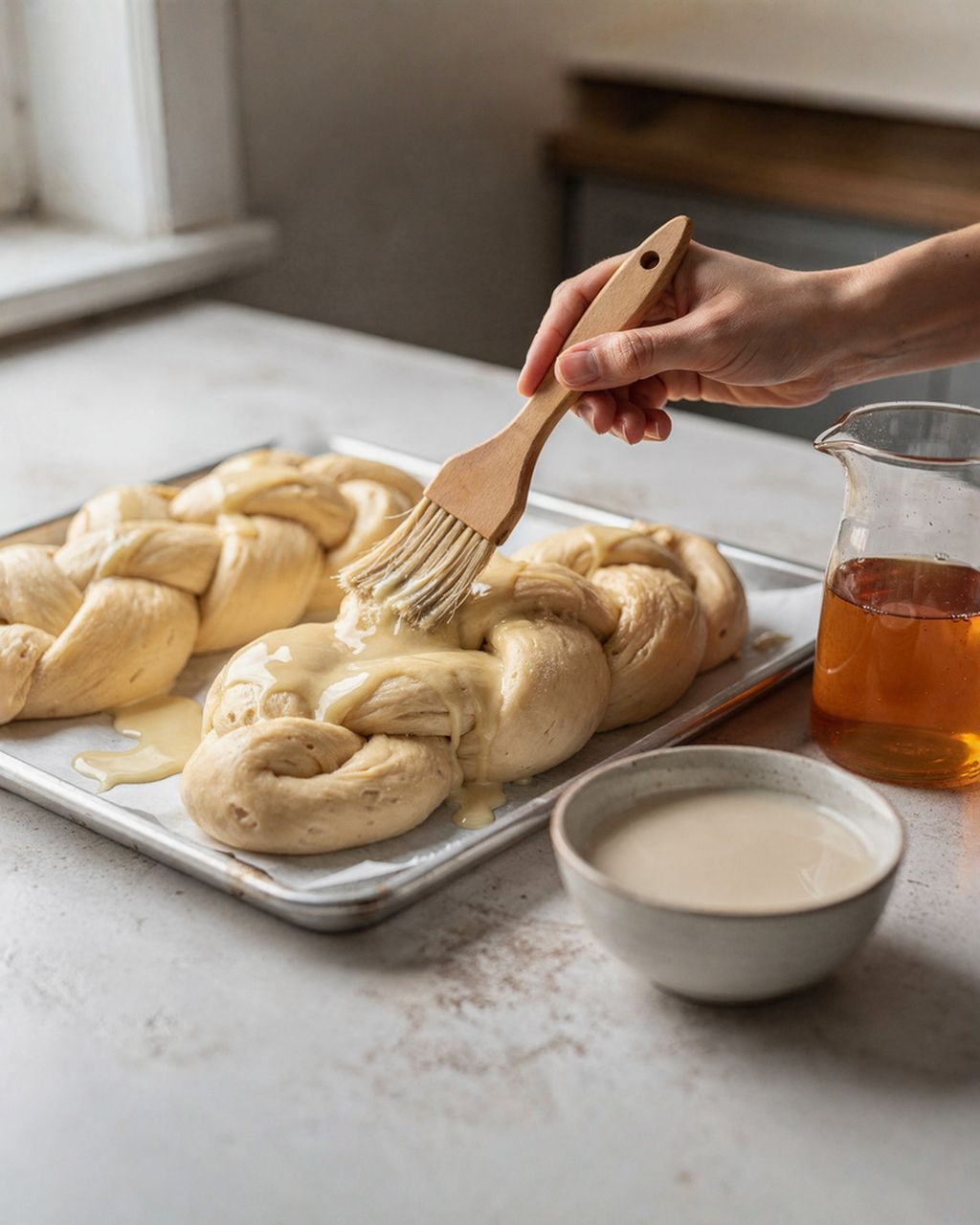
Stir 2 tablespoons of unsweetened soy milk with 1 teaspoon of maple syrup or honey until smooth.
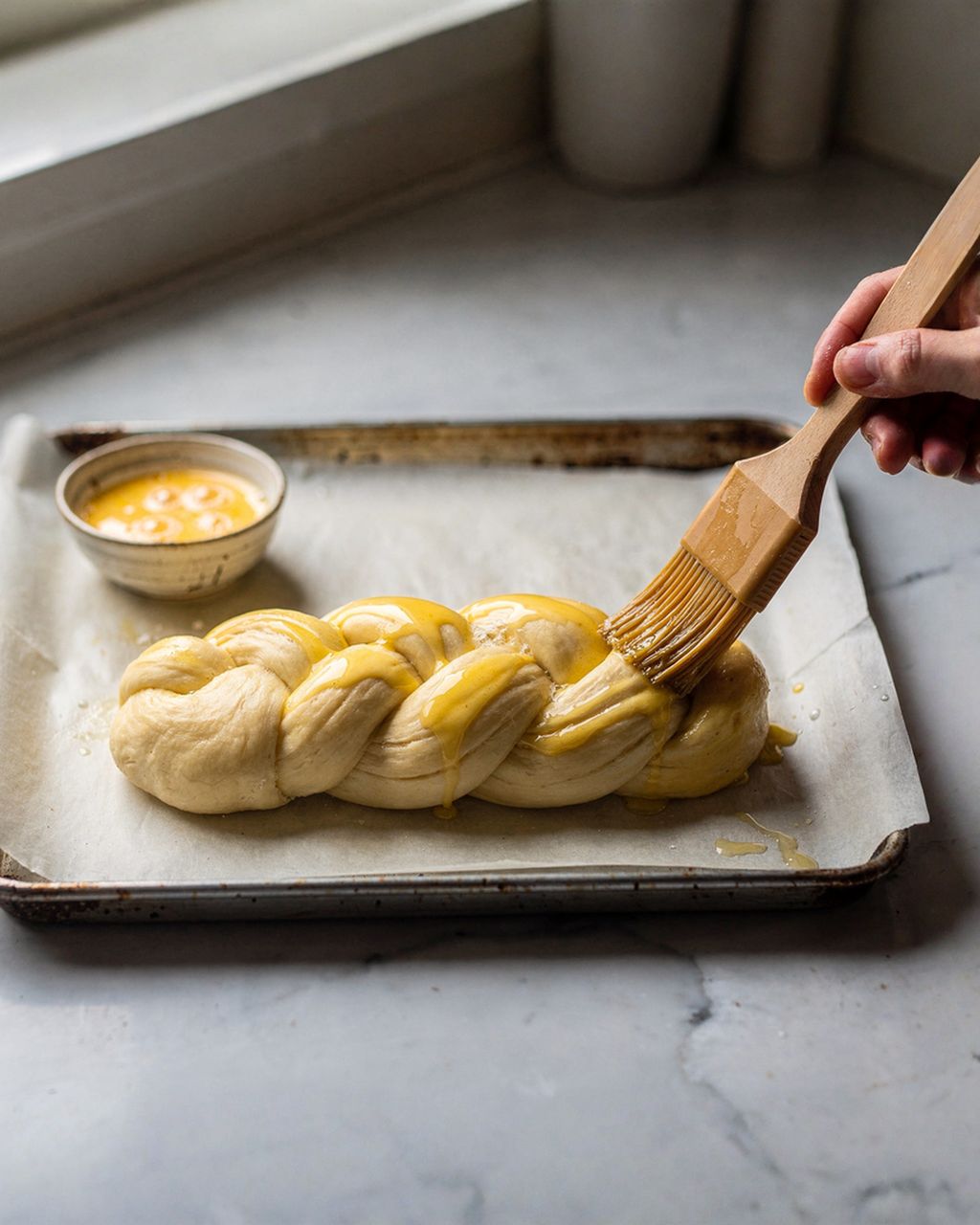
Brush the risen loaf with a soft pastry brush right before it goes into the oven. A thin, even layer — no puddles.
About 20 minutes before baking finishes, open the oven and brush a second coat quickly. This second layer makes the biggest difference to the color.
Right after taking it out, you can brush on one more light coat and let it dry on a wire rack.
Go for unsweetened milk on purpose: sweetened and "barista" versions have a lot of added sugar and will scorch before the inside of the loaf is done.
A starch glaze is the cheapest way to get real shine on vánočka with zero eggs — all you need is starch and water.
Stir 1 teaspoon of cornstarch or potato starch into 100 ml of cold water.
Bring it to a boil while stirring constantly, and simmer for about a minute, until the mixture turns clear and thickens slightly to a thin syrup consistency.
Let it cool to lukewarm, then brush it onto the hot loaf right as it comes out of the oven.
Don't put it on raw dough — in the oven it would dry into a dull white film. The same goes for sticking on almonds: starch glaze always goes on the finished loaf, never before. Leftovers keep in the fridge for two to three days; just warm through and stir before reusing.
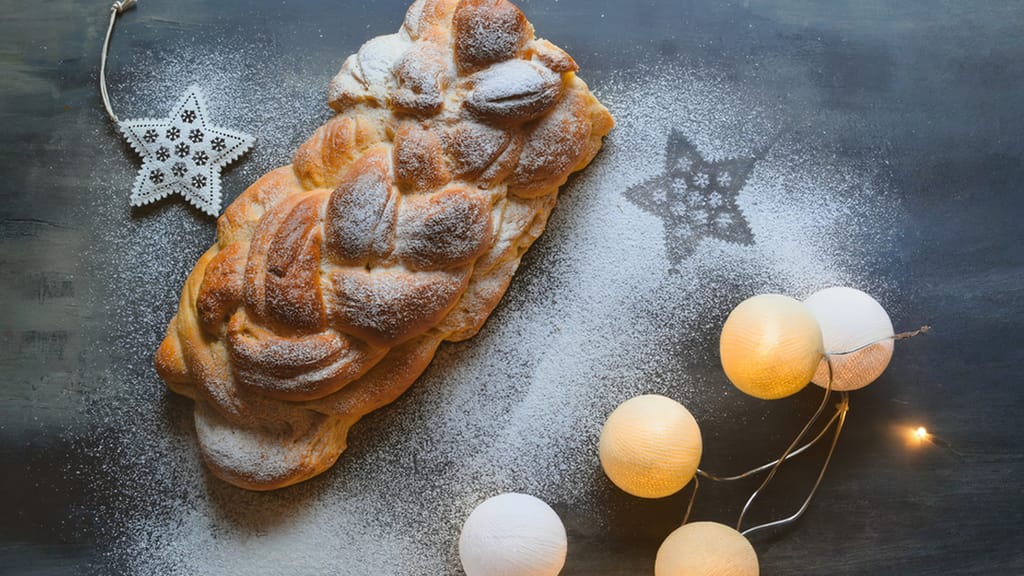
Mom's christmas braid
Mom's Vánočka — the classic yeasted dough for practicing egg-free brushing
Five things commonly recommended that don't hold up on vánočka: plain water, plain oil or butter, straight honey before baking, rice milk, and unsweetened aquafaba.
Plain water has no protein or sugar, so there's nothing to brown. The surface stays dull and turns out a bit tougher, since the water dries out the crust from the outside.
Plain oil or melted butter will make the loaf greasy rather than glossy, and the fat also slows down crust formation. Save the butter for after baking — brushed on a finished loaf, it adds softness and aroma.
Straight honey or syrup before baking will caramelize long before the dough inside is done. You'll end up with a loaf that's dark to burnt on the outside and underbaked in the middle.
Rice milk is low in protein (about 0.1–0.3 g per 100 ml) and will leave the loaf pale. Oat milk browns decently well, just with a bit less shine than soy.
Unsweetened aquafaba gives a bit of shine but stays pale — you'll need to add syrup for color.
Brush it twice: right before it goes into the oven, and again about 20 minutes before it's done. A single egg-free coat is almost never enough.
Before baking, brush only after the dough has risen, using a soft brush and no pressure. Risen dough is delicate — a stiff brush will dig in and deflate it.
Don't let the glaze pool into the grooves between the strands. A pool in a groove stays damp, won't brown, and crumbles when you slice the loaf. Sweep away any excess to the sides with the brush.
The second coat, in the last 20 minutes, should go on quickly, with the oven open as briefly as possible so the temperature doesn't drop.
After baking, only syrup and starch glazes go on, and only onto a hot loaf — on a cooled one, they'll leave a sticky layer that never dries.
Brushing won't fix problems that started earlier, though. If your vánočka has spread out sideways or you're wondering why vánočka cracks, the cause lies in proofing and braiding, not the glaze.
Without eggs, almonds stick best to syrup diluted 1:2 with milk or water — brush it on, sprinkle the almonds, and press gently into the dough; raisins shouldn't go on the surface at all — work those into the dough instead. Plant milk alone is too thin for sticking, and the almonds will slide off during baking.
Egg works well as a glue because its protein sets in the oven and essentially welds the almond in place. A substitute needs to be thicker to pull off the same trick:
Brush the risen loaf with syrup or honey diluted 1:2 with milk or water. It's thicker than plain milk, yet diluted enough not to burn in the oven.
Sprinkle sliced almonds on from above, not from the side.
Press them gently with your fingers so they touch the dough itself, not just the layer of glaze. Press lightly — the dough has risen and is delicate.
Save a starch glaze for sticking things on until after baking — it won't hold on raw dough and will just dry into a dull film. It does work well on the hot loaf, though, adding shine to almonds that are already baked.
Almonds scorch faster than the loaf itself. As soon as they darken faster than the crust, loosely tent the loaf with foil for the last 15 minutes. As for raisins: on the surface they turn bitter and burn before anything else does. If any peek out while you're braiding, push them back under the surface before the loaf goes into the oven.
A pale loaf needs more protein and sugar in the wash; an overly dark one needs foil and a lower temperature — not a different glaze. Both are easy fixes without changing the whole method.
A pale loaf is fixed with a stronger wash and closer attention to temperature:
Swap rice or almond milk for soy or pea milk. They have noticeably more protein, which means more browning.
Add 1 teaspoon of syrup or honey per 2 tablespoons of milk.
Brush it on twice. The second coat, 20 minutes before it's done, makes the biggest difference.
Check your oven temperature. Vánočka bakes at around 170–180°C (340–355°F); below 160°C (320°F) it won't brown, it'll just dry out.
An overly dark loaf is fixed with foil and gentler baking:
Loosely tent it with foil for the last 15–20 minutes. The inside finishes baking while the crust stops darkening further.
Lower the oven temperature by 10°C (about 15–20°F) and bake five to ten minutes longer.
Dilute the glaze: more milk, less syrup. The more sugar on the surface, the faster it darkens.
Move the tray to a lower rack if it's mainly the top that's darkening too fast.
Yes, the same substitutes work on any sweet yeasted dough — mazanec included, as well as smaller sweet yeasted rolls and buns. Only the baking time changes, not the underlying principle: protein and sugar create color, fat and starch create shine. With smaller pieces, expect them to brown faster, so apply the second coat sooner — around 10 minutes before they're done.
If you're missing eggs in the dough itself, that's a different problem from brushing — there, eggs hold structure and softness, not color. You'll find ratios that work in our egg substitute chart for baking.
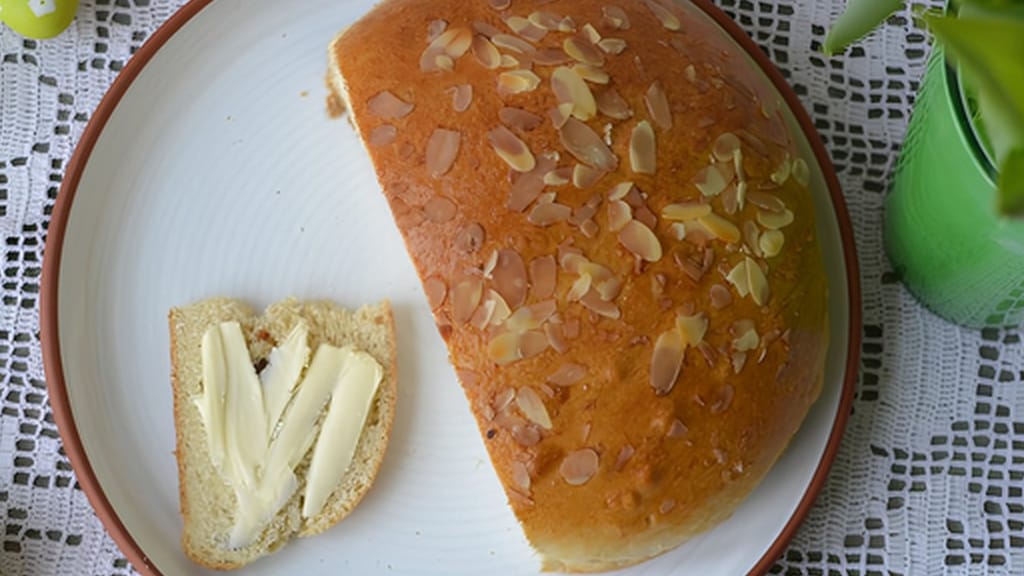
Easter classic: fragrant mazanec bread
Fragrant Easter Mazanec — the same yeasted dough, the same egg-free wash
Yes, you can make the starch glaze ahead — it keeps two to three days in a sealed container in the fridge. Warm it through and stir before using, since it thickens and separates as it cools. The plant milk and syrup mixture is best mixed fresh each time; it takes ten seconds, and opened plant milk loses flavor fast in the fridge.
Reach for pea milk — it has roughly the same protein content as soy and browns almost identically. Oat milk is the next best choice. Steer clear of almond and rice milk for color, since they have the least protein. If dairy isn't an issue for you, whipping cream works just as well.
A sticky surface means sugar didn't dry down properly — either the syrup went on a loaf that had already cooled, or the layer was too thick. Syrup and starch glazes need to go on a hot loaf straight out of the oven, while the residual heat can still evaporate the water and leave just the shine behind. If it's already sticky, let it sit uncovered on a wire rack for an hour instead of under a towel.
Only if the dough itself is also egg- and dairy-free. The wash is just the final layer — classic vánočka has eggs, butter, and milk baked right into the dough, so swapping the glaze alone won't make it vegan. For a vegan version you need to adjust the dough as well.
Yes, freezing won't harm the glaze — freeze it once cooled, whole or in halves, wrapped tightly in plastic wrap and then in a freezer bag. It keeps for three months. Thaw it slowly at room temperature while still wrapped; a starch glaze will lose a bit of shine after thawing, but five minutes in a 150°C (300°F) oven brings it right back.
One recipe worth heating the oven for, one tip, and one deal from the shop. Nothing else.