What to Cook with Cabbage: White, Red, Sauerkraut, Jarred and Leftovers
What Is Halušky? Slovak Potato Dumplings vs American Haluski
Updated Nov 20, 2026
Halušky are small, soft potato dumplings from Slovakia, and the famous version, bryndzové halušky, tosses them with bryndza sheep cheese and crisp bacon. In the US, especially around Pittsburgh, haluski usually means something else: egg noodles fried with cabbage, butter and onion. Here is what each one is, what bryndza is, and what to use when you cannot buy it.
Halušky (singular haluška) are small, irregular dumplings made from a soft potato dough. They look a little like gnocchi that has been torn rather than rolled, or like chunky spätzle. On their own they are fairly neutral, soft and slightly chewy, and they exist mainly to carry what goes on them.
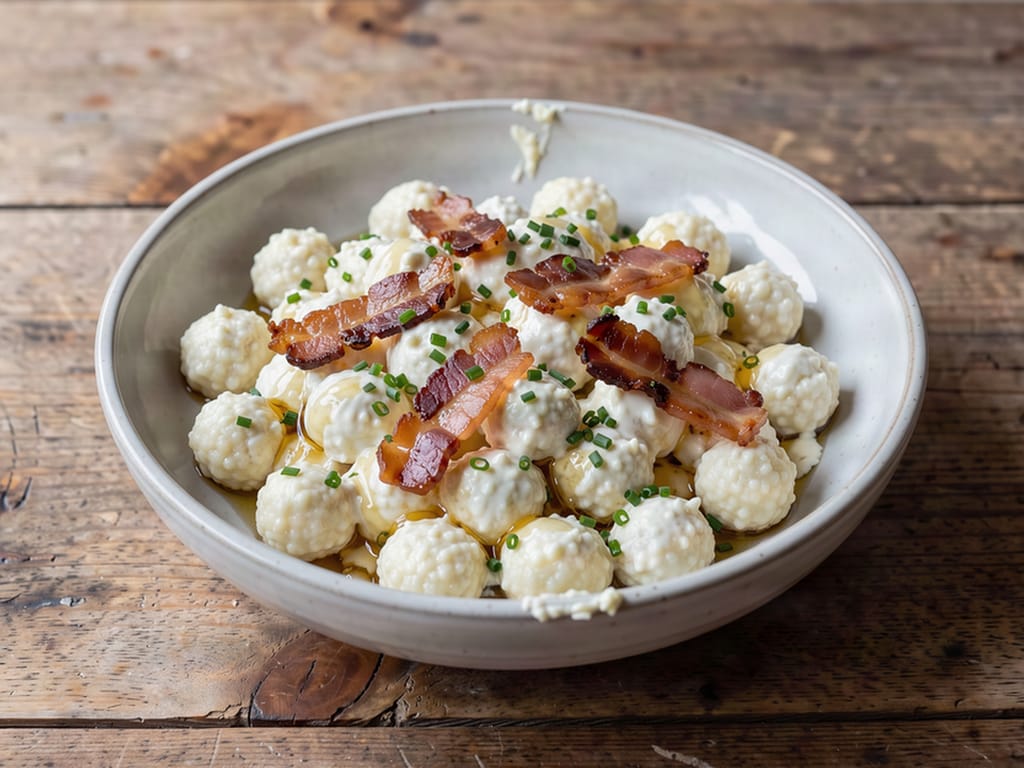
The most famous dish is bryndzové halušky: hot dumplings tossed with bryndza, a soft, salty sheep's cheese, and finished with crisp fried bacon and some of its fat. It is widely described as the national dish of Slovakia and is on the menu of almost every traditional Slovak restaurant, especially the mountain inns called salaš (sheep farms that often serve food).
You will also meet halušky in Czechia, mainly on menus that lean Slovak or Moravian, but the dish belongs to Slovakia.
On the plate, bryndzové halušky are a heavy, filling main course, not a side. A typical restaurant portion is a deep bowl, and it is eaten on its own, sometimes with a glass of buttermilk. The taste is salty, tangy and smoky all at once: the cheese brings the tang, the bacon the smoke, and the soft dumplings soak up both.
Recipe of the week, one tip that saves you time and one deal from the shop. Unsubscribe in one click.
The next issue goes out on Thursday, November 26.
The method is simple in outline, and very different from Italian gnocchi:
Raw potatoes are grated finely, not boiled first. This is the key difference from gnocchi.
Flour and salt go in (some cooks add an egg) to make a soft, sticky dough that you cannot roll by hand. Many Slovak cooks start from roughly two to three parts grated potato to one part flour by weight and adjust from there.
The dough is pushed into boiling salted water in small pieces, either through a perforated halušky board or sieve (haluškár), or scraped off the edge of a wooden board with a knife.
The dumplings cook in a few minutes and float when they are done. They are drained and tossed straight away with bryndza, which melts slightly into a creamy coating.
Bacon goes on top: diced bacon fried until crisp, with a spoonful of the rendered fat poured over. Chopped chives or spring onion are common.
The Slovak version uses smoked bacon (slanina). In the US or UK, a good smoked streaky bacon or slab bacon is the nearest match.
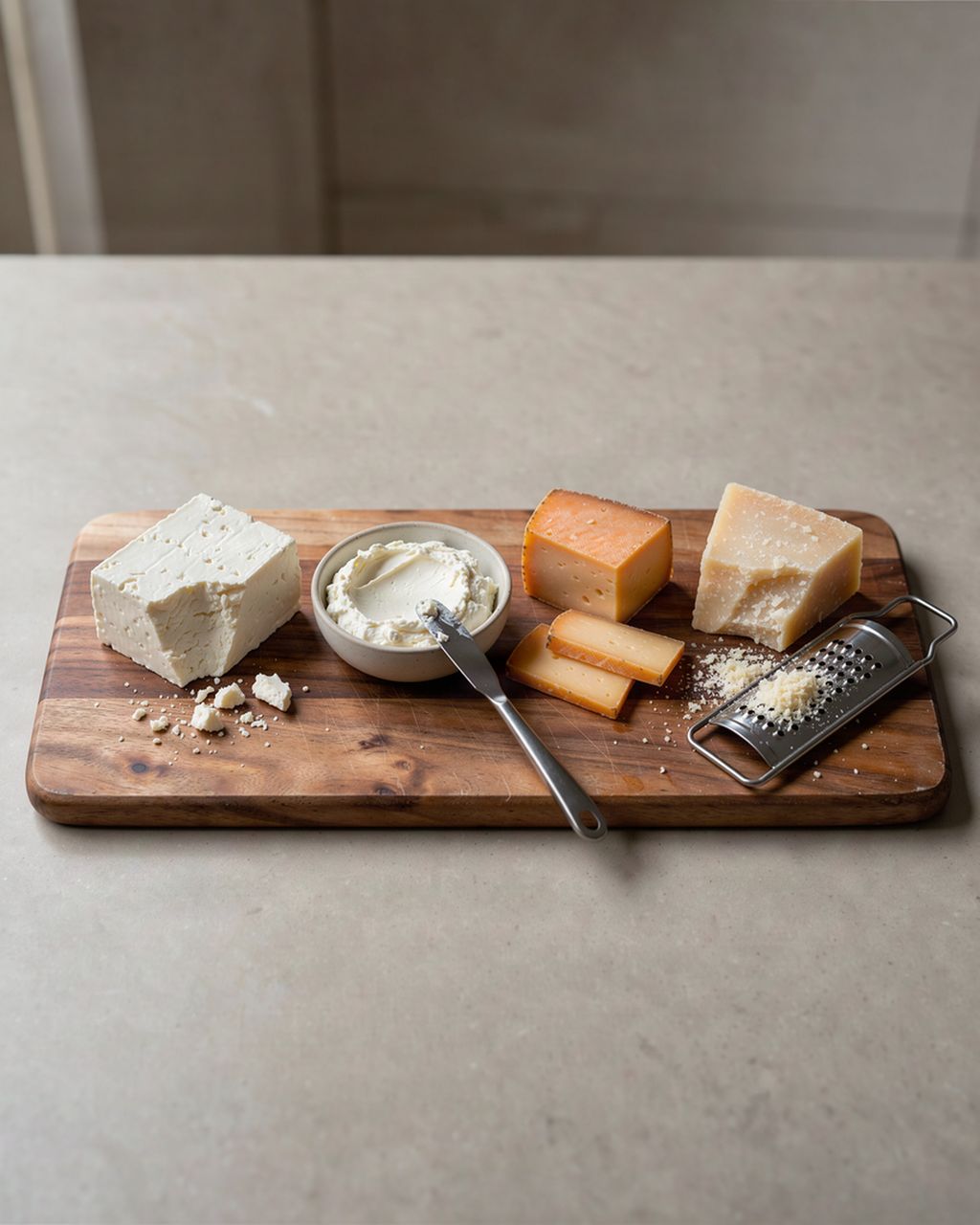
Bryndza is a soft, white, spreadable cheese made from sheep's milk cheese, sometimes blended with cow's milk cheese. It is salty and tangy, with a sharp, slightly sheepy finish, and it has the texture of a thick, slightly grainy spread.
Slovenská bryndza (Slovak bryndza) is protected in the EU as a Protected Geographical Indication (PGI), registered on 16 July 2008. Under that protection it must be made in Slovakia and contain at least 50% sheep's cheese. A 100% sheep's version is also sold, and many cooks reach for it for halušky.
Bryndza was traditionally made from raw sheep's milk, and some farm and specialty bryndza still is. Many supermarket versions use pasteurized milk. The label will tell you which you are buying.
Bryndza is hard to find outside Central Europe, although Polish, Slovak and Eastern European delis sometimes stock it. If you cannot get it, you can get close by mixing two things: a salty, tangy cheese and something creamy.
Feta plus sour cream: the most common swap. Mash about 2 parts feta with 1 part sour cream or cream cheese until spreadable. Sheep's milk feta tastes closest.
Brined sheep's cheese: a Balkan-style sheep's cheese in brine, mashed with a little milk or cream.
Soft fresh goat's cheese: creamier and milder, but with the right tang.
Polish bryndza or bundz, if your local Polish shop has them, are close relatives, but both are often made from raw milk, so check the label for pasteurized milk.
Taste before salting the dumplings, because feta and brined cheeses vary a lot in salt.
In Pennsylvania, Ohio and other parts of the US with large Central European communities, haluski usually means a different dish: egg noodles fried with shredded cabbage, butter and onion, often with bacon or kielbasa added. It is a fixture of church dinners, parish festivals and family tables, especially around Pittsburgh, which has one of the largest Slovak-American communities in the country.
The name came over with Slovak, Polish and Carpatho-Rusyn immigrants in the late 19th and early 20th centuries. Over generations the home versions drifted towards what was easy to buy, and in many families store-bought egg noodles replaced hand-made potato dumplings. Some Slovak-American cooks still make the dumpling version, and food writers often describe the noodle dish as the Polish-American branch of the family.
Both versions are real dishes with real histories. They are just not the same plate.
These four get confused all the time. The quick way to tell them apart:
Halušky: grated raw potato plus flour, a soft dough dropped into water in small pieces. Usually with bryndza and bacon.
Gnocchi: cooked, mashed potato plus flour, rolled and cut by hand. Firmer and more regular in shape.
Spätzle (German): a batter of flour, eggs and milk or water, with no potato, pushed through a press or scraped off a board.
Strapačky: the same Slovak potato dumplings as halušky, but tossed with braised sauerkraut and bacon instead of bryndza. If you like this direction, our guide to homemade sauerkraut is a good starting point.
Store-bought gnocchi can stand in for halušky at a pinch. The texture is denser and smoother, but with bryndza and bacon it still makes a satisfying plate.
Slovak halušky are made of grated raw potato, flour and salt, sometimes with an egg, mixed into a soft dough and dropped into boiling water in small pieces. Bryndzové halušky are then tossed with bryndza sheep cheese and topped with fried bacon.
Halušky is the Slovak dish of small potato dumplings, usually with bryndza and bacon, while American haluski is egg noodles fried with cabbage, butter and onion. The American dish took the name from Slovak and Central European immigrants but changed the recipe.
Bryndzové halušky is Slovak and is widely called Slovakia's national dish. The cabbage-and-noodle haluski known in the US is associated with Polish, Slovak and other Central European immigrant communities in Pennsylvania and Ohio.
The closest substitute for bryndza is feta mashed with a little sour cream or cream cheese until spreadable. Soft fresh goat cheese also works; whichever you choose, check the label for pasteurized milk.
Yes, Slovenská bryndza has been an EU Protected Geographical Indication (PGI) since July 2008. It must be made in Slovakia and contain at least 50% sheep's cheese.
One recipe worth heating the oven for, one tip, and one deal from the shop. Nothing else.