European Baking Sachets in Grams: Baking Powder, Vanilla Sugar, Yeast
Vanilla Pudding Powder: What It Is, How Czechs Use It and Substitutes
Updated Nov 20, 2026
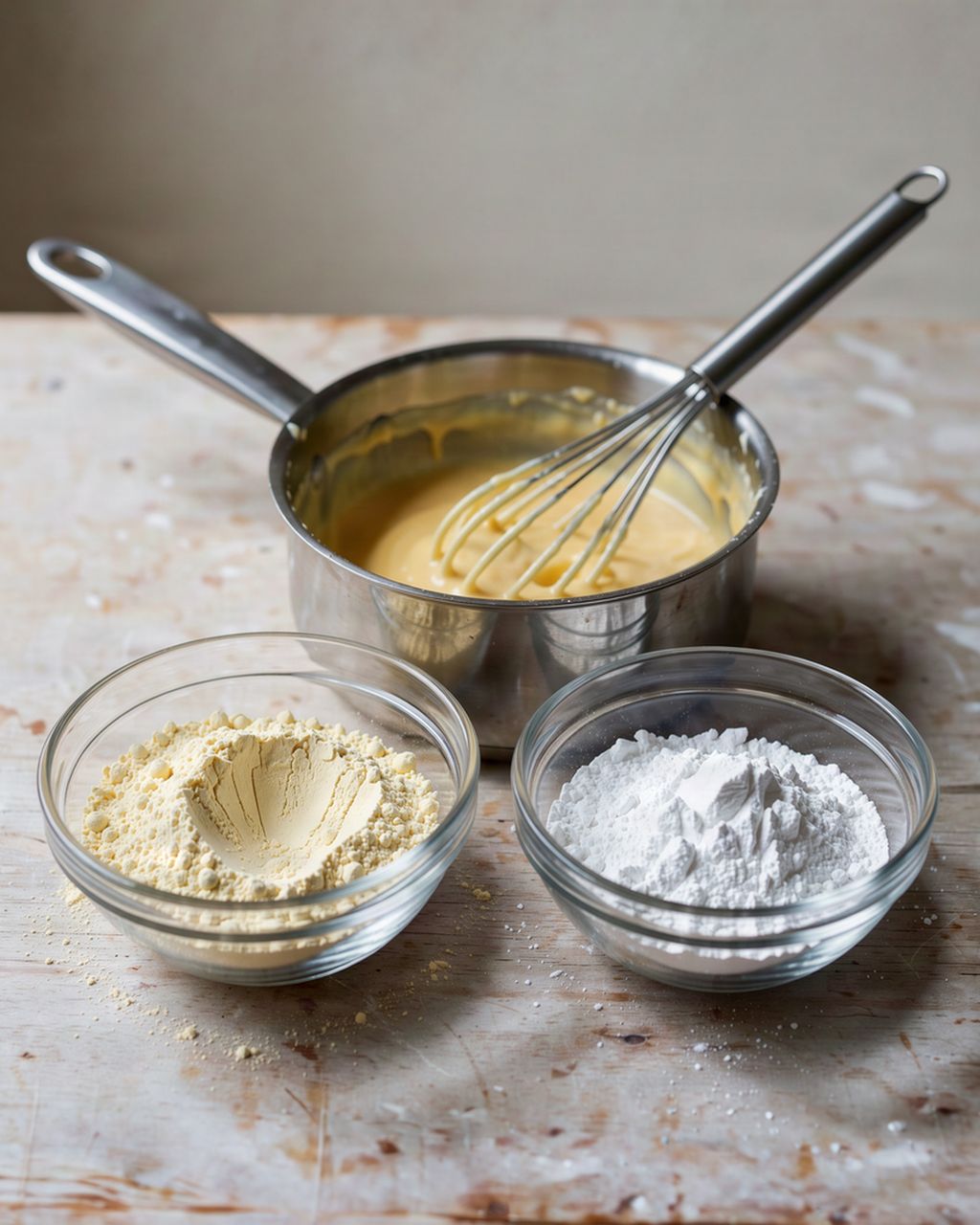
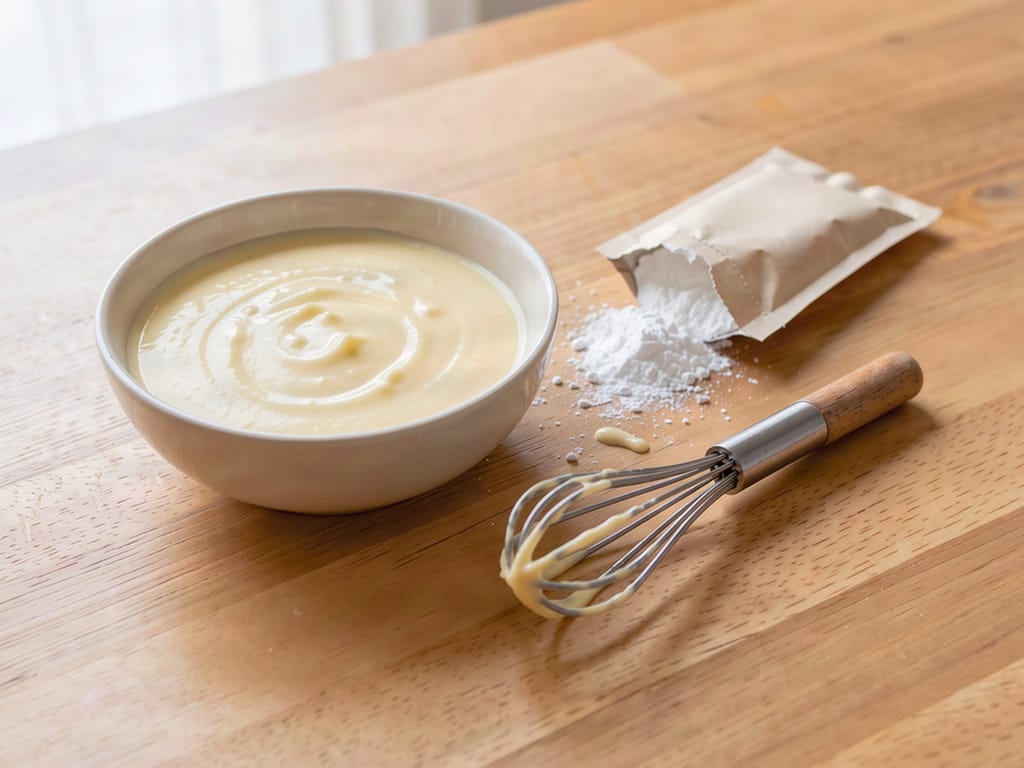
Vanilla pudding powder is the small European sachet, about 37–40 g, that you cook with 500 ml of milk and your own sugar to make a thick vanilla pudding; it is mostly cornstarch with flavoring and color. It is not the same as US instant pudding mix, and closer to UK custard powder than to anything else. Czech bakers use it for buttercreams, fillings and sheet cakes, and you can replace it with cornstarch, sugar and vanilla.
In Czech and German supermarkets, pudding powder (pudinkový prášek, Puddingpulver) comes in small paper sachets, sized to set exactly 500 ml of milk. The sachet weighs about 37–40 g, depending on country and brand: the Czech Dr. Oetker vanilla pudding is 38 g, the German one 37 g.
What is inside is simpler than the name suggests. The Czech packet lists cornstarch, flavoring and colors (carotenes and riboflavin). The German Original Pudding Vanille-Geschmack lists maize starch, salt, flavoring and carotene. There is no sugar, no egg and no milk powder in the classic version. You add the sugar yourself, which is why Czech recipes always give a separate sugar amount next to 1 vanilkový pudink (one vanilla pudding).
The Czech packet carries a may-contain line for gluten-containing cereals and milk, so if you bake for someone with an allergy, check the package. Our vanilla pudding powder page has more on the ingredient itself.
Recipe of the week, one tip that saves you time and one deal from the shop. Unsubscribe in one click.
The next issue goes out on Thursday, November 26.
The method is the same on every packet, and it is worth knowing because Czech recipes assume it:
Stir the powder into about a third of the cold milk until smooth.
Bring the rest of the milk to a boil with the sugar. The Czech packet says 2–3 tablespoons (30–40 g); the German one about 35–40 g.
Pour in the starch mixture while stirring, let it bubble for about a minute, and take it off the heat.
The pudding thickens a lot as it cools. In US measures, 500 ml of milk is about 2 US cups (236.6 ml each) plus 2 tablespoons, and 30–40 g of granulated sugar is about 2½–3 US tablespoons. For other amounts, use our cups and spoons to grams calculator.
They share a name and a flavor, and little else.
European pudding powder: cornstarch plus flavor and color, unsweetened, about 37–40 g, cooked with 500 ml of milk.
US instant pudding (Jell-O 3.4 oz box): sugar is the first ingredient, followed by modified starch and phosphate salts. You whisk it into cold milk and it sets in minutes without heat.
US cook-and-serve pudding (Jell-O 3 oz box): sugar, dextrose and cornstarch, cooked with 2 cups of milk. This is the closer cousin of the European sachet, but it is already sweetened.
For a Czech recipe that cooks the pudding, a US cook-and-serve box can stand in for one sachet. Leave out the sugar the recipe adds to the pudding and taste before you sweeten. Instant mix is built to set cold, so we would not use it for a cooked Czech pudding cream.
Very nearly. Bird's Original Custard Powder lists maize starch, salt, color (annatto) and flavoring, with no egg, which is almost exactly what the European sachet contains. The main difference is the ratio. Bird's suggests about 35 g of powder for 568 ml of milk (a UK pint), which gives a pouring custard. Like the Czech sachet, Bird's carries a may-contain warning for milk, so check the label if you are cooking for someone with an allergy, including when you make it dairy-free with plant milk.
Czech recipes want a thicker, spoonable pudding, so weigh about 40 g of custard powder for 500 ml of milk. Use the original powder in the tub, not the instant custard sachets: those contain sugar, whey and fat and are made with hot water.
Cooked pudding is one of the workhorses of Czech home baking. You will meet it in:
Pudding buttercream (pudinkový krém). Cooked, cooled pudding beaten into soft butter, used to fill and cover layer cakes and sliced cakes. It curdles if the two are at different temperatures; our guide to pudding buttercream explains the fix.
Lighter pudding creams firmed up with whipped cream, quark or mascarpone instead of butter. See butter-free pudding cream for cakes.
Fillings for koláče (round yeast buns with a filling) and doughnuts, often marbled with jam or quark. Our doughnut fillings guide gives the ratios.
Sheet cakes with a layer of pudding between the base and a fruit or crumble top.
Dessert on its own, served warm or cold, sometimes with a spoon of jam.
For fillings, Czech bakers often cook the pudding with a little less milk than the packet says, so it sets firmer. Cover the surface with plastic wrap while it cools so it does not form a skin, and keep a finished cream cake covered, in the fridge.
Because the sachet is mostly cornstarch, a homemade version is easy. For one sachet, for 500 ml of milk:
About 40 g of cornstarch (UK: cornflour), which is about 5 level US tablespoons. USDA puts cornstarch at about 128 g per US cup, so about 8 g per tablespoon.
Sugar as the recipe says, usually 30–40 g.
1 teaspoon of vanilla extract, stirred in after cooking, or the seeds of a piece of vanilla pod cooked in the milk.
Color, if you want it: a tiny pinch of turmeric or a drop of yellow food coloring. The packet version is yellow from carotene, and Czech cooks expect that color.
A pinch of salt, as in the German packet.
Mix the cornstarch with some of the cold milk, then cook it exactly as above. Weigh the cornstarch if you can: a heaped spoon holds far more than a level one, and too much makes the pudding rubbery. Our guide to homemade pudding from scratch covers a richer version with egg yolks.
The classic Dr. Oetker vanilla pudding powder sold in Czech shops is cornstarch, flavoring and color (carotenes and riboflavin), with no sugar. The German version adds a little salt. Check the package for the exact list and the may-contain line.
One sachet of European pudding powder sets 500 ml of milk, about 2 US cups plus 2 tablespoons. The Czech packet adds 30–40 g of sugar, and the German one about 35–40 g.
No, European pudding powder is unsweetened and has to be cooked, while US instant pudding mix is mostly sugar and sets in cold milk. They are not interchangeable in Czech recipes that cook the pudding.
Yes, Bird's custard powder is the closest UK swap, because it is also maize starch, salt, color and flavoring with no egg. For a pudding-thick result, weigh about 40 g of it for 500 ml of milk, a little more than Bird's own pouring-custard ratio. Like the Czech sachet, Bird's carries a may-contain warning for milk, so check the label if you are cooking for someone with an allergy, including when you make it dairy-free with plant milk.
Use about 40 g of cornstarch (about 5 level US tablespoons), sugar as the recipe says, and 1 teaspoon of vanilla extract stirred in after cooking. A tiny pinch of turmeric or a drop of yellow food coloring gives the familiar color.
One recipe worth heating the oven for, one tip, and one deal from the shop. Nothing else.