Grilling tip: roasted pepper spread
Tomato Allergy: Symptoms, Diagnosis and What to Use Instead
Updated Aug 30, 2026
A tomato allergy is an immune reaction to proteins found in tomatoes — most often showing up as itching in the mouth after eating a fresh tomato, a rash, or digestive upset. It's not a single condition: depending on which protein your body reacts to, you might happily eat tomato sauce yet be unable to tolerate a single bite of fresh tomato. Or the other way round. What matters is whether your particular allergen survives cooking — some break down with heat, others don't.
A tomato allergy is a reaction from the immune system, which mistakenly identifies tomato proteins as a threat and produces IgE antibodies against them. Intolerance doesn't involve the immune system at all — it's a problem with digesting or processing a particular substance. This isn't just an academic distinction: it changes how fast the reaction hits, what it looks like, and how dangerous it can be.
Allergy — an immune reaction, usually within minutes to two hours. Itching in the mouth, hives, swelling, breathing difficulties. Even a small amount can trigger it.
Intolerance — no immune involvement, onset tends to be slower. Bloating, cramps, diarrhoea. Dose matters: small amounts often cause no problem.
Histamine reaction — tomatoes are often listed among histamine-rich foods, though measured levels vary widely between samples. So trouble after eating tomatoes doesn't necessarily mean an allergy at all.
This is exactly why self-diagnosis is a bad idea. Three completely different mechanisms can look the same on your plate, but each one needs a different approach.
Seasonal baking plans, tested recipes and kitchen tricks that save you time. Unsubscribe in one click.
The international WHO/IUIS nomenclature lists seven tomato allergens — Sola l 1 through Sola l 7 — with further proteins described in the scientific literature. Each behaves differently, which is exactly why two people with the same diagnosis can end up with completely different restrictions.
Sola l 1 (profilin) — the protein behind broad cross-reactivity with pollens and other plant foods. Destroyed by heat.
Sola l 2 (beta-fructofuranosidase) — a tomato enzyme.
Sola l 3 (nsLTP, a lipid transfer protein) — survives both cooking and digestion. According to review studies, LTP is the allergen most often linked to more serious, systemic reactions.
Sola l 4 (PR-10, related to birch's Bet v 1) — typically responsible for mouth itching. Breaks down with heat. Interesting fact: this PR-10 protein was first described in the nightshade family in tomato, and has also been found in some pepper varieties.
Sola l 5 (cyclophilin) — a less common allergen.
Sola l 6 and Sola l 7 (seed LTPs) — like Sola l 3, these resist heat.
Labs today can pinpoint exactly which of these proteins you react to — so-called molecular or component-resolved diagnostics. This isn't a detail only for enthusiasts — it's the information that decides whether you need to avoid everything, or just fresh tomatoes.
Anyone who reacts to heat-sensitive allergens (profilin, PR-10) can usually tolerate tomato sauce just fine; fresh tomato is the problem because those proteins remain intact. Both profilin (Sola l 1) and the PR-10 protein (Sola l 4) are heat-labile — cooking breaks down their structure so the immune system no longer recognises them. That's why people who get mouth-itching from fresh tomato can often eat sauce, soup or purée without any issue.
LTP (Sola l 3, Sola l 6 and Sola l 7) is the opposite. It survives cooking, sterilisation and digestion — so for someone sensitive to LTP, ketchup, tomato purée and sun-dried tomatoes are just as risky as the fresh fruit. Concentrated products can actually be worse, since they pack more allergen into every bite.
Two practical takeaways follow from this:
Don't experiment on your own.Testing whether "cooked is fine" by trial and error means risking a systemic reaction if you're sensitive to LTP. That kind of test belongs in a doctor's office.
Peeling won't solve it. Studies comparing whole tomatoes with peeled ones found the same IgE-binding proteins in both — allergens aren't confined to the skin, so peeling or removing the seeds won't reliably prevent a reaction.
The most common symptom of tomato allergy is itching or burning in the lips, tongue and palate shortly after eating a fresh tomato — known as oral allergy syndrome. But the reaction can also show up on the skin, in the airways or in the digestive system, usually within minutes to two hours.
Mouth and throat — itching, tingling, burning, mild swelling of the lips or tongue.
Skin — hives, redness, eczema, swelling. In sensitive people, this can appear from merely handling tomatoes or their juice.
Airways — runny nose, sneezing, coughing, wheezing, breathlessness.
Digestion — nausea, stomach cramps, vomiting, diarrhoea.
Systemic reaction — affects several body systems at once; in extreme cases, anaphylaxis.
Watch out for one trap: simply feeling "off" after eating tomatoes doesn't tell you what's actually going on. Heartburn after tomatoes, for instance, is caused by their acidity, not your immune system. Keep a note of what you ate, how much, how it was prepared and how long it took for symptoms to appear — that kind of record is far more useful to a doctor than anything you'll find online.
Tomato cross-reacts primarily with grass and birch pollen, latex, and a range of plant foods — all because of proteins that share a very similar shape across species. Allergen databases and review studies describe tomato cross-reactivity with:
pollens — grasses, birch, Japanese cedar
fruit — apple, peach and other stone/pome fruits, cherry, banana, pineapple, melon, kiwi
vegetables and spices — pepper, celery, mustard
nuts and latex — natural rubber latex (the latex–fruit syndrome)
The numbers put this in perspective: in one study, 39% of children allergic to grass pollen were also sensitised to tomato. So having seasonal hay fever alone doesn't mean you need to cut out tomatoes — it just explains why a fresh tomato might make your mouth itch more in May than in January.
We cover how cross-reactive allergies work, and why certain foods make your mouth itch, in detail in our article Cross-reactive allergies: why apples make your mouth itch.
You don't automatically need to cut out potatoes, peppers or aubergine if you have a tomato allergy — being botanically related doesn't predict a clinical allergy. There's no such thing as a blanket "nightshade allergy", and each of these plants has its own protein profile: the PR-10 allergen is best documented in tomato but also turns up in some pepper varieties; LTP appears inconsistently across the family (you'll find it in aubergine, for instance, but not everywhere).
The old advice of "cut out the whole family just to be safe" usually just narrows your diet for no good reason. What to avoid and what's fine should be decided by a doctor based on testing and your actual medical history — not by a rule based on a plant family tree.
An allergist reaches a diagnosis by combining your medical history with testing — a positive test result alone isn't enough. The process usually looks like this:
Medical history. What you ate, how it was prepared, how much, how long before symptoms appeared, how long they lasted, whether it's happened before, and whether allergies run in your family.
Skin prick test.A drop of extract on the forearm, a light prick, and a reading after about 15 minutes. For tomato, fresh fruit is often used alongside the test, since commercial extracts tend to be weak.
Specific IgE blood test. Measures antibodies against tomato; the molecular version can distinguish whether you're reacting to profilin, PR-10, or LTP.
Elimination and challenge. Cutting out tomatoes, followed by a supervised food challenge if needed — this is the gold standard and must only be done under medical supervision at a facility equipped to handle a reaction.
One thing worth knowing upfront: a positive test on its own doesn't mean you have an allergy.It means sensitisation — your body has produced antibodies. It only becomes an allergy once real symptoms are also present. That's why results are always read alongside what actually happened to you.
This article can help you understand what's going on and prepare for your appointment, but it doesn't replace a proper examination. Your doctor is the one who determines the diagnosis and next steps for you specifically.
Tomatoes most often hide in ready-made sauces, spice blends, cured meats and convenience foods — exactly where you wouldn't expect them. Look for it on labels under names like: tomato, tomato purée, tomato paste, sun-dried tomatoes, tomato, tomate, pomodoro, and on imported products, occasionally even "vegetable base".
Places you'll find it surprisingly often:
ketchup, salsa, barbecue and Worcestershire sauce, ajvar
ready-made pasta sauces, sugo, ratatouille, lecsó
pizza and pizza bases, stuffed pastries
instant soups, stock cubes, seasoning mixes and marinades
cured and cooked meats, meatloaf, canned meat products, stuffed peppers
baked beans, chilli con carne, many curries and ready-made stocks
Two practical notes. Tomato isn't one of the EU's 14 legally recognised allergens, so it doesn't have to be highlighted in bold on the label — it must appear in the ingredients list, but you need to spot it yourself rather than rely on formatting. And when eating out, ask specifically ("does this have tomato purée or ketchup in it?") rather than generally — a general allergy question often lets tomato slip through unnoticed.
In a dish, tomato does three jobs at once — acidity, umami and colour — so when you leave it out, you need to cover all three. That's the whole trick: one ingredient usually can't do it alone, but two or three together can.
Acidity — lemon juice, vinegar (cider, wine), sour cream, a splash of white wine, sumac, sauerkraut or its brine.
Umami — mushrooms (dried ones especially), miso, soy sauce, roasted garlic, caramelised onion, Parmesan, capers, olives.
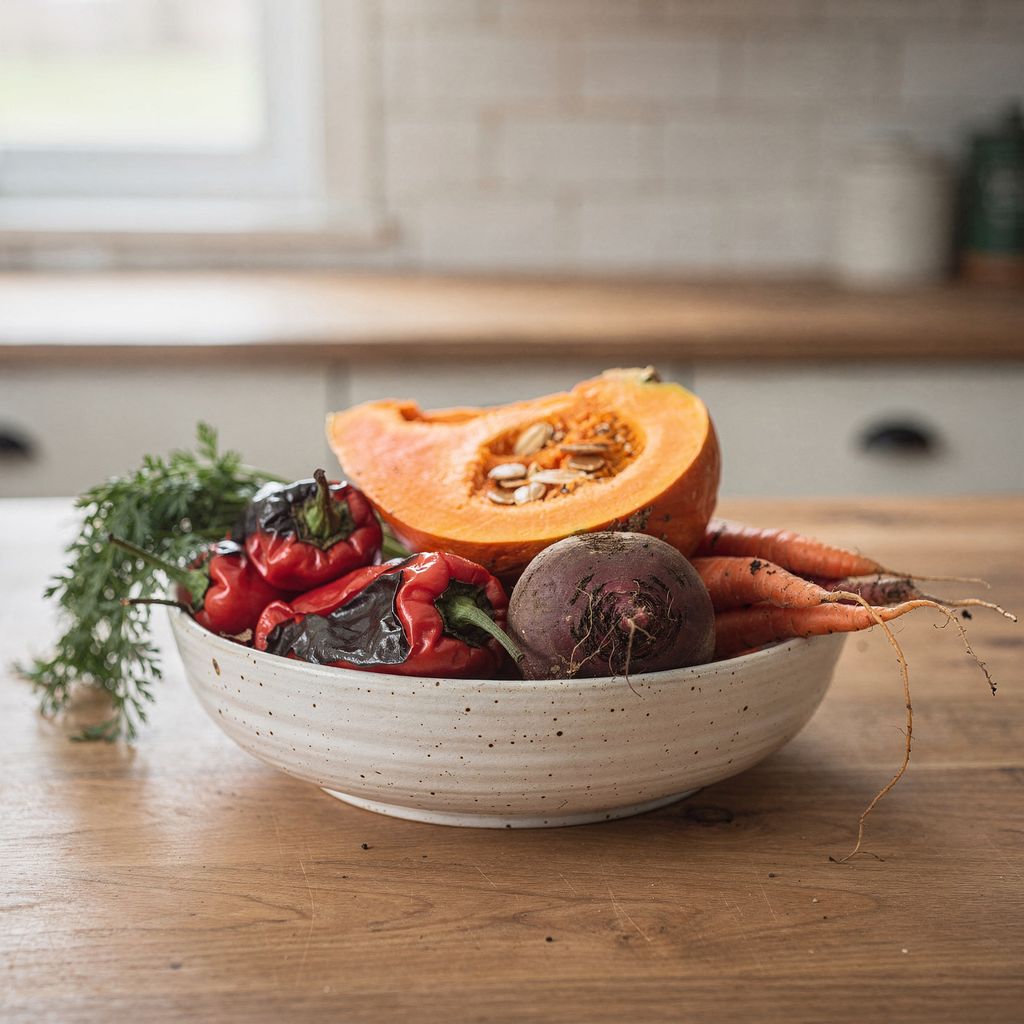
Colour and sweetness — roasted red pepper, pumpkin, beetroot, carrot, smoked paprika.
Now let's go through it ingredient by ingredient.
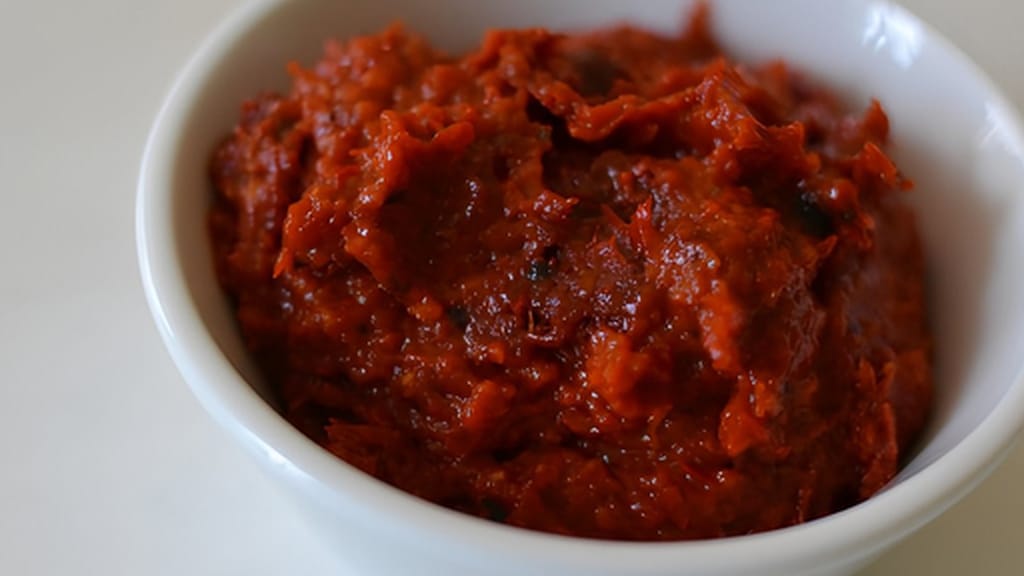
Roasted red pepper is the closest substitute for tomato sauce — it has the sweetness, body and colour. What it's missing compared to tomato is acidity and umami: add acidity with a spoonful of wine vinegar or some lemon, and umami with roasted garlic or a teaspoon of miso paste. Roast the peppers until the skin turns black; you'll find the full method in the recipe below.
Keep the garlic-and-oil base in the fridge for a maximum of 3 days; for longer storage, freeze it — a big batch in the freezer is far more useful than a big batch in the fridge.
Grilling tip: roasted pepper spread
Roasted pepper mix — a tomato-free sauce base
Pumpkin can stand in for tomato anywhere you want a creamy soup — it gives body, colour and a gentle sweetness, which you then balance with lemon or ginger. Hokkaido pumpkin doesn't even need peeling. Roasting instead of boiling gets you noticeably more flavour: 200°C, on a tray, until the edges start to caramelise.
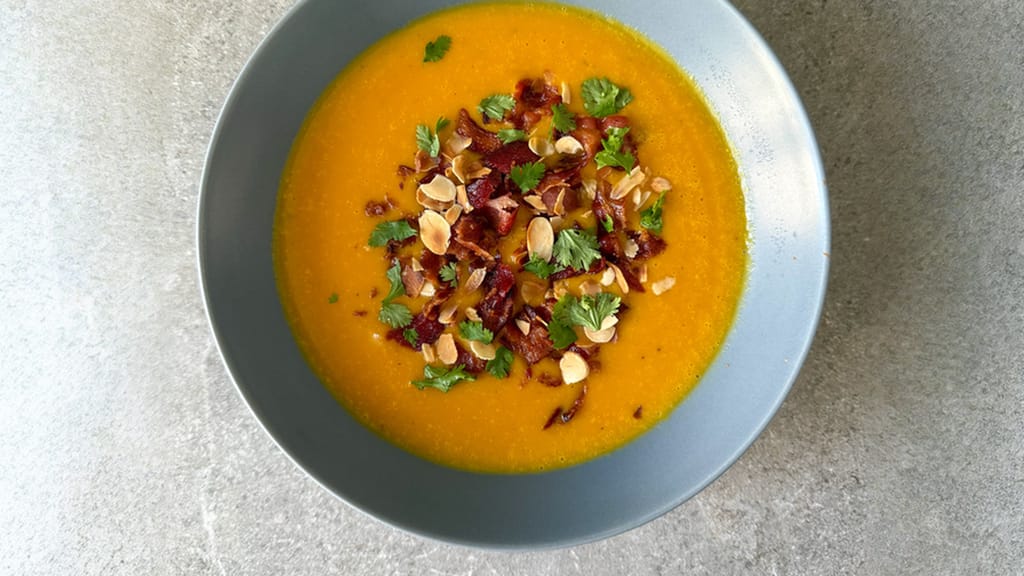
Pumpkin soup with crispy bacon
Pumpkin soup with crispy bacon — a creamy soup without tomatoes
Tomato-free pasta relies on fat, acidity and herbs — not on some substitute for tomato purée. The simplest technique: warm sliced garlic in olive oil until fragrant (golden, never browned), toss in the cooked pasta, and stir in a ladleful of the salted pasta water. The starch in that water binds the oil and water together into a creamy sauce with no cream needed. From there, finish it your way — lemon zest, pecorino, toasted breadcrumbs, pesto, or blended roasted vegetables.
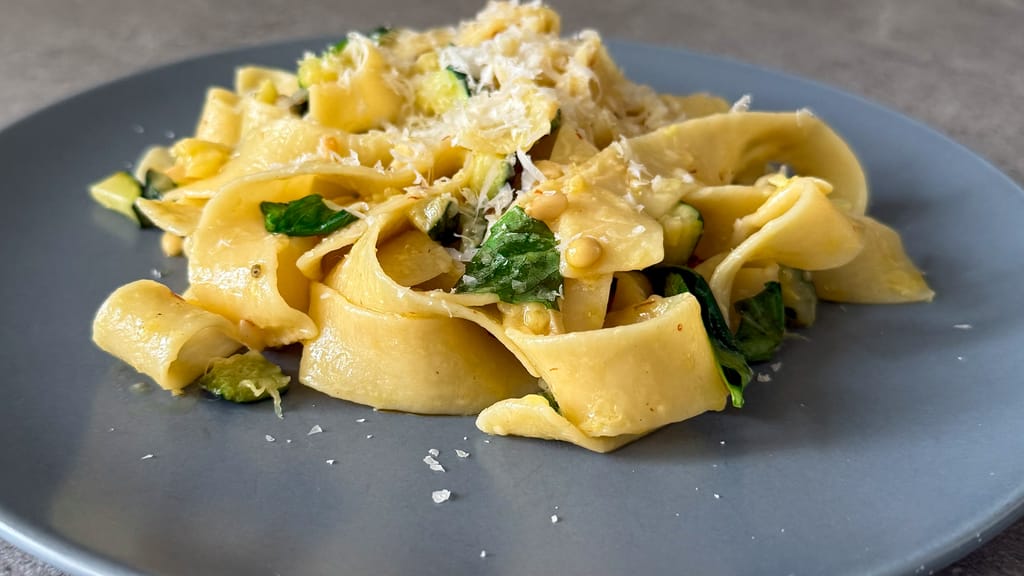
Quick zucchini and lemon pasta
Quick courgette and lemon pasta — a tomato-free dinner in 20 minutes
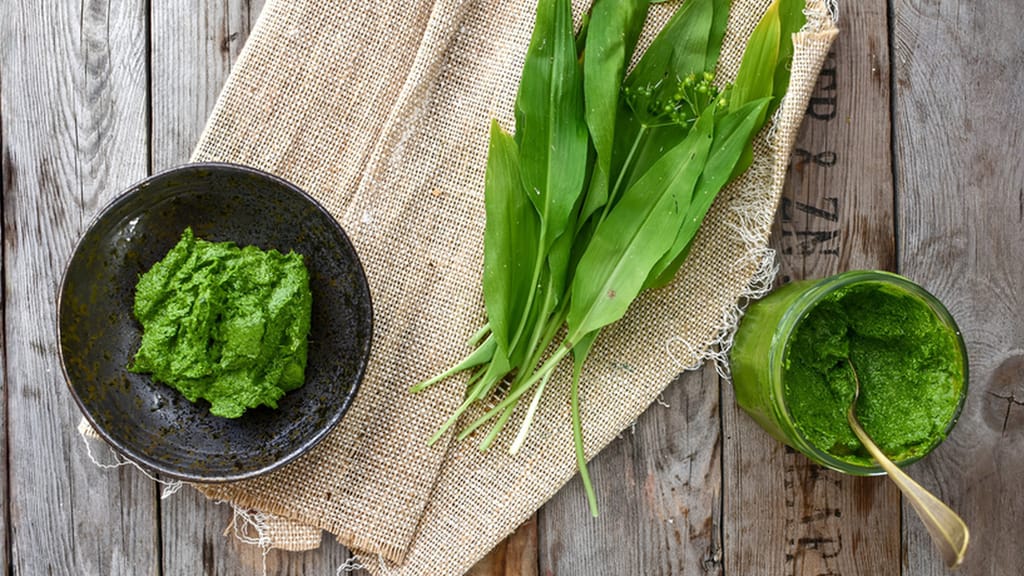
Wild garlic pesto
Wild garlic pesto — a tomato-free pasta sauce
Beetroot brings deep colour and earthy sweetness to a dish, while carrot is milder and more versatile. Both work roasted or grated raw. With beetroot, keep in mind it's noticeably sweeter than tomato — balance it with vinegar or lemon, or the dish will taste flat. Carrot, meanwhile, is the quiet workhorse in stocks and stews where a tin of tomatoes used to do the flavour work.
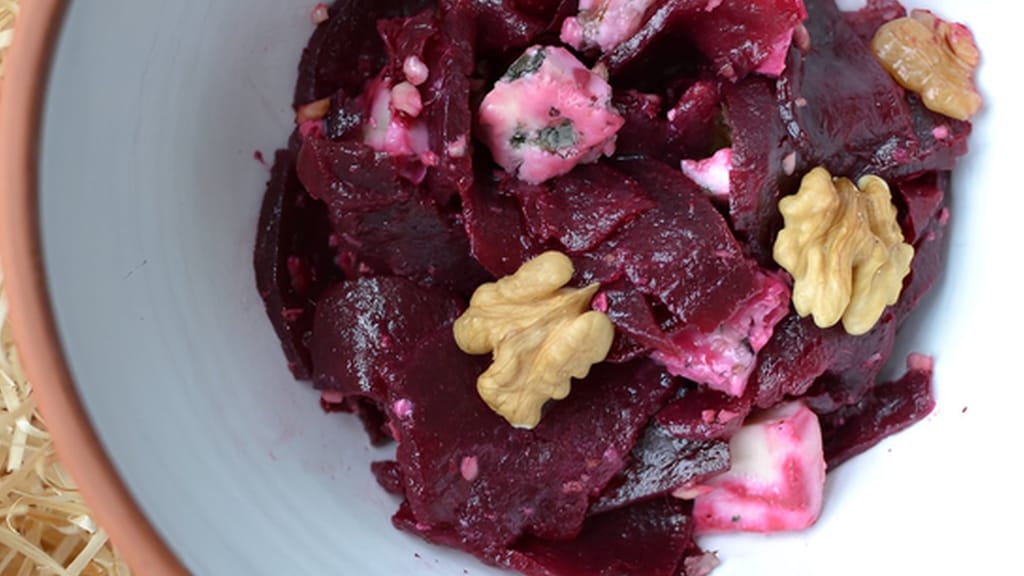
Roasted beetroot and walnut salad
Roasted beetroot and walnut salad — no tomatoes needed
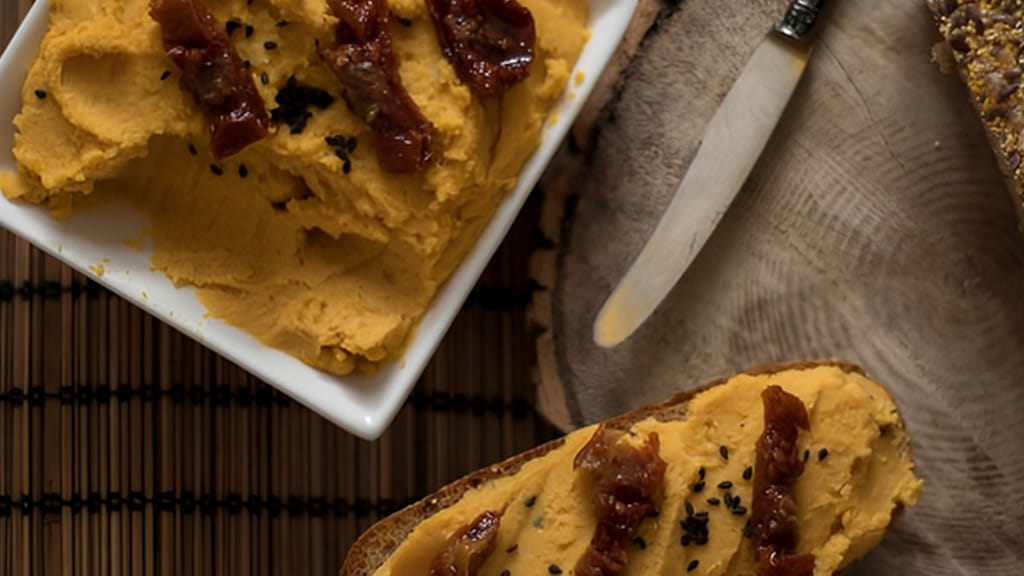
Carrot hummus
Carrot hummus — a colourful, tomato-free spread
Classic Czech dishes made without tomatoes include dill sauce, svíčková, creamy sauce, and goulash built on onion and paprika. Instead of tomato sauce, try dill sauce with slow-roasted beef, homemade svíčková, or rabbit in creamy sauce. Goulash can be built entirely on onion and sweet paprika — for instance, courgette goulash needs no tomato purée at all. Onion cooked down until soft, plus a generous amount of paprika, gives the sauce more body than a spoonful of concentrate ever could.
Yes, tomato allergy commonly appears in adulthood — usually as a knock-on effect of a pollen allergy that develops first. The body becomes sensitised to grass or birch pollen, and only later starts reacting to similar proteins found in tomatoes. That's why people can eat tomatoes without issue for years and then suddenly find their mouth itching after a fresh one.
A "may contain traces of tomato" label is voluntary and doesn't guarantee any specific amount — manufacturers use it to flag possible cross-contamination on the production line, not a measured quantity. You'll rarely even see it on tomato products anyway, since tomato isn't one of the EU's 14 legally recognised allergens and manufacturers aren't required to declare it this way. If you react to LTP and risk a systemic reaction, ask the manufacturer directly; if you only get mouth-itching after fresh tomato, trace amounts usually won't bother you. Set your own safety threshold with an allergist, not based on a label.
Studies suggest allergen levels vary between tomato varieties and ripeness stages, but no variety is safe for every allergy sufferer. The differences tend to lie in how much of each protein is present, not in one variety lacking the allergen altogether. In practice: just because one variety from your garden didn't bother you, that's no guarantee another won't — and it's certainly not a reason to experiment on your own if you've ever had a stronger reaction.
Yes — in sensitive people, simply touching tomatoes or their juice can trigger a local skin reaction: itching, redness or hives on the hands. Inhalation-related tomato allergy has also been documented in people who work with large quantities of them, such as greenhouse growers. Wearing gloves and working in a well-ventilated kitchen helps when chopping.
Before skin prick tests, antihistamines are usually stopped several days in advance — roughly 3–7 days depending on the medication, and the allergist performing the test will tell you exactly how long. That's because antihistamines suppress the skin reaction and can produce a false negative. A blood test for specific IgE, on the other hand, isn't affected by antihistamines, so it can be done at any time. Never stop medication you take long-term for another condition on your own — always discuss it with your doctor first.
With pollen-linked allergies (profilin, PR-10), sensitivity can change over time and tends to be noticeably milder outside pollen season. LTP allergy (Sola l 3, 6 and 7), by contrast, usually persists and doesn't fade with age or cooking. Track how your particular allergy develops with an allergist — testing on your own whether tomatoes are now fine is not a safe way to find out.
One recipe worth heating the oven for, one tip, and one deal from the shop. Nothing else.