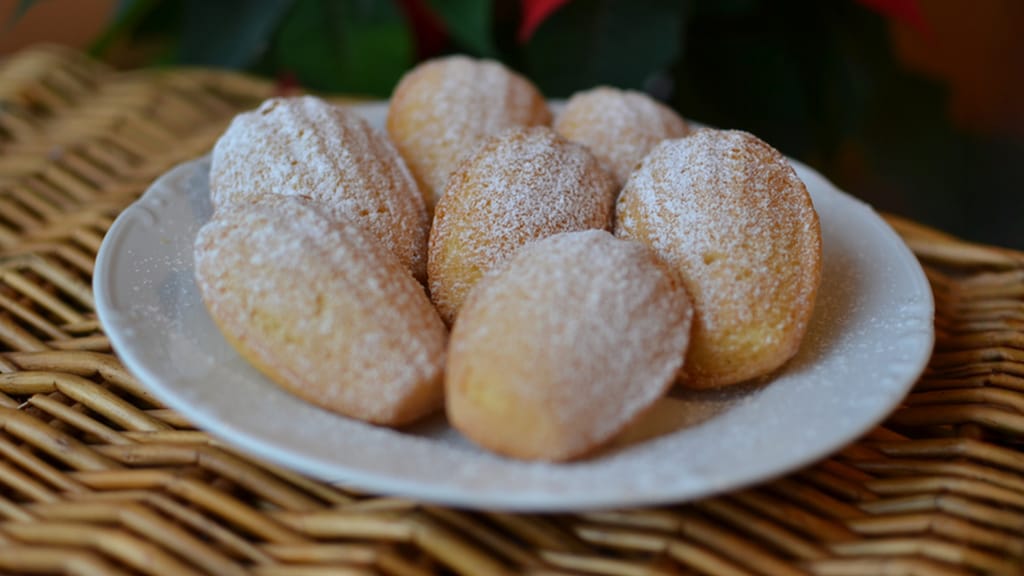
Madeleines - fragrant french sweets
The Priciest Ingredients in French Pastry — and How to Use Them
Updated Jul 19, 2026
The most expensive ingredients in French pastry are vanilla, saffron, almond flour, real butter with at least 82% fat, and good-quality chocolate for truffles. They're not pricey for the sake of prestige — it's the hand labour behind them: hand-pollinating, hand-picking, months of curing. Below, for each one, I'll explain why it costs so much, how much to use, and which desserts it belongs in. No filler theory, straight to the point.
Vanilla is the second most expensive spice in the world, right after saffron. The price isn't about marketing — it's about hand labour. The vanilla orchid flower blooms for just one day, and outside its native Mexico there's nothing to pollinate it naturally, so every single flower has to be pollinated by hand, ideally within 12 hours of opening. According to trade data, Madagascar today supplies 75–80% of the world's production; the pods are harvested unripe and then sweated and cured for several months before developing their signature aroma.
Vanilla was originally cultivated by the Aztecs in Mexico. Today, pods from Tahiti and Indonesia also rank among the finest — and origin makes a big difference in flavour.
In short: Bourbon for baking, Tahitian for cold desserts. Both aroma and best use differ between the two.
Bourbon vanilla (from Madagascar and the Comoros) — a rich, creamy flavour with notes of chocolate and caramel. A go-to for crème brûlée, ice cream, custards and buttercreams, where it's exposed to prolonged heat.
Tahitian vanilla — floral, fruity, with a hint of anise and cherry. Shines in cold desserts, panna cotta and fruit pairings, where you want it to read more as perfume than sweetness.
A fresh, quality pod is pliable and oily to the touch. A dry, brittle pod has already lost most of its aroma.
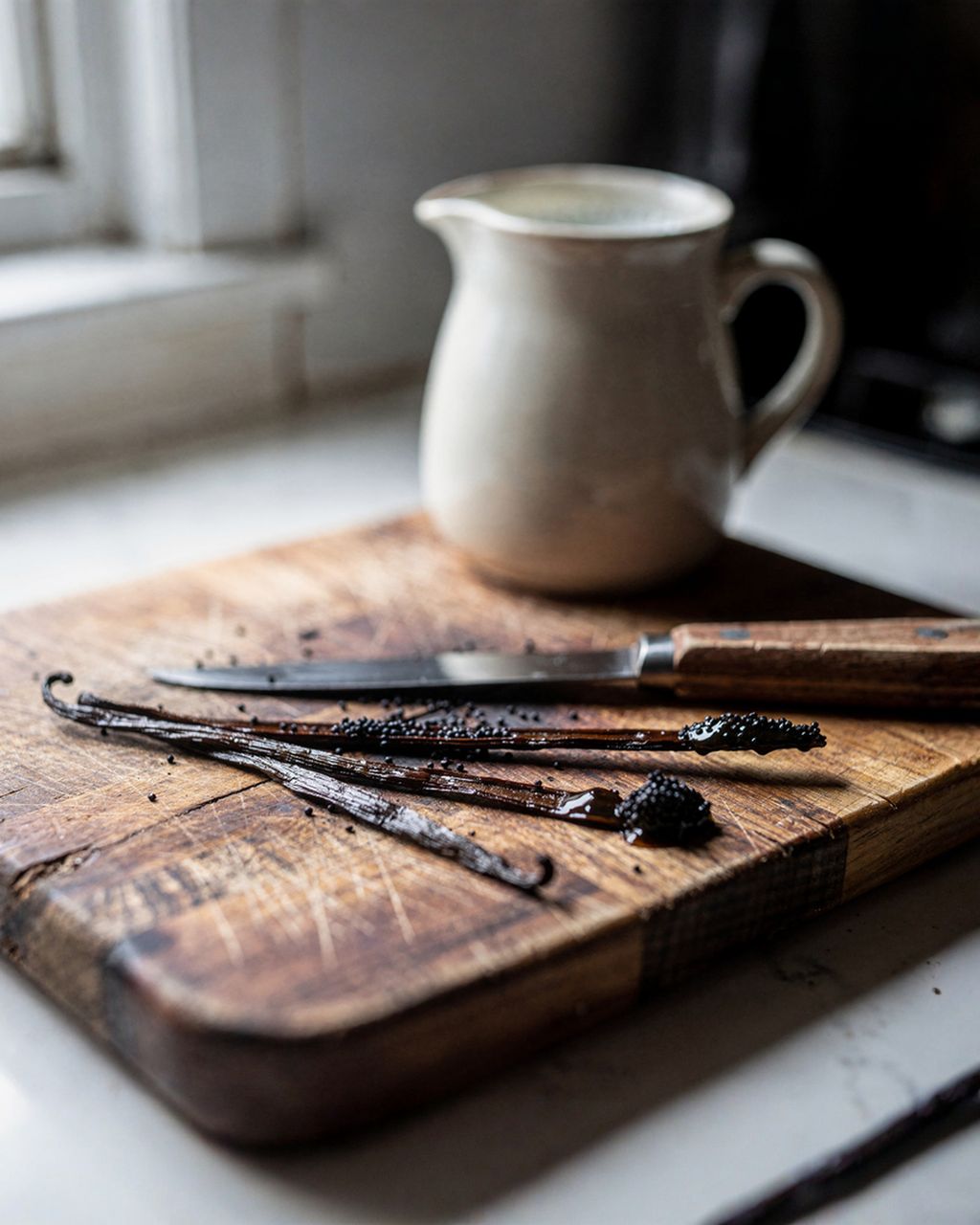
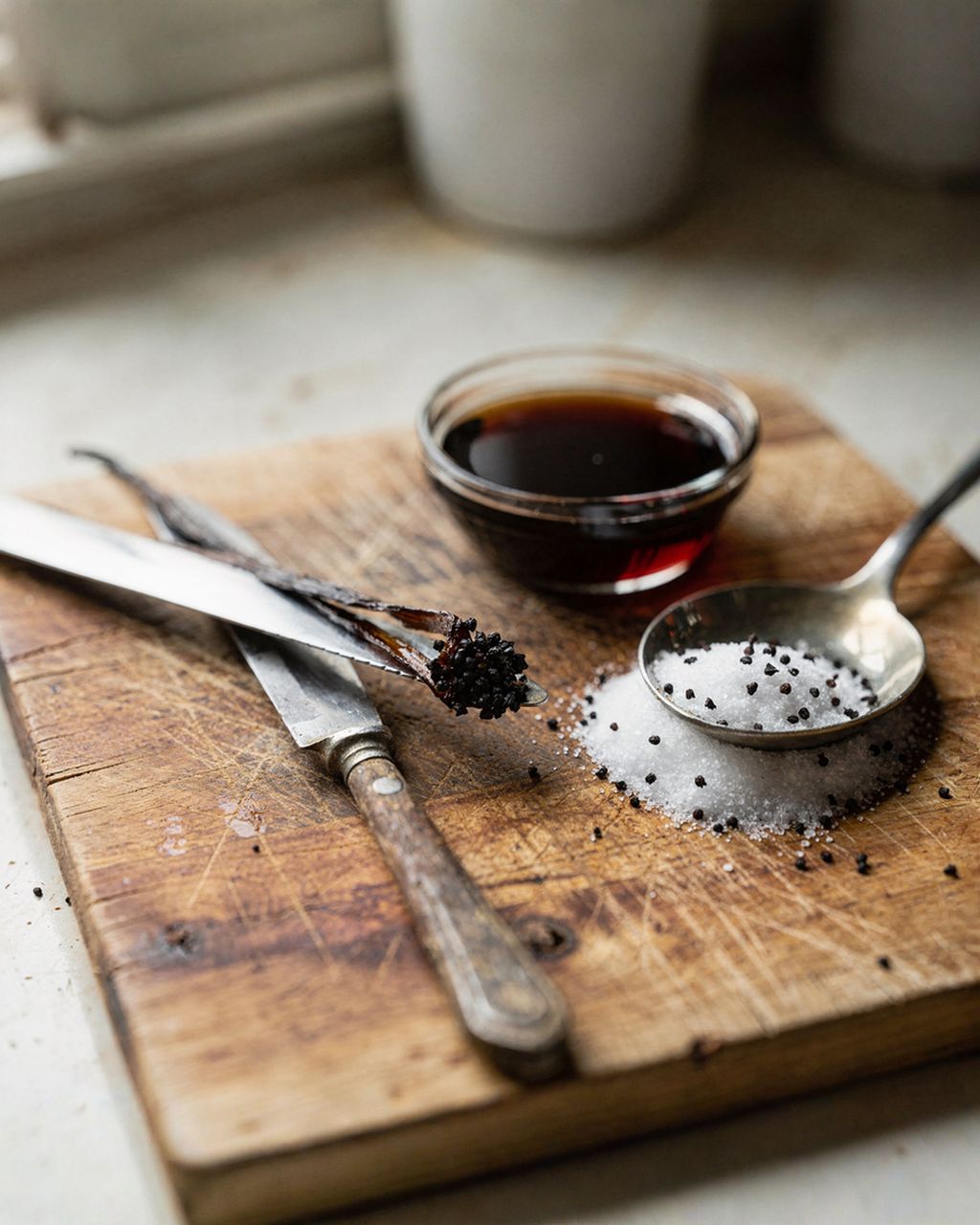
Slit the pod lengthwise with a sharp knife and scrape out the seeds with the back of the blade — that's where the intense aroma lives. Don't toss the spent pod, though: steep it in cream or milk, since both the pulp and the skin still carry fragrance.
Store airtight, somewhere dry and dark — not in the fridge, where the pod will dry out. Real vanilla truly shines in something like vanilla mascarpone with raspberries, where nothing else competes with it.
Classic desserts that lose their whole point without real vanilla are crème brûlée and vanilla éclairs — in both, vanilla carries the entire flavour, so it's not worth skimping on aroma.
Seasonal baking plans, tested recipes and kitchen tricks that save you time. Unsubscribe in one click.
Saffron is the most expensive spice in the world — it takes around 150,000 flowers of the saffron crocus (Crocus sativus) to produce just one kilogram. Each flower yields only three red stigmas, which must be picked by hand, at dawn, while the flower is still closed. Hence the price tag: quality saffron regularly sells for over $5,000 a kilogram.
Its flavour is delicate, honey-hay-like and slightly bitter, adding real depth to food; its colour turns batter or cream a rich golden yellow. In pastry, it works beautifully in madeleines, brioche, custards and panna cotta.
First, lightly crush the threads, then soak them for 15–20 minutes in warm (not boiling) milk or water — only then will they release their full colour and aroma. Add both threads and liquid to your batter or cream.
Use it sparingly: a whole recipe usually needs just a few threads, roughly a pinch. With saffron, less really is more.
Madeleines - fragrant french sweets
Madeleines — fragrant French treats that a pinch of saffron elevates into a little luxury
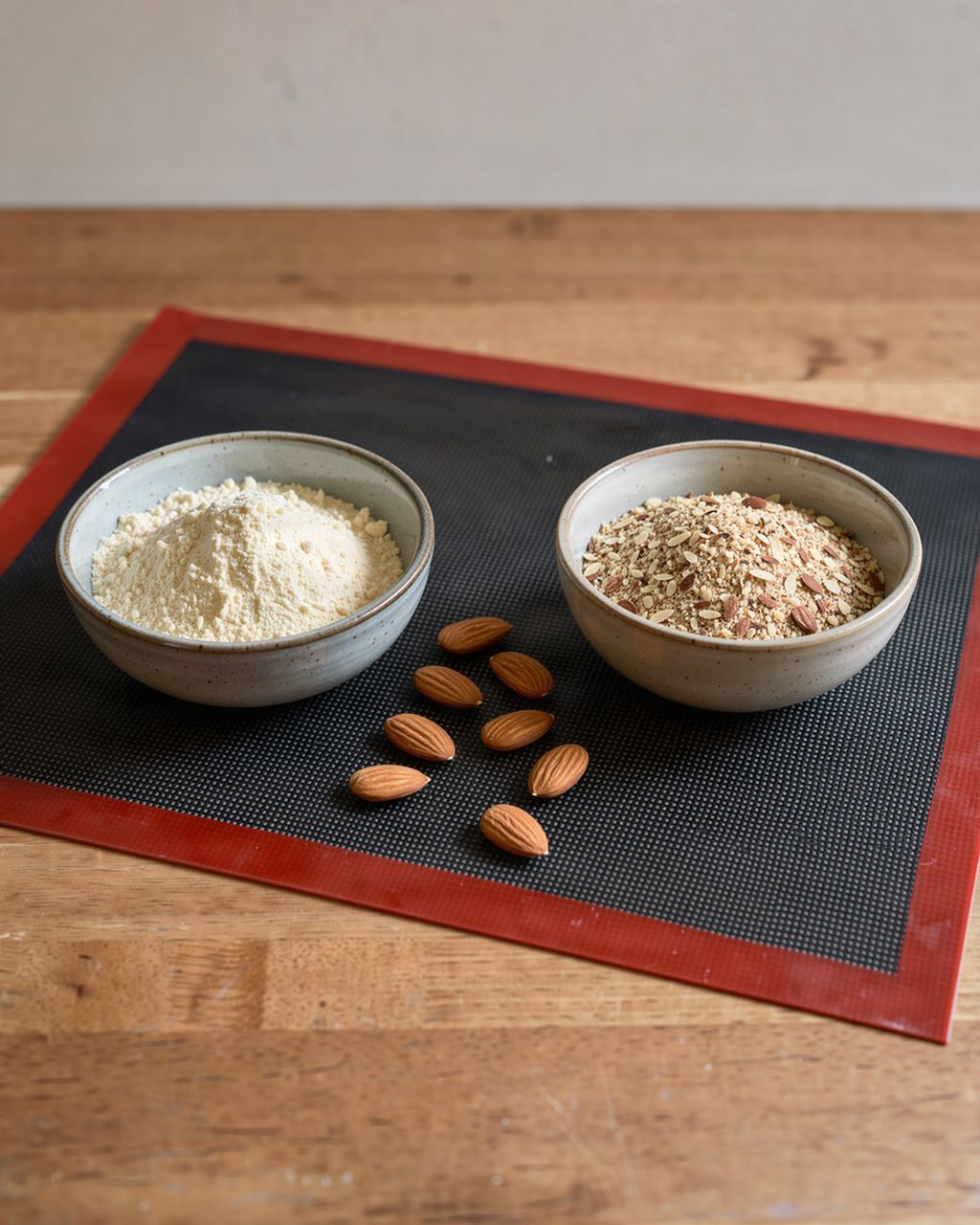
Almond flour is finely ground blanched almonds, and it's the indispensable base of real macarons. Blanching (removing the skins) gives the flour its pale colour and delicate flavour; it takes almost a kilogram of peeled almonds to make one kilogram of flour, which explains the price.
Its high fat content is what gives macarons their signature chewy texture. Almond flour is also reported to have a low glycemic index and no gluten, which makes it a welcome option for gluten-free baking.

Macarons don't forgive much, but a handful of things account for most of your success:
Sift the almond flour with powdered sugar in roughly a 1:1 ratio (the so-called tant pour tant) and discard any lumps — the fineness of the mix is what gives you a smooth shell.
Weigh everything in grams, don't eyeball it. With macarons, ratios are an exact science.
Macaronage: fold the batter only until it flows off the spatula in a continuous ribbon. Overmixed batter spreads too thin, undermixed batter cracks.
Once piped, tap the tray firmly on the counter, let the rounds rest for 20–40 minutes until a skin forms, then bake at around 150°C (300°F).
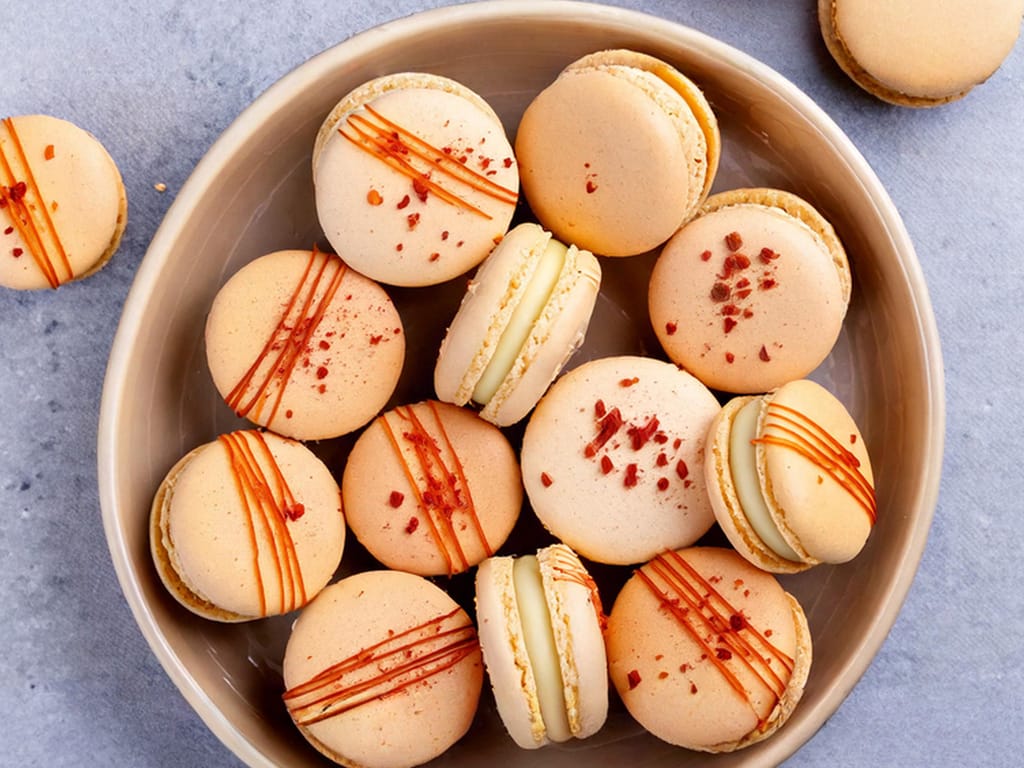
The filling does the rest. Two reliable options are white chocolate and coffee macaron filling or the bolder salted caramel macaron filling.
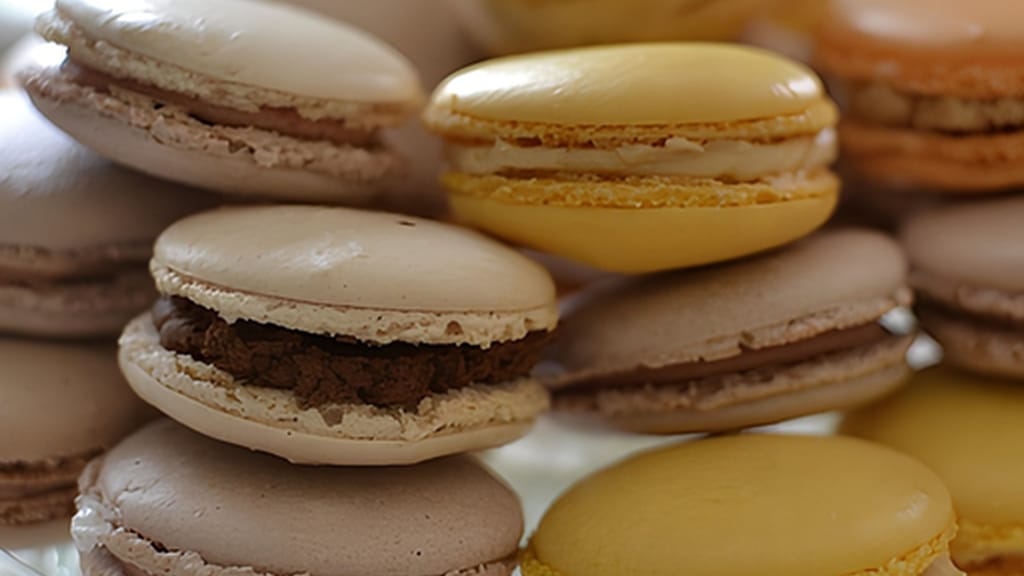
White chocolate and coffee cream - great in macarons and beyond
White chocolate and coffee cream — a light filling for almond-flour macarons
French pastry is baked with butter that has at least 82% fat. Standard butter tends to sit around 80%, with more water — and those few percentage points decide whether a croissant puffs into proper layers or simply melts and leaks butter during baking.
Real French butter differs from ordinary butter in three ways: a higher fat content (min. 82%), less water, and a higher melting point. That's exactly why it laminates better and lets puff pastry hold its layers.
More fat, less water. The French standard is a minimum of 82% fat; less water means puff pastry won't turn soggy during baking, so the layers stay distinct.
Protected designations (AOP).Beurre d'Isigny (min. 82%) and beurre d'Échiré (around 84%) are prized for both flavour and texture.
Higher melting point.Butter from the Charentes-Poitou region melts more slowly and rolls and laminates beautifully — which is why it's known as the king of puff and Danish pastry.
For croissants and Danish pastries, look for "butter for lamination" (beurre de tourage): cold yet pliable, so it rolls out into a sheet without cracking.
Without quality butter, the French classics lose their character. In croissants it creates the crisp crust and tender layers, in tartelettes au citron the creamy filling and delicate crust, in kouign-amann the caramelized layers, and in madeleines that unmistakable buttery aroma. The principle is always the same: more fat, less water, cleaner flavour.
Truffles are chocolate pralines made from ganache — a mixture of good chocolate and cream — typically rolled in cocoa powder. They originated in France in the 19th century and got their name from their resemblance to the fungus. Since then they've become a symbol of luxury sweets the world over.
The result hinges on the quality of the chocolate: the higher the cocoa content and the better the beans, the deeper the flavour. The contrast between the soft centre and the lightly bitter cocoa coating is the whole magic of a truffle.

The base is ganache: stir hot cream into chopped chocolate in roughly a 2:1 ratio (chocolate to cream) for dark chocolate, let it set, roll into balls and coat in cocoa powder. You can take the flavour further with hazelnuts, rum or Grand Marnier. Tempering the chocolate before coating helps the shell set with a proper snap.
Want to try a variation right away? Check out Lotus biscuit truffles or the simpler Baileys white chocolate truffles.
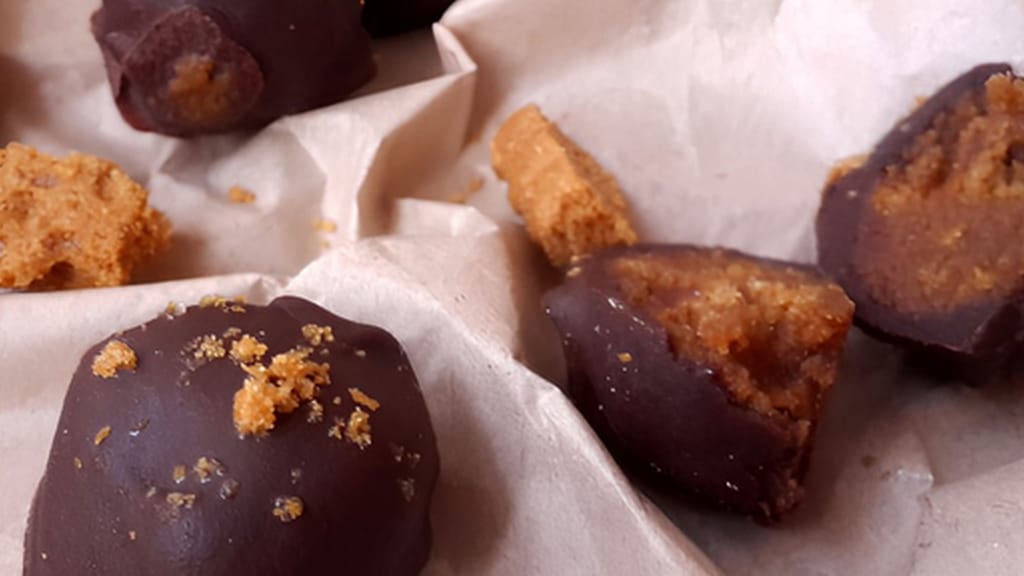
Lotus biscoff truffles
Lotus biscuit truffles — homemade chocolate pralines, step by step
Pricey ingredients are only worth the money if you don't ruin them through poor storage or dosing. A few rules that apply across the board:
Buy small amounts, and buy fresh. Vanilla and saffron both lose aroma over time — a smaller pack you'll actually use up is the smarter buy.
Store in a cool, dark place, but keep vanilla out of the fridge (it dries out) and almond flour in the fridge instead (its fat turns rancid otherwise).
Dose precisely. With saffron and vanilla, it's all about the pinch; with butter and almond flour, it's about the gram.
Let the ingredients shine. There's no point drowning out good vanilla or saffron — give them room in the recipe.
For cold, delicate desserts, a real pod is worth it — the aroma is deeper and more natural than synthetic vanillin. For long-baked doughs, where those subtle notes get lost anyway, feel free to reach for a good extract or vanilla paste; you'll save money and barely notice the difference. The cheapest vanilla sugar is purely synthetic and shares nothing with real vanilla but the name.
Turmeric or safflower can mimic saffron's colour, but not its flavour — saffron has an unmistakable honey-hay aroma that simply can't be replicated. If it's mainly about the dessert's yellow colour, use a pinch of turmeric; if flavour matters, buy a few real threads instead — they last a long time and you only need a little per batch.
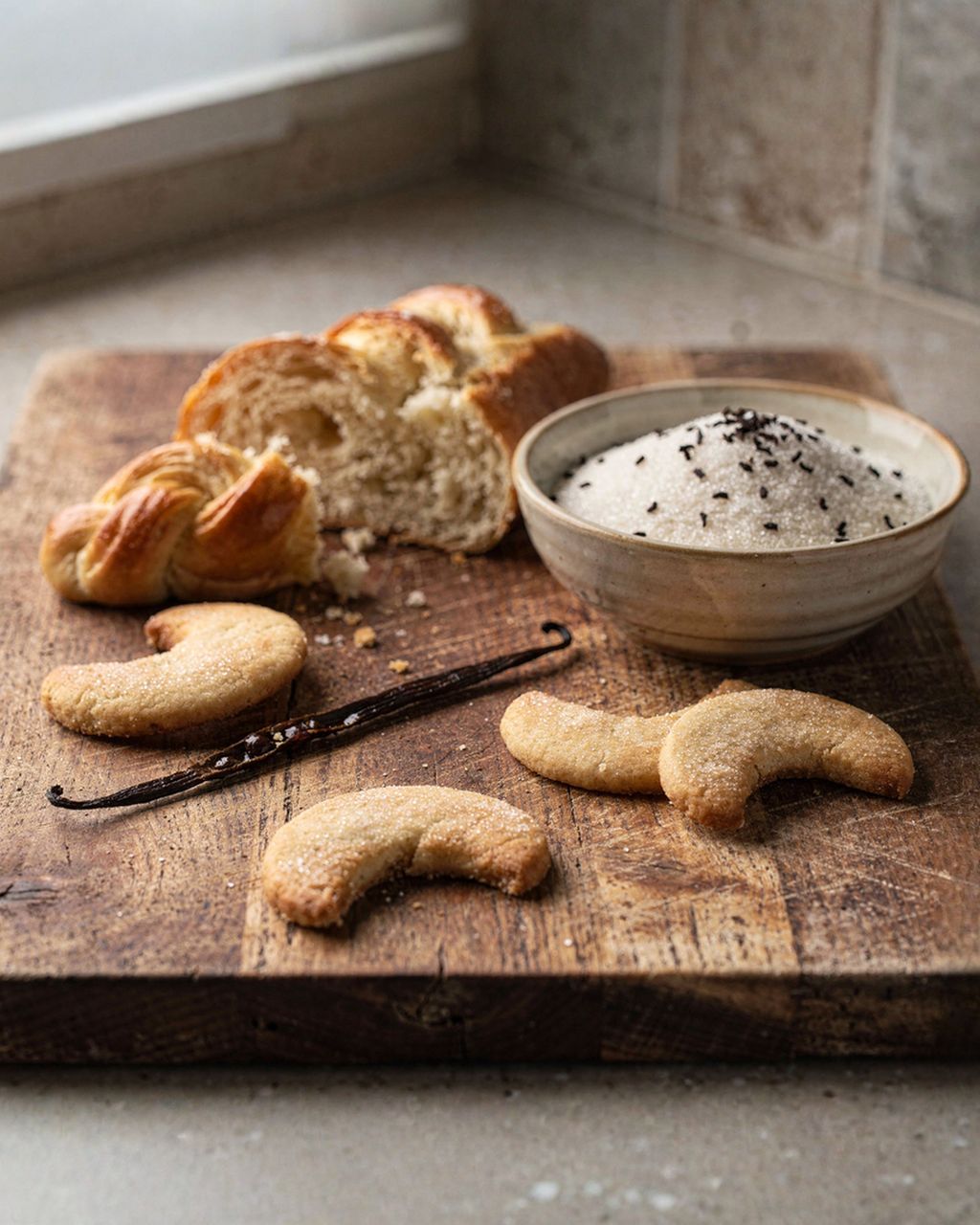
A quality pod is pliable, slightly oily to the touch, and smells strongly. If it's dry, brittle, and barely fragrant, it's already lost most of its aroma. Don't throw out a dried-out pod though — steep it in hot milk or bury it in sugar; you'll still get something out of it.
Yes, but be careful with macarons. Pulse blanched (skinned) almonds briefly with a bit of powdered sugar, which absorbs the oil and helps prevent clumping. Grind too long and the almonds release their fat, turning into paste instead of flour. For a smooth macaron shell surface, always sift the mixture afterwards.
Most often it's poor macaronage or skipping the resting time. Overmixed batter spreads too thin, undermixed batter cracks; the piped rounds need 20–40 minutes to rest before baking so a skin forms. Hollow macarons usually come from too high a temperature or under-whipped meringue — try baking around 150°C (300°F) with a stable meringue.
Not without losing quality in croissants and puff pastry — margarine has a different melting point and flavour, and the layers won't turn out the same. Bakeries use special laminating fat sheets, but at home, real butter with at least 82% fat gives the best result. In simpler doughs (madeleines, cookies), the swap is less noticeable than in croissants.
One recipe worth heating the oven for, one tip, and one deal from the shop. Nothing else.