How to Bake Bread at Home: With Yeast or Sourdough, Rye or Wheat, in the Oven, a Dutch Oven or a Bread Machine
Sourdough Without a Banneton: What to Use Instead of a Proofing Basket
Updated Nov 21, 2026
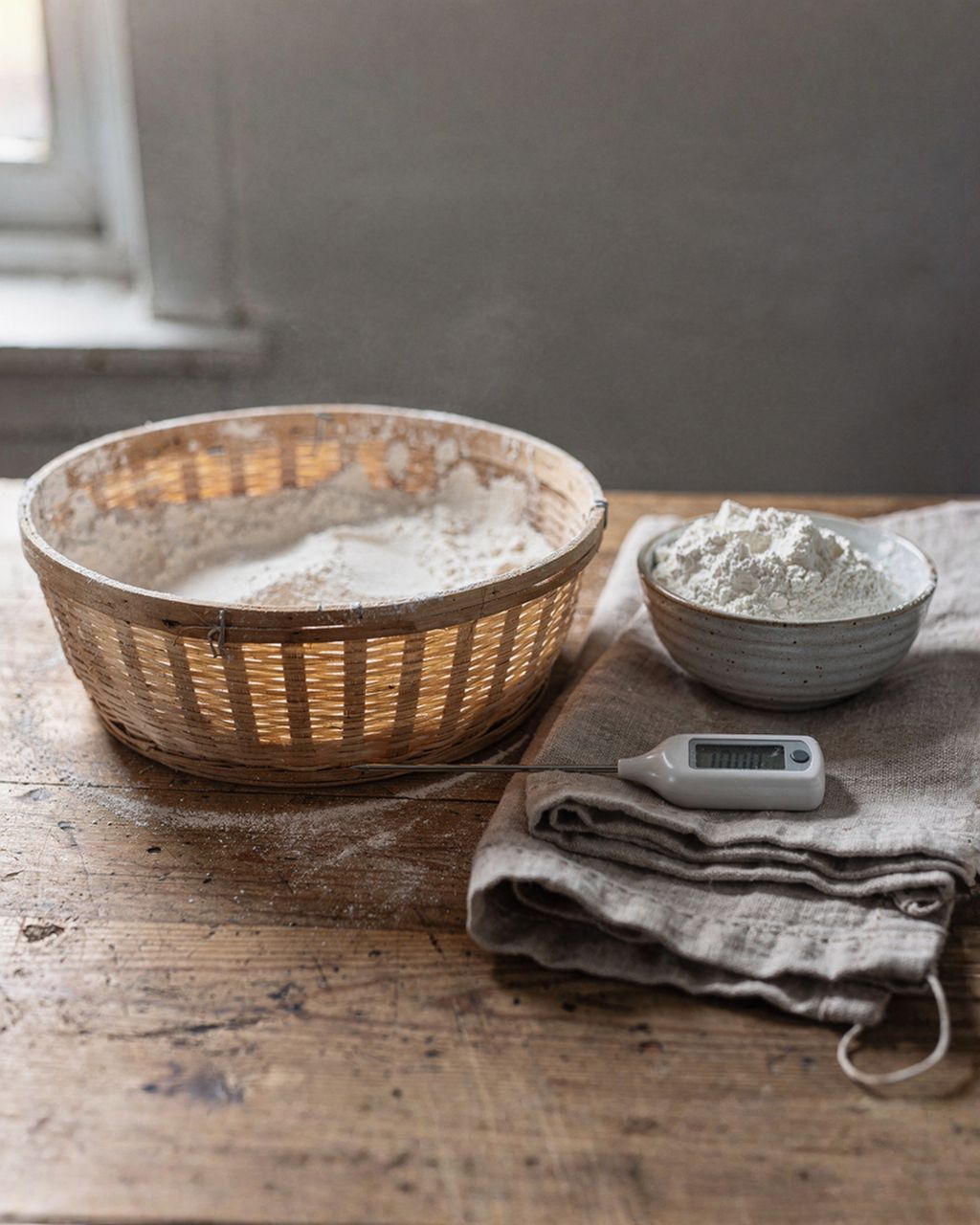
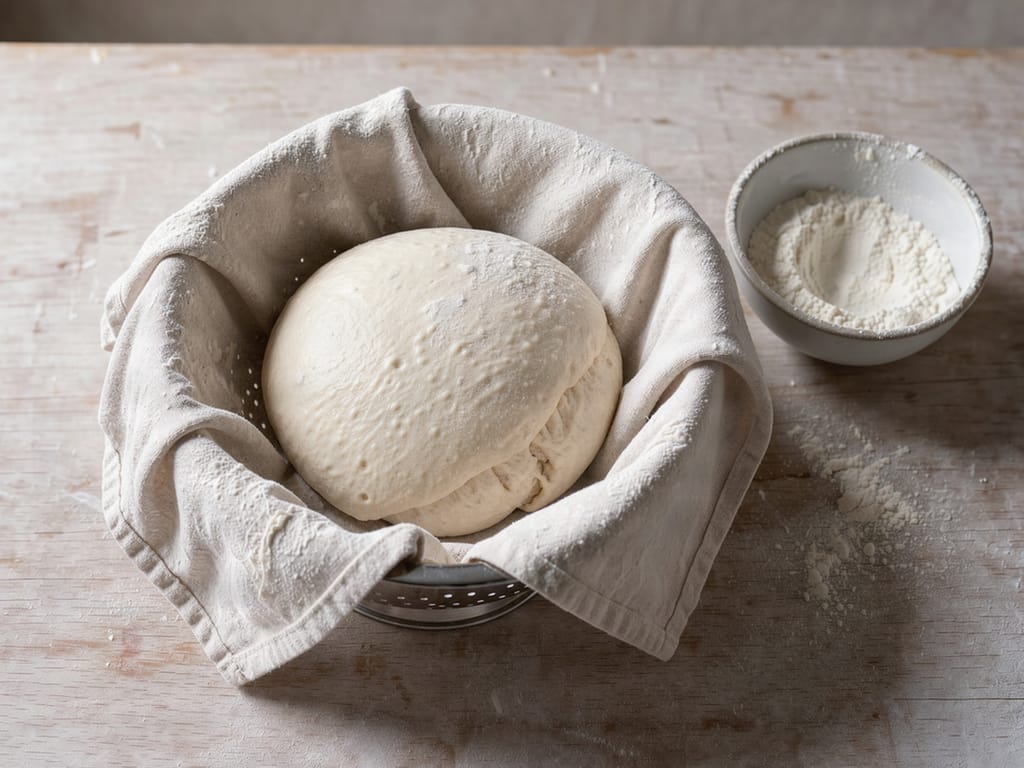
You don't need a banneton for sourdough: a bowl or colander lined with a well-floured linen or thin cotton tea towel does the same job. Dust the cloth with rice flour so the dough releases, and pick a container about the size and shape of the loaf you want.
A banneton (a cane or wicker proofing basket, also called a brotform) does three things during the final rise:
Holds the shape. A soft sourdough would spread flat if left on a board.
Wicks a little moisture from the surface, so the outside dries slightly and is easier to score.
Lets the dough release cleanly when you turn it out, thanks to the flour in the cane.
Anything that does those three things works. Our guide to proofing dough covers how to use and care for a real banneton, and how to tell when the dough is ready.
Colander lined with a towel: America's Test Kitchen's improvised banneton. Air reaches the dough through the holes, even more than in a cane basket, so slip the colander into a loose plastic bag to protect the dough from drafts and stop the surface drying out.
Mixing bowl lined with a towel: the simplest option. King Arthur Baking calls it a stopgap, and it suits round loaves only. Metal, glass or plastic all work, because the cloth does the real work. Plastic and metal don't breathe, so the surface may stay a little stickier.
Wicker or bread basket lined with a towel: breathes well and gives a classic look.
Loaf tin or oval dish lined with a towel: good for a long loaf (batard).
Proofing on parchment with support: set the shaped loaf on parchment and prop it with rolled towels or the sides of a loaf tin. Easy to slide into the oven.
Choose a container not much wider than the loaf you want. A wide bowl lets the dough slump.
The cloth matters more than the container.
Linen or a thin, smooth cotton (flour sack) towel works best. America's Test Kitchen prefers linen, because loose cotton fibers can stick to the dough.
Avoid terry towels and fluffy weaves. Flour can't settle into them evenly and the dough grips the loops.
Use a clean, dry towel without fabric softener or strong detergent scent.
Keep one towel just for bread. After use, shake off the flour and let the towel dry completely before storing. Wash it hot whenever dough has stuck to it or it smells sour, and throw it away if you see mold.
Sticking is the most common problem when you swap in a towel.
Use rice flour, or half rice and half wheat flour. Rice flour absorbs less water than wheat flour and has no gluten, so it stays as a dry, non-stick layer instead of turning gummy.
Rub it into the cloth, don't just sprinkle. You want an even, visible coat, more than seems necessary the first time.
Dust the top of the shaped dough too, before it goes in seam side up.
Wetter doughs stick more. If your dough is very slack, use more flour on the cloth and handle it cold.
If you have no rice flour, semolina or fine cornmeal also stays dry, and they toast on the crust (semolina is wheat, so if you're baking gluten-free, use rice flour or cornmeal labelled gluten-free, and a towel that has never held wheat dough).
Line a bowl or colander with a dry linen or flour sack towel.
Coat the cloth evenly with rice flour.
Shape the dough and set it in seam side up, so the smooth side faces the cloth.
Fold the overhanging cloth over the top, or slide the bowl into a large bag so the surface doesn't dry out.
Proof at room temperature, or for a cold proof, covered, in the fridge, as your recipe says.
Turn the dough out onto parchment, score it and bake.
Proofing times don't change because you use a bowl instead of a basket. The dough is ready when a gentle poke springs back slowly. If it springs back fast it needs longer; if the dent stays, it is close to overproofed.
Round loaf (boule): a round bowl or colander. Aim for one about as wide as the loaf you want, so the sides support the dough.
Oval loaf (batard): an oval dish, a loaf tin, or a long bread basket. Two bowls won't do it, but a towel folded into a loaf tin will.
Small rolls: a muffin tin or a floured, pleated towel on a tray, with a fold between each roll.
Two loaves at once: two bowls of the same size, so the loaves proof and bake evenly.
Depth matters as well. A very deep bowl gives a tall loaf that may tip when turned out; a shallow one lets the dough spread before it sets.
Recipe of the week, one tip that saves you time and one deal from the shop. Unsubscribe in one click.
The next issue goes out on Thursday, November 26.
Lay parchment over the bowl, put a board or tray on top and flip the whole thing in one smooth move.
Lift the bowl off, then peel the towel away slowly. If it catches, dust a little rice flour into the gap.
Score and bake straight away, while the dough is still holding its shape.
Without an unlined cane banneton you won't get the ringed flour pattern on the crust, but the bread itself will be the same. If you don't have a Dutch oven either, our guide to baking bread at home covers other ways to bake the loaf. If the dough barely rose at all, the problem may be the starter rather than the basket: see how to tell a starter is ready.
A mixing bowl or a colander lined with a floured linen or thin cotton tea towel. A small wicker basket lined the same way works too. The container holds the dough's shape while it proofs, and the cloth stops it sticking.
Yes, as long as the bowl is lined with a well-floured cloth. An unlined bowl lets the dough stick and tear when you turn it out. King Arthur Baking says a towel-lined bowl works in a pinch for round loaves, though it lacks some of the benefits of a real banneton.
Rice flour works best because it absorbs less water than wheat flour and forms no gluten, so it stays drier between the dough and the cloth. A mix of rice and wheat flour also works. Plain wheat flour alone is more likely to stick.
Yes. America's Test Kitchen suggests lining a metal or plastic colander with a linen dish towel. The holes let in even more air than a cane banneton, so slip the colander into a loose plastic bag to protect the dough from drafts and stop the surface drying out.
Yes, but the loaf spreads. You can proof it on parchment with rolled towels on either side for support, or on a heavily floured, pleated cloth (a couche), then bake it as a flatter loaf.
One recipe worth heating the oven for, one tip, and one deal from the shop. Nothing else.