Sourdough Starter: How to Make It, Feed It and Tell When It's Ready
Sourdough Discard: What It Is, How to Use It and Can You Freeze It
Updated Nov 21, 2026
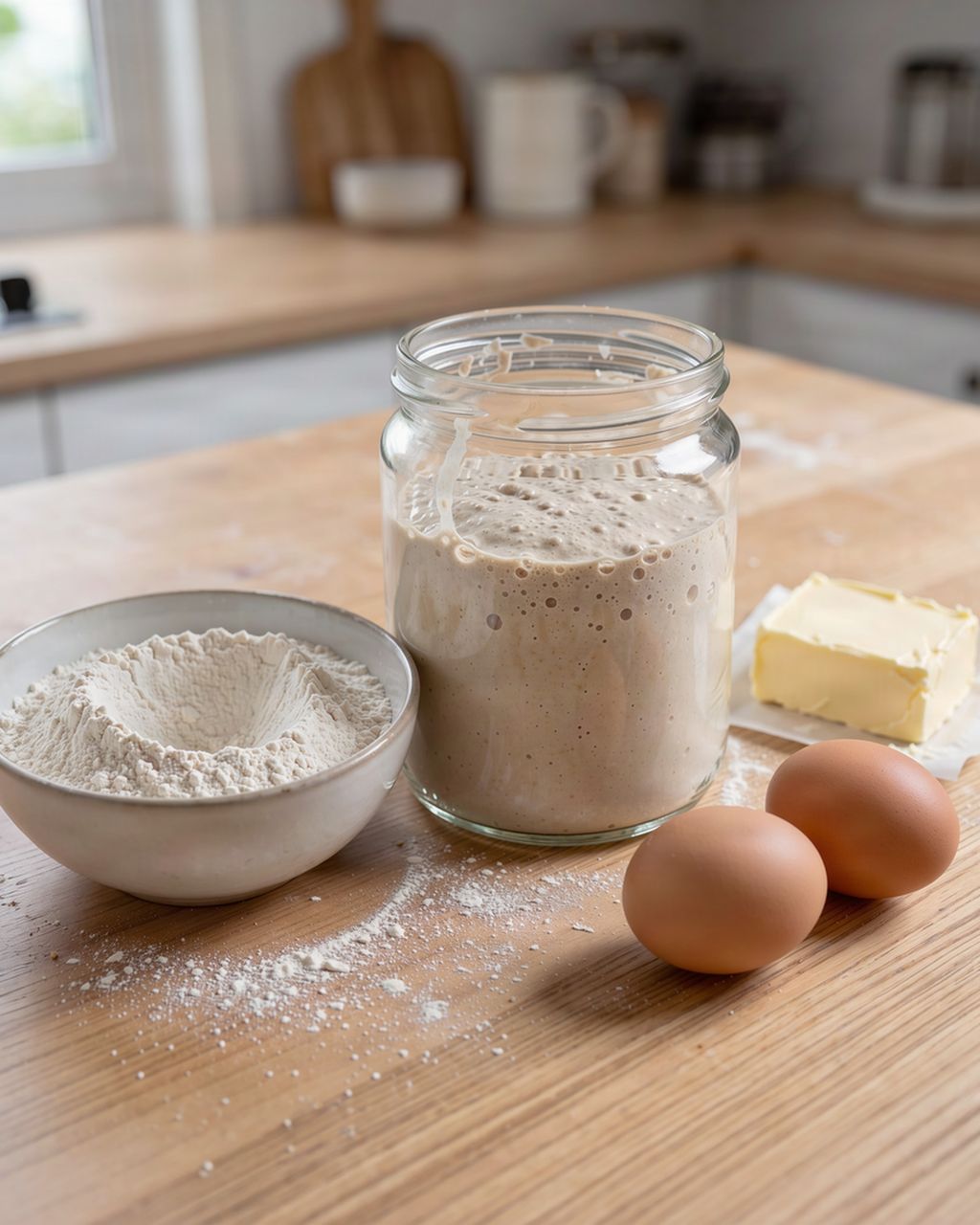
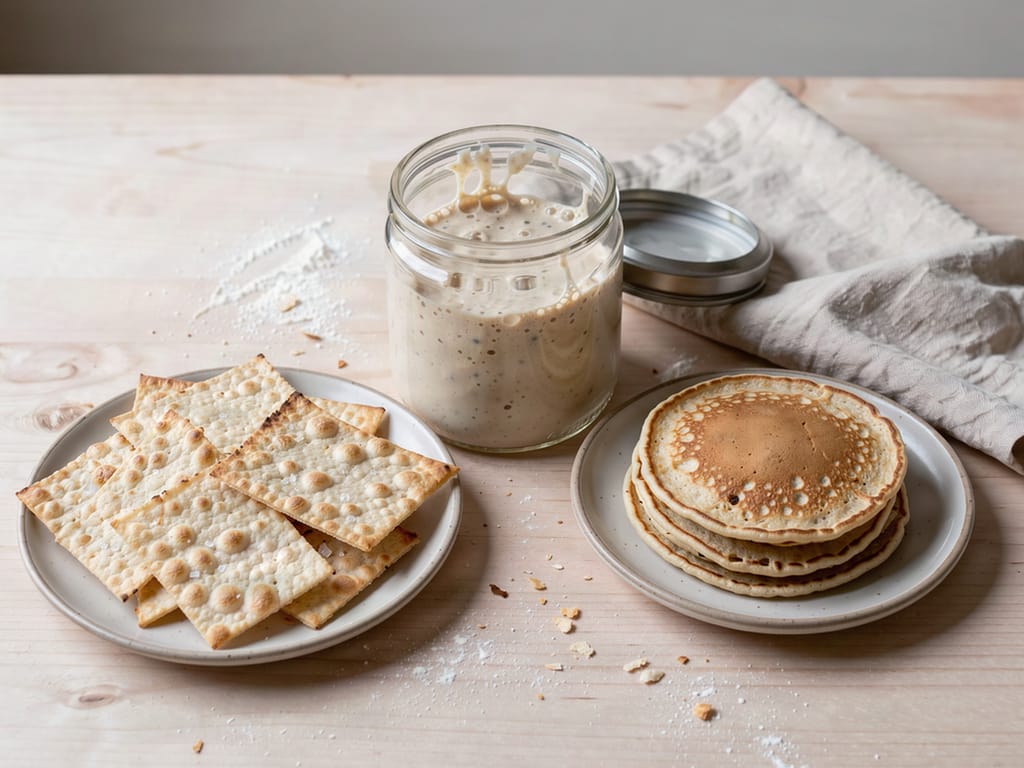
Sourdough discard is the part of your starter you remove before feeding it, so the starter doesn't grow huge and keeps the right balance of flour, water and culture. It is raw flour and water with a sour, tangy flavor, and you can bake with it in pancakes, crackers, flatbreads and quick breads, or freeze it until you need it.
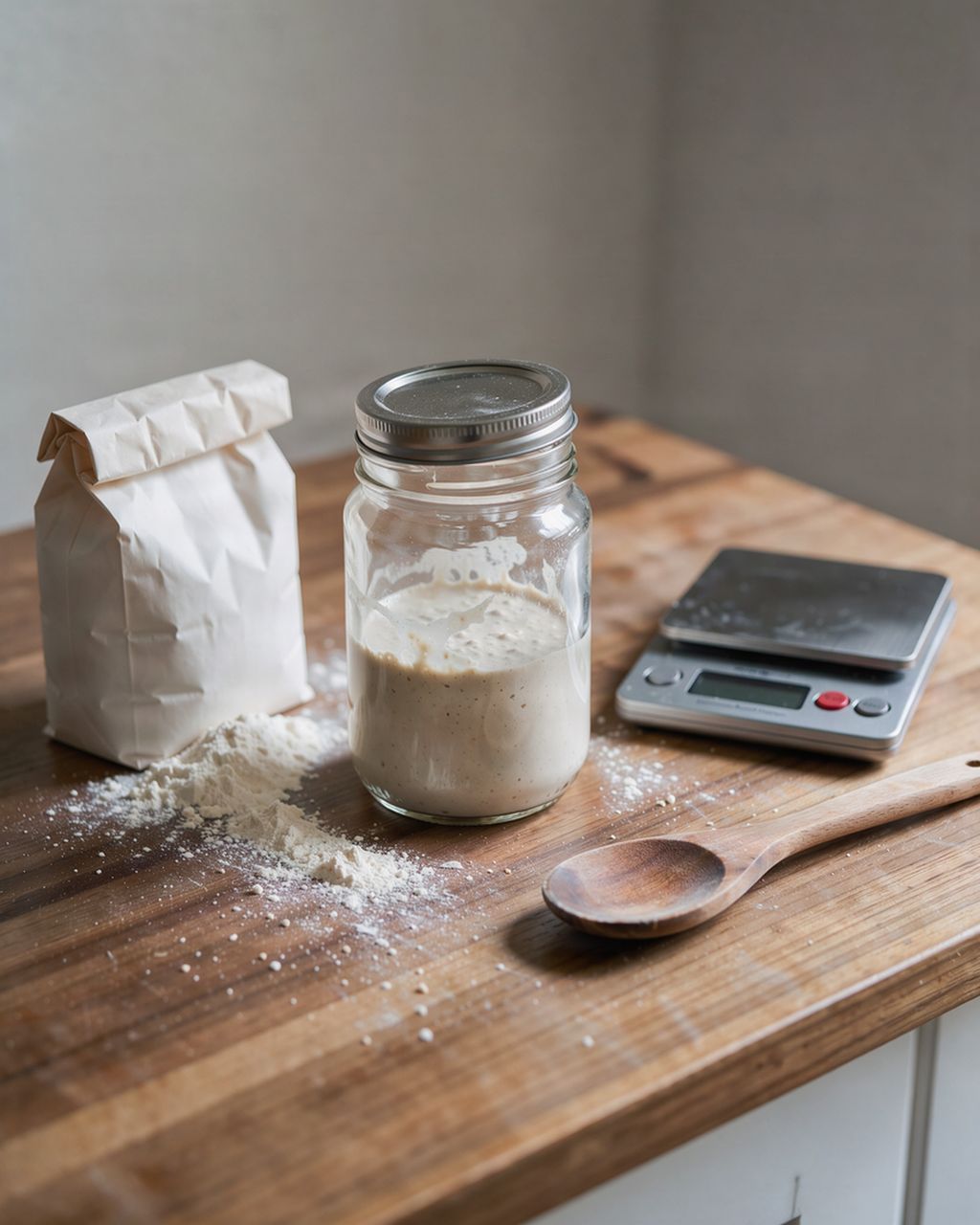
When you feed a sourdough starter, you usually take some of it out first and then add fresh flour and water. The part you take out is the discard.
Why remove it? If you kept every gram and fed it, the starter would double at every feed and you would need ever more flour to keep it in balance. Removing some keeps the jar a manageable size and keeps the ratio of fresh food to culture right, which keeps the starter strong.
Discard is the same mixture as your starter: flour, water, wild yeasts and lactic acid bacteria. Because it hasn't just been fed, it is tangy and not very active. It won't raise a loaf of bread on its own, but it adds flavor and moisture to many bakes.
For making, feeding and judging the starter itself, see our guide to the sourdough starter. In Czech, a starter is kvásek (sourdough starter), and in Czech kitchens it is most often a rye one, kept for rye bread.
Recipe of the week, one tip that saves you time and one deal from the shop. Unsubscribe in one click.
The next issue goes out on Thursday, November 26.
Discard works best where you want tang and tenderness, and where something else does the lifting.
Pancakes and waffles: replace some of the flour and milk with discard, and keep the baking powder or soda.
Crackers: discard, a little fat, salt and seeds, rolled thin and baked until crisp. One of the easiest uses for a large amount.
Flatbreads: cooked in a dry pan, a quick side for soups and stews.
Pizza dough: add discard alongside yeast for flavor. Our no-yeast pizza dough guide explains what happens when there is little or no leavening.
Quick breads, banana bread and muffins: a portion of discard adds tang and moisture.
Yeast bread: add some to a yeast dough for extra flavor. Fed starter, not discard, is what raises a true sourdough loaf.
Most starters are kept at 100% hydration, which means equal weights of flour and water. So discard is half flour, half water.
The rule: 100 g of discard replaces 50 g of flour and 50 g of water or other liquid.
Example: a recipe with 200 g flour and 200 ml milk could use 100 g discard, 150 g flour and about 150 ml milk.
Stiffer starter: if yours is at a different hydration, divide the discard weight by 1 plus the hydration as a decimal to find its flour. At 75%, 100 g discard holds about 57 g flour and 43 g water.
Start by replacing up to about half of the flour. Recipes that get most of their liquid from eggs are harder to adapt, because there is less water to take out. Weighing makes this much easier; the cups and spoons to grams calculator converts cup recipes first.
Not if you bake often. If you use most of the starter every day or two, you can feed what's left without throwing any away. You can also keep a much smaller starter, for example just a spoonful fed with small amounts, so there is very little discard each time.
Discard builds up when you feed a starter regularly but bake rarely. That's when a discard jar, or the freezer, helps.
Discard is raw flour and water with a live culture, so handle it like a raw batter.
In the fridge: collect it in a clean jar with a lid, covered, in the fridge. USDA FSIS advises keeping refrigerators at 4 °C (40 °F) or below. No food-safety authority publishes a fridge time for discard, so we don't give one. Use it while it looks like your starter, and take out what you need with a clean spoon.
Liquid on top: a grey or brownish liquid layer that smells of alcohol is a normal byproduct of fermentation. Colorado State University Extension says it is fine to pour off or stir back in.
Mold: if you see any mold, fuzzy patches, or colored spots or streaks, throw the whole jar's contents out. Colorado State University Extension advises not using a starter with mold. Don't sniff it, as USDA FSIS warns that breathing mold spores can cause respiratory problems. Wash the jar well before using it again.
Don't taste it raw. The FDA advises against eating raw flour or dough, and Colorado State University Extension says not to taste raw starter. Cook it first.
Yes, and it is the easiest way to save discard for a big baking day.
Freeze it in a covered container or freezer bag, or in portions (an ice cube tray, then a bag) so you can thaw just what a recipe needs.
USDA FSIS says food kept constantly frozen at -18 °C (0 °F) stays safe; storage time only affects quality.
Thaw it in the fridge, covered, then stir it well. It may look more watery than before.
Frozen discard is fine in recipes with baking powder, soda or yeast. Freezing slows the culture, so it is less reliable as a starter for bread.
Our guide to storing food in the freezer covers packing and labeling.
Sourdough discard is the portion of starter you take out before each feeding. Without removing some, the starter would double every feed. It is the same mix of flour, water and wild yeast and bacteria as your starter, just not freshly fed, so it is sour and not very strong.
Yes, partly. Discard kept at equal weights of flour and water (100% hydration) is half flour and half water, so 100 g of discard replaces 50 g of flour and 50 g of liquid in a recipe.
Yes. Freeze it in a covered container. USDA FSIS says food kept frozen at -18 °C (0 °F) stays safe, though quality slowly declines. Thaw it in the fridge before baking.
Not reliably on its own. Discard is unfed and sluggish, so most discard recipes also use baking powder, baking soda or yeast. Fed, active starter is what you use to raise sourdough bread.
No. It is raw flour, and the FDA and Colorado State University Extension both advise against tasting raw flour, dough or starter. Bake or cook it first.
Keep it covered in the fridge, at 4 °C (40 °F) or below as USDA FSIS advises for refrigerators, or freeze it. Throw it out if you see any mold or fuzzy or colored spots.
One recipe worth heating the oven for, one tip, and one deal from the shop. Nothing else.