Semi-Coarse Flour: What Czech Polohrubá Mouka Is and What to Use Instead
Semolina vs Cream of Wheat: What's the Difference and Can You Swap?
Updated Nov 20, 2026
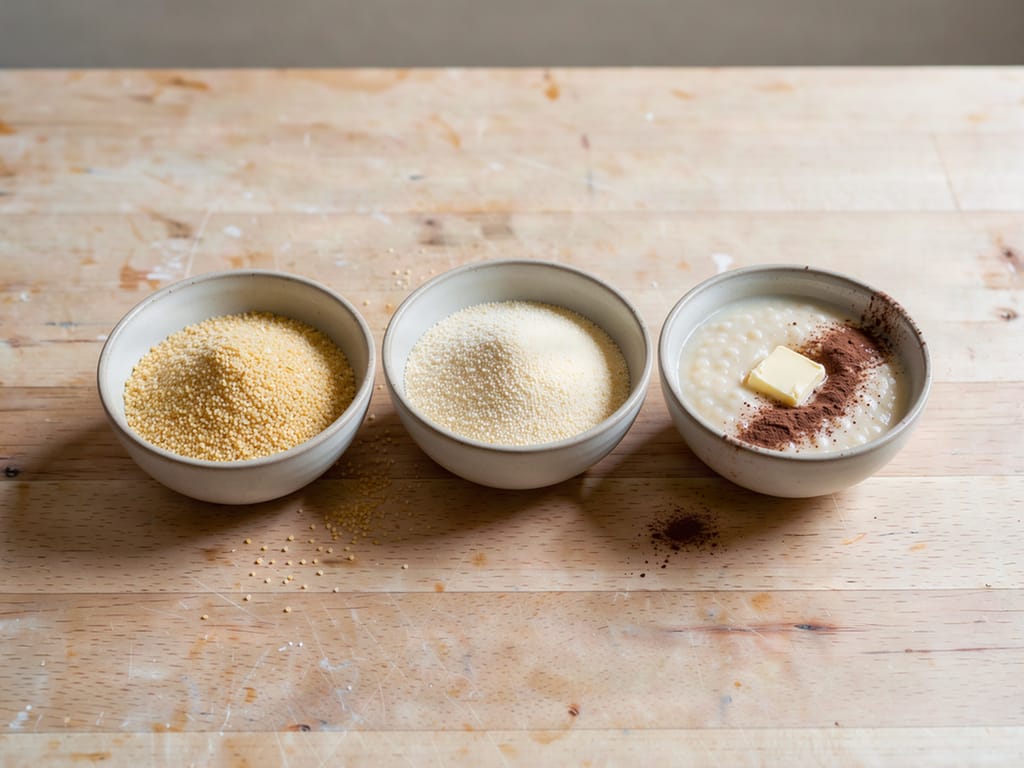
Semolina and Cream of Wheat are not the same: semolina is coarsely milled durum wheat, yellow and firm, while Cream of Wheat is a brand of farina, finely milled from ordinary non-durum wheat, pale and soft. For porridge and dumplings they swap reasonably well, but only semolina makes proper pasta. Czech krupice, used for semolina porridge and soup dumplings, is milled from ordinary wheat, so it is much closer to farina than to Italian semolina.
Both are grainy middlings: the inner part of the wheat kernel, the endosperm, broken into small granules before it is ground into flour. The difference is the wheat.
Semolina is milled from durum wheat, the hard wheat used for dried pasta. It is golden yellow, has sharp granules and keeps its bite when cooked.
Cream of Wheat is a US brand of farina, which is milled from wheat that is not durum. It is creamy white, finer and cooks to a smooth, soft porridge.
So all farina is like semolina, but it is not semolina. In milling terms, semolina is made only from durum, while farina can come from any other wheat.
Recipe of the week, one tip that saves you time and one deal from the shop. Unsubscribe in one click.
The next issue goes out on Thursday, November 26.
In English-speaking shops, semolina usually means durum semolina: Italian semola or North African couscous semolina. It is the backbone of Italian dried pasta, because durum protein forms a firm, elastic dough that holds its shape in boiling water.
You will also see semolina flour, or semola rimacinata (re-milled semolina) on Italian packs. That is the same durum wheat, milled finer, for fresh pasta and for breads such as the semolina loaves of southern Italy.
Czech law uses the word the same way: the Czech flour decree reserves semolina for granules made from durum wheat. That is why Czech pasta packs say semolinové těstoviny when they mean durum pasta.
Cream of Wheat is a brand of hot breakfast cereal sold in the US and Canada since 1893. Its original version lists wheat farina, defatted wheat germ, a phosphate salt and added iron and vitamins. It also comes as quick and instant versions, which are pre-treated to cook faster.
In American shops, farina is the generic name for the same product. Bob's Red Mill, for example, sells it as a creamy wheat cereal milled from hard wheat. Some UK and Australian shops sell soft-wheat semolina simply as semolina, which is effectively the same thing as farina. If the pack is pale and creamy rather than yellow, and says wheat rather than durum, treat it as farina.
Like all flours and grain products, farina is raw until cooked.
Czech krupice (wheat semolina) is milled from ordinary bread wheat, not durum, so it is pale cream and behaves like farina. Czech flour law sets two grades by sieve size:
Hrubá krupice (coarse): at least 96% passes an 853 µm sieve, and at most 15% passes 446 µm. Granules are roughly 0.45–0.85 mm. See coarse wheat semolina.
Jemná krupice (fine): at least 96% passes 485 µm, and at most 15% passes 257 µm. See fine wheat semolina.
Dětská krupička (literally children's semolina): the finest, almost powdery grade. It is a shop name, not a legal grade, and it is named for its traditional use in children's semolina porridge. See baby semolina.
Fine krupice and dětská krupička are the closest match to Cream of Wheat. Coarse krupice is closer to a coarse farina.
Per 100 g, dry and unenriched, USDA FoodData Central lists:
Semolina (durum): about 12.7 g of protein, about 360 kcal.
Farina: about 10.6 g of protein, about 369 kcal.
Durum wheat usually contains a little more protein than common wheat. Cream of Wheat is enriched with iron and other nutrients, so its label differs from plain farina. Compare the panels of the packs you have, since enrichment varies by brand and country.
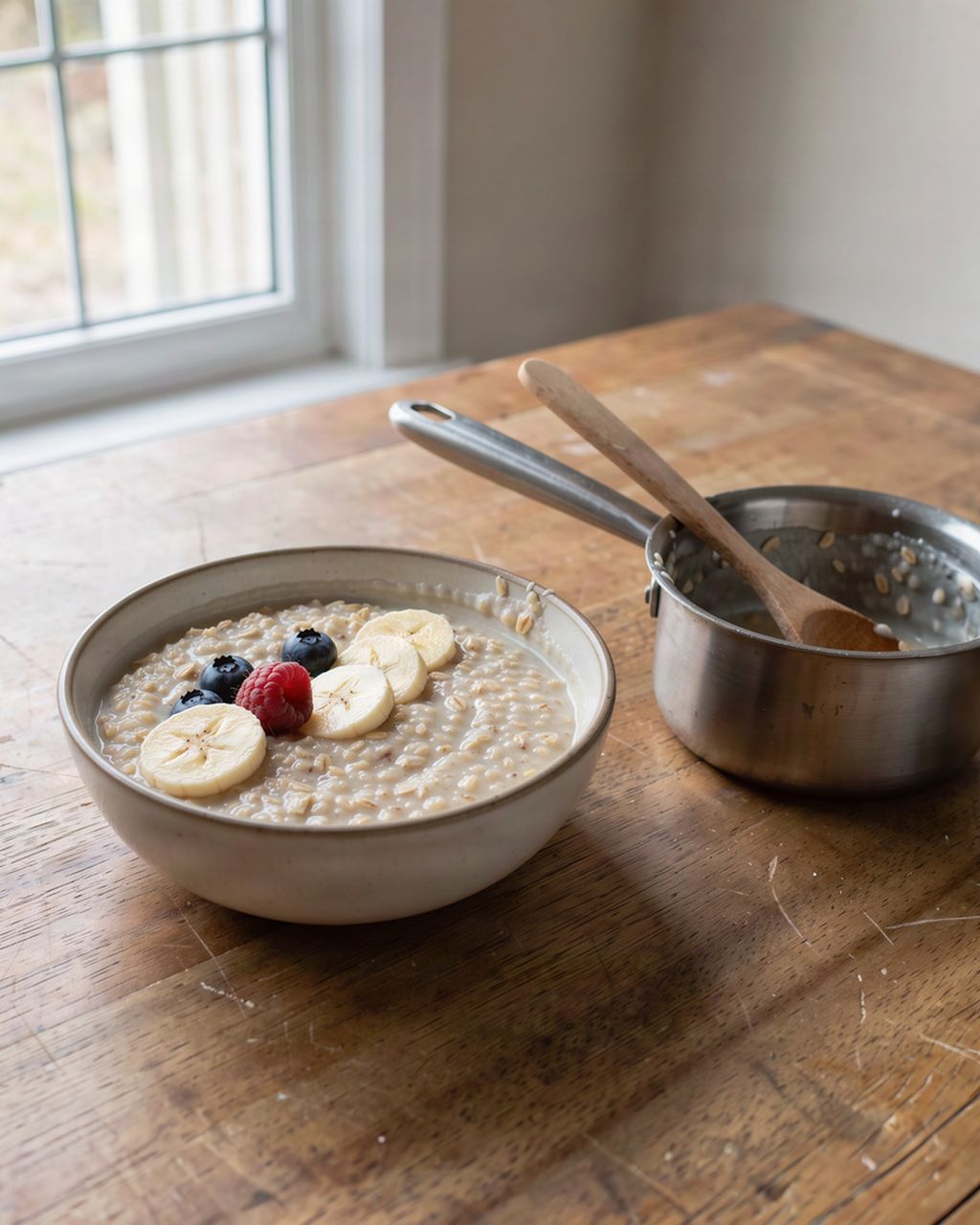
Semolina porridge (krupicová kaše). The Czech classic is fine krupice cooked in milk, served with melted butter, sugar and grated chocolate or cocoa. Plain Cream of Wheat or fine farina gives the same smooth result. Durum semolina works too, but the porridge is yellower and grainier. Our guide to cooking oatmeal and semolina porridge gives the milk ratio.
Soup dumplings (krupicové noky). Small spoonfuls of semolina batter, usually with egg and butter, simmered in broth. Czech cooks use fine or coarse krupice. Farina is the closest swap; durum semolina gives firmer dumplings. See gnocchi and noky for how to cook them.
Bread and potato dumplings. Some Czech recipes add a little coarse krupice for texture. Coarse farina is the nearest match.
Pasta. Use durum semolina or semolina flour. Farina and Czech krupice do not hold together the same way.
Baking and puddings. Semolina puddings and cakes work with either. Durum gives more color and a slightly sandier texture.
For porridge and dumplings, use regular or original Cream of Wheat rather than instant, which is pre-cooked to dissolve fast and can turn pasty.
No, semolina is milled from durum wheat, while Cream of Wheat is farina milled from ordinary non-durum wheat. Semolina is yellow and coarser; farina is pale and cooks up smoother and softer.
For porridge, puddings and Czech semolina dumplings, yes, use plain Cream of Wheat (not instant) in the same amount. For pasta dough, no: it lacks the strong durum protein that keeps pasta firm.
Per 100 g dry, USDA lists unenriched semolina at about 12.7 g of protein and unenriched farina, the cereal Cream of Wheat is made from, at about 10.6 g. Durum wheat usually contains a little more protein than common wheat.
Krupice is Czech wheat semolina milled from ordinary wheat, not durum, so it is creamy white and close to farina. It comes as coarse (hrubá) and fine (jemná), and the finest grade is sold as dětská krupička.
Semolina flour is usually durum semolina milled finer, sold in Italy as semola rimacinata, and it is used for pasta and bread. It is still durum wheat, so it is not a substitute for farina in a smooth porridge.
One recipe worth heating the oven for, one tip, and one deal from the shop. Nothing else.