What to Use Instead of Coconut Fat in No-Bake Treats: Substitutes and Ratios
Ghee: How to Store It, How Long It Lasts and What to Substitute
Updated Nov 17, 2026
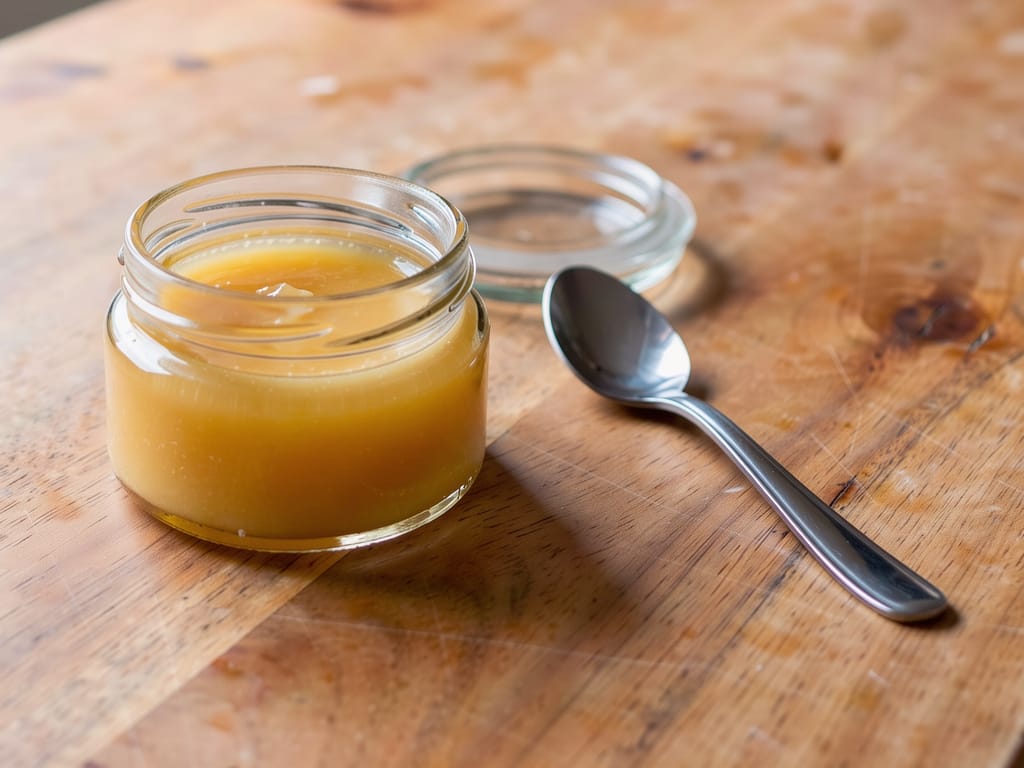
According to the USDA's FoodKeeper database, opened ghee keeps 6–8 months at room temperature and 1–2 years in the fridge, as long as no water gets into the jar. Ghee (Czech ghí) is butter that has been simmered until almost all the water has cooked off and the milk proteins have been strained out, which is exactly why there's very little in it to spoil. Below you'll find how to store it, how to tell when it's gone off, and what to use instead when you run out.
According to USDA FoodKeeper, opened ghee keeps 6–8 months at room temperature (in the pantry) and 1–2 years in the fridge. So the fridge isn't needed for safety, but it keeps the flavor good for longer, since fat goes rancid more slowly when it's cold.
Store-bought, unopened: go by the best-before date and the manufacturer's instructions on the label.
Store-bought, opened: room temperature 6–8 months, fridge 1–2 years (USDA FoodKeeper).
Homemade: FoodKeeper gives no separate time for homemade ghee. Its figures assume ghee from which the water has truly been cooked off. At home that doesn't always work out, so put homemade ghee straight in the fridge and plan on a shorter time.
Why so long? Under the Codex Alimentarius standard (CXS 280-1973), ghee must contain at least 99.6% milk fat. Bacteria and molds need water to grow, and there's almost none in ghee. So ghee doesn't rot, it just goes rancid over time.
Seasonal baking plans, tested recipes and kitchen tricks that save you time. Unsubscribe in one click.
Keep ghee in a tightly closed, dry jar in a dark, cool place, and scoop it out only with a clean, dry spoon. Four things harm it: water, air, heat and light. Water lets mold into the jar, while air, heat and light speed up rancidity.
Use only a dry, clean spoon in the jar. A drop of water or a crumb of food is the most common reason ghee grows mold. Never dip in a spoon you've been stirring a pot with.
Keep the lid tightly closed. The less air, the more slowly the fat oxidizes.
Choose a dark, cool spot, not next to the stove. A shelf above the burners or a sunny windowsill is the worst place.
Split a large jar. Keep a smaller amount in the kitchen and put the rest in the fridge. That way you aren't opening the big jar every day.
Strain homemade ghee through cheesecloth into a sterilized, completely dry jar, and close it only once it has cooled. If you close it hot, steam condenses on the lid and drips back in.
It's normal for ghee to firm up in the fridge and soften in a warm kitchen. It has no effect on shelf life.
You can tell spoiled ghee mainly by smell and taste, not by looks. Fresh ghee smells mildly nutty and caramel-like, like butter browned to golden.
Rancid: a sharp, sour smell like old oil or oil paint, and a bitter, harsh aftertaste. It will spoil the flavor of your food. Throw it out.
Moldy: fuzzy or colored spots on the surface. This almost always means water got into the jar. Throw out the whole jar rather than just scooping off the top.
A grainy texture, little crystals, or lighter and darker layers aren't spoilage. Ghee simply crystallizes with temperature changes, much like honey. If you melt it gently and let it set quickly in the fridge, it will be smooth again.
For cooking, you can replace ghee with five fats: refined oil, butter, clarified butter, coconut oil or lard. Clarified butter is the closest, and refined oil is best for high-heat frying. It depends on what you need ghee to do in the dish:
Refined oil (canola, sunflower) – high heat, frying, toasting spices: it handles high temperatures, it just lacks the nutty flavor.
Butter – buttery flavor and gentler heat: watch the flame, because the milk proteins that ghee doesn't have burn quickly in the pan. A spoonful of oil added to the butter helps a little.
Clarified butter – the closest substitute: ghee is really just clarified butter cooked longer. So clarified butter works almost the same, just without as many nutty notes.
Coconut oil – dairy-free (vegan, for allergies): reach for odorless coconut oil, or refined oil. Virgin coconut oil adds a coconut flavor, which doesn't matter in curry.
Lard – savory dishes: it has a strong flavor of its own and doesn't quite suit Indian cooking.
In lentil dal or chicken curry, ghee is mainly used for blooming the spices. Oil can easily stand in there, and you add a teaspoon of butter at the end for flavor. In butter chicken, butter is the base of the flavor, so replace ghee with butter there, not oil.
It works the other way too: in the article what to substitute for coconut oil in no-bake Christmas cookies you'll find when ghee works in place of coconut oil.
In baking, the best substitute for ghee is butter, using about a quarter more: instead of 100 g ghee, use about 125 g butter. Ghee is almost pure fat (at least 99.6% according to Codex), while butter, under European rules (EU Regulation No. 1308/2013), is only 80–90% fat, with the rest mostly water.
Shortcrust dough, cookies, linecké (Czech Linzer-style jam cookies): butter at a 1.25:1 ratio. The water in the butter doesn't hurt the dough, it even helps bind it a little.
Batters and muffins: butter or neutral oil. Replace ghee with oil 1:1, since both are pure fat.
The other way around, ghee instead of butter: use about a fifth less ghee and add a spoonful of milk or water so the dough isn't dry.
Butter can't fully replace the nutty flavor of ghee. If it matters in your recipe, melt the butter and cook it to golden as brown (nutty) butter (beurre noisette). That's the closest in flavor.
You can freeze ghee, but there's usually no point, since according to USDA FoodKeeper it keeps 1–2 years in the fridge. FoodKeeper gives no freezer time for ghee. If you do freeze it, put it in a dry, tightly sealed container and don't let condensation water into it after thawing.
Nearly. Ghee is clarified butter that's cooked longer, until the milk proteins at the bottom turn brown. That gives it a nutty, caramel-like flavor and even less water. In the kitchen you can swap one for the other 1:1.
Store-bought ghee doesn't have to go in the fridge after opening. According to USDA FoodKeeper it keeps 6–8 months in the pantry. The fridge extends that to 1–2 years, so it's worth using if you go through it slowly or have a warm kitchen. Always refrigerate homemade ghee, which may still contain a little water.
Ghee usually doesn't spoil right after its best-before date, because under European rules that date indicates quality, not safety (unlike a "use by" date). If the jar was kept closed in a cool, dark place, smell and taste it: if it smells nutty and has no mold, you can use it. A rancid smell or any mold is a reason to throw it out.
Yes, you can replace ghee with extra virgin olive oil 1:1 for sautéing and in braised dishes, but refined oil is better for high-heat frying. Olive oil brings its own fruity flavor, so in Indian cooking the dish will taste different.
One recipe worth heating the oven for, one tip, and one deal from the shop. Nothing else.