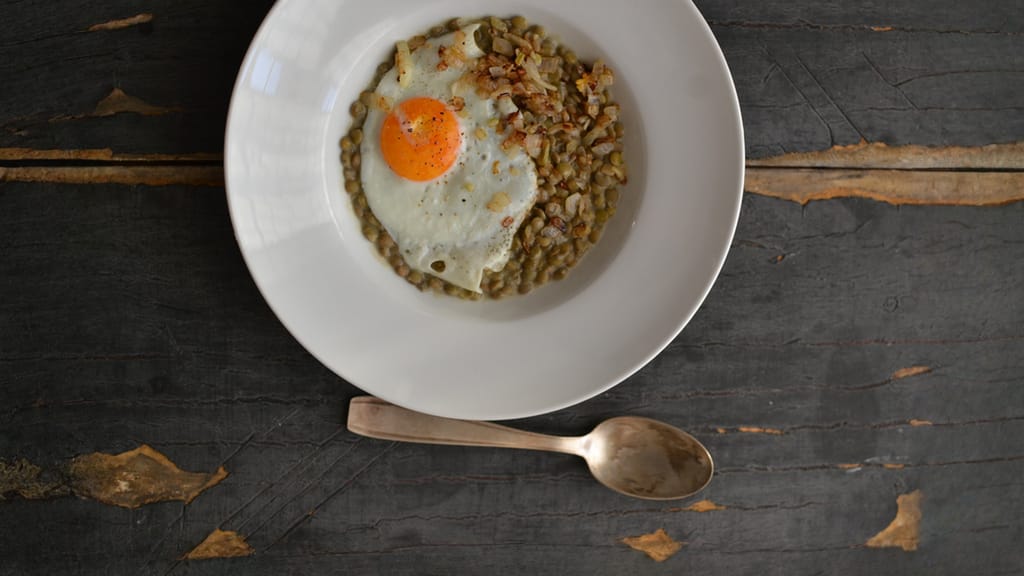
Sour lentils with a fried egg
New Year's Lentils: Why We Eat Them and How to Cook Them So They Don't Turn to Mush
Updated Nov 3, 2026
Eating lentils on New Year's Day is a folk tradition: the tiny flat seeds look like coins, so a plate of lentils comes with a wish that money will stick around in the year ahead. To keep them from turning to mush, choose large brown or green lentils, simmer them gently just until tender, and add the salt and vinegar only at the end. Unsoaked brown lentils take roughly 30–45 minutes to cook; lentils soaked overnight take 20–30 minutes.
Lentils are eaten at New Year because of an old folk superstition: the round, flat seeds look like coins, and whoever eats them on January 1st is said to have good fortune with money in the coming year. It's a custom, not a guaranteed recipe for riches – but a plate of warm lentils after New Year's Eve is welcome either way.
Similar customs exist elsewhere in Europe, for example in Italy, where lentils are served with cooked pork sausage on New Year's Eve or New Year's Day. In Czechia, the most common versions are sweet-and-sour lentils (čočka na kyselo) with a fried egg, with smoked meat, or as lentil soup.
The best at keeping their shape are large brown (plate) lentils, green lentils and black beluga lentils. Red and yellow split lentils collapse into a purée within minutes, so they suit soups and curries, not a New Year side dish.
Large brown (plate) lentils: the classic choice for sweet-and-sour lentils. They hold their shape and are floury and creamy.
Small brown lentils: they cook faster and break down more easily, which makes them ideal for a mash or thick, stew-like lentils.
Green: firmer, with a slightly peppery flavor, and great in salads.
Beluga (black): small and the best of all at holding their shape, perfect for a salad or as an elegant side.
Red and yellow split: they have no skins, so they fall apart – use them for soup or purée.
Older lentils cook for longer and less evenly. If a bag has been sitting open in your cupboard for years, plan on the upper end of the cooking time, or soak them.
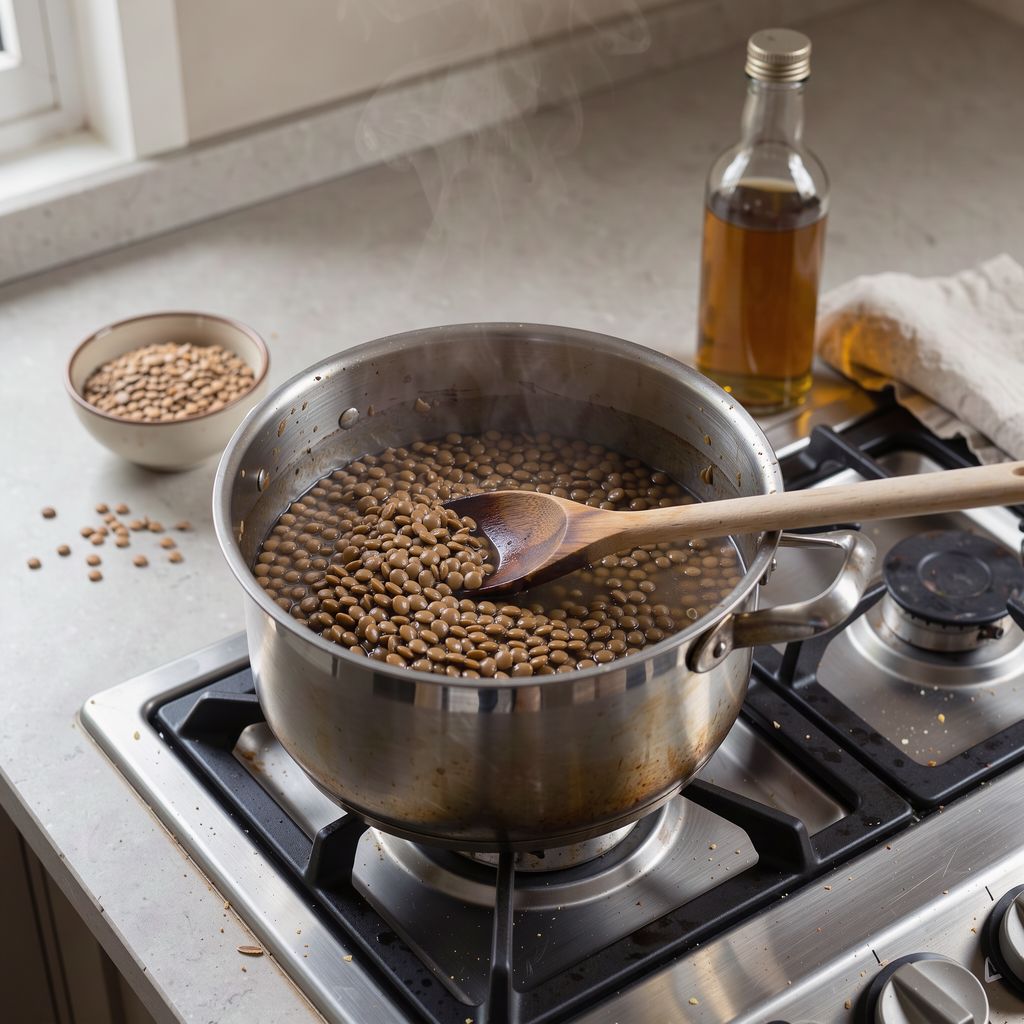
Cook lentils at a gentle simmer, just until tender, and add the salt and vinegar right at the end. Here's how:
Pick over and rinse the lentils in a sieve – every now and then you'll find a little stone.
Soak them overnight in cold water, or cook them unsoaked. Soaking shortens the cooking time and helps the lentils cook more evenly. Drain the soaking water.
Cover with fresh water at about 1 part lentils to 3 parts water, bring to a boil and skim off the foam.
Turn the heat down to a gentle simmer. A hard boil knocks the lentils against each other and the skins split.
Start tasting from the halfway point. They're done when the lentils are tender and creamy but still hold their shape.
Salt at the end and only then add the vinegar.
Vinegar and other acidic ingredients slow down the softening of the skins. Added at the start, they can leave lentils hard even after an hour of cooking; added at the end, they simply season.
Large brown lentils take 30–45 minutes unsoaked and 20–30 minutes if soaked overnight. Approximate times from when the water comes to a boil:
Large brown: 30–45 minutes, or 20–30 minutes if soaked
Small brown: 20–30 minutes
Green: 25–35 minutes
Beluga: 20–25 minutes
Red split: 10–15 minutes, and they fall apart
The time depends on the age of the lentils and the size of the seeds, so keep tasting. If you need to top up the water during longer cooking, use hot water, not cold – cold water interrupts the cooking and the lentils end up cooked unevenly.
The most traditional New Year preparation is čočka na kyselo (sweet-and-sour lentils): cooked lentils seasoned with vinegar, finished with cream or a roux, and served with a fried egg, a pickle and bread. You can follow the recipe for sweet-and-sour lentils with a fried egg, which also includes a version thickened with a roux.
A lighter New Year plate is a lentil salad or the more festive beluga lentil salad with duck breast, which also makes good use of holiday leftovers. And if soup wins out, the article What belongs in lentil soup will point you in the right direction.
Sour lentils with a fried egg
Sweet-and-sour lentils with a fried egg – traditional New Year lentils
You don't have to soak them. Both brown and green lentils cook fine unsoaked, they just take 10–15 minutes longer. Soaking overnight does shorten the cooking time and helps the lentils cook more evenly, so they're less likely to fall apart. Always drain the soaking water and cook the lentils in fresh water.
Lentils most often stay hard because they're old, or because vinegar or another acidic ingredient went in too early. Acid slows down the softening of the skins. Keep simmering gently for longer and top up with hot water; add vinegar only once the lentils are tender.
Allow 60–80 g of dry lentils per person as a side dish, or 80–100 g when lentils are the main course. They absorb water as they cook and roughly double in weight. For lentil soup, 40–50 g of dry lentils per serving is enough.
Yes, you can freeze cooked lentils, ideally without any cream or egg, in an airtight container or bag. Cool them as quickly as you can and get them into the freezer within two hours of cooking. Thaw them in the fridge and add a splash of water when reheating, because lentils thicken in the freezer.
One recipe worth heating the oven for, one tip, and one deal from the shop. Nothing else.