Want tips like this every Thursday?
One recipe worth heating the oven for, one tip, and one deal from the shop. Nothing else.
How to Bake Pracny: Temperature, Time and When to Unmold Them from the Tins
Updated Oct 27, 2026
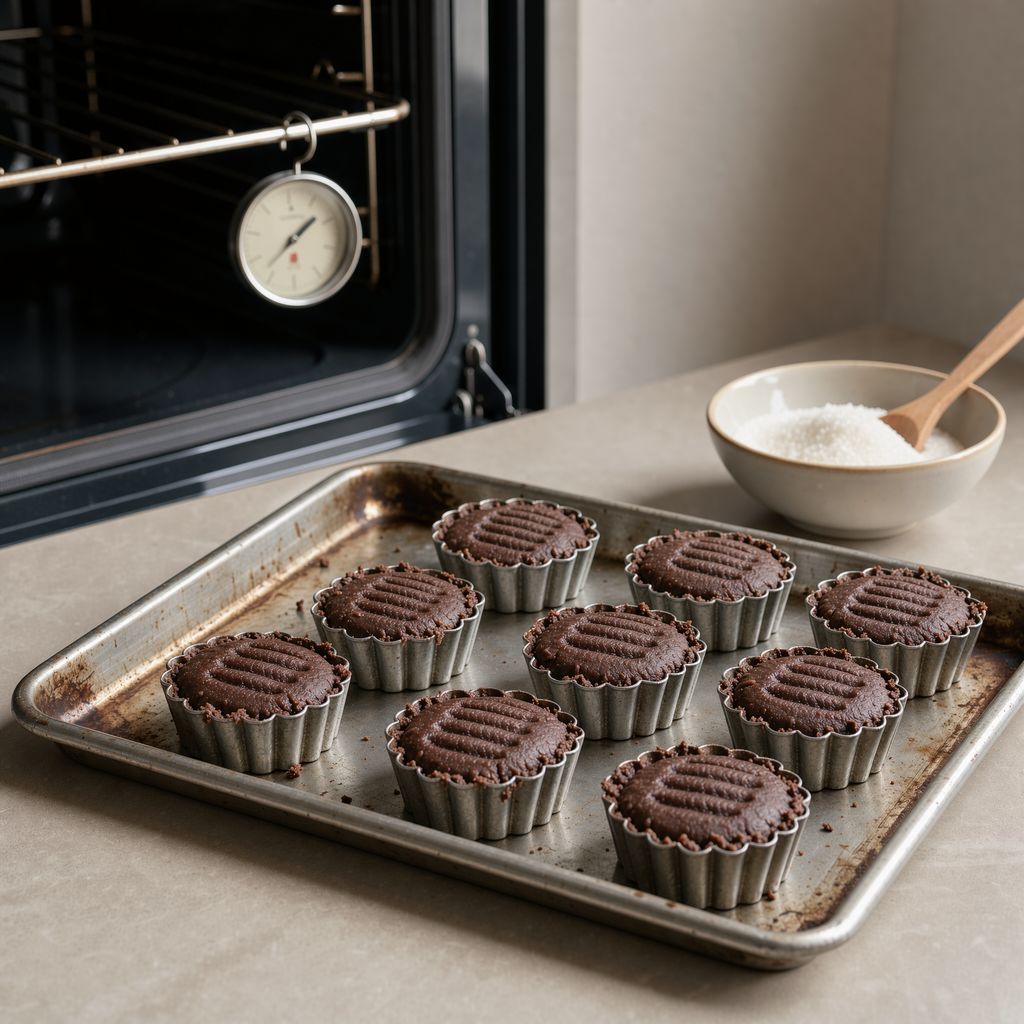
What temperature should you bake pracny at? Use 340–355 °F (170–180 °C) with top and bottom heat (300–320 °F / 150–160 °C with a fan oven) for about 8–15 minutes, depending on tin size – medium tins (1.5–2.5 in / 4–6 cm) take 10–12 minutes. They're done when the surface looks dry and matte and the edges pull away slightly from the sides of the tin. Unmold them 1–3 minutes after they come out of the oven, while still warm – once cold they stick, and when piping hot they break.
Bake pracny at 340–355 °F (170–180 °C) with top and bottom heat, or at 300–320 °F (150–160 °C) with a fan oven. A higher temperature won't improve them – it only burns the edges before the middle is baked through.
Why this range:
The dough is dark. Cocoa and ground nuts mask browning, so you can barely tell by eye when pracny start to burn. A gentler temperature gives you some leeway.
Nuts turn bitter. The fat in ground nuts scorches quickly at high heat, and the pracny taste bitter even when they look fine.
Metal conducts heat. Metal tins get hotter than the air around them, so the dough at the sides bakes faster than the dough in the middle.
If you're not sure how well your oven holds its temperature, start at the lower end. You'll find general temperatures for other kinds of cookies in our article What temperature to bake Christmas cookies: temperatures and times by type.
Pracny bake for 8–15 minutes depending on the size of the tin; for the most common medium tins (1.5–2.5 in / 4–6 cm), allow 10–12 minutes. The exact time depends mainly on the size of the tin and the thickness of the dough layer:
Small tins (under 1.5 in / 4 cm): 8–10 minutes
Medium tins (1.5–2.5 in / 4–6 cm): 10–12 minutes
Large or deep tins (over 2.5 in / 6 cm): 12–15 minutes
Silicone tins: allow 1–3 minutes extra, since silicone conducts heat less well than metal
These times assume a dough layer of roughly ⅛–¼ in (3–5 mm). Line the tin with dough like a little bowl rather than filling it to the rim – a full tin can't bake through without the edges darkening. Always bake just one sheet at a time on the middle rack, and treat the first batch as a test: use it to fine-tune the time for the rest.
Pracny are done when the surface is dry and matte and the edges pull away slightly from the sides of the tin. Color won't help much with dark dough, so look for these signs instead:
Surface: the shiny, moist look disappears and the dough looks velvety and matte.
Edges: a thin gap appears between the dough and the tin as the dough "lets go".
Touch: light pressure with a finger in the middle shouldn't leave a deep dent; the center should feel springy, not liquid. It shouldn't be rock hard – pracny firm up as they cool.
Aroma: once the kitchen starts to smell of toasted nuts and cinnamon, you're nearly there. A smell of burning means you're too late.
Test cookie: unmold one pracny from the first batch and break it open. Inside it should be crumbly and dry, not sticky or gummy.
This helps you avoid two mistakes: underbaked pracny tear when unmolded and stay stuck in the tin, while overbaked ones are hard, bitter and crumble to dust.
Unmold pracny 1–3 minutes after taking them out of the oven, while they're warm but no longer piping hot. This window matters more than anything else:
Straight from the oven, the dough is still soft and fragile – it breaks and crumbles when you tap it out.
After a few minutes, the structure sets, but the butter in the dough is still liquid and works like a lubricant. The pracny slip out on their own.
Once cooled, the butter solidifies and glues the dough to the walls, especially in the fluted ridges. Then they break with every attempt.
How to do it: turn the tin upside down over a clean tea towel or baking sheet and tap it briefly against the work surface. If the cookie doesn't drop out, gently squeeze the sides of the tin (possible with metal ones) or tap once more. Don't pry it out with a knife – you'll damage both the edge and the tin.
If the tins have cooled in the meantime, put them back in a warm oven for 1–2 minutes. The butter softens again and the pracny will come out.
Pracny most often burn because of an oven that runs hotter than it shows and because of baking too long "just to be safe". Home ovens commonly deviate from the set temperature by 10–20 °C (about 20–35 °F), and with dark, nutty dough that's the difference between a fragrant pracny and a bitter one.
Check the temperature. Put a separate thermometer in the oven and let it heat for 15–20 minutes; you'll see how many degrees it really reaches. The Patisse oven thermometer, which hangs on the rack and reads through the glass, is handy for this. Once you know how much your oven overshoots, you can adjust it for all your cookie baking.
Don't bake on the bottom rack. The bottoms of the tins burn there before the tops are baked.
Watch the thick spots. Where there's more dough in the tin, it bakes more slowly, and where there's little (the edges), it browns first. Line the tins evenly.
One sheet at a time. Two sheets together disrupt the airflow, and the top batch bakes differently from the bottom one.
For pracny, classic metal tins work best: they heat up quickly, set the dough nicely at the sides, and warm pracny slip right out of them. They do have their demands, though – new ones need to be greased and floured, and after washing they must be dried thoroughly or they'll rust.
Metal (tinplate, stainless steel): the sharpest pattern and shortest baking time; unmold warm after 1–3 minutes.
Silicone: nothing sticks and they don't rust, but the pattern is usually less crisp, baking takes a few minutes longer, and it's better to let the pracny cool a little longer, because you can't tap them out of silicone – you push them out.
Tartlet tins: these work too, but they tend to be deeper, so go for the upper end of the time range.
Temperature and the moment of unmolding matter more than the brand.
Roll the unmolded pracny in vanilla sugar while they're still warm – a warm surface makes the sugar stick, a cold one doesn't. The best choice is sugar made with real vanilla, such as homemade vanilla sugar from vanilla pods, which you can prepare a few weeks ahead.
Then let them cool completely on a wire rack and pack them into a metal tin. Freshly baked pracny tend to be harder and more brittle; over a few days in a closed container they soften a little and the flavors meld. For more holiday baking inspiration, browse our Christmas cookies.
You can bake pracny 3–4 weeks before Christmas. Stored in a closed tin in a cool place, they keep well and even soften a little over the first few days. Store them away from cookies with cream filling so they don't absorb moisture.
Yes, it's best to chill the dough for at least 1–2 hours, ideally overnight, in the fridge. The butter firms up, the dough stops sticking to your fingers, and it presses into the tins much more easily and evenly.
You can, but they won't have the classic fluted shape. Roll the dough out and cut shapes, or roll it into balls, and bake them on a baking sheet lined with parchment paper. The time drops to about 8–10 minutes because the layer is thinner.
Hard pracny are most often overbaked or were baked in too thick a layer. Shorten the time by 1–2 minutes, press the dough into the tins more thinly, and let the cookies rest for a few days in a closed tin, where they'll soften a little.
Wash metal tins in warm water only, never in the dishwasher, and dry them thoroughly right away – ideally for a few minutes in the cooling oven. Stored dry and lightly greased, they last for years without rust.
One recipe worth heating the oven for, one tip, and one deal from the shop. Nothing else.