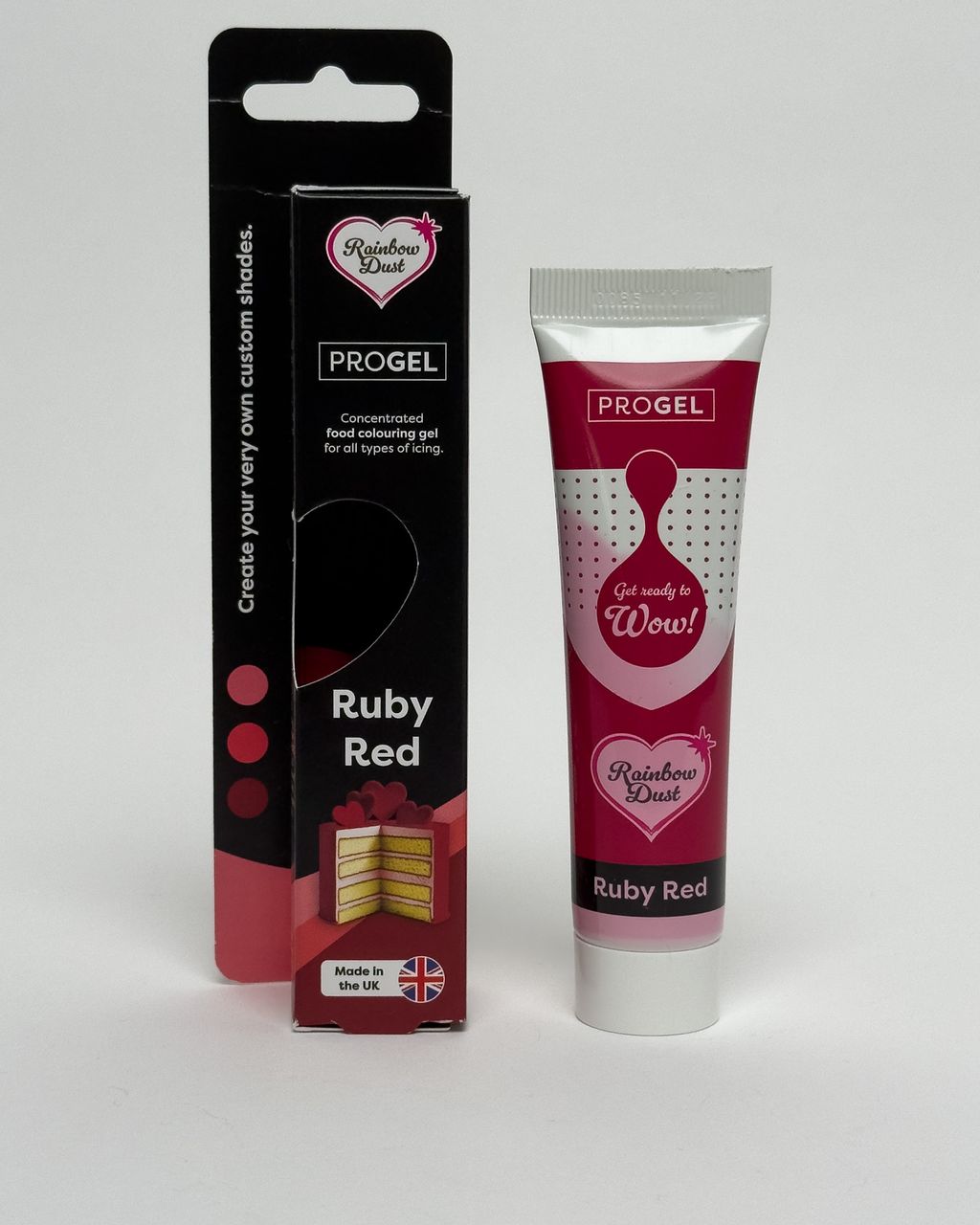
ProGel Gel Food Colouring – Ruby (25 g)
Marzipan for Covering a Cake: How to Roll It Out and Cover a Cake Without Cracks or Sticking
Updated Oct 24, 2026
Roll marzipan out to 3–5 mm (about ⅛–¼ inch) between two sheets of baking paper or on a surface dusted with icing sugar. Lay it over a chilled cake coated with ganache, buttercream or sieved apricot jam, and smooth it from the top down with your palm. Unlike fondant, it tastes of almonds, is softer and more forgiving, but it dries out faster and cracks if it's cheap or cold. We'll cover which marzipan to buy, what goes underneath, how much you need, how to colour it and how to give it a golden shine for Christmas.
Choose marzipan when you want the covering to taste good; choose fondant when looks and sharp edges matter most. A quick comparison:
Flavour: marzipan tastes of almonds and you eat all of it, while fondant is pure sugar and many people peel it off.
Handling: marzipan is softer and more pliable, and you can smooth out small cracks with the warmth of your palm. Fondant stretches more, but cracks on the edges are harder to repair.
Appearance: fondant gives a smoother, "porcelain" finish and a clean white colour. Marzipan is naturally yellowish, so pastel and deep dark shades work, but snow white doesn't.
Keeping quality: marzipan acts as a barrier against drying out, so the cake underneath stays moist for longer.
A classic British Christmas cake uses both: marzipan first, then a thin layer of fondant or icing on top. If you're leaning towards fondant, we have a separate guide: fondant for cakes – which filling goes underneath and how to cover a cake without cracks.
For covering, buy marzipan with a higher almond content, ideally 30% or more. You'll find the percentage in the ingredients on the packaging. The more almonds, the more elastic the paste and the less it cracks; the more sugar (and starch), the more crumbly it is and the faster it dries into "elephant skin".
Marzipan for covering / modelling is the safest choice. It's usually balanced so that it rolls out thinly and holds its shape.
Raw marzipan paste (in Germany Marzipanrohmasse, around two thirds almonds) tastes excellent, but it's too greasy and soft for covering. Knead it with icing sugar at roughly 1:1 and it rolls out beautifully.
Cheap "marzipan" bars and flavoured pastes often contain more sugar and starch than almonds, or apricot kernels instead of almonds (so-called persipan). They're fine for a few decorations, but not for a whole cake.
Homemade marzipan from ground almonds tastes best, but it's usually stickier and uneven. For covering, knead in extra icing sugar and let it rest for an hour.
If your marzipan is crumbly and tears while you knead it, work in a few drops of glucose syrup or liquid invert sugar. It restores elasticity without making it sticky. Don't add water, as it dissolves the sugar and the paste turns tacky.
Under marzipan you want a firm, smooth layer that isn't too wet: ganache, buttercream or, for dense cakes, sieved apricot jam. That layer does two jobs: it sticks the marzipan to the cake and evens out bumps that would otherwise show through.
Ganache (chocolate with cream) is the most reliable base for cream cakes. Spread a thin layer, level it with a scraper and chill the cake in the fridge for at least 1–2 hours. Sharp ganache edges mean sharp marzipan edges.
Buttercream (for example custard-based or Swiss meringue) works, as long as the cake is chilled and the buttercream is firm to the touch.
Apricot jam is the classic under marzipan on a fruit Christmas cake or dense almond sponge. Warm it, push it through a sieve and brush it on the cake while it's still warm; as it cools it sets and holds the marzipan.
What not to put under marzipan: whipped cream, quark or yoghurt creams, or anything with a high water content. Moisture dissolves the sugar in the marzipan, which gets damp, starts to shine and slides down the sides. If your cake is filled with quark or whipped cream, that's fine: just seal the outside with a thin layer of ganache before the marzipan goes on.
For a final covering, roll marzipan to 3–5 mm; as a base under fondant, 2–3 mm is enough. Thinner than 3 mm and it tears when you lift it and shows every bump; thicker than 5 mm and it's heavy, breaks at the edges and overpowers the flavour of the cake.
How much to buy (at a thickness of about 4 mm, with a margin for trimming):
cake ⌀ 18 cm, height 8 cm: about 500 g
cake ⌀ 20 cm, height 8 cm: about 600 g
cake ⌀ 24 cm, height 8 cm: about 800 g
The diameter of the rolled circle is easy to work out: cake diameter + 2 × height + 4–5 cm extra. For a cake ⌀ 20 cm and 8 cm high, you need a circle of roughly 40 cm.
Marzipan won't stick when it's at room temperature, rolled between two sheets of baking paper (or on a lightly sugared surface), and turned regularly as you go. Here's how:
Let it warm up. Take the marzipan out of the fridge at least 1 hour ahead. Cold marzipan cracks at the edges whatever you do.
Knead briefly, only until smooth, about a minute. Kneading for a long time with warm hands draws almond oil out and the paste turns greasy.
Roll between two sheets of baking paper or film. You don't need any extra sugar, nothing sticks, and the sheet is easy to move afterwards. The alternative is a surface lightly dusted with icing sugar.
Every few strokes, turn the sheet a quarter turn. You'll see straight away if it's sticking, and you'll keep both a round shape and an even thickness. Rolling pin guide rings or two strips of equal thickness on either side help.
Don't dust heavily with starch or flour. They stay on the surface as white patches and dry out the marzipan.
Work quickly: a rolled-out sheet dries in the air within 10–15 minutes and starts cracking at the edges. You'll find rolling and decorating tools in our cake decorating category.
You'll cover a cake without cracks if you lay the marzipan on a chilled cake, smooth the top first and then the sides from the top down, lifting and spreading the excess at the bottom rather than pushing it against the side.
Prepare the cake. Take it out of the fridge; the ganache or buttercream should be firm. If the surface is dry, brush it lightly with a thin layer of ganache or jam so the marzipan sticks.
Transfer the sheet over a rolling pin. Peel off the top paper, wrap the sheet around the rolling pin, line it up with one edge of the cake and unroll it over the cake.
Smooth the top with your palm from the centre outwards so no air is trapped under the marzipan.
Press in the top edge all the way round with your palm, not your fingers. This is where marzipan cracks most often, so work with the warmth of your hand and go slowly.
Smooth the sides from the top down. With one hand, lift and gently stretch the loose "skirt" of marzipan; with the other, smooth the marzipan against the side. If a fold forms, lift it and spread it outwards, and never press it down, or it will stay there for good.
Trim the excess at the bottom with a sharp knife or a pizza wheel.
Finish with a cake smoother or just your palm in circular motions. The warmth of your hand softens the surface.
If it cracks anyway: smooth a small crack on an edge with a warm palm or the pad of your thumb. Prick a bubble with a pin at an angle and press the air out. Patch a bigger hole with a piece of marzipan in the same colour and smooth it in; under a golden finish or a decoration, nobody will find it.
Colour marzipan with gel or powder colours, not liquid ones, because liquid colour adds water to the paste and makes the marzipan sticky. A tiny amount of gel is enough, and it colours deeply.
Apply it with a toothpick. For 100 g of marzipan, start with the amount that clings to the tip of a toothpick and add more as needed. The colour darkens by a shade after resting for 1–2 hours.
Wear gloves and work the colour in by folding and kneading until the streaks disappear.
Colour the whole amount you need at once, with some to spare. Mixing the same shade a second time almost never works.
Remember the yellowish base. Marzipan isn't white, so blue shifts towards green and pink towards salmon. Pastels and warm tones (red, gold, brown, green) turn out best.
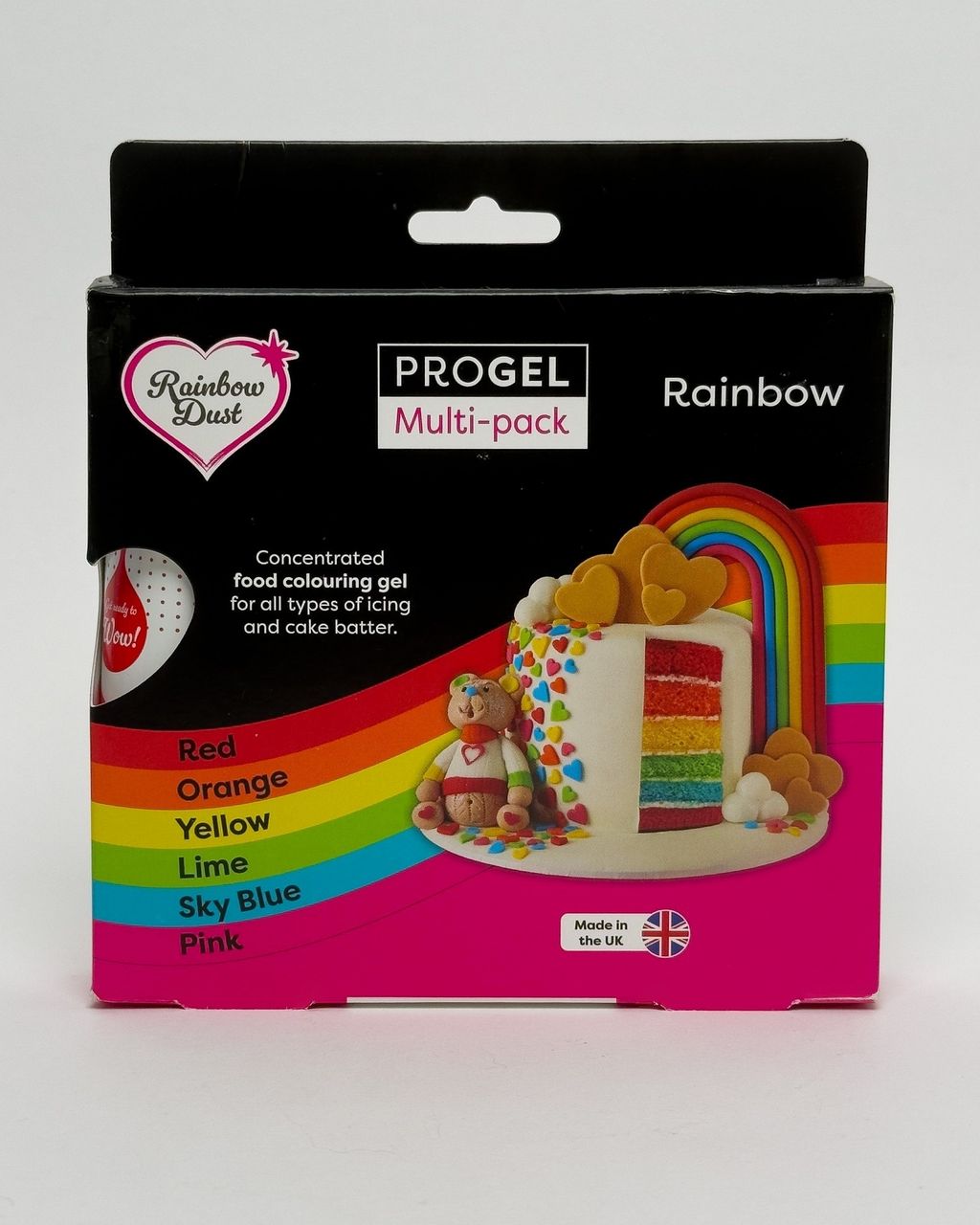
Deep red Christmas marzipan is the hardest challenge: you need a lot of red, and weak colours give only pink. For that, a concentrated ProGel gel colour – Ruby is worth it, giving a deep red without making the paste watery. For green holly leaves, brown pine cones and other decorations, the basic ProGel Rainbow Set (6 pcs) covers everything.
Something we don't sell, but that works: ready-coloured marzipan saves work with very intense shades. For brown, cocoa will do (work it in with a drop of syrup, otherwise it dries out the marzipan). Natural colourings from beetroot or spirulina give soft tones, but they fade over time and can be noticeable in the flavour.
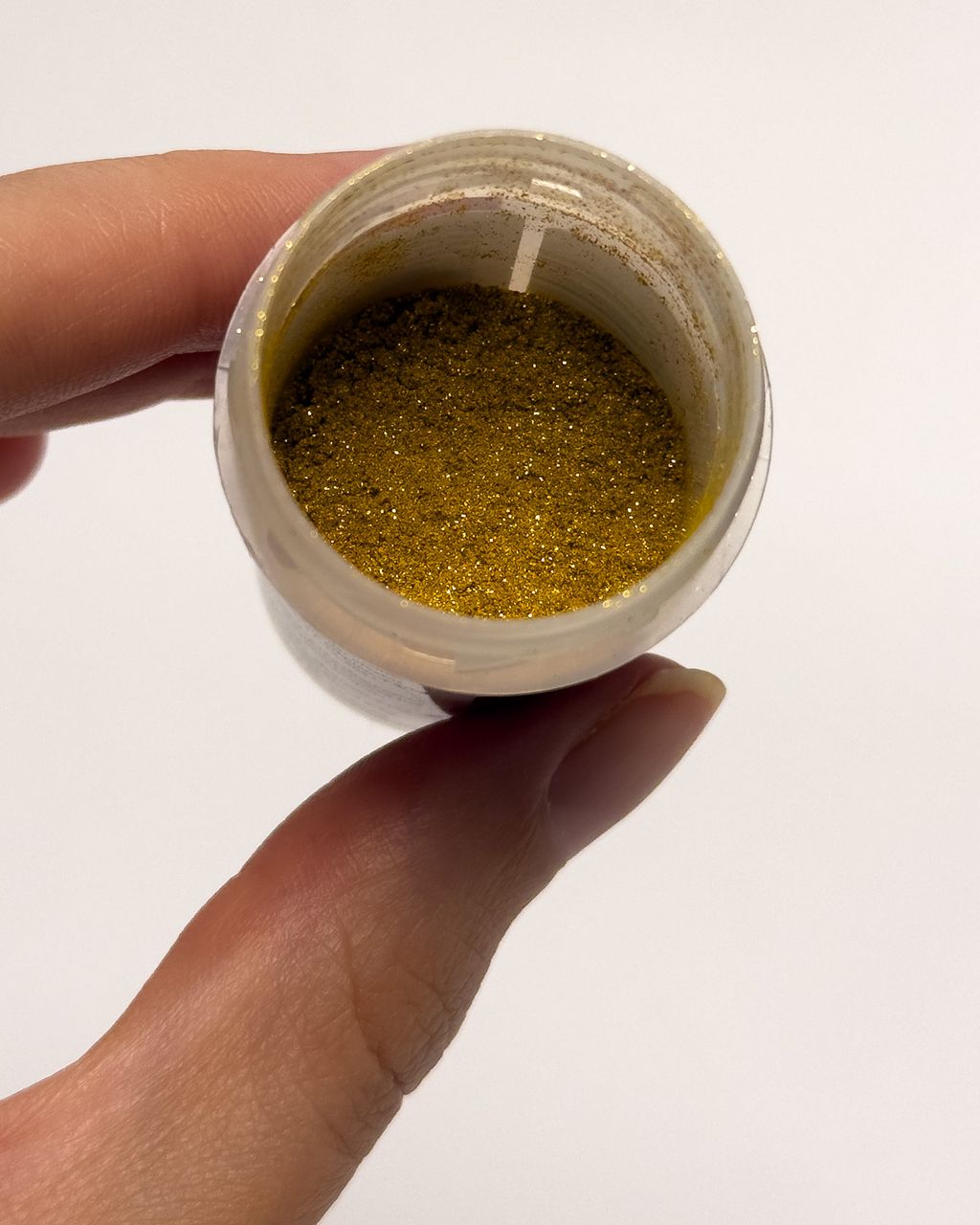
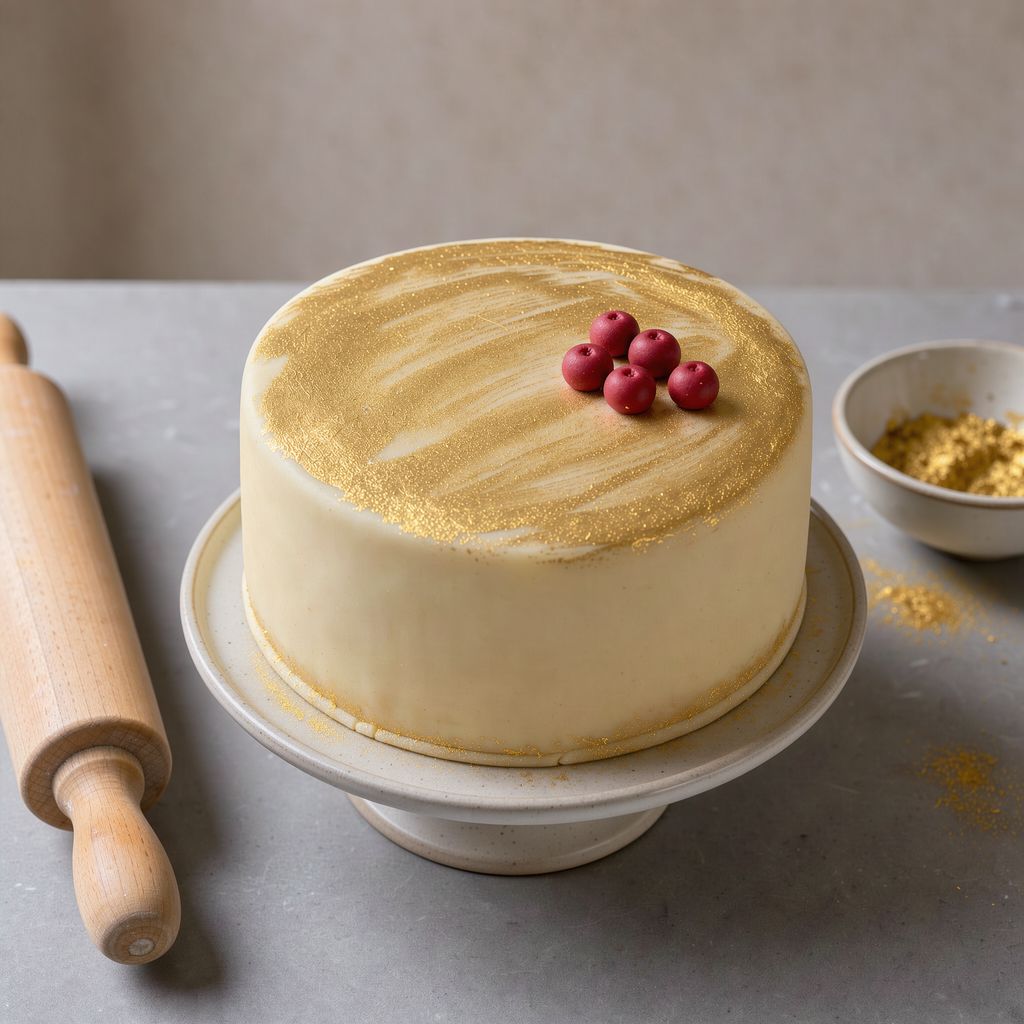
You can get a golden shine on marzipan in two ways: dry with a brush for a subtle shimmer, or mixed with a few drops of alcohol as a paint for full metallic gold. For both, use shimmering edible powder – gold.
Dry: pick up the powder with a soft dry brush and rub it into the surface in circles. It gives a delicate pearly sheen, ideal for the whole top or the edges.
As a paint: mix about ¼ teaspoon of powder with 3–5 drops of clear spirit (vodka, white rum). The alcohol evaporates within a few minutes and leaves an opaque gold. Don't use water, as it dissolves the sugar and the surface turns tacky.
When to paint: let the covered cake dry for at least a few hours (ideally overnight) so the marzipan forms a firm "skin". On a fresh surface, the brush leaves streaks.
For decorations: gold-painted marzipan stars, pine cones or just the rim of the cake look more elegant than an all-gold cake. Less gold often looks more expensive.
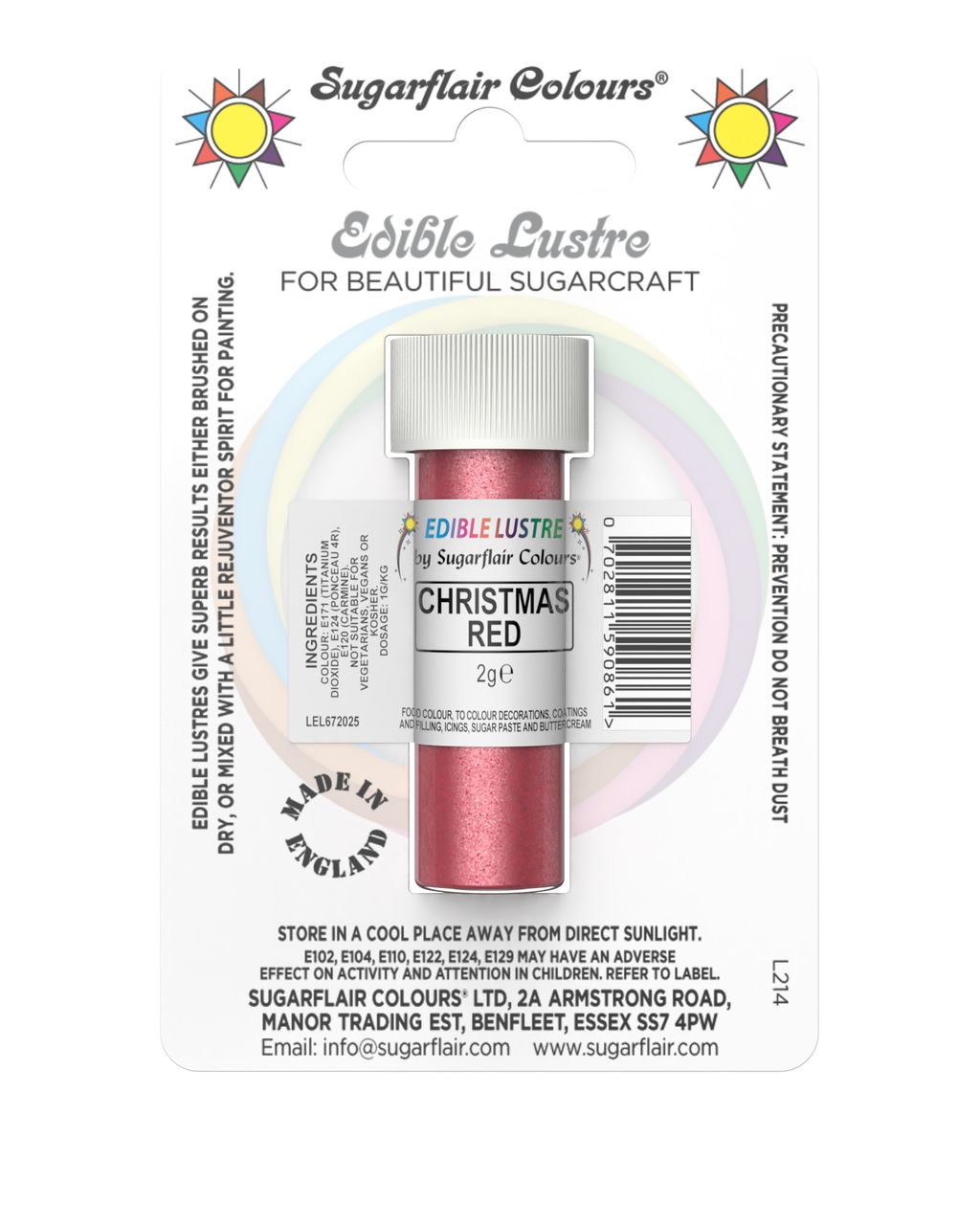
An alternative is edible gold leaf, which gives a mirror shine, but it's pricier and hard to work with if there's a draught from an open window. The classic Christmas combination: natural marzipan, a golden top and a few deep red berries.
A marzipan-covered cake keeps as long as its filling: 2–3 days in the fridge with cream, and up to a week in a cool place for a dense fruit cake under jam and marzipan. Put it in the fridge in a closed box so the marzipan doesn't absorb odours or dry out. Condensation will form on it when you take it out; let it evaporate on its own for 20–30 minutes and don't touch it, or you'll leave fingerprints.
Shiny, greasy marzipan means almond oil has seeped out or it has taken on moisture. Too much kneading with warm hands or a warm room draws out the oil, while moisture comes from whipped cream or quark underneath, or from condensation after the fridge. Dust it lightly with icing sugar and gently rub it with a dry palm. Next time, knead it for less time and put ganache underneath the marzipan.
Yes, marzipan is an ideal base for fondant: it smooths out bumps and adds flavour. Let the marzipan dry for at least 24 hours, then brush it lightly with boiled (cooled) water or clear spirit so the fondant sticks, and lay on fondant rolled to 3–4 mm.
You can colour and wrap marzipan several days ahead, but only roll it out right before covering the cake, because it dries and cracks within 10–15 minutes. Wrap coloured marzipan tightly in cling film, put it in a container and keep it in a cool place. Before rolling, let it warm up to room temperature for an hour and knead it briefly.
No, marzipan is made from almonds, which are an allergen. Persipan, made from apricot kernels, isn't a reliable substitute: it's often produced alongside marzipan and may contain traces of almonds. Always check the ingredients and warnings on the packaging. Fondant is a better choice for people with allergies, but check its ingredients and nut-trace warnings too. This is general food information, not medical advice: if you have an allergy, follow the allergen information on the packaging or consult your doctor.
One recipe worth heating the oven for, one tip, and one deal from the shop. Nothing else.