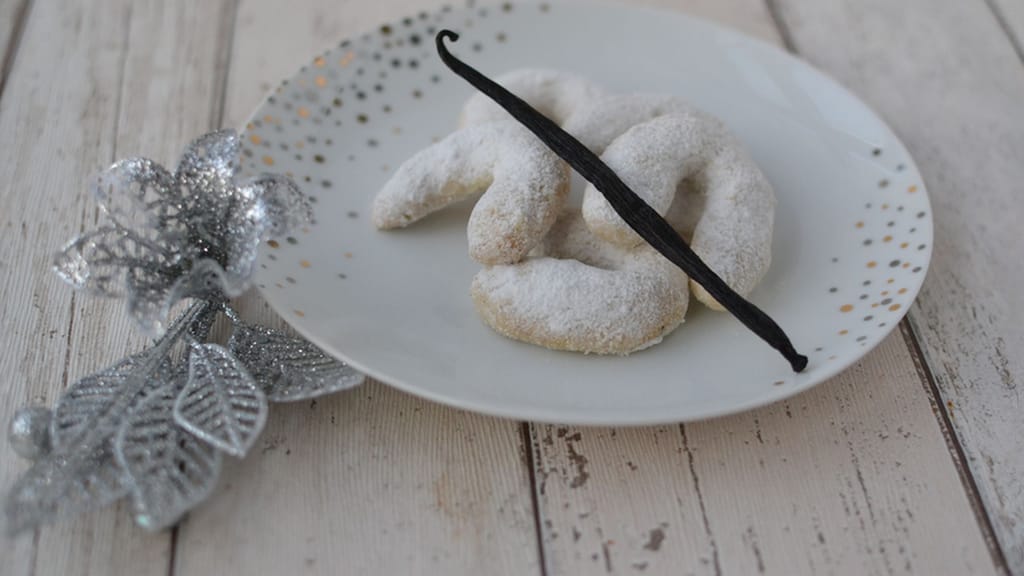
The best christmas cookies? vanilla crescents, of course!
Last-Minute Christmas Cookies: Quick Recipes You Can Bake in One Afternoon
Updated Oct 17, 2026
Last-minute Christmas cookies are the ones that don't need to rest, soften or mature: butter cookies, vanilla crescents, chocolate cookies and no-bake balls can all be eaten the same evening. In one afternoon (about 4 hours) you can make three to five shapes from a single butter dough, plus one no-bake treat. Here's what to bake, what to skip, and how to decorate it all quickly so it looks like you've been at it since the start of Advent.
Cookies that don't need to rest include those made from a tender butter dough with no filling (vanilla crescents, cut-out cookies), drop cookies spooned onto the baking sheet, and every kind of no-bake cookie. They taste best within a few days of baking, so leaving them to the last minute actually suits them.
Vanilla crescents – the dough only needs 20–30 minutes of chilling, they bake in 10–12 minutes, and you roll them in vanilla sugar as soon as they come off the tray. You'll find a tried-and-tested method in the recipe for vanilla crescents, the best Christmas cookies.
Butter cut-out cookies – one dough, any shapes you like, baked in 8–10 minutes. The base recipe is tender, delicate sugar cookies for Christmas.
Almond and chocolate cookies – spooned onto the sheet, no cutting out. Try crisp almond cookies or chocolate cookies with fleur de sel.
No-bake balls and bars – just mix, shape and let them set in the fridge (1–2 hours).
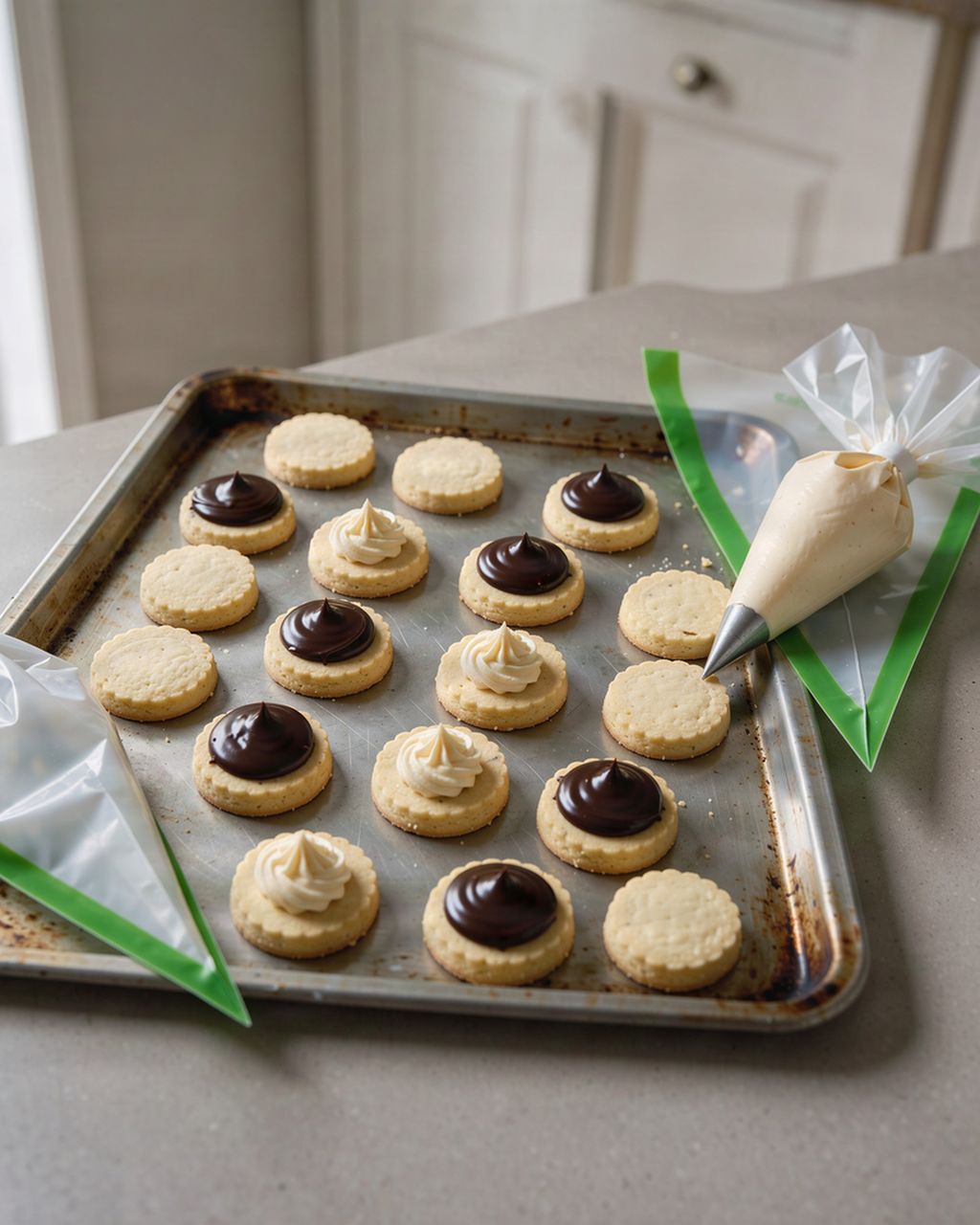
Unfilled Linzer cookies – cut-out rounds dipped in chocolate, with the dough from the classic Christmas Linzer cookies recipe. You can fill them with jam too, but bear in mind that they only soften after 1–2 days.
The best christmas cookies? vanilla crescents, of course!
Vanilla crescents: a classic that doesn't need to rest
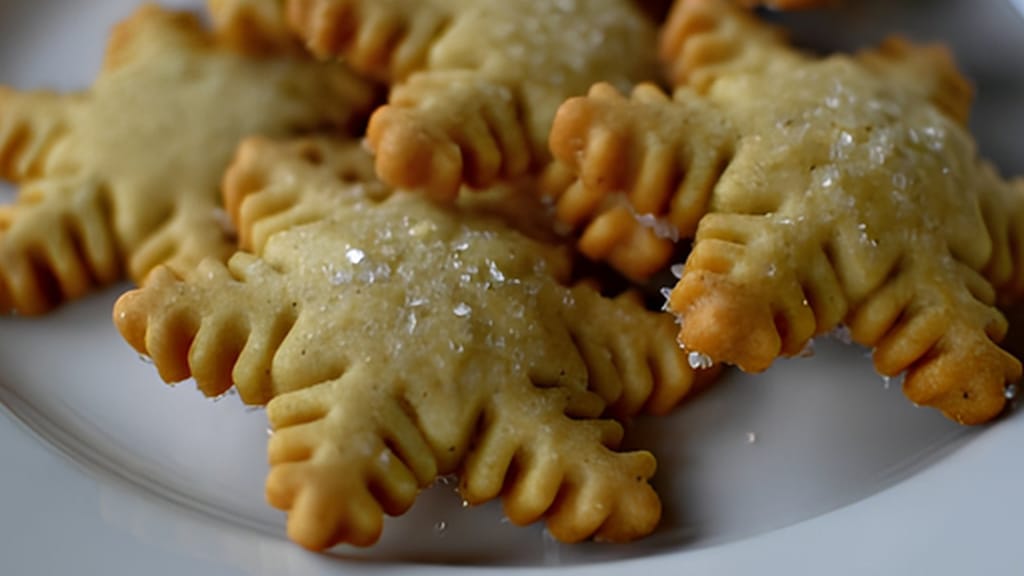
Sugar christmas cookies - delicate and crisp
Tender, delicate Christmas sugar cookies – the base for cut-out cookies
Skip anything that needs time to soften, mature or dry out: classic hard gingerbread, sandwich cookies with a dense filling, and little cups with cream. It's not that you can't bake them, but without a few days' rest they won't turn out the way you know them.
Classic gingerbread usually needs 2–3 weeks in a tin to soften. The exception is gingerbread that's soft right away – for example soft gingerbread cookies.
Sandwiched Linzer cookies and filled rounds with jam are still crisp on the first day and only turn tender after 1–2 days.
Cookies with buttercream (little cups, nut flowers) have to set overnight after filling and then be stored in the cold – on baking day that's just needless stress.
We spell out what to bake ahead, and when, in the Christmas cookie calendar by type. This guide is its opposite: a list for anyone who missed the calendar.
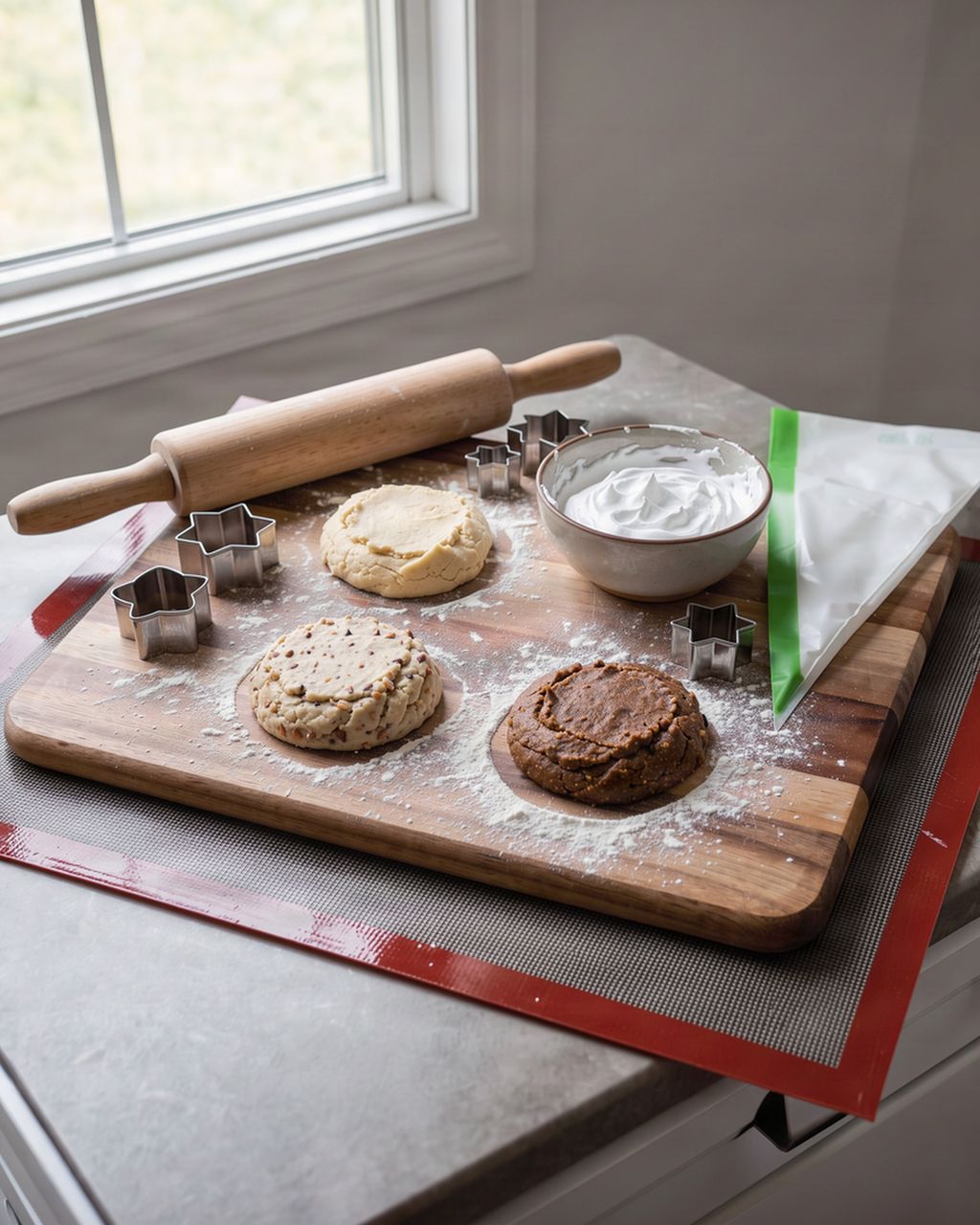
One batch of tender butter dough gives you five shapes: cut-outs, slices from a log, thumbprint balls, crescents and two-tone pinwheels. Make the dough in a ratio of 3 : 2 : 1 (flour : butter : sugar, plus egg yolks), divide it into five parts, and give each one a different shape and finish. A batch with 500 g flour (about 330 g butter, 170 g sugar and 2 egg yolks) makes roughly 1 kg of dough, or about five trays – one for each shape. For three shapes, 300 g flour is enough.
Cut-outs – roll out to 3–4 mm (about ⅛ inch), cut shapes and bake at 170–180 °C (340–355 °F) for about 8–10 minutes.
Slices from a log – shape the dough into a log 3–4 cm (about 1½ inches) across, wrap it in plastic wrap and freeze for 20–30 minutes. Then cut slices 5 mm (¼ inch) thick. No rolling, no scraps.
Thumbprint balls – make balls the size of a walnut, press a hollow into the middle, and after baking add a drop of jam or chocolate.
Crescents – work 2–3 tablespoons of ground nuts or almonds into part of the dough and shape small crescents.
Two-tone pinwheels – work 1 tablespoon of cocoa into half of one portion, lay the two sheets on top of each other, roll them up into a log and slice.
Why it works: butter dough without a raising agent only holds its shape when it's cold. The freezer cuts the chilling time from the usual 1–2 hours in the fridge to 20–30 minutes, and the cut shapes won't spread. You'll find cookie cutters, moulds and decorations all together in the Christmas cookies category.
In 4 hours you can manage one butter dough in three to five shapes, one no-bake treat and the decorating – as long as you work on something else while the dough chills.
0:00–0:20 – knead the butter dough, divide it into portions, wrap each in plastic wrap and put them all in the freezer for 20–30 minutes. Move the portions that won't be needed until later to the fridge after half an hour, so they don't freeze solid.
0:20–0:45 – meanwhile, mix the no-bake cookies and put them in the fridge to set.
0:45–2:30 – bake tray after tray. While one tray is in the oven, prepare the next on parchment paper.
2:30–3:00 – let the cookies cool completely on a wire rack. Warm cookies break easily and chocolate won't set on them.
3:00–4:00 – dipping in chocolate and adding sprinkles.
If you only have one baking sheet, bake on sheets of parchment: prepare three sheets of cookies ahead and just slide them onto the baking sheet one by one.
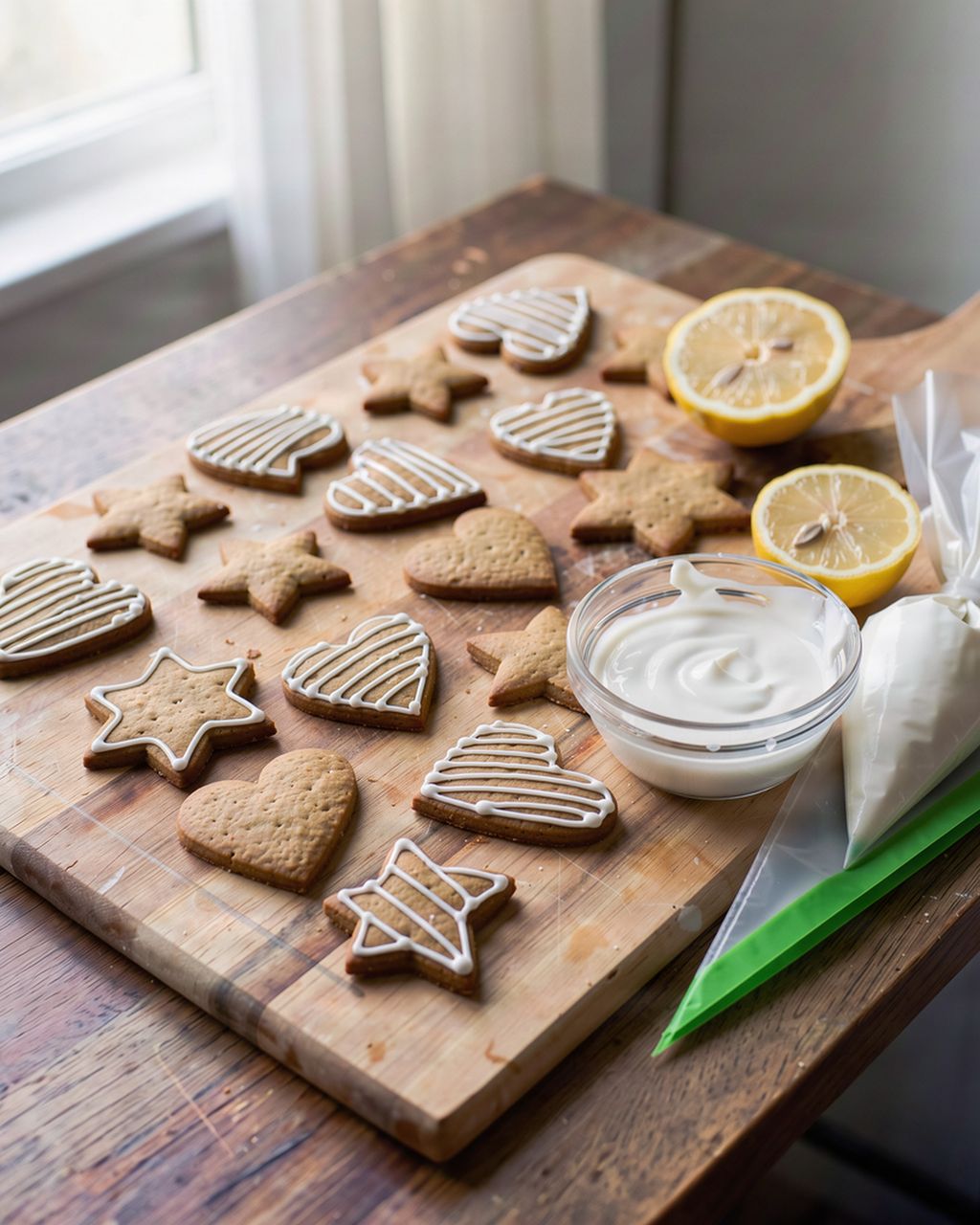
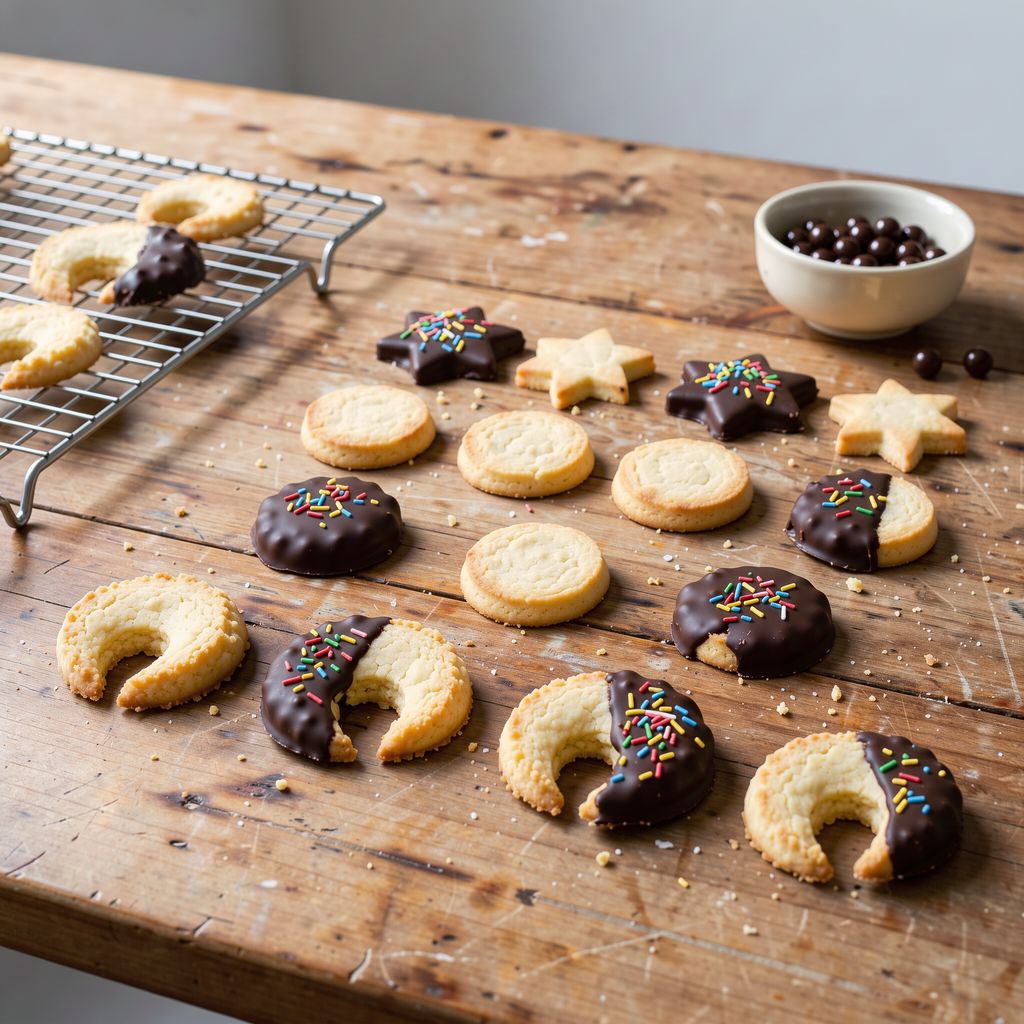
The quickest decoration is to dip each cookie halfway into melted chocolate and, while it's still wet, top it straight away with sprinkles or crispy pearls. You can decorate a whole tray in 10–15 minutes, and a plain round turns into a cookie that looks like it came from a pastry shop.
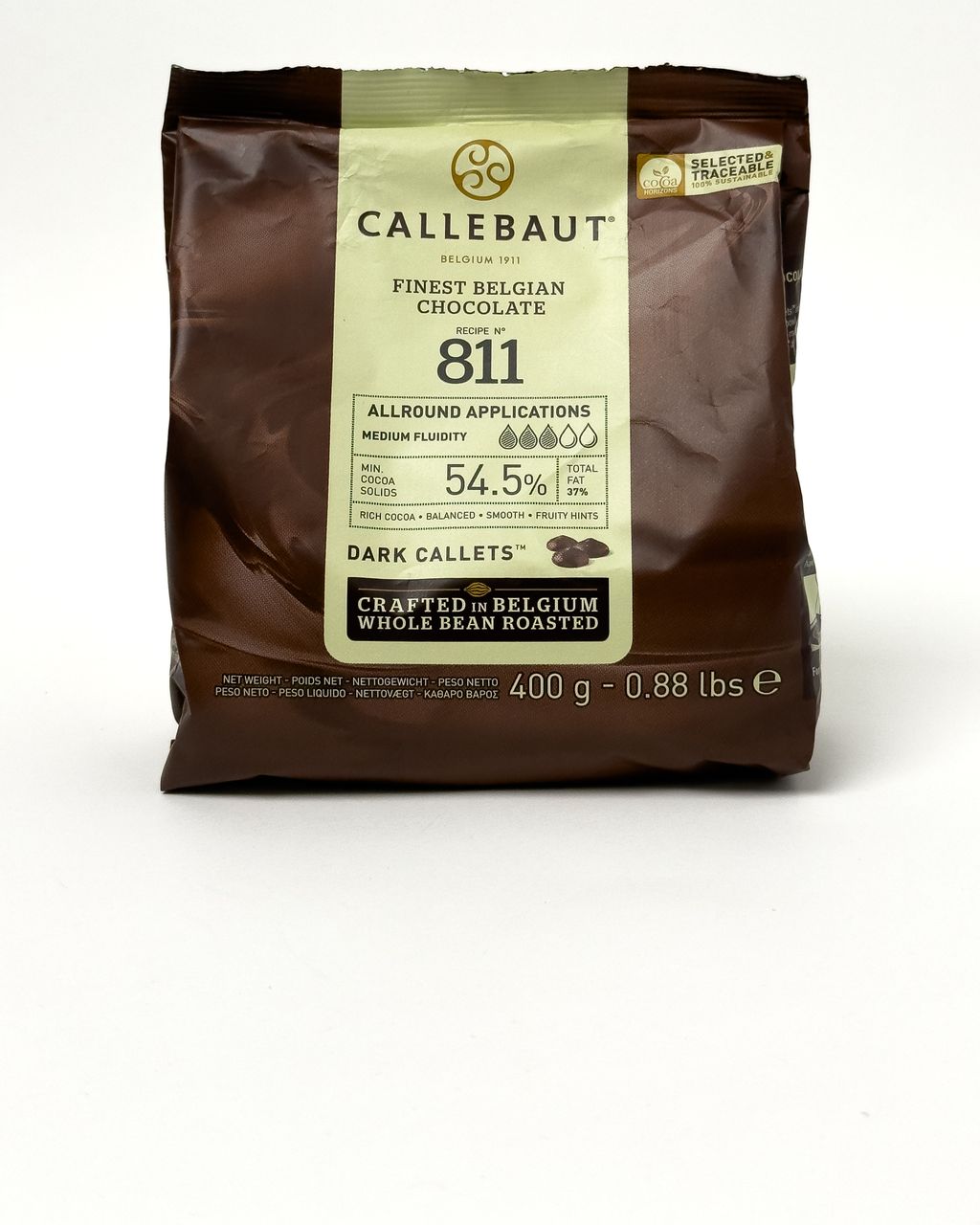
Chocolate: for it to set glossy and not smear, it needs to be tempered. The easiest way is the seeding method: melt two-thirds of the chocolate (for dark chocolate, to about 45 °C / 113 °F), stir in the remaining third as chips and keep stirring until the dark chocolate cools to a working temperature of around 31–32 °C (88–90 °F). Chocolate chips or callets are handy for this because they melt evenly and there's nothing to chop – we use Callebaut 811 dark chocolate callets with 54.5% cocoa, which are less bitter than 70% chocolate. Good-quality bar chocolate works too. Supermarket coatings (made with fat instead of cocoa butter) don't need tempering and are quicker, but the flavour is weaker. Read more about shine and temperatures in our article on dipping cookies in chocolate.
Sprinkles: sprinkle within 1–2 minutes of dipping, because after that the chocolate surface sets and the sprinkles won't stick. A ready-made mix saves time compared with blending your own – for example Queen of the Dance Floor sugar sprinkles. Ordinary coloured sprinkles from the supermarket, chopped pistachios or freeze-dried raspberries work just as well.
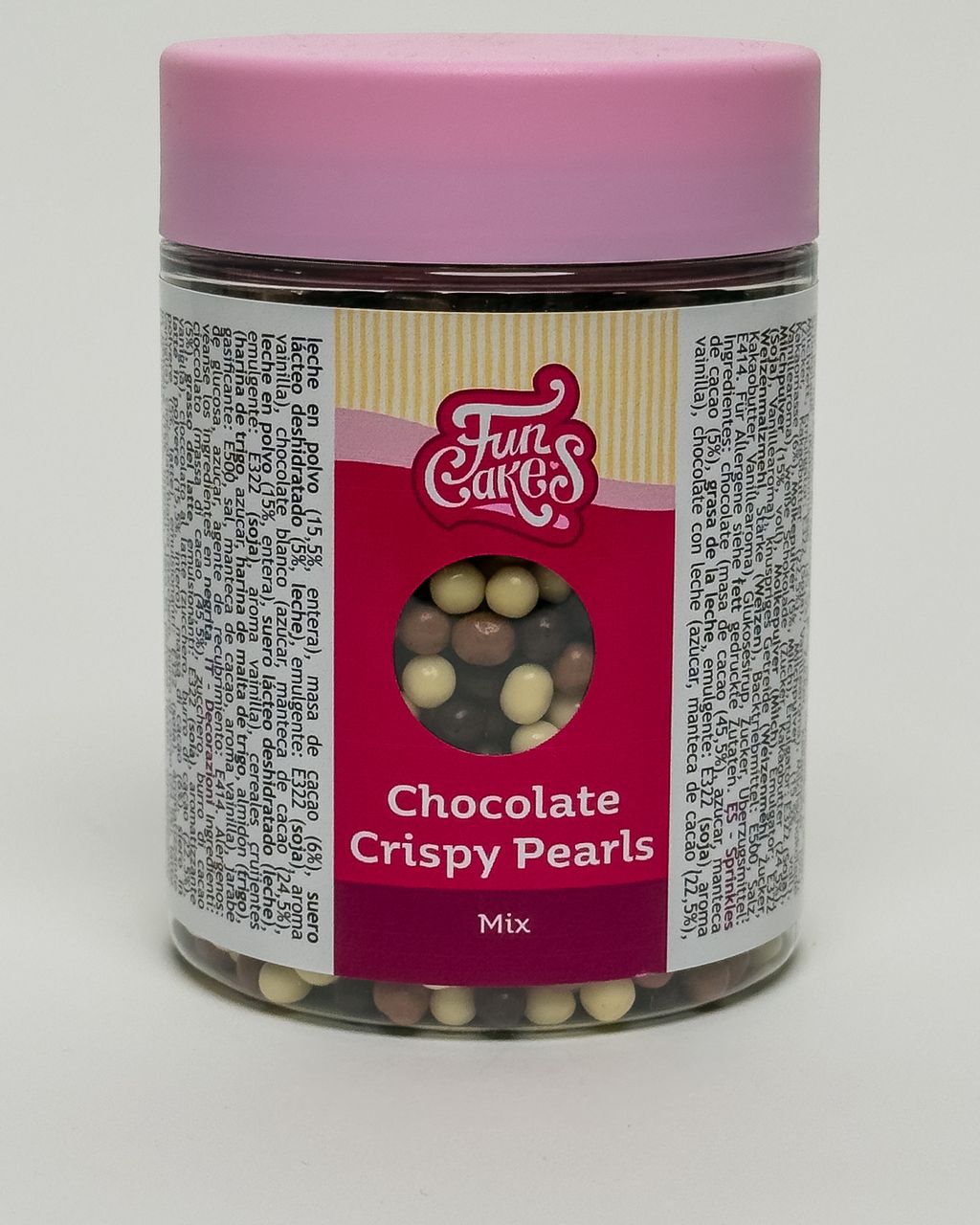
Crispy pearls: chocolate-coated cereal pearls add a distinct crunch. The chocolate coating protects them from moisture, so they stay crisp on top of the chocolate and in the tin. For cookies, the crispy pearls – chocolate mix of white, milk and dark chocolate is a good fit. Don't put them into a moist cream, where they'd go soft within a few hours – read more in how to use crispy pearls so they don't go soft.
Leave the dipped cookies to set on parchment paper at room temperature, ideally in a cooler room (up to 20 °C / 68 °F). The fridge speeds up setting, but tempered chocolate could turn dull once you take it out.
No-bake cookies are the quickest because there's no oven: you bind a dry base (cookie crumbs, oats or crispy rice cereal) with fat, chocolate, marshmallow or dates, shape it, and 1–2 hours in the fridge later it's done. They work well as a second kind alongside the baked dough, because they set while you're baking.
White chocolate Baileys balls with sponge fingers – rolled in coconut or cocoa.
Snowflake Crisps, no-bake marshmallow cookies – cut into squares, with crispy rice.
Cocoa oat and date balls – sweetened with dates.
If the mixture is crumbly, it needs more binder: add melted fat, chocolate or liquid a teaspoon at a time until a ball holds its shape when you squeeze it. You'll find a full overview of types in our article on no-bake cookies: an overview of types.
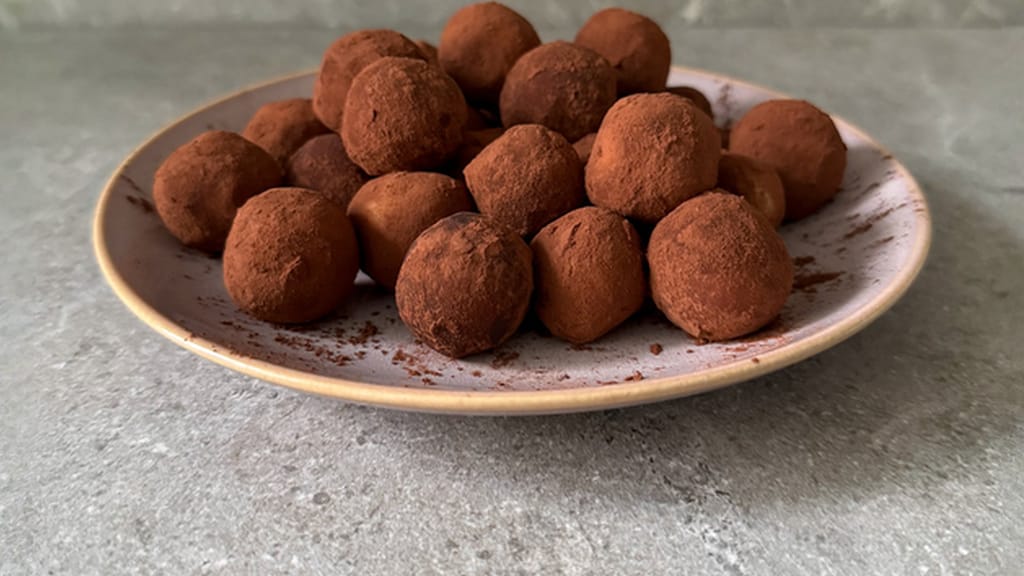
Baileys white chocolate truffles with sponge biscuits
White chocolate Baileys balls – no-bake cookies ready in 2 hours
Yes. Butter dough keeps wrapped in plastic wrap in the fridge for 2–3 days and in the freezer for up to 3 months. Before rolling it out, let it soften at room temperature for 10–15 minutes, or it will crack. A log of dough can be sliced straight from the freezer.
Butter cookies without a filling keep in a tin in a cool place for about 2–3 weeks. Store chocolate-dipped cookies in layers separated by parchment paper at up to 18 °C (64 °F). No-bake cookies belong in the fridge and should be eaten within a week. Find out more in our article on [how to store Christmas cookies](/cs/articles/skladovani-vanocniho-cukrovi).
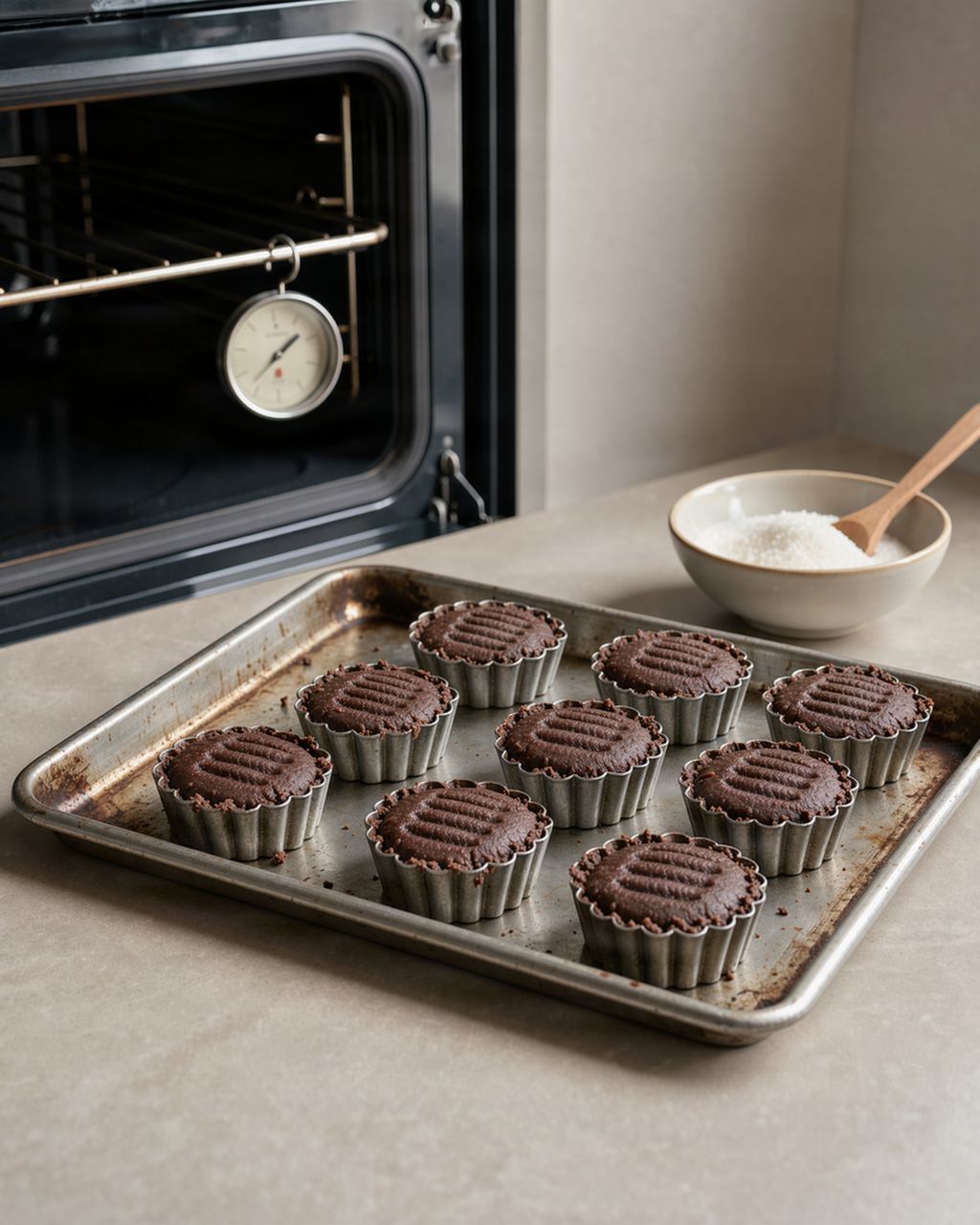
Cookies spread mainly because the dough is too warm when it goes into the oven. Put the cut-out shapes on the baking sheet in the freezer for 10 minutes, and check your oven temperature with an oven thermometer – many ovens run 10–20 °C (18–36 °F) off from what the dial says.
Wait until the cookies are completely cool, and any chocolate is fully set, before packing them, or they'll steam and stick together. Layer them in the box with parchment paper between layers, with heavier, sturdier cookies on the bottom and delicate crescents on top. Put no-bake balls in paper cups and keep them separate, so they don't pass moisture on to the crisp cookies.
Yes. For a tender butter dough, simply leave out the egg yolk and add 1–2 tablespoons of cold water or cream. The dough will be a little more delicate and less firm, so chill it for longer. Most no-bake cookies are completely egg-free anyway.
One recipe worth heating the oven for, one tip, and one deal from the shop. Nothing else.