Why Are My Brownies Cakey? Fudgy vs Cakey vs Chewy Explained
How to Tell When Brownies Are Done (and Why the Middle Stays Gooey)
Updated Nov 21, 2026
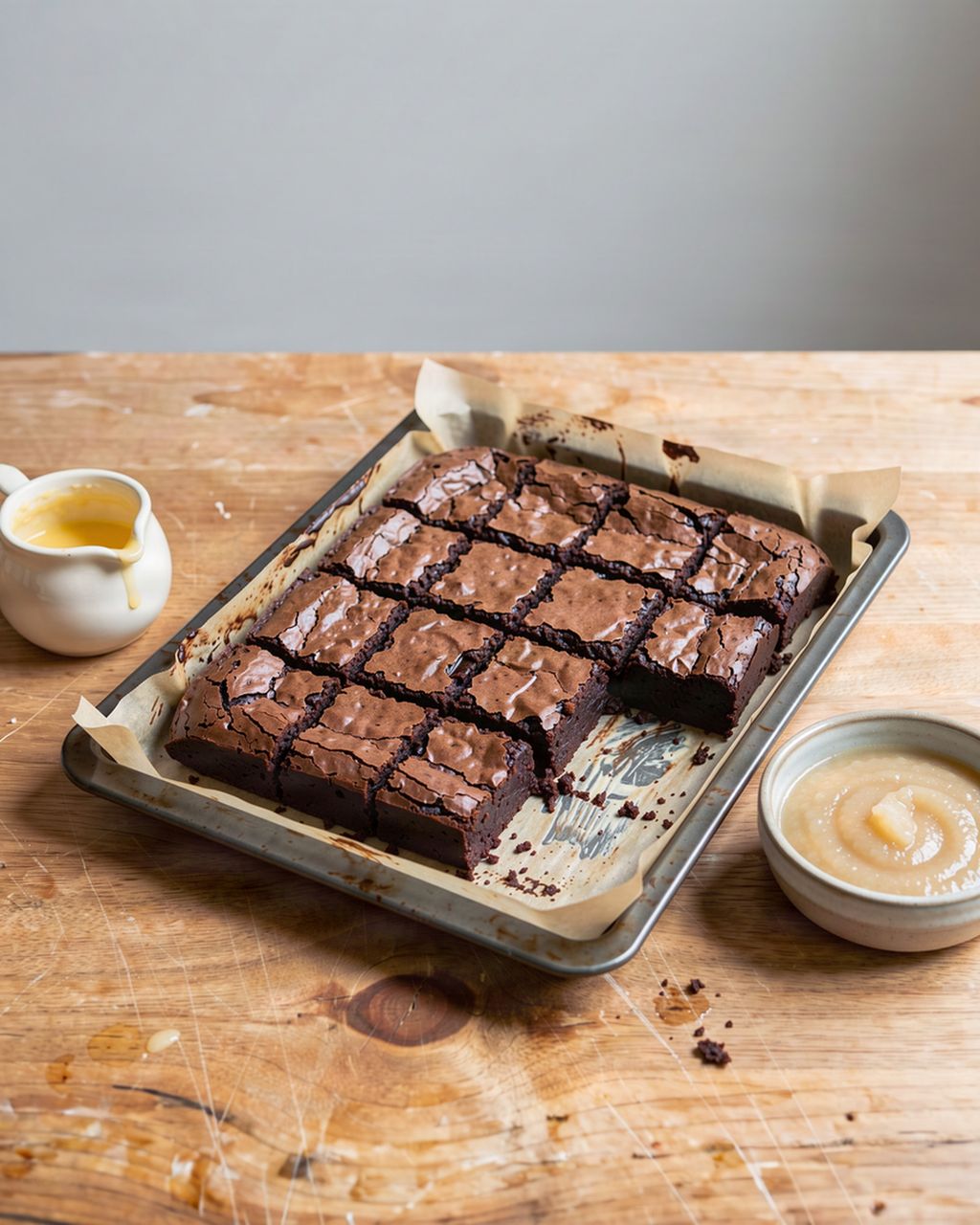
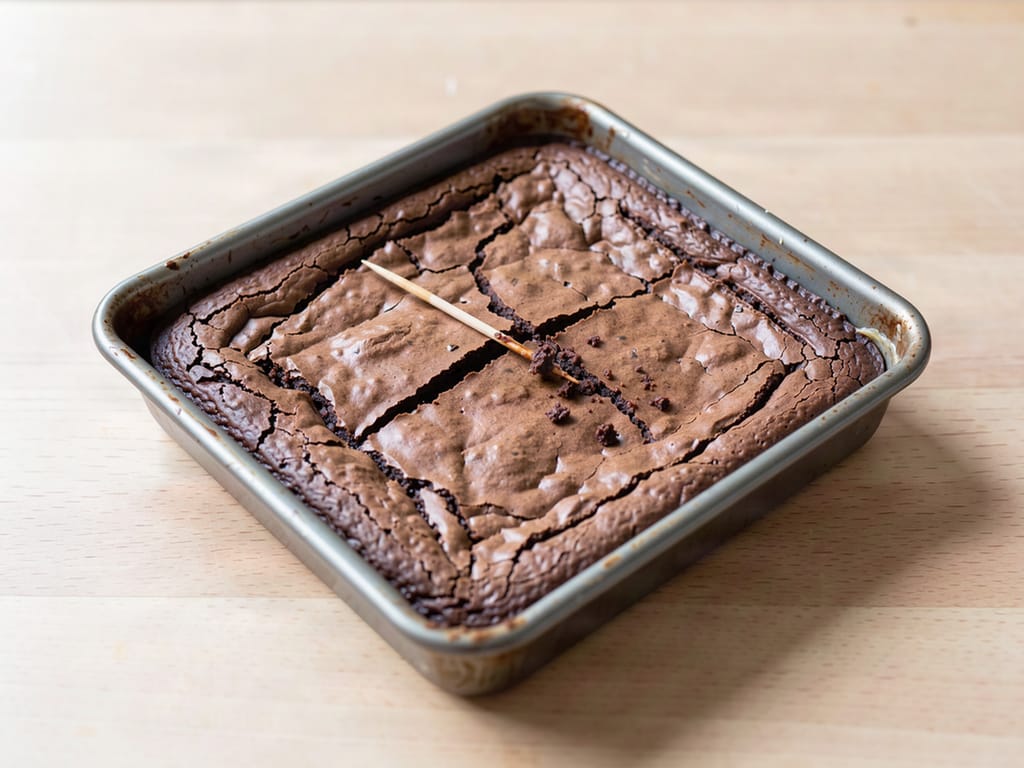
Brownies are done when the edges are set and pulling away from the pan, the top looks dry, and a toothpick pushed into the center comes out with moist crumbs but no wet batter. They keep setting as they cool, so a center that still looks soft is normal; one that is liquid needs more time.
Check these together, not just one:
Edges: set, slightly raised, and just starting to pull away from the sides of the pan.
Top: dry and matte, often with a thin shiny or crackly crust. No wet shine in the center.
Wobble: give the pan a gentle shake. The center should barely move, not ripple like liquid.
Toothpick: push it in about halfway between the edge and the center, then in the center. Moist crumbs mean done. Wet batter means not yet.
Start checking 5 minutes before the time in the recipe, then every 3 to 5 minutes.
Seasonal baking plans, tested recipes and kitchen tricks that save you time. Unsubscribe in one click.
For cakes, you want a clean toothpick. For brownies, a clean toothpick usually means you have gone too far.
Wet, glossy batter: underbaked. Bake longer.
Moist, sticky crumbs: done, for fudgy and chewy brownies.
A few dry crumbs or clean: done for cakey brownies; overbaked for fudgy ones.
If your brownies have chocolate chunks, you can hit a pocket of melted chocolate, which looks like wet batter. Test a second spot.
A thermometer is the most reliable check if the toothpick confuses you. Push an instant-read probe into the center of the pan.
Baking sources don't agree on one number. ThermoWorks says to take fudgy brownies out once the center reaches at least 93 °C (200 °F); King Arthur Baking's chewy brownie recipe uses 104 °C (220 °F) for fully set bars that slice cleanly. Lower in that range is fudgier, higher is firmer.
Both are comfortably above 71 °C (160 °F), the safe minimum USDA FSIS gives for egg dishes.
A gooey center has two possible meanings: underbaked, or just warm.
Still warm: brownies firm up a lot as they cool, because the chocolate and butter set. A center that looks soft but leaves moist crumbs on a toothpick will be fudgy, not raw, once cool.
Underbaked: a toothpick comes out with wet, runny batter, or the middle has sunk into a wet hollow. Common causes:
the pan is smaller than the recipe asks for, so the batter is deeper
the oven runs cooler than the dial
a glass or ceramic pan, which heats more slowly than metal
the pan went in before the oven was fully heated
Ovens can run hotter or cooler than the dial. An oven thermometer tells you what yours does, and the cake pan size converter shows how a different pan changes the depth.
Edges done, middle wet: lay a sheet of foil loosely over the pan and keep baking. The foil slows the edges while the center catches up.
Deep pan: lower the oven by about 15 °C (25 °F) and bake longer, so the outside doesn't burn before the middle sets.
Glass pan: expect a longer bake. A metal pan of the same size bakes more evenly.
Next time: use the pan size in the recipe, or a bigger one for thinner, faster brownies.
If you cut in soon after baking and find raw batter, put the pan back in the oven straight away. If underbaked brownies have sat out for more than 2 hours (1 hour above 32 °C / 90 °F), USDA FSIS advice on perishable food is to throw them out, not rebake them.
The time in a recipe only holds for the pan it was written for.
Smaller pan: deeper batter, longer bake, and more risk of a raw middle. A 20 cm (8 in) square pan holds noticeably less than a 23 cm (9 in) one, so the same batter sits deeper.
Larger pan: thinner brownies that can overbake in minutes. Start checking much earlier.
Dark metal: browns the edges and base faster. Watch for dark edges before the center is set.
Light aluminum: the most even bake, and what most American recipes assume.
Glass or ceramic: heats more slowly, then holds heat. Edges often overbake while the middle lags.
If you are using a different pan, our cake pan substitutes guide explains how to adjust, and the cake pan size converter scales the batter.
Sunken center: often underbaked, so the middle collapsed as it cooled. It can also mean too much baking powder or too much beaten air.
Crackly, papery top: normal. It comes from sugar dissolving into the beaten eggs and setting into a thin crust.
Deep cracks: usually overbaking or a very hot oven. The center rose fast and split.
A slight dip in the middle of a fudgy brownie is fine if the toothpick shows moist crumbs there.
Let brownies cool in the pan on a rack until they reach room temperature. That usually takes at least an hour, longer for a deep pan.
Warm brownies are soft and smear when cut.
Fully cooled brownies slice cleanly. For very neat squares, chill them briefly, covered, in the fridge, then cut with a long knife wiped between cuts.
Our guide to sheet pan bars has more on cutting neat squares.
Brownies are done when the edges are firm, the top is dry and slightly crackly, and a toothpick in the center comes out with moist crumbs attached. Wet, shiny batter on the toothpick means they need more time.
No. A clean toothpick usually means fudgy brownies are overbaked. Look for a few moist, sticky crumbs. Cakey brownies are the exception: they can come out almost clean.
The center is either underbaked or simply still warm. Brownies firm up a lot as they cool. If a toothpick shows wet batter rather than moist crumbs, bake them longer and cover the edges loosely with foil if they are darkening.
Usually the oven runs cooler than the dial, the pan is smaller and the batter deeper than the recipe intended, or you are using a glass pan. Check the oven with a thermometer, use the pan size in the recipe, and lower the heat slightly for a longer bake if the edges burn first.
Let them cool in the pan until they reach room temperature, which usually takes at least an hour. Warm brownies are soft and crumble when cut; cooled ones slice cleanly.
Baking sources give a range rather than one number: ThermoWorks says to take fudgy brownies out once the center reaches at least 93 °C (200 °F), while King Arthur Baking's chewy brownie recipe uses 104 °C (220 °F). Both are well above the 71 °C (160 °F) that USDA FSIS gives for egg dishes.
One recipe worth heating the oven for, one tip, and one deal from the shop. Nothing else.