Homemade Mint Marshmallows with Chocolate
How to Store Marshmallows So They Don't Go Hard or Sticky
Updated Oct 17, 2026
How do you store marshmallows? Keep them in a well-sealed container at room temperature, in a dry spot, coated in a dusting of powdered sugar and starch. Marshmallows have two enemies: dry air, which pulls out their moisture and turns them rubbery, and humidity, which makes them sticky and "sweaty." A container and a good dusting protect you from both. Below, you'll find why this works, how long marshmallows last according to official storage charts, when the fridge and freezer make sense, and how to revive pieces that have already gone hard.
Marshmallows go hard when they lose water to dry air, and they get sticky when they pull water in from the air. A marshmallow is really a foam of sugar syrup set with gelatin, and sugar is hygroscopic, so it's constantly trading water with the air around it.
Dry air (heating, an open bag, an unwrapped marshmallow in the fridge): the moisture escapes, the surface hardens into a crust, and within a few days the whole piece is stiff and rubbery.
Humid air (a kitchen while you're cooking, summer, condensation after taking them out of the fridge): the sugar on the surface absorbs water and dissolves, leaving a sticky film. The pieces stick together, release syrup, and a little puddle of syrup may appear at the bottom.
Heat: in warmth (roughly above 25–30 °C / 77–86 °F) the gelatin softens, the foam collapses, and the pieces lose their shape even without any moisture.
That gives you the whole storage rule: keep them in an enclosed space with a stable temperature and humidity, and protect the surface with a coating that absorbs moisture before the sugar itself does.
Store-bought marshmallows keep for months at room temperature, but official sources give different numbers, and it's a matter of quality, not safety. Here's exactly what they say:
Room temperature: up to 1 year (NMSU specifically for an unopened package), according to the storage charts from Virginia Cooperative Extension (Virginia Tech) and New Mexico State University (publication E-118).
Room temperature, in an airtight container: 2–3 months, according to Ohio State University Extension (fact sheet HYG-5401, pantry at about 21 °C / 70 °F).
The manufacturer: the Jet-Puffed marshmallow product specification (Kraft Heinz) gives a shelf life of 210 days when stored at 10–20 °C (50–68 °F) and relative humidity below 65%.
Fridge, opened package: 1 month, according to Virginia Tech.
In practice: go by the best-before date on the package, and transfer an opened bag to a container. The shorter Ohio State timeframe is more realistic for an opened package, since after a few weeks in the air both flavor and springiness noticeably fade.
These charts don't apply to marshmallows without industrial stabilizers and packaging:
Handmade marshmallows from a confectioner (including ours): follow the date on the label.
Ones from your own kitchen: treat them as a fresh confection and use them within days, not months.
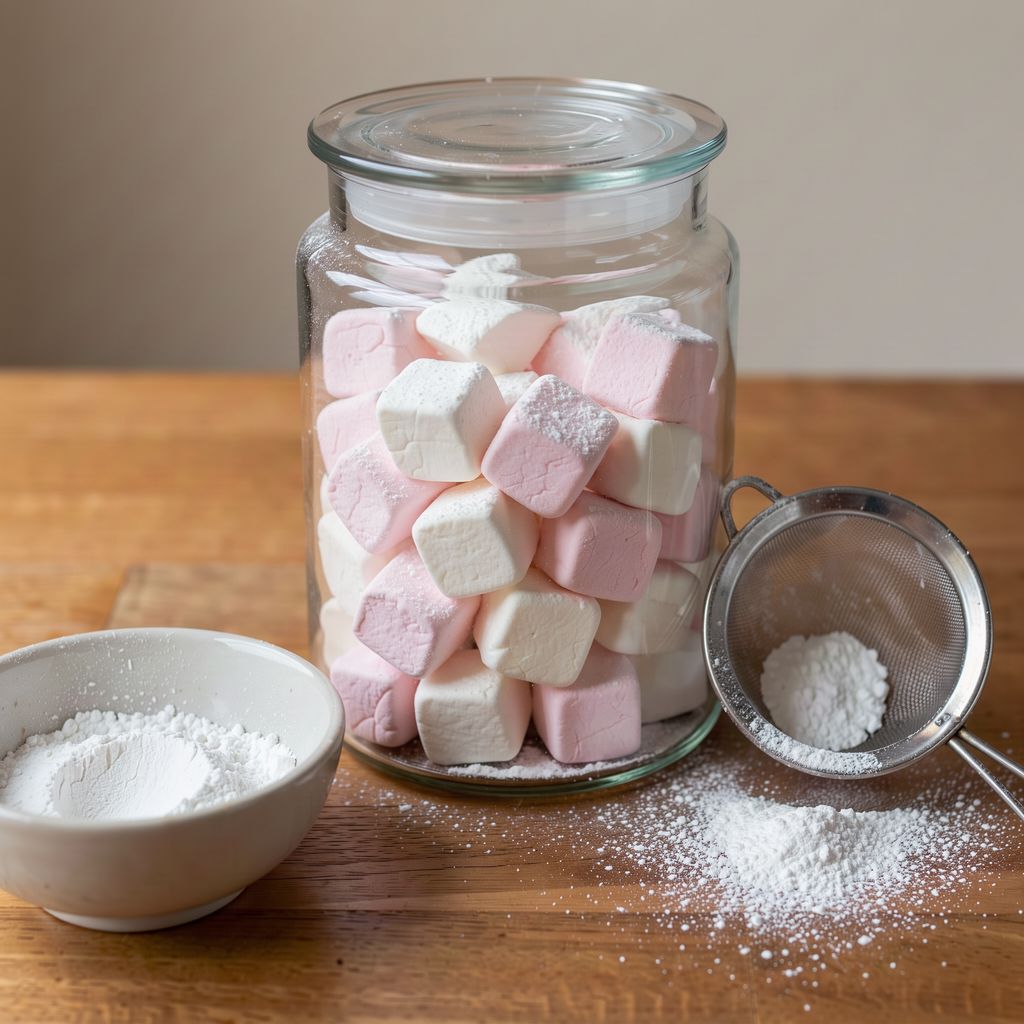
Marshmallows keep best in an airtight container, in a single layer or separated with parchment paper, and coated in a dusting of powdered sugar and starch in a 1:1 ratio. The container protects them from exchanging moisture with the air, and the dusting stops them from sticking.
The container should seal well and hold as little air as possible. The less air inside, the more slowly the marshmallows dry out.
Glass or plastic with a tight-fitting lid, ideally only slightly bigger than what's inside.
A zip-top bag works too, just squeeze the air out before sealing.
The original bag with a rolled-up end and a rubber band isn't enough, because it only half seals.
Keep it away from the oven, dishwasher, hob, and sunlight. A cooler pantry or cupboard is ideal, and Jet-Puffed's manufacturer gives 10–20 °C (50–68 °F).
The dusting is half powdered sugar and half starch, and you can make it in a minute:
Mix powdered sugar and cornstarch (or potato starch) 1:1. About 2–3 tablespoons of the mixture is enough for 300 g (about 10½ oz) of marshmallows.
Coat the pieces on all sides, ideally in a bowl or in a closed bag that you shake.
Shake off the excess over a sieve, and only then put them in the container.
The starch absorbs surface moisture before the sugar dissolves, so the pieces stay dry to the touch and don't stick together. Powdered sugar on its own melts into a puddle in humidity, which is why you need the starch. Store-bought marshmallows are usually already coated, so you just need to transfer them. With homemade ones, the dusting is a must, and we write more about making it in our article How to Make Marshmallows at Home.
Marshmallows don't belong in the fridge unless it's really hot where you live. Virginia Tech does list the fridge (1 month after opening), but for texture, dry room temperature is better.
The fridge hurts them twice over. Inside, the cold, dry air dries them out, and when you take the container out, moisture from the kitchen condenses on the cold surface, leaving you with sticky pieces. They also pick up odors easily.
When the fridge makes sense: in summer, when your kitchen is so hot that the marshmallows start to lose their shape. Then put them in the fridge in a well-sealed container, and let it warm up to room temperature for about 30 minutes before opening. That way the condensation forms on the container, not on the marshmallows. We tackle the same battle with moisture in Crunchy Pearls in Cakes and on Cookies: How to Use Them So They Don't Go Soft.
Yes, you can freeze marshmallows, and they stay soft after thawing. None of the university charts give a freezer time for marshmallows, so we won't make one up for you. Think of the freezer as a backup, not long-term storage.
Here's how:
Coat the pieces in the dusting so they don't freeze together.
Spread them in a single layer on a baking sheet and freeze for 1–2 hours.
Transfer them to a freezer bag, squeeze out the air, and write the date on it.
Thaw in the closed bag at room temperature, about 15–30 minutes for small pieces. If you open it sooner, condensation ends up on the marshmallows and they turn sticky.
You can sprinkle frozen mini marshmallows straight into hot chocolate or batter, with no need to thaw them.
You soften hard marshmallows by giving them water back: seal them in a container or bag with a slice of fresh bread for 1–2 days. The bread is moister, so it gradually passes its moisture to the marshmallows. Then throw the bread out so it doesn't start to mold.
Other options:
Steam: set the marshmallows in a sieve over a pot of boiling water for 10–20 seconds. They soften right away, but only briefly, so use them immediately.
Microwave: 5–10 seconds on a plate. Warmed, they soften, but once they cool they harden again, even more than before, so this only suits immediate use.
Melt them: hardness doesn't matter if you're going to melt them anyway. Feel free to use hard pieces in hot chocolate or in Snowflake Crisps, No-Bake Asian Marshmallow Cookies. You'll find more ideas in the article What to Do with Marshmallows: Ideas from Hot Chocolate to Rice Krispies Treats.
Hard marshmallows aren't spoiled, just dry. Throw them out only if mold appears on them, they have a sour or musty smell, or they've turned into a wet, runny syrup.
Supermarket marshmallows last longer, while homemade ones taste better, and they need to be stored more carefully. The differences at a glance:
Supermarket, in a bag (such as Jet-Puffed or Haribo Chamallows): industrial recipe and packaging, with a shelf life of months (Jet-Puffed's manufacturer gives 210 days). The foam is denser and sweeter, with mostly vanilla flavor. Perfectly fine for hot chocolate and toasting.
Handmade marshmallows from a confectioner (including ours): airier, with a distinct fruit or herb flavor, but without stabilizers. They need a container and a dusting from day one and last considerably less time, so go by the label.
Ones from your own kitchen: with no label and no packaging, so use them within days.
Chocolate-covered marshmallows: the chocolate shields them from drying out, but it can't take heat or the fridge, where it gets a gray bloom. Keep them dry at 15–20 °C (59–68 °F).
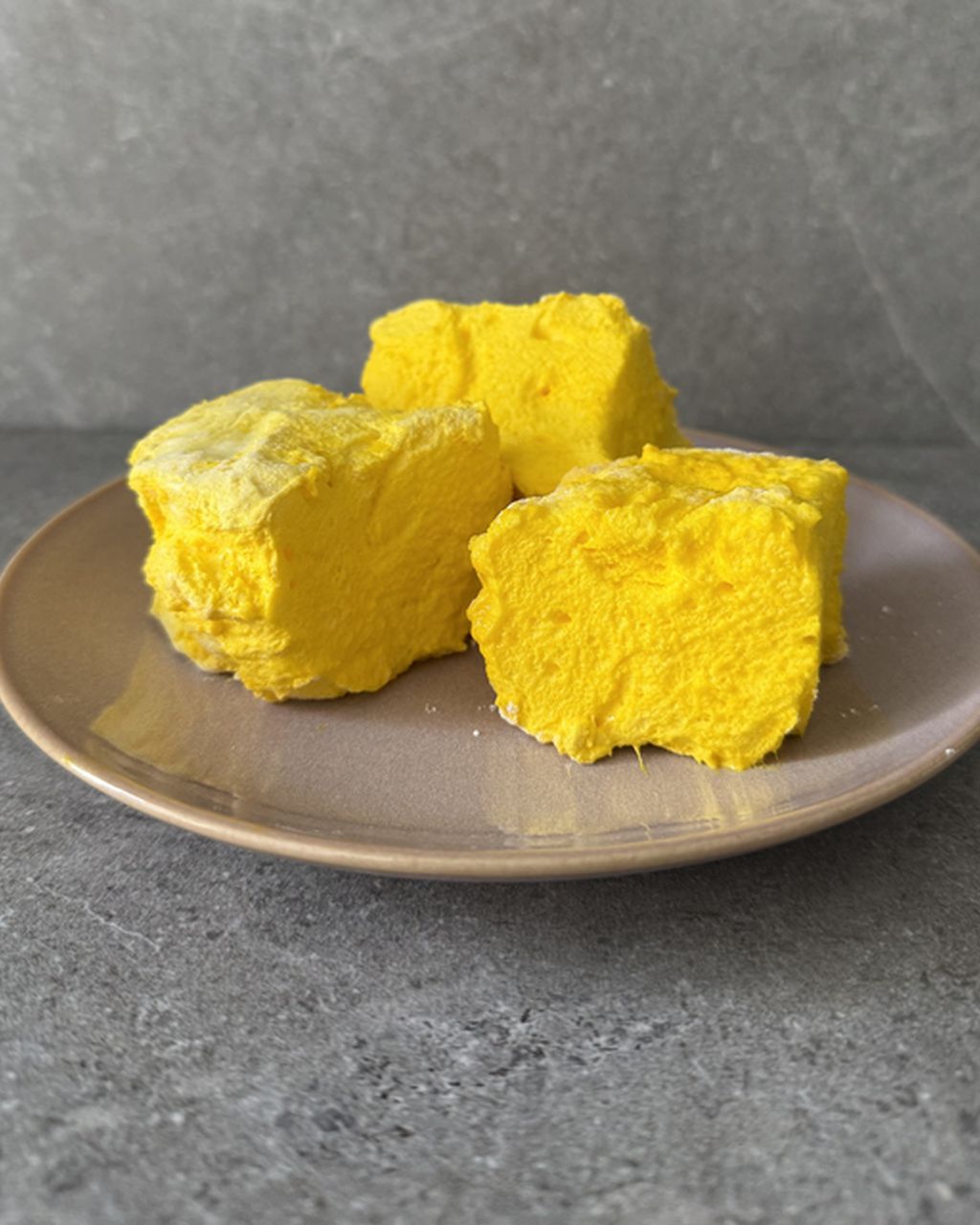
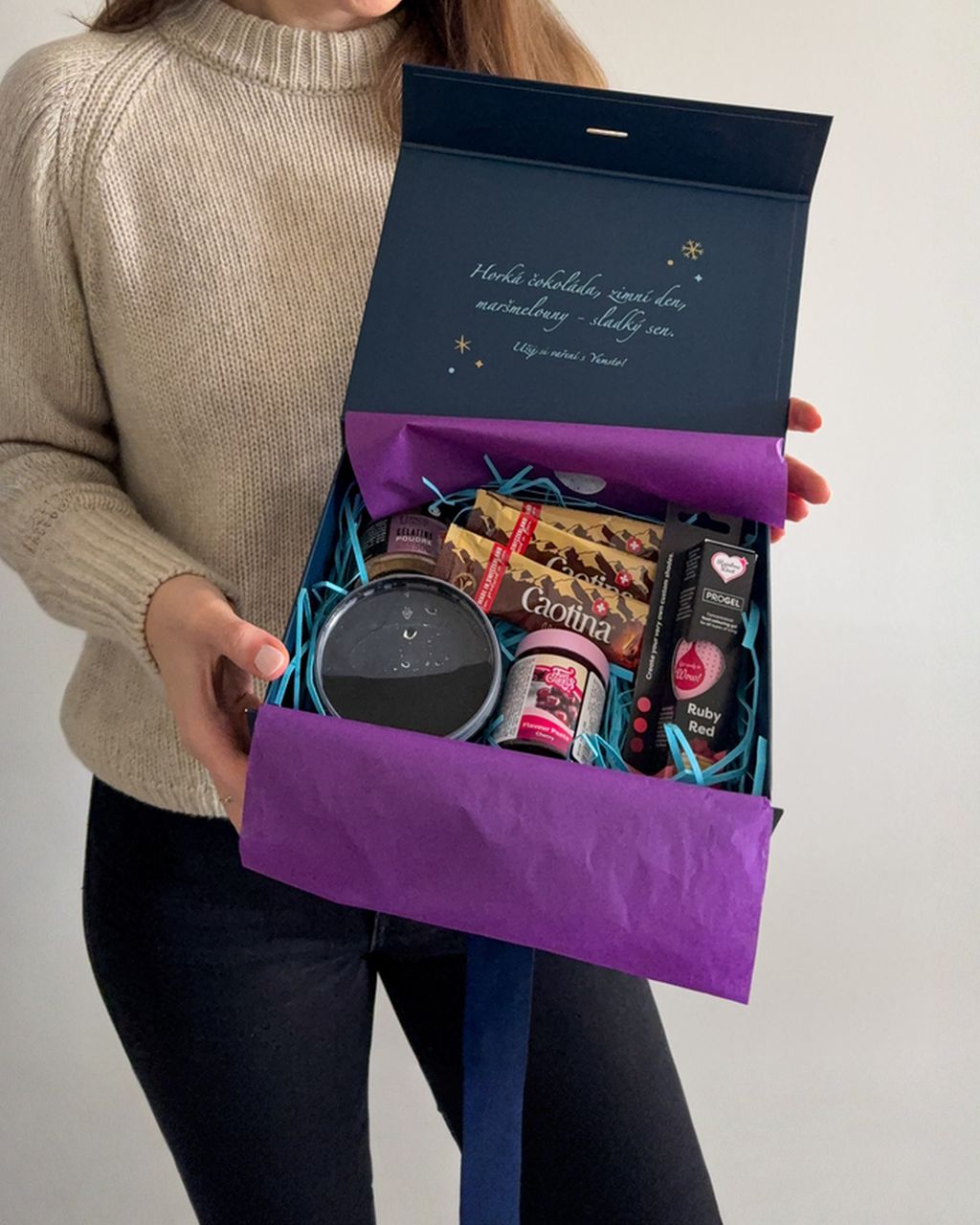
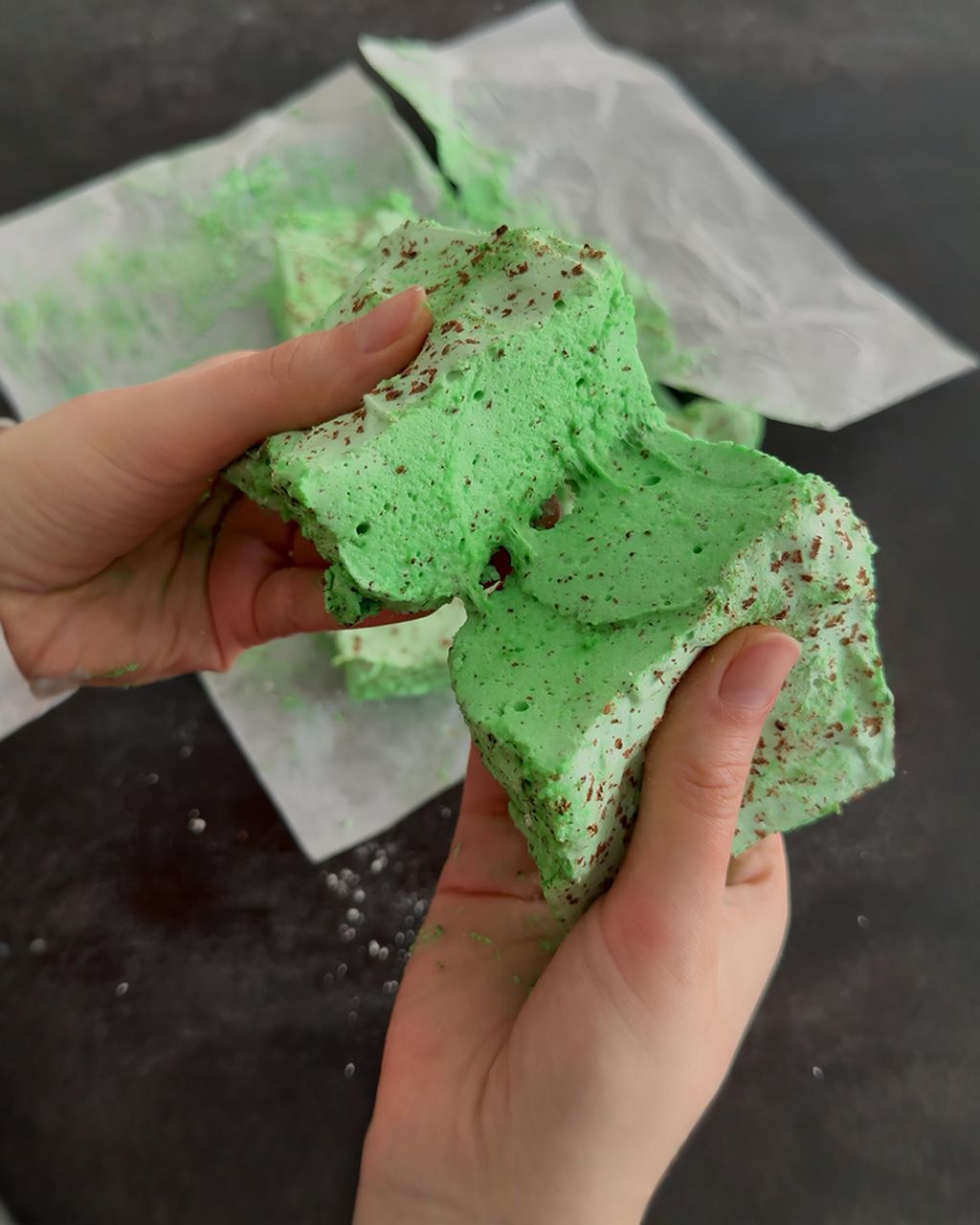
With us you can find handmade marshmallows made in our kitchen: mint chocolate marshmallows and mango marshmallows. You'll find the full selection on the handmade marshmallows page. If you'd rather make them yourself, we have recipes for homemade mint chocolate marshmallows and homemade cherry marshmallows.
You can store unopened marshmallows in their original bag, but not opened ones. A bag that's rolled up and held with a rubber band isn't airtight, and the marshmallows will go hard in it within a few days. Once opened, transfer them to a container with a lid or a zip-top bag and squeeze the air out. The exception is bags with an original zip closure, which just need to be sealed properly.
Don't use plain flour instead of cornstarch in a marshmallow dusting. It tastes raw and absorbs moisture less well. Potato starch is a good substitute, used in the same amount.
Keep opened marshmallow creme (fluff) in its original jar with the lid on tight, and always scoop it out with a clean, dry spoon. The Virginia Cooperative Extension (Virginia Tech) storage chart gives 1 month in the fridge for opened marshmallow creme, but the date and instructions on the label take priority. If you see mold on the surface or notice a sour smell, throw it out.
Toasted marshmallows, and marshmallows used as a topping on a cake or hot chocolate, can't be stored, so eat them right away. The caramelized crust softens within a few hours, and on creams or in damp conditions they start to dissolve. Add them to a cake just before serving.
Yes, but only with cookies and treats that are similarly dry, not with moist baked goods or fruit. The marshmallows would draw moisture from them and turn sticky, while crisp cookies would go soft. The safest option is to keep them in their own container.
One recipe worth heating the oven for, one tip, and one deal from the shop. Nothing else.