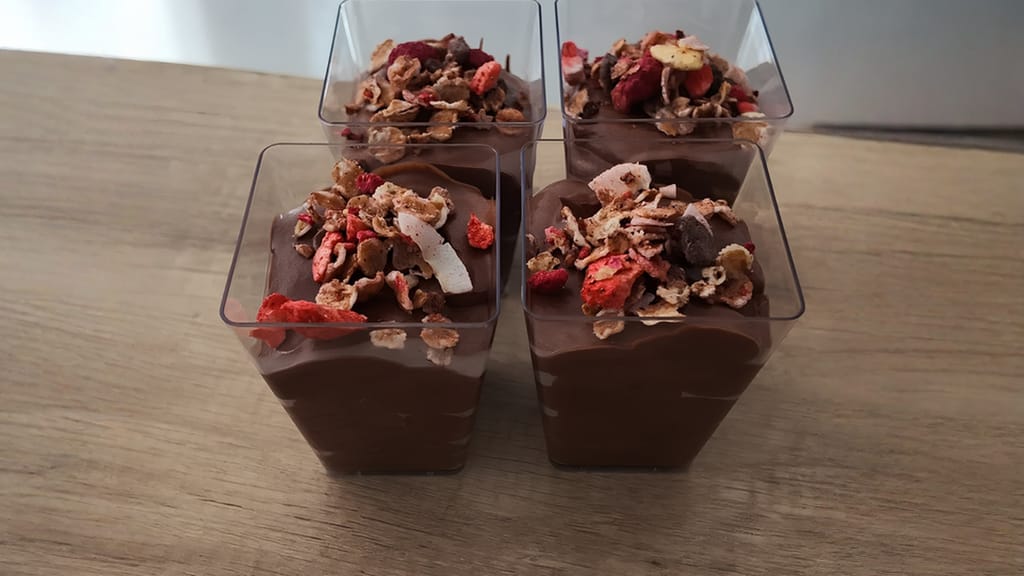
Chocolate mousse
How to Store Chocolate (and Why It Turns Grey)
Updated Sep 25, 2026
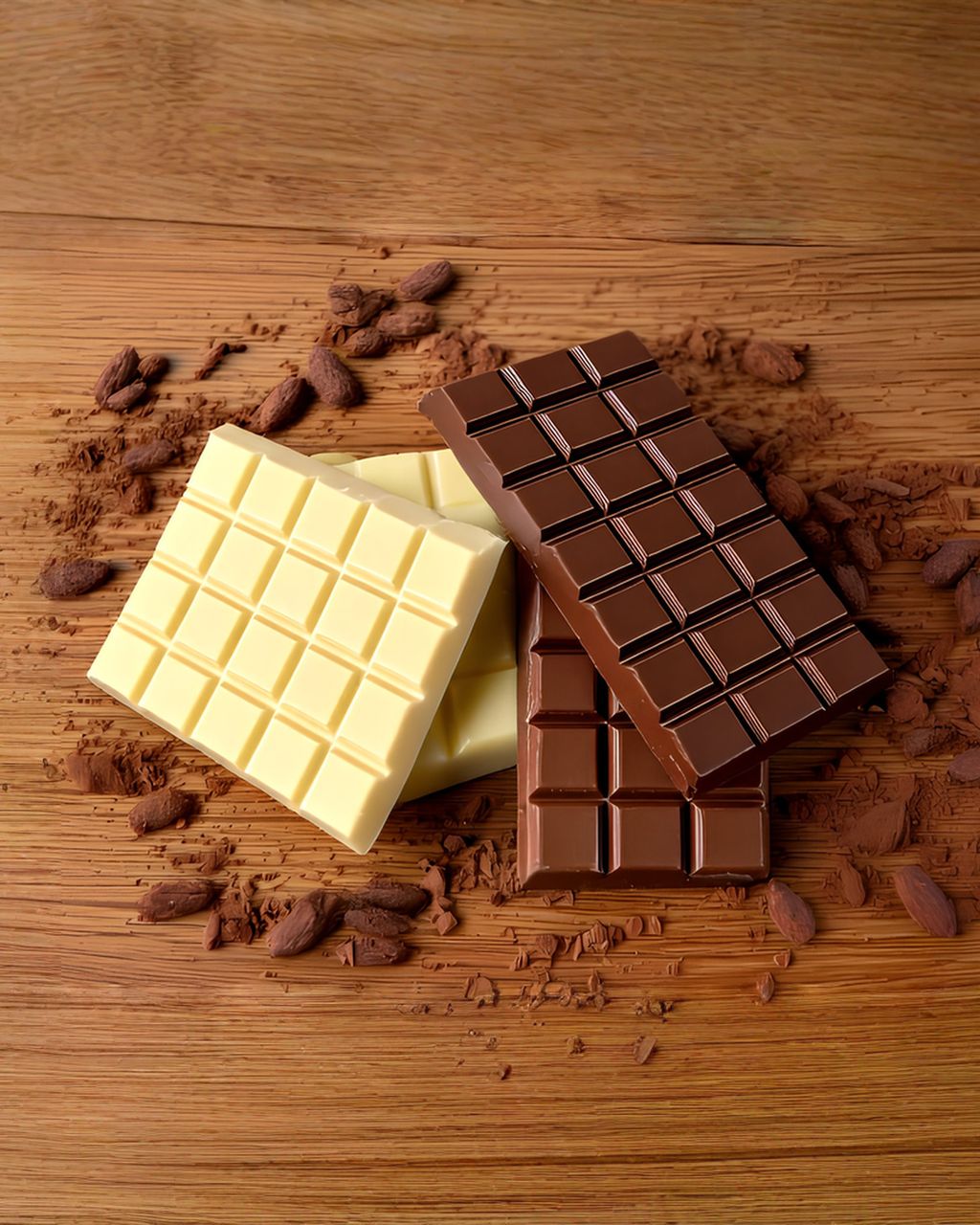
Chocolate needs to be stored somewhere dry, dark and cool — around 15–18°C — wrapped up and well away from anything smelly. That grey or white film, known as bloom, forms either from heat (cocoa butter rising to the surface) or from moisture (sugar rising to the surface). Chocolate like this is perfectly safe to eat; it's just lost its shine and snap. It melts down just fine, so it's still great for baking.
Chocolate turns grey for two reasons: heat, or moisture. Both are called bloom (bloom), and they look similar but form differently.
Fat bloom: the chocolate warms up, some of the cocoa butter softens and rises to the surface, then re-sets as irregular crystals. The surface turns matte and greyish, often with streaks or a marbled look.
Sugar bloom): moisture reaches the surface — say, condensation after taking the chocolate out of the fridge. The water dissolves sugar on the surface, which recrystallises once it evaporates, leaving behind a dry white dusting.
Good chocolate gets its shine and snap from tempering — controlled crystallisation that locks cocoa butter into one stable form. Bloom means that structure has broken down on the surface. It doesn't affect flavour or safety at all, but it does change the look and texture.
You can tell fat bloom from sugar bloom with two quick tests: the finger test and the water-drop test.
Run your finger over the surface. Fat bloom will smear under the warmth of your finger and leave a greasy feel behind. Sugar bloom stays put and feels dry, slightly grainy — almost like fine sand.
Drop a bit of water onto the surface. Sugar bloom will dissolve in the droplet and that spot will darken. Fat bloom won't react to the water at all.
Both types can show up at once — typically on chocolate that's been baking in a hot car and then gets "rescued" straight into the fridge.
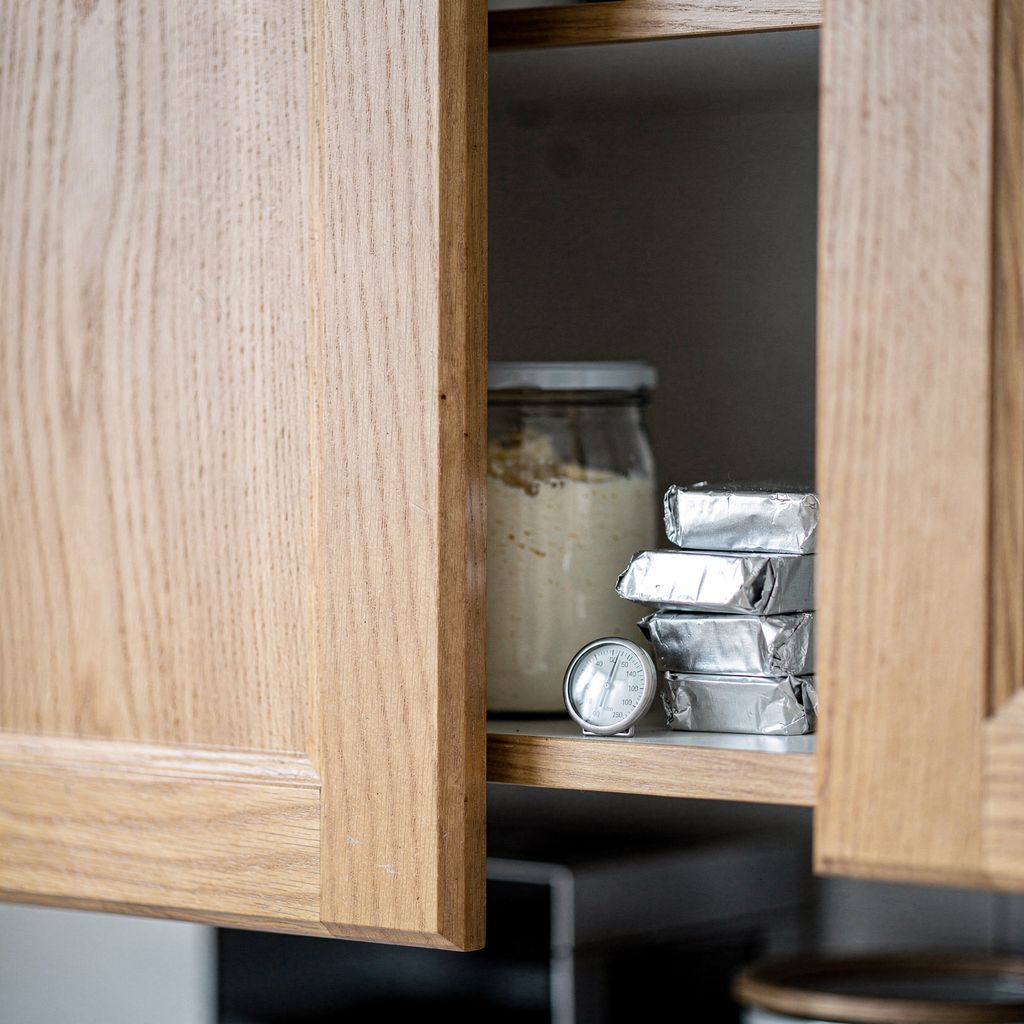
Store chocolate at 15–18°C, with relative humidity below 55–60%, in the dark and in an airtight container. In practice, that means:
Location: a cool pantry, a cupboard on a north-facing wall, or a mould-free cellar. Definitely not above the stove, next to the oven, by a radiator, or on a windowsill.
Steady temperature: swings in temperature do more damage than any single number. Chocolate kept constantly at 20°C will fare better than chocolate that swings between 15°C and 25°C three times a week.
Wrapping: keep it in its original foil or wrap, then put it inside a sealed container or bag. Cocoa butter soaks up smells like a sponge, so chocolate stored near coffee, spices, onions or cheese will end up tasting like them.
Light: direct sunlight heats it up and speeds up fat oxidation. This shows up fastest in the flavour of white and milk chocolate.
According to manufacturers and food safety guidance, dark chocolate stored well keeps for roughly 18–24 months, milk chocolate around 12 months, and white chocolate the shortest, usually around 6 months, since it has no fat-free cocoa solids and is mostly made of cocoa butter, milk and sugar, which turns rancid faster. Filled pralines and truffles with fresh cream keep for more like a few days to a couple of weeks. For those, go by whatever the maker tells you.
An ordinary bar of chocolate doesn't belong in the fridge. It's 4–6°C in there, damp, and full of other food smells — and worse, once you take it out, condensation forms on the cold surface and triggers sugar bloom. The fridge only makes sense in two situations:
Your home is consistently above 24–25°C, typically an attic flat in summer.
Pralines or truffles with a cream filling, which would spoil quickly in the warmth.
In that case, do this:
Wrap the chocolate airtight, ideally twice over (wrap plus a sealed bag or container).
Store it in the least cold part of the fridge, like the door or top shelf.
Before opening, let it come up to temperature for 1–2 hours in its sealed wrapping at room temperature. That way, condensation forms on the wrapping, not on the chocolate.
You can freeze chocolate too — the same rules apply, just move it through stages: from the freezer to the fridge for a day first, then to room temperature, always kept wrapped.
Grey chocolate is safe to eat, and both types of bloom work fine in baking and cooking. Melting mixes the fat and sugar back together evenly.
Fat bloom disappears completely once you melt and re-temper the chocolate. It gets its shine and snap back, so it's fine for coatings or moulding, too.
Sugar bloom gets hidden once you melt the chocolate, but since the sugar has already crystallised once, the coating might come out very slightly less smooth. For batters, creams or mousses, it makes no difference at all.
It's best used wherever chocolate gets melted and mixed with other ingredients: chocolate mousse, truffles, brownies, or chocolate bundt cakes. It also works well in ganache or a mug of hot chocolate. For a coating on biscuits or a cake, where shine actually matters, it's better to temper it or use fresh chocolate instead.
Chocolate mousse
Chocolate mousse: a great way to use up grey chocolate
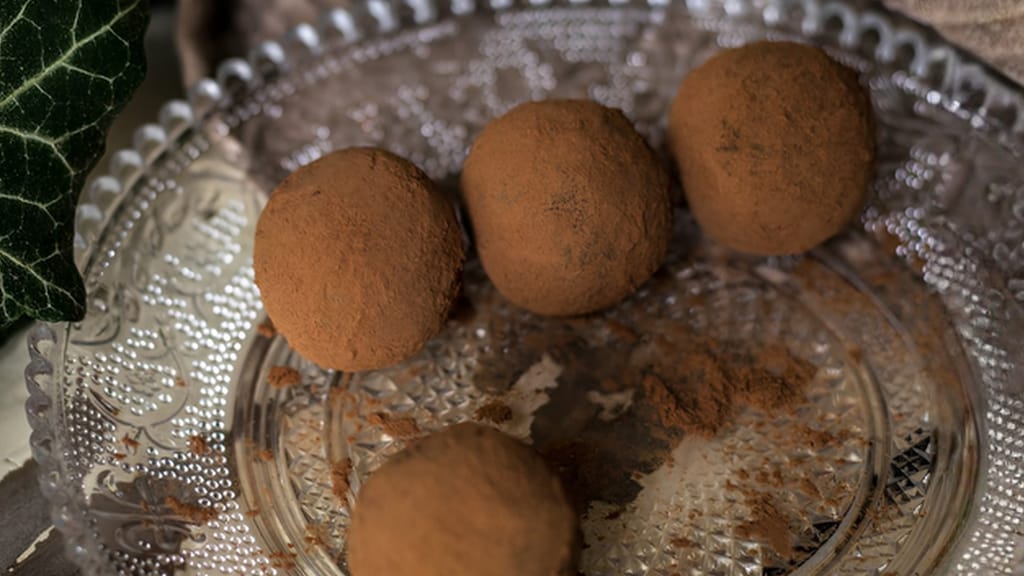
Chocolate peanut butter truffles
Peanut butter chocolate truffles made from bloomed chocolate
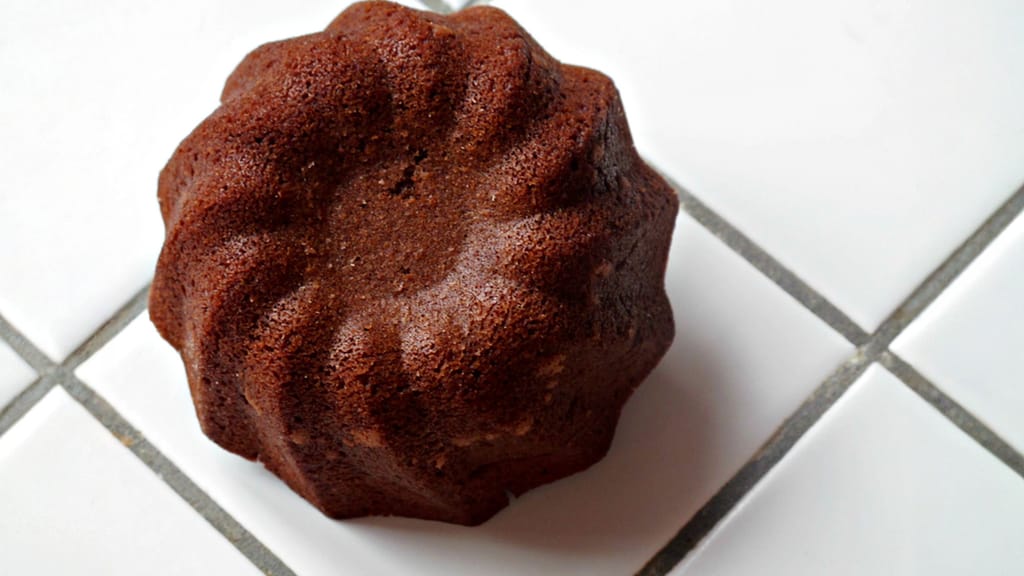
Little chocolate bundt cakes with ganache
Chocolate mini bundt cakes with icing: grey chocolate in the batter is no problem
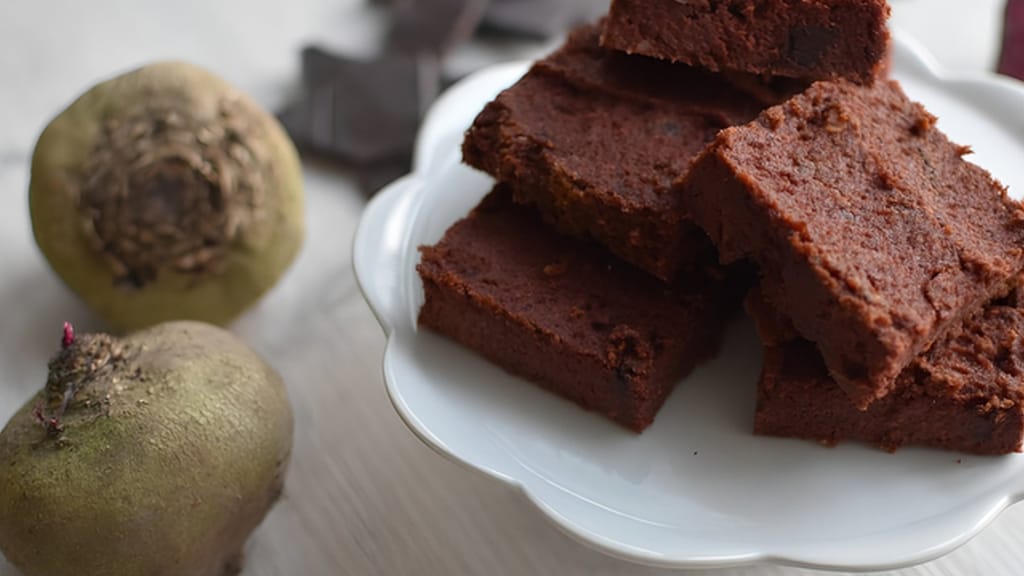
Gluten-free beetroot and walnut brownies
Gluten-free chocolate brownies with beetroot and walnuts
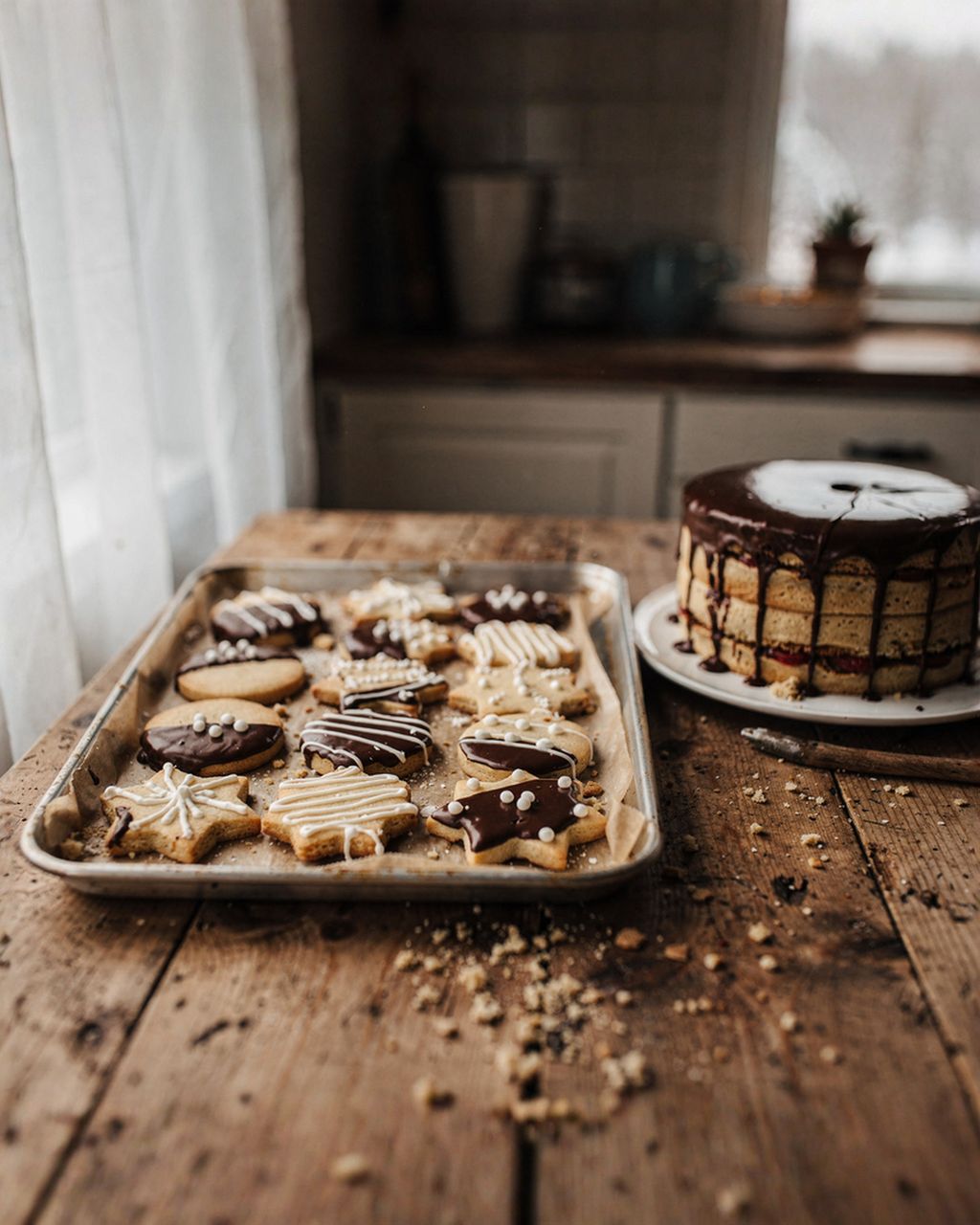
Stop coatings from blooming with four steps: temper the chocolate, let the coating set at 18–20°C, store the treats at 10–15°C outside the fridge, and only separate layers with baking paper once everything has fully set. Coatings are thin, so they're more sensitive to temperature swings than a solid bar.
Temper it if you want a clean, glossy chocolate coating. Untempered chocolate will almost certainly turn grey within a few days. If you'd rather skip tempering, reach for a cocoa coating made with vegetable fat instead — it blooms less, though it tastes a bit different.
Let the coating set at room temperature, ideally around 18–20°C. Setting it in the fridge sets you up for condensation trouble.
Store your treats somewhere cool, but not the fridge: a tin in the pantry or hallway at 10–15°C works better than the fridge.
Don't stack the pieces together until the coating has fully set, and separate the layers with baking paper.
We go into how different types of chocolate behave when melted, and why white chocolate can't handle as much heat, in our article Dark, Milk and White Chocolate: Differences in Composition, Melting and Use.
Yes — a bar of chocolate is usually still fine for months past its best-before date, as long as it's been kept dry and cool. The date marks how long the maker guarantees peak flavour and texture, not when it goes off. Give it a taste and a sniff first: a rancid or cardboard-like taste is easy to spot. With filled pralines that have a cream or fruit centre, though, stick to the date.
In summer, carry chocolate in a cool bag with an ice pack wrapped in a tea towel, so the chocolate never touches the ice directly. Once home, leave it in the bag for another hour to come up to temperature before unwrapping — this stops condensation forming and sugar bloom setting in. Never leave it in a parked car, where summer temperatures can easily top 50°C.
Melted chocolate that sets without being tempered turns grey because the cocoa butter crystallises in an unstable form — usually within hours to days. If you want a glossy, snappy result, you need to temper it after melting, or use a compound coating made with vegetable fat instead.
Homemade chocolate truffles made with cream ganache keep for roughly 1–2 weeks in the fridge in a sealed container, or about 2–3 months in the freezer. The cream is the weak link, so they don't belong in the pantry. Let them come up to temperature in a closed container before serving, so condensation doesn't form on the surface.
One recipe worth heating the oven for, one tip, and one deal from the shop. Nothing else.