How to Freeze Dumplings: Bread, Yeast and Quark Dumplings, Raw or Cooked
How to Slice and Reheat Czech Bread Dumplings So They Stay Soft
Updated Nov 20, 2026
Slice Czech bread dumplings while they are still hot, with a loop of plain cotton thread or a thin knife, and reheat the slices with steam: in a steamer basket, or in the microwave under a damp towel. Leftover slices also make one of the best Czech lunches, fried in butter with beaten egg. Here is how to do each, and what to avoid so the dumplings do not turn gummy or dry.
A Czech bread dumpling (houskový knedlík) is cooked as a log, either boiled in salted water or steamed, and only becomes the familiar round slices on the plate. The timing of that first cut matters.
When the log comes out of the pot it is full of steam. If you leave it whole, that steam condenses inside and the crumb turns heavy and wet. Czech cooks either slice it at once or, if it has to wait a minute, prick it a few times with a fork or skewer so the steam can escape.
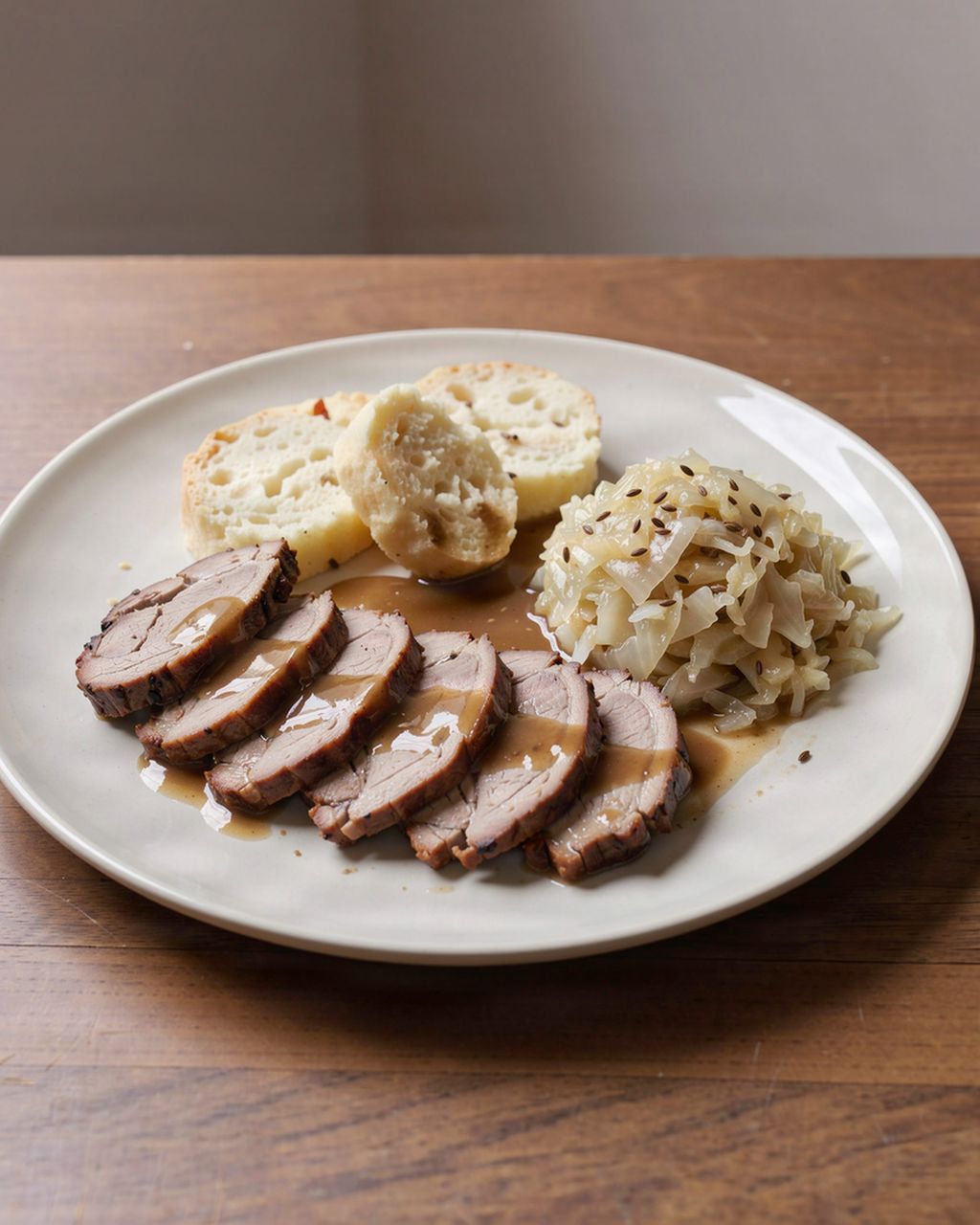
So the rule is simple: lift it out, let it rest on a board for a moment, and cut it while it is still hot. The slices then stay light and springy, and they hold sauce instead of turning soggy under it. That is the whole point of a dumpling: it sits next to svíčková, goulash or roast pork and soaks up the sauce.
Seasonal baking plans, tested recipes and kitchen tricks that save you time. Unsubscribe in one click.
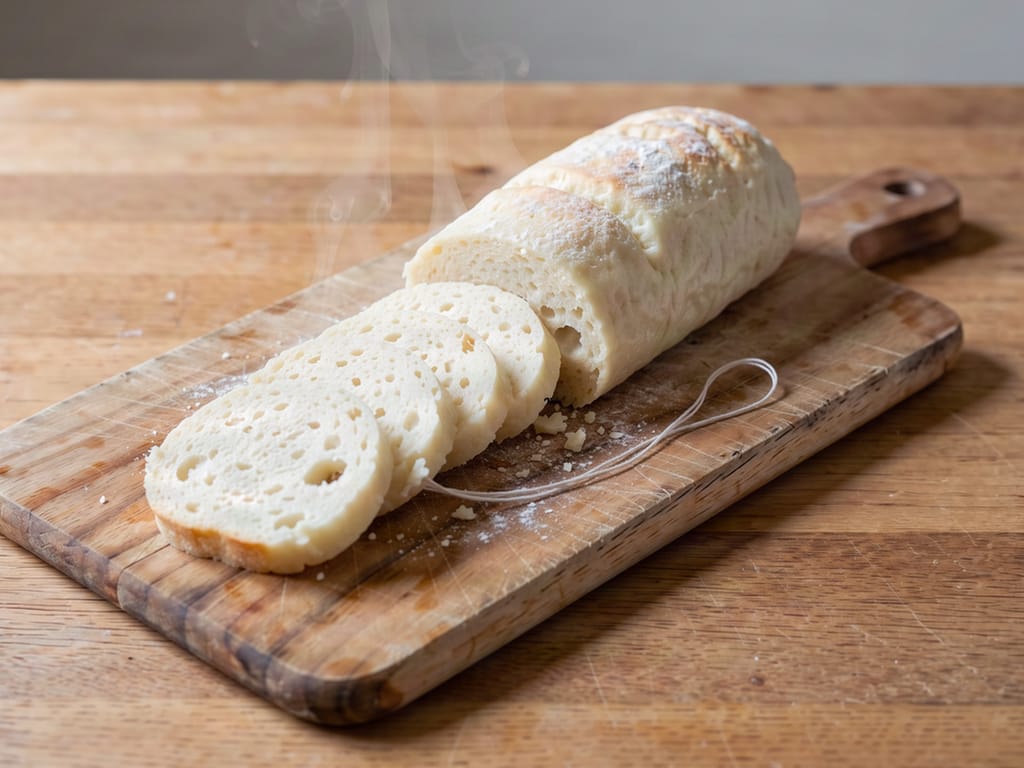
Thread is the traditional Czech way, and it gives the cleanest slices because it cuts without pressing the soft crumb flat. Use plain, undyed cotton thread, not anything waxed, scented or dyed. Czech cooks traditionally use unbleached režná nit (coarse cotton thread).
Cut a length of thread about 40 cm (16 in) long.
Slide it under the hot dumpling, about 1 to 1.5 cm (around ½ in) from the end.
Cross the two ends over the top of the log.
Pull both ends apart firmly. The thread tightens and cuts straight down through the dumpling.
Pull the thread out, move along, and repeat.
This works best on a fresh, hot dumpling. A cold, firm one cuts fine with a knife, as below.
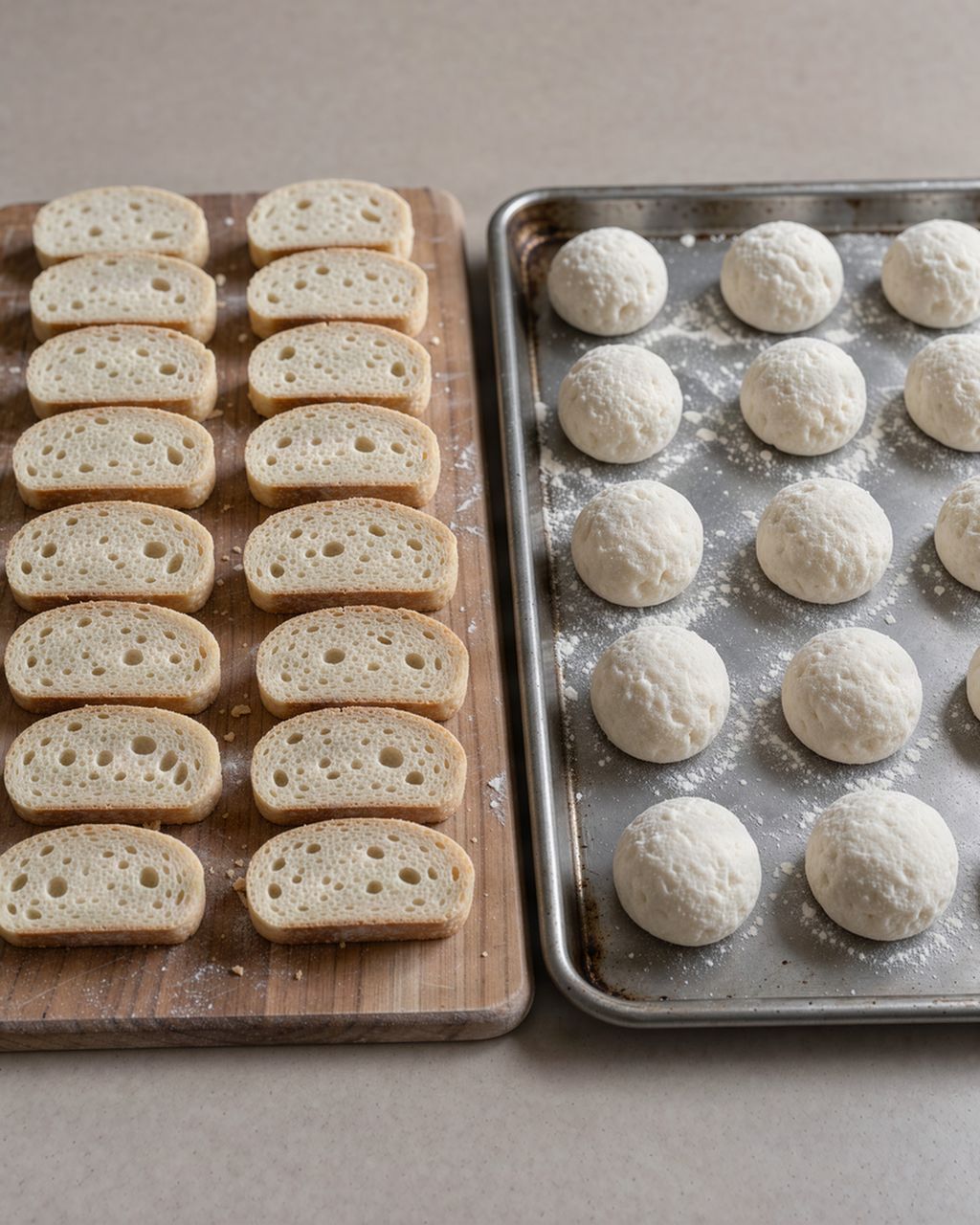
How thick? Most Czech kitchens cut slices about 1 to 1.5 cm thick. Thinner slices dry out when reheated; thicker ones take longer to warm through.
If you do not have thread to hand, a knife works, as long as it is the right kind and you do not press down.
Use a thin, very sharp knife or a serrated bread knife. A thick chef's knife wedges the crumb apart and squashes it.
Wet the blade in hot water before each cut so the dough does not stick.
Saw gently rather than pushing down.
Cold dumplings slice more cleanly than hot ones with a knife, which makes the knife the better tool for leftovers.
Some Czech households also own a dumpling slicer (kráječ na knedlíky), a frame with several tight wires that cuts a whole log into even slices in one press. Our guide to choosing a kitchen knife covers which blades suit soft bread and dough.
Steaming is how most Czech cooks reheat dumplings, and it is the one method that brings them back almost to fresh. The dumpling absorbs a little moisture and puffs up again.
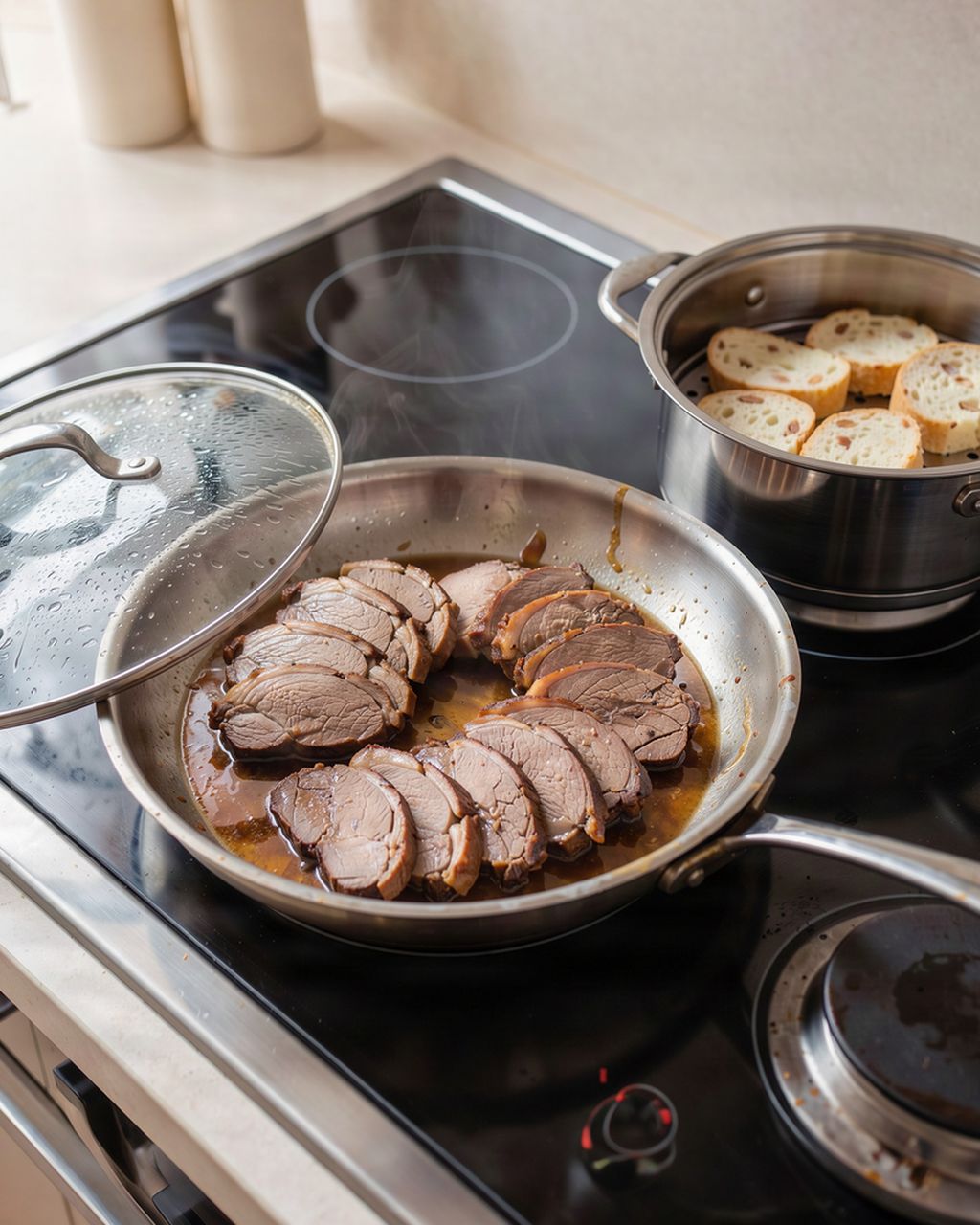
Steamer basket or insert: bring a few centimeters of water to a simmer in a pot, set the basket over it, lay the slices in one layer so they do not touch the water, cover, and steam for a few minutes.
No steamer? A metal colander or sieve over a pot of simmering water, covered with a lid or a plate, does the same job.
Czech dumpling steamer pots (napařovák) are made for exactly this, with a perforated tray over a water base.
The slices are ready when they are soft right through to the center. The UK's Food Standards Agency advises reheating food until it is steaming hot all the way through, and that is the test to use here too: press the center of a slice, and it should be hot, not lukewarm.
The microwave is the quickest option, and it works well if you treat it as a small steamer.
Lay the slices on a plate in a single layer.
Sprinkle them lightly with water, or brush them with a wet hand.
Cover with a damp kitchen towel or damp paper towel, or a microwave-safe lid.
Heat in short bursts, checking between each, until the slices are steaming hot in the middle.
What goes wrong: heating uncovered, or for too long in one go, which turns the edges hard and chewy. Short bursts and the damp cover prevent both. If you are reheating dumplings with sauce, you can also lay the slices on top of the sauce in a covered dish so they steam in it.
Yes, but it is the least forgiving method. Dry oven heat pulls moisture out of the crumb, so the slices need protecting.
Wrap them tightly in foil with a spoonful of water inside, or put them in a covered ovenproof dish with a splash of water in the bottom, and heat in a moderate oven until hot through. It is useful when you are reheating a whole tray for a crowd alongside a roast, but for a few slices, steam or microwave are better.
Many Czechs would argue that leftover dumplings are better than fresh ones, because of knedlíky s vejci (dumplings with eggs). It is a simple, cheap lunch that has been made in Czech homes for generations.
In outline:
Cut day-old dumpling slices into cubes or strips.
Fry them in butter (or lard) in a wide pan until golden and slightly crisp at the edges.
Pour beaten eggs, seasoned with salt, over the top and stir gently until the eggs are cooked through and set.
Finish with chopped chives if you like.
It is traditionally eaten with a sweet-sour pickled gherkin on the side, which cuts through the butter and egg. Some cooks add leftover smoked meat or onion to the pan before the eggs.
Keep leftover dumplings covered in the fridge, wrapped or in a closed container, so the cut faces do not dry out. The UK's Food Standards Agency advises cooling leftovers and getting them into the fridge within 2 hours of cooking, eating refrigerated leftovers within 2 days or freezing them, and reheating them only once, until steaming hot all the way through, so reheat only the slices you are about to eat. Store-bought dumplings in a sealed pack come with storage instructions on the label, so follow those.
Bread dumplings also freeze well, sliced or whole. Our guide to freezing dumplings covers how to freeze bread, yeast and quark dumplings, raw or cooked, and how to reheat them straight from frozen.
Steaming is the best way to reheat bread dumplings, because the moisture brings the slices back to soft and springy. Lay the slices in a steamer basket or colander over simmering water, cover, and steam until hot all the way through.
Slide a length of plain cotton thread under the dumpling, cross the two ends over the top, and pull them apart so the thread cuts down through the loaf. Move along about 1 to 1.5 cm and repeat.
Yes, bread dumplings reheat well in the microwave if you keep them moist. Sprinkle the slices with a little water, cover them with a damp kitchen towel or paper towel, and heat in short bursts until steaming hot.
You can reheat bread dumplings in the oven, wrapped tightly in foil with a spoonful of water, but they dry out more easily than when steamed. The oven is mainly useful for a large batch.
The classic Czech dish for leftover bread dumplings is knedlíky s vejci: cubes or slices fried in butter until golden, with beaten eggs stirred in until set. It is usually served with a pickled gherkin.
One recipe worth heating the oven for, one tip, and one deal from the shop. Nothing else.