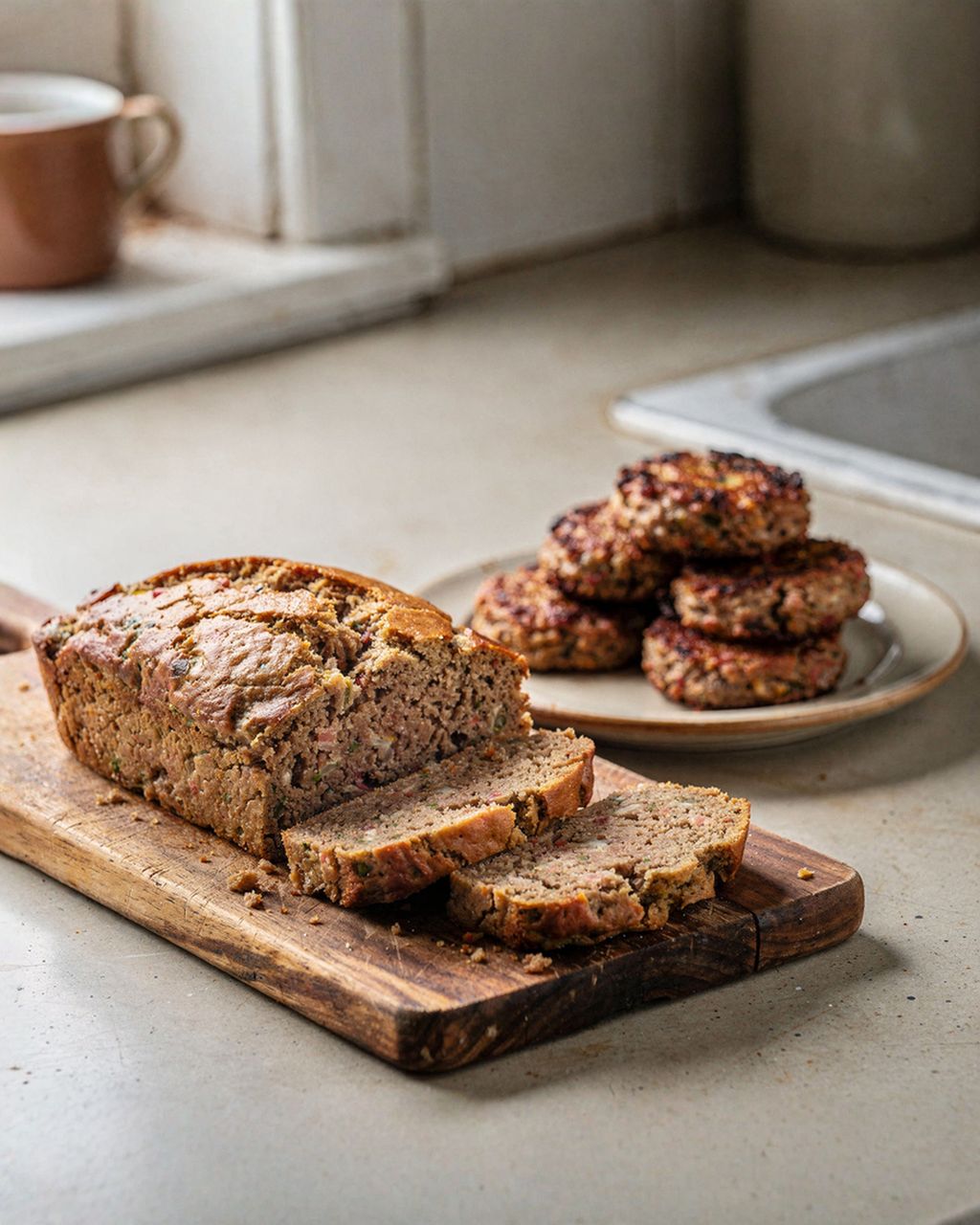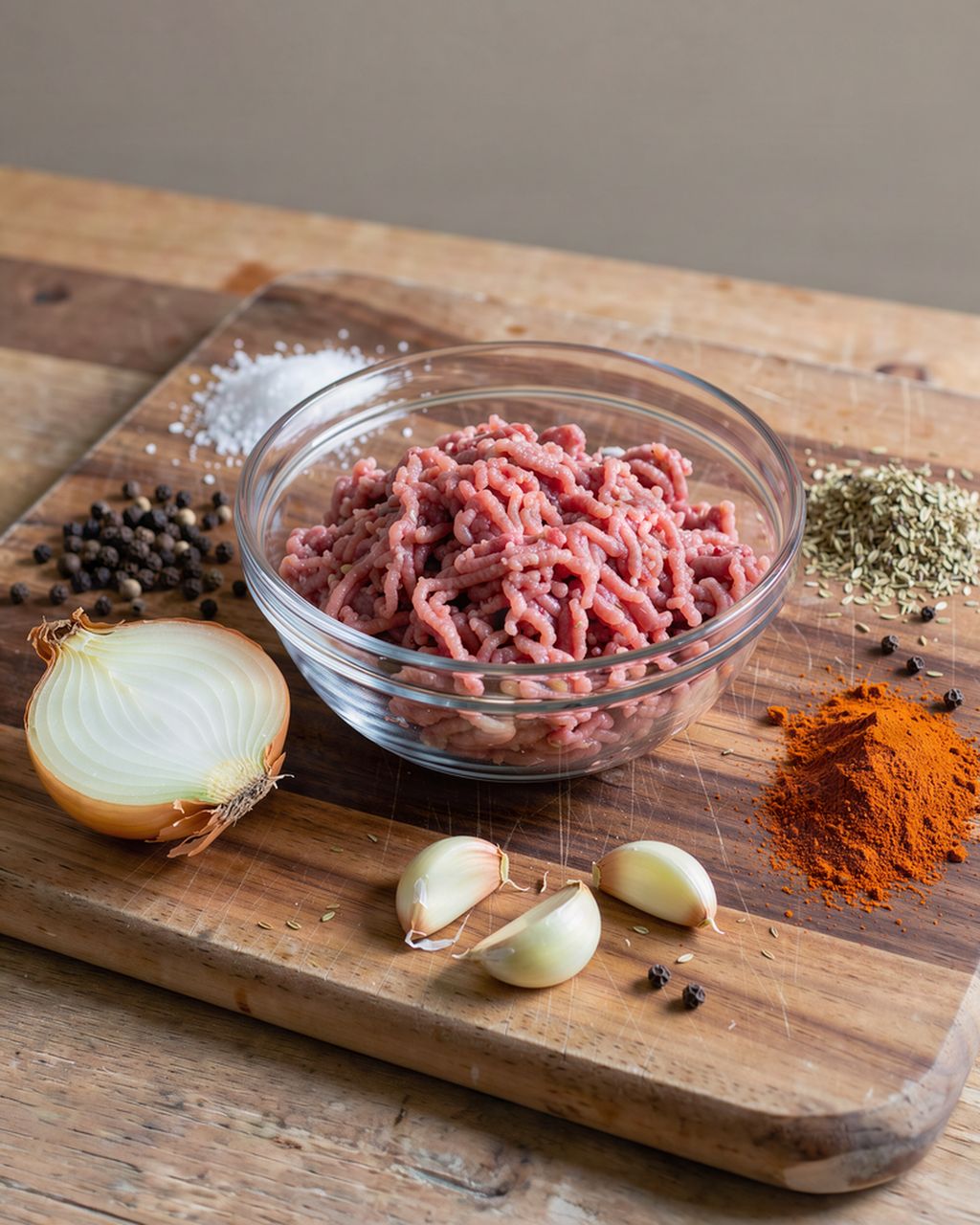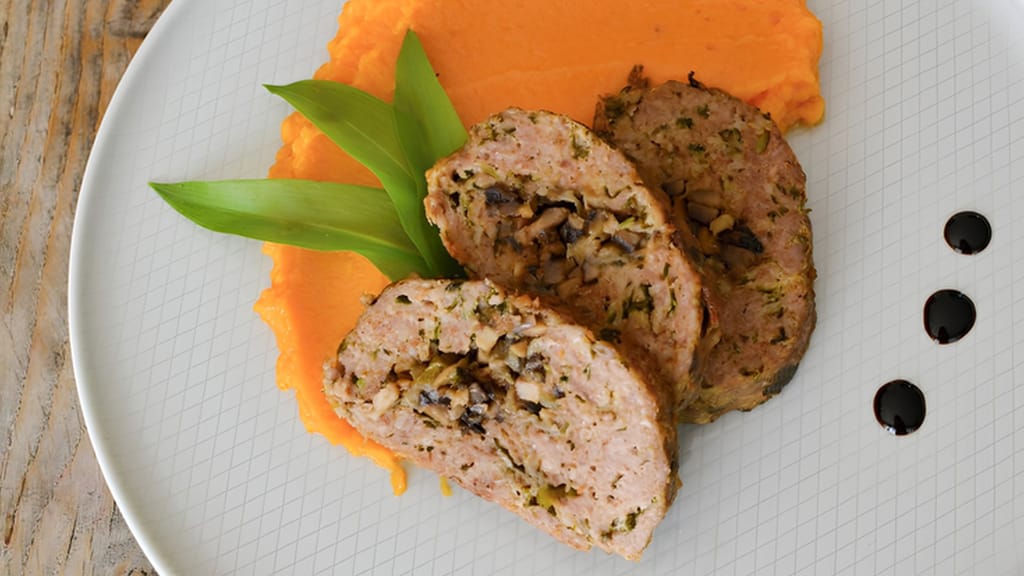
Spring meatloaf with wild garlic and sweet potato mash
How to Bake Meatloaf: Temperature, Timing and How to Keep It from Cracking or Drying Out
Updated Nov 17, 2026
The surest way to bake a meatloaf (sekaná) is to watch the thermometer, not the clock: it's done when the center hits 70°C (158°F). As a rough guide, bake a homemade loaf made with 1–1.5 kg (2.2–3.3 lb) of meat at 180°C (350°F; convection 160°C/320°F) for about 1–1.5 hours. A raw Globus meatloaf takes about 80 minutes at 120°C (250°F), according to the manufacturer. Below you'll find times by weight, the difference between convection and conventional heat, when a water bath is worth it, why meatloaf cracks, and how to freeze it raw or baked.
Bake homemade meatloaf at 180°C (350°F) with conventional top and bottom heat. The time depends mainly on the weight and thickness of the loaf. Approximate times from TopRecepty.cz (meatloaf baked uncovered):
meatloaf from 0.5 kg (1.1 lb) of meat: 180°C (350°F), 30–45 minutes
meatloaf from 1–1.5 kg (2.2–3.3 lb) of meat: 180°C (350°F), 1–1.5 hours
The time is only a guide. A flat loaf on a baking sheet is done sooner than a tall one in a pan, even at the same weight, because the heat has to travel all the way to the center. So start checking with a thermometer at about two thirds of the estimated time.
A juicier meatloaf comes from baking more slowly, at around 120°C (250°F): chefs interviewed by Czech Radio recommend baking it gently, with a little water in the pan, and raising the temperature only at the end for the crust. Here's why it works: the proteins in ground meat shrink as the temperature climbs and squeeze out the juices. The fiercer the heat, the more the edges overcook before the center warms through, and the meatloaf turns out gray, crumbly and dry. At a low temperature the gap between edge and center is smaller. Expect it to take longer, and check doneness with a thermometer.
Recipe of the week, one tip that saves you time and one deal from the shop. Unsubscribe in one click.
The next issue goes out on Thursday, November 26.
Bake a raw Globus meatloaf (1 kg/2.2 lb pack in a tray) at 120°C (250°F) for about 80 minutes, according to the manufacturer. Just peel off the top film and put it in the oven right in the tray it came in.
Don't worry if it's pink inside. According to the ingredients listed on the Globus website, the meatloaf contains a curing salt mix with nitrite (E250). It keeps the meat pink even after baking, just like in ham. So the color tells you nothing about doneness – the thermometer decides.
The manufacturer doesn't class it as a ready-to-eat product. It's a raw meat product labeled "cook thoroughly", so bake this one to 70°C (158°F) in the center too.
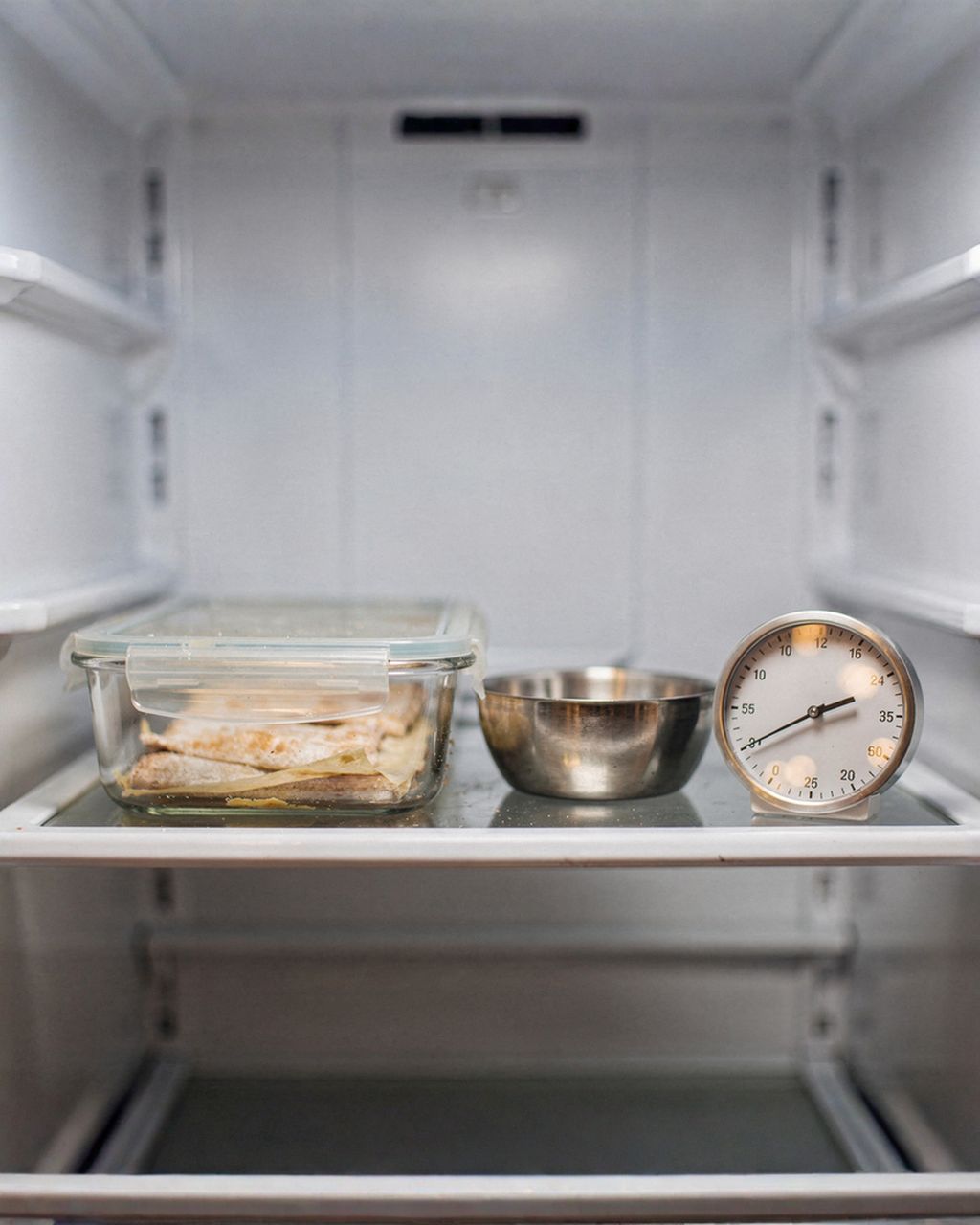
Storage: according to the manufacturer, keep it in the fridge at up to +4°C (39°F) and use it by the date on the pack ("spotřebujte do", use by). Don't bake it after that date, even if it smells fine.
In a convection oven, set the temperature 20°C (about 35°F) lower than for top and bottom heat – so 160°C (320°F) instead of 180°C (350°F). That's what oven makers Electrolux and AEG recommend in their guides to oven functions.
The fan blows hot air around the whole meatloaf, so it bakes faster and dries out the surface more. So:
check with a thermometer a little earlier than with conventional heat,
add a little water to the pan so the air in the oven isn't as dry,
if the crust starts browning too soon, cover the meatloaf with aluminum foil for the rest of the bake.
Meatloaf is done when a thermometer inserted into the middle of the thickest part reads 70°C (158°F). According to meat hygienist Doc. Josef Kameník (Czech Association of Meat Processors), two minutes at 70°C in the center destroys 99.9999% of disease-causing bacteria. With ground meat this is essential: grinding carries bacteria from the surface of the meat to the inside, so unlike a steak, a well-cooked outside isn't enough. You'll find the same threshold in our article on how long ground meat keeps in the fridge.
Insert the thermometer from the side into the center, not from the top toward the bottom of the pan – near the bottom it's hotter and will skew your reading.
Don't rely on color or juices. Meatloaf made with nitrite curing salt stays pink even when cooked through, and clear juices running out aren't a reliable signal either.
Let it rest. After taking it out of the oven, leave the meatloaf in the pan for about 10 minutes (a recommendation from TopRecepty.cz). The juices settle and won't run out onto the cutting board when you slice.
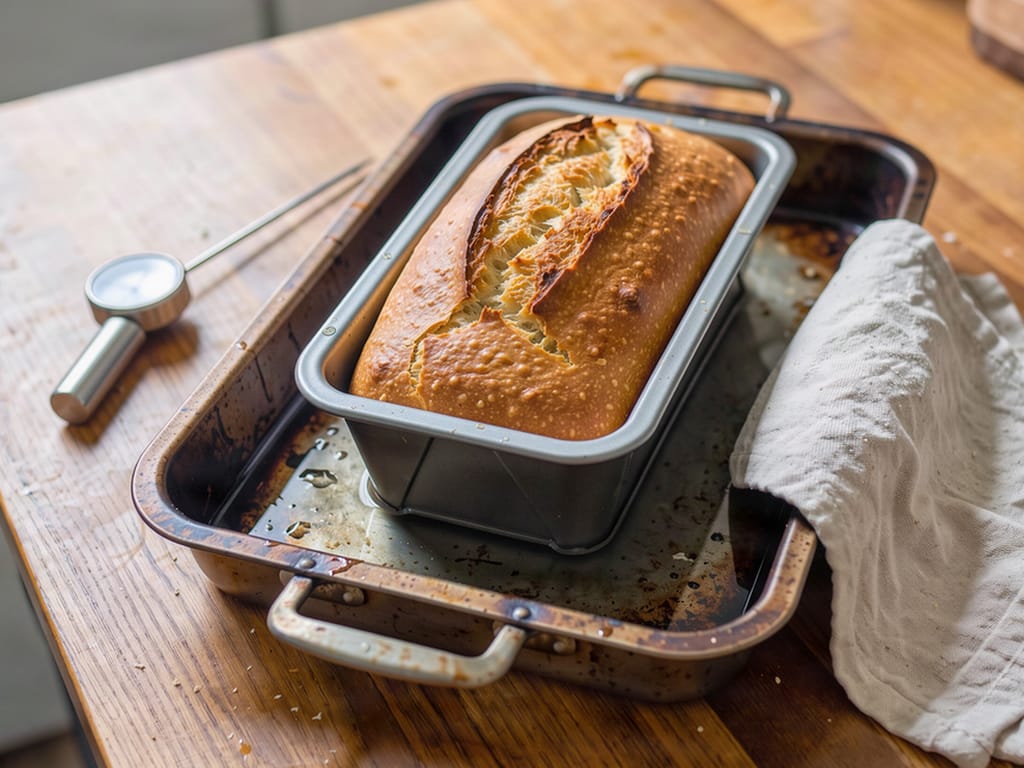
A water bath is worth it when you bake meatloaf in a loaf pan and want it evenly juicy right to the edges. Set the pan with the meatloaf in a larger roasting pan and pour in hot water to about halfway up the side of the pan.
Here's why it works: water in an oven doesn't heat past its boiling point, so the part of the pan sitting in water never gets much above about 100°C (212°F). The edges don't overcook, no hard crust forms, and the surrounding steam keeps the surface from drying out – and so from cracking.
A free-form meatloaf on a baking sheet doesn't need a bath; just add a little water to the pan, as the chefs on Czech Radio also advise.
Crust: it won't brown much in a bath. For the last few minutes, lift the pan out of the water, or turn the meatloaf out onto a baking sheet and finish it uncovered.
Check the water level during baking and top up any that evaporates with hot water.
Meatloaf cracks mainly for five reasons: too high a temperature, dry air in the oven, a mixture that's too dry, air pockets and an unsuitable loaf shape. The surface shrinks and sets before the inside stops expanding, and the crust splits.
Too high a temperature. The surface seals and the inside pushes against it. Bake more gently (see above) and finish the crust only at the end.
Dry air in the oven. Add water to the pan, or use a water bath. You can also brush the surface with a little water or melted lard.
Too dry a mixture. Lots of breadcrumbs or a dry bread roll (houska) draw out moisture and the meatloaf turns brittle. Soak the roll in milk or water and squeeze it out.
Air pockets. Press the mixture firmly into the pan so no bubbles are left to expand during baking.
Shape. A tall, narrow loaf with sharp edges cracks more easily. Smooth the surface with a wet hand and round off the edges.
If your meatloaf doesn't just split on top but also falls apart when you slice it, the problem is the binding of the mixture, not the temperature – for that, see our article why meatloaf and meat patties fall apart.
A juicy meatloaf rests on five things: fattier meat, a moist binder, foil at the start of baking, basting with the pan juices and bacon on top.
Don't use lean meat. Lean beef dries out on its own; the fat in pork "lubricates" it as it bakes. For reference, according to its ingredients, the raw Globus meatloaf is made mostly from pork and lard with a smaller share of beef.
A moist binder. A soaked and squeezed-out bread roll holds water in the meat better than dry breadcrumbs. If you're out of eggs, our article on what to use instead of eggs in meatloaf will help.
Cover for the first part of baking. Leave the meatloaf under foil for roughly the first two thirds of the time, then remove it for the crust.
Baste. Spoon the juices from the pan over the meatloaf several times as it bakes.
Bacon on top. Slices of bacon laid across the surface act like a blanket that renders its fat.
Already happened and your meatloaf is dry? A sauce or pan juices will help – you'll find the methods in our article on how to rescue overcooked meat from the oven.
Spring meatloaf with wild garlic and sweet potato mash
Spring meatloaf with wild garlic and sweet potato purée
Bake meatballs 3–5 cm (1¼–2 in) across at 180°C (350°F) for about 25–30 minutes, with a little water in the pan (figures from TopRecepty.cz). In a convection oven, lower the temperature to 160°C (320°F). The same target applies here as for meatloaf: 70°C (158°F) in the center of the largest meatball.
Meatballs bake much faster than meatloaf because the heat has a shorter way to the middle. So make them all the same size so they finish at the same time. If you then finish cooking them in a sauce, you only need to brown them in the oven until golden.
For inspiration: meatballs with cheese and mushroom ragù, mildly spicy meatballs with zucchini noodles or meatballs in vegetable sauce.
Baked meatloaf keeps 3–4 days in the fridge and 2–6 months in the freezer; the raw mixture keeps 1–2 days in the fridge and 3–4 months in the freezer. The times come from the US food safety agency (USDA FSIS, FoodSafety.gov chart):
raw ground meat mixture: fridge 1–2 days, freezer 3–4 months
baked meatloaf: fridge 3–4 days, freezer 2–6 months
The freezer times are about quality, not safety: at a constant −18°C (0°F), according to FoodSafety.gov, food stays safe and only gradually loses flavor and juiciness.
Store-bought raw meatloaf follows the "spotřebujte do" (use by) date on the pack, not general day counts. If you want to freeze it, do it right after buying, not on the last day.
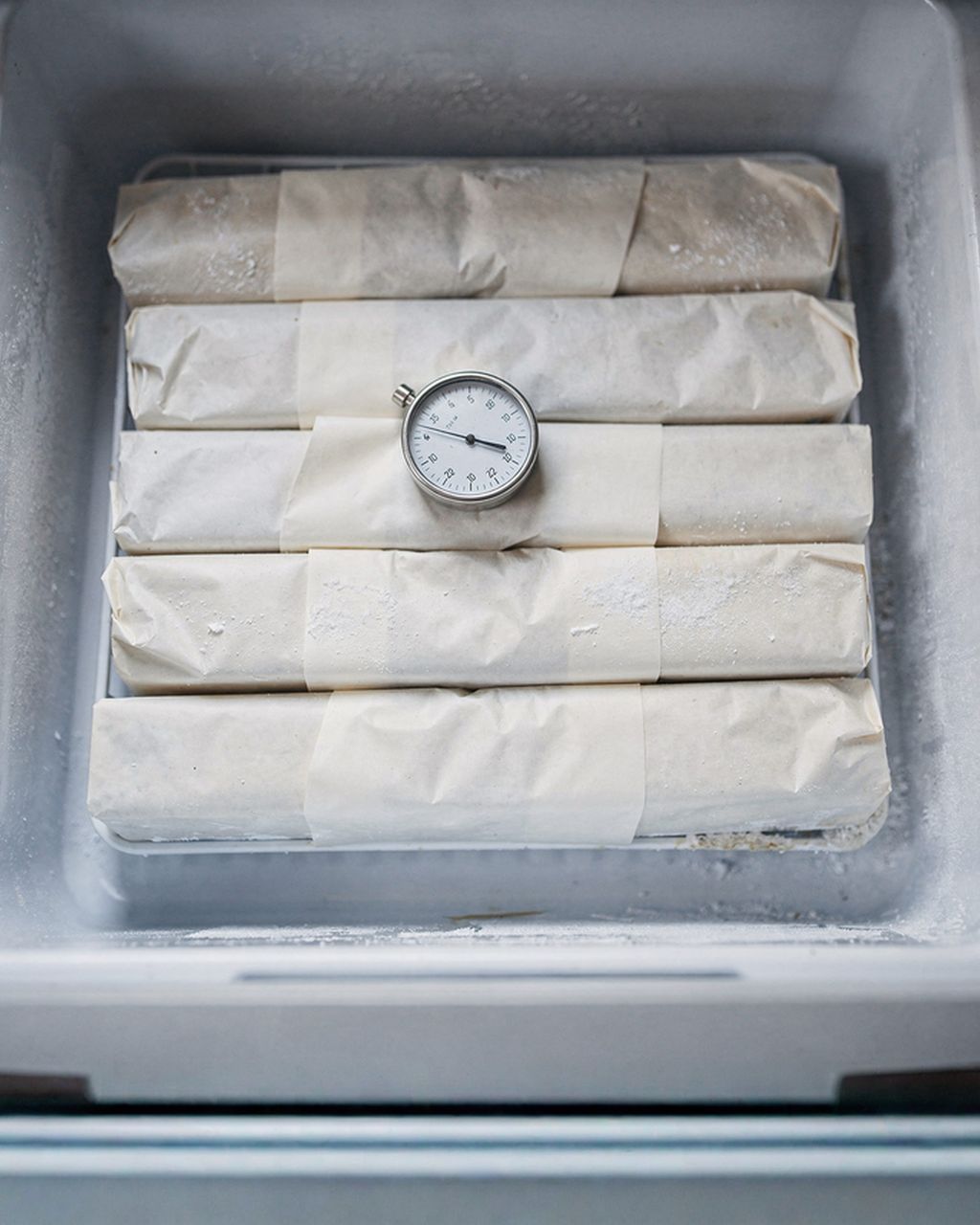
Baked meatloaf: let it cool, but not all day on the counter – get it into the fridge or freezer as soon as it stops steaming. Cut it into slices, layer them with parchment paper and wrap airtight, so you can take out just as much as you'll eat. Thaw in the fridge (more in our article on frozen meat: how long it keeps and how to thaw it) and reheat until hot all the way through – USDA FSIS recommends reheating leftovers to 74°C (165°F).
You can bake a Globus meatloaf hotter, but it will be drier and more likely to crack. The manufacturer recommends 120°C (250°F) for about 80 minutes. If you raise the temperature, keep an eye on it with a thermometer and take the meatloaf out as soon as the center reaches 70°C (158°F). Cover it with aluminum foil for roughly the first two thirds of the time.
Without a thermometer, go by the times for your loaf's weight and err on the longer side: for 1–1.5 kg (2.2–3.3 lb) of meat at 180°C (350°F), allow about 1–1.5 hours (TopRecepty.cz). Don't trust the color inside, because a meatloaf made with curing salt (nitrite) stays pink even when fully cooked. An instant-read probe thermometer pays for itself with your very first meatloaf.
Meatloaf is best baked both ways: covered with aluminum foil for the first part so it doesn't dry out, then uncovered at the end to form a crust. If you bake it uncovered the whole time, add some water to the pan and baste the meatloaf with the pan juices.
It's better to thaw a frozen raw meatloaf in the fridge first. From frozen, the outside overcooks before the center reaches 70°C (158°F), and the meatloaf turns out dry. If you have no other option, bake it at a lower temperature for much longer and check the core temperature with a thermometer.
Reheat slices covered and with a little liquid: in a skillet with a lid over low heat with a spoonful of water or pan juices, or in the oven at about 150°C (300°F) under foil. The steam keeps the surface from drying out. In the microwave, cover the slices and heat at medium power in short intervals. Reheat until hot all the way through (USDA FSIS gives 74°C/165°F).
One recipe worth heating the oven for, one tip, and one deal from the shop. Nothing else.