Gelatin Bloom Strength: What the Bloom Number Means and How to Convert It
Homemade Aspic: How Much Gelatin for a Firm, Crystal-Clear Set
Updated Oct 15, 2026
For homemade aspic, use 25–30 g of 200 Bloom powdered gelatin per 1 litre of liquid. That holds its shape, slices cleanly and still melts in the mouth. For a thin glaze on open-faced sandwiches and for aspic turned out of a mold, use more (35–40 g). Your aspic will be clear if you clarify the stock beforehand, never boil the gelatin and don't whip air into it. Below you'll find exact ratios, a step-by-step method and what to do when your aspic doesn't turn out.
For 1 litre of liquid you need 15–40 g of 200 Bloom powdered gelatin, depending on how firm you want your aspic:
15–20 g/l: soft aspic. Poured into a bowl or small glass and eaten with a spoon. It wobbles when cut and can't be unmolded.
25–30 g/l: sliceable aspic. The all-round ratio for platters and aspic set in a dish. It holds a clean edge but melts in the mouth.
35–40 g/l: firm aspic. For unmolding, for a thin glaze on open-faced sandwiches that will be carried around, and for a warmer room. Above 40 g/l it tends to turn rubbery.
For comparison: a standard store-bought packet (Dr. Oetker gelatin for egg head cheese and aspics, 20 g) is meant by the manufacturer for 0.5 litre of liquid, which works out to 40 g/l. That's the upper limit, not a "medium" aspic. This is why aspic made by the packet often turns out firmer than you expect.
If your gelatin has a different strength, convert it by Bloom. The article Gelatin Bloom: What the Bloom Number Means and How to Convert Gelatin Strength explains how. The short version: the higher the Bloom, the fewer grams you need.
How much gelatin your aspic needs depends on homemade stock, acidity, serving temperature and how much you put in the aspic. The ratios above apply to plain liquid (water, store-bought stock):
Homemade stock from bones, skin and trotters already contains its own collagen. If it sets by itself in the fridge once chilled, you can safely reduce the gelatin by a third.
Vinegar, wine, lemon. Acid weakens gelatin. If you acidify your aspic (the classic is a spoonful of vinegar per litre), add roughly 10% more gelatin.
Serving temperature. Gelatin aspic starts to soften above roughly 25–30 °C (77–86 °F). A platter on a warm table needs a firmer ratio than aspic taken out of the fridge just before eating.
How much is floating in it. Lots of vegetables, eggs and meat means less liquid between the pieces, and those pieces release water. With a dense fill, lean toward the upper end.
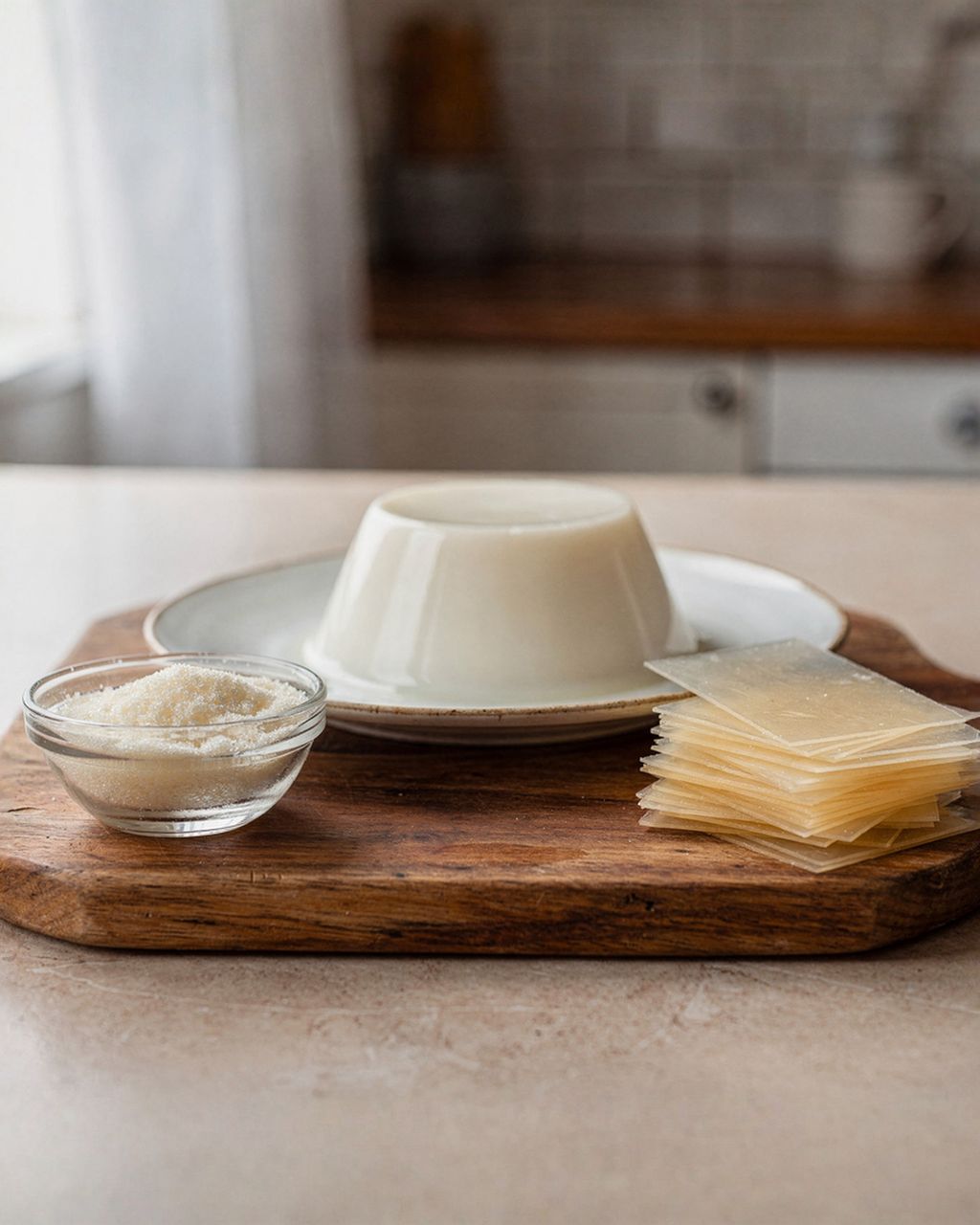
Powdered gelatin is easier to measure for aspic: you weigh it to the gram, and the same Bloom always means the same strength, so the ratios in this article work exactly. With sheet gelatin, both the strength and the weight of a sheet vary by brand, and store-bought packs often don't state the Bloom strength on the package.
All the ratios here are calculated for 200 Bloom powdered beef gelatin (Patisdécor), which we carry. Beef-based gelatin also suits anyone who doesn't eat pork. You'll find more gelling and binding ingredients on the gelling agents and binders page.
Seasonal baking plans, tested recipes and kitchen tricks that save you time. Unsubscribe in one click.
You make clear aspic in five steps: simmer the stock only gently, skim off the fat, clarify with egg white, don't boil the gelatin and don't whip air into it. Cloudiness almost always comes from the stock, not the gelatin.
Simmer the stock gently. A hard boil breaks the fat and proteins into tiny droplets, and the stock turns permanently cloudy. The surface should barely tremble.
Remove the fat. The easiest way is to chill the stock in the fridge and lift off the solidified fat with a spoon. Fat in aspic creates greasy spots and a dull surface.
Clarify it with egg white. Whisk 1 beaten egg white per litre into the cold, defatted stock, heat slowly to a simmer and stop stirring. The egg white clumps into a grey raft and traps the cloudiness. Let it barely bubble for 10 minutes, then carefully strain the stock through cheesecloth or a paper towel set in a sieve.
Don't boil the gelatin. Heat it only until fully dissolved. Boiling robs it of strength and clouds the stock.
Don't use a whisk. Stir slowly with a spoon. Skim off any bubbles that appear, or pop them, before pouring the aspic into the dish.
The method is always the same: soak the gelatin in cold water, dissolve it in warm stock, season, and let it cool to a syrupy thickness before pouring it over the ingredients.
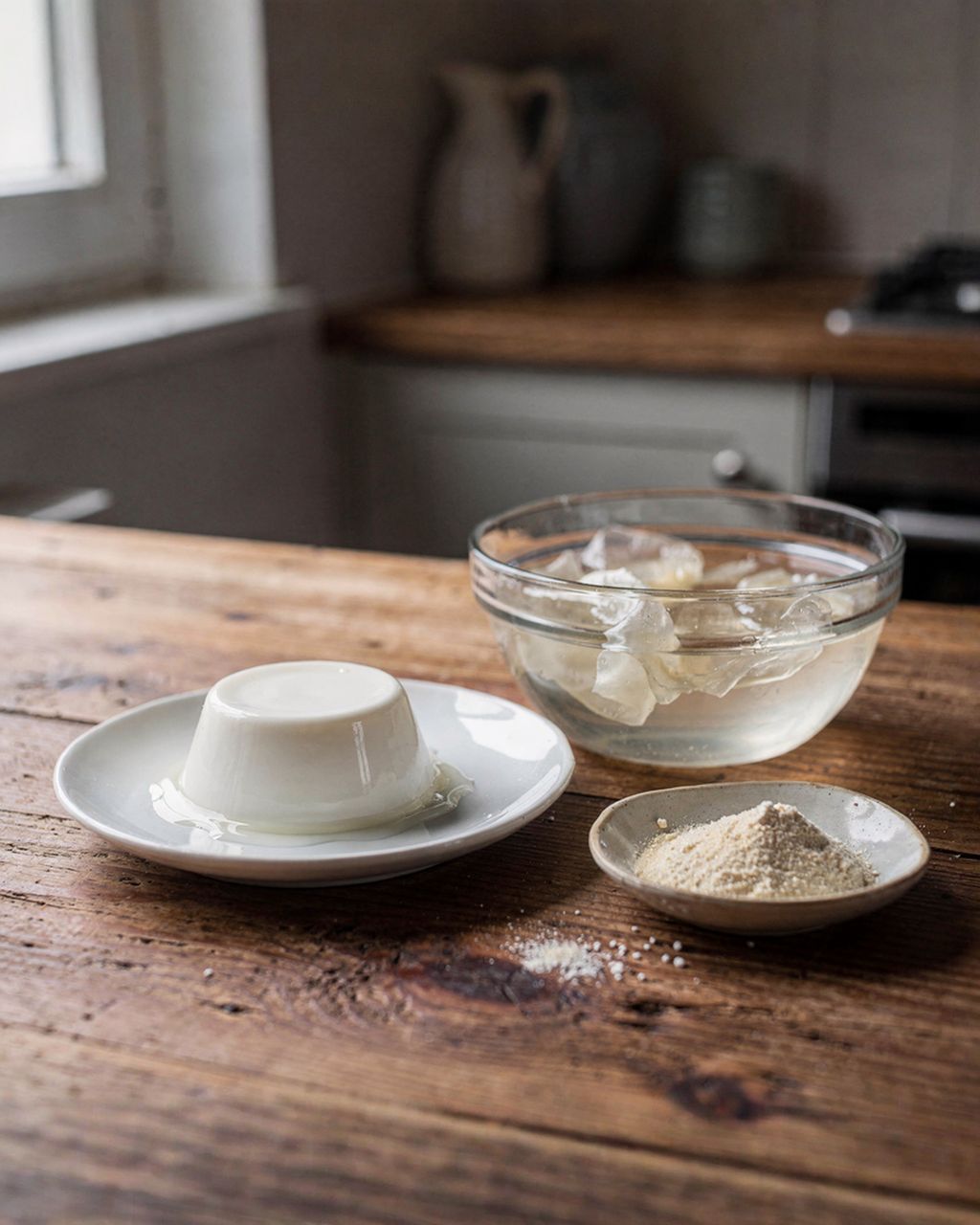
Soak the gelatin. Sprinkle the powdered gelatin over 5–6 times its weight in cold water (about 150–180 ml for 30 g of gelatin) and let it bloom for 10 minutes. Count this water toward the total litre.
Dissolve it. Stir the bloomed gelatin into warm stock (60–80 °C / 140–175 °F) and stir until every granule has disappeared. Don't boil.
Season boldly. Cold aspic tastes less salty than warm stock. Add more salt and acidity than seems right: the stock should taste almost over-salted when warm.
Let it cool. At 25–30 °C (77–86 °F) the aspic starts to thicken like syrup. That's the moment to work with it. Hot aspic would float the eggs and ham up to the top and bury them unnecessarily.
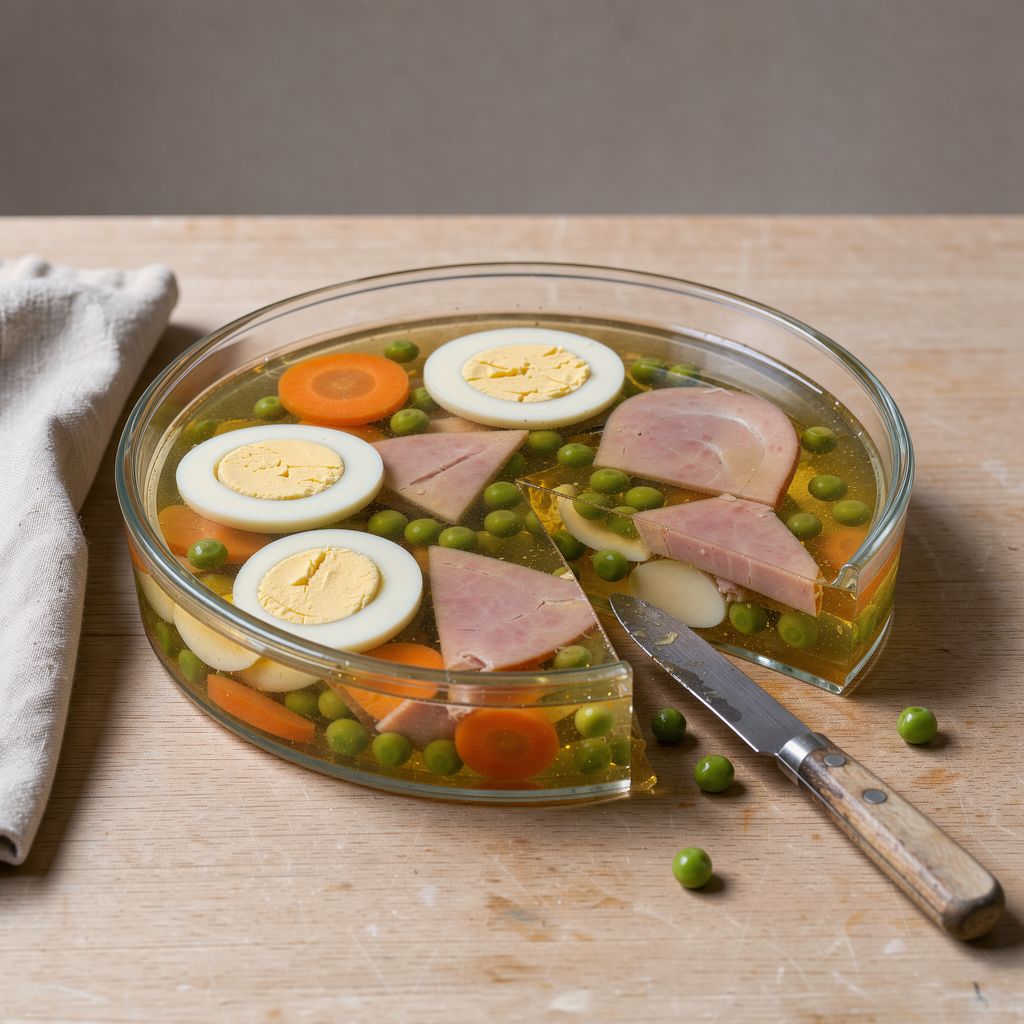
Pour in layers. First pour 0.5 cm of aspic into the dish and let it set in the fridge. Place your garnish on top (egg, peas, parsley) and cover with another thin layer. Only then add the rest. This way nothing floats or flips over.
Let it set in the fridge for at least 4 hours, or preferably overnight for aspic you'll unmold.
If your aspic sets in the pot while you work, stand the pot in a warm water bath and gently reheat it. Gelatin can be melted and set again repeatedly, just never boil it.
For open-faced sandwiches you don't pour the aspic on; you brush it on in a thin coat just as it begins to set. A thin layer keeps the topping from drying out and gives it a shine.
Ratio: 35–40 g/l. The layer is thin, so it must be firm or it will slide off.
Temperature: chill the aspic to 20–25 °C (68–77 °F), until it flows like thin syrup. Anything warmer runs off the egg onto the roll and makes it soggy.
Chill the sandwiches first. Brush them on cold, straight from the fridge, so the aspic sets within a few seconds.
Two thin coats are better than one thick one. Brush on the second once the first has set.
For a platter (ham, eggs, pickles, vegetables), 25–30 g/l is enough if you're taking it from the fridge to the table. If it will sit longer in a warm room, go up to 35 g/l.
For spreads to go under the aspic, see the article Spreads for Open-Faced Sandwiches: Basic Ratios and Consistency. For more cold party food you can make ahead, see New Year's Eve Finger Food: 15 Ideas and Make-Ahead Prep.
Gelatin is better for classic aspic: it melts at mouth temperature, so it's tender and juicy. Agar is a plant-based alternative that holds up even in warmth, but it's more brittle and doesn't melt in the mouth.
Gelatin (animal-based, from beef or pork skin): elastic, "wobbly" aspic. It softens above roughly 25–30 °C (77–86 °F). Good for open-faced sandwiches, platters and head cheese.
Agar (from seaweed): you need much less, roughly 5–10 g per litre depending on the product, and it must be boiled for a few minutes or it won't set. The result is firm but crumbly and slightly cloudier. It suits vegetarians or a summer table outdoors. We don't carry agar; find it in a health food store and follow the dosage on the package.
Pectin isn't suitable for savory aspic. It needs sugar and acid and is meant for jams.
You'll find a detailed comparison in the article Types of Gelling Agents: Pectin, Agar and Gelatin and How to Use Them.
Huspenina (also called sulc or rosol) is an aspic made from a stock of pork trotters, hocks, skin or ears. They release so much collagen that the stock sets without added gelatin. You add gelatin only as insurance.
The spoon test: pour a spoonful of stock onto a cold plate and put it in the fridge for 10 minutes. If the jelly is firm and doesn't run, you don't need gelatin. If it's soft, add 10–15 g of 200 Bloom gelatin per litre.
Cook it long and slow: 3–4 hours over low heat. Collagen turns into gelatin only over time, and a hard boil will cloud the stock.
Acidity: add vinegar only at the end and sparingly, because acid weakens the jelly.
We don't have a head cheese recipe on Yumsto yet. It's coming soon.
You can rescue most failed aspics: reheat one that hasn't set and add gelatin, and thin out one that's rubbery. Only cloudy aspic can't be made clear again.
Didn't set: too little gelatin, the gelatin was boiled, or the aspic is very acidic. Warm it (don't boil), add 5–10 g of soaked gelatin per litre and let it set again.
Rubbery: too much gelatin. Reheat it and stir in warm stock. An extra third of liquid will make it one notch softer.
Cloudy: the stock was boiled hard, wasn't defatted, or air got whipped into the gelatin. Next time, clarify with egg white and stir with a spoon.
Garnish floated to the top: you poured hot aspic all at once. Pour in layers, using chilled aspic.
Water runs from the bottom: ingredients (pickles, vegetables) released their juices. Pat them dry on a paper towel before pouring.
A sheet of gelatin weighs roughly 1.7–2 g (Dr. Oetker packs 6 sheets in 10 g), so 1 litre of sliceable aspic needs roughly 13–18 sheets, depending on the sheet weight. Sheets usually have a different Bloom than 200, though, so converting by weight alone is only approximate. Do a spoon test, or use powdered gelatin, which you can measure to the exact gram.
We don't recommend freezing aspic, because gelatin aspic releases water when thawed and loses both its firmness and its shine. Make it one to two days ahead instead and store it in the fridge at or below 4 °C (40 °F). According to USDA FSIS, cooked dishes keep in the fridge for 3–4 days.
Dip the mold in hot water for 5–10 seconds, cover it with a plate and flip it over firmly. If the aspic doesn't release, dip the mold for a few more seconds. It also helps to lightly grease the mold with a thin layer of oil or line it with plastic wrap.
You can use stock made from bouillon cubes in aspic, but it is saltier and cloudier than homemade stock. Dilute it more than the package says, because the aspic still gets seasoned afterwards, and if you want a clear result, clarify it with egg white just like homemade stock.
Aspic can sit at room temperature for 2 hours at most, or just 1 hour when it's above 32 °C (90 °F). That is the USDA FSIS rule for cooked perishable foods. After that, throw it away rather than putting it back in the fridge. It's better to bring the aspic and open-faced sandwiches to the table in smaller batches.
One recipe worth heating the oven for, one tip, and one deal from the shop. Nothing else.