Easter classic: fragrant mazanec bread
Folar de Páscoa: Portugal's Traditional Sweet Easter Bread
Updated Jul 19, 2026
Folar de Páscoa is a traditional Portuguese Easter sweet bread made from a soft, enriched dough with a hard-boiled egg baked right into the top as a symbol of new life. It comes in both sweet and savoury versions, and in Portugal it's the gift godparents traditionally give their godchildren at Easter. Cinnamon, aniseed and citrus zest give it its signature scent — and baking it at home is far simpler than the beautifully decorated loaf might suggest. Here's its story, its regional variations, and a step-by-step method.
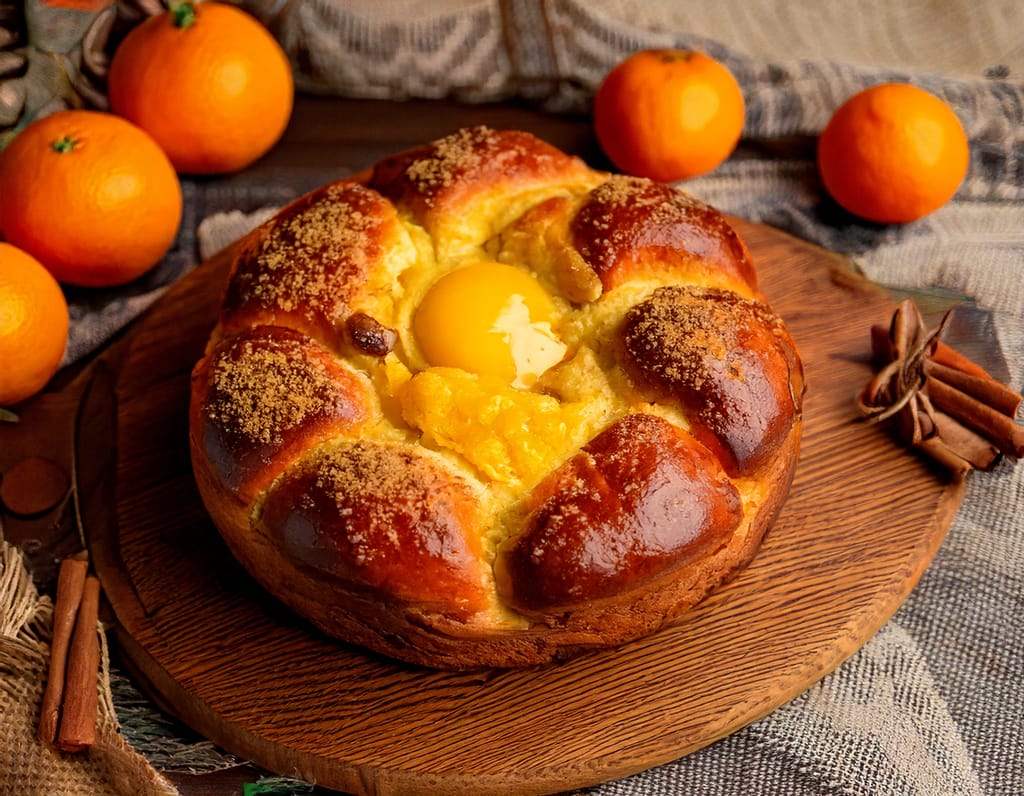
Folar de Páscoa is a traditional Portuguese Easter bread made from a soft, yeasted dough enriched with eggs, butter, milk and sugar, with a hard-boiled egg baked right into the top. The egg doesn't stay put on its own — it's held in place by a cross made from strips of dough, which gives folar its distinctive look.
It comes in two main forms: a sweet version, scented with cinnamon, aniseed and orange or lemon zest, and a savoury version, filled with smoked meats. It's eaten mainly over the Easter weekend, and in many regions godparents traditionally give it to their godchildren as a gift.
Folar has roots stretching back to the Middle Ages, and historians link it to even older spring festivals tied to fertility and rebirth, onto which Christianity later grafted the symbolism of Christ's resurrection. Bread and eggs were given at Easter back then as a gesture of gratitude and respect.
Originally, the eggs were offered separately from the bread; over time they began to be baked directly into the loaf, and the dough itself grew richer with sugar, butter and spices. Portuguese emigrants from Madeira and the Azores carried the sweet version overseas — you can still find it today in Hawaii, known as Portuguese sweet bread.
The egg in folar symbolises new life and resurrection — the central theme of Easter. It's baked hard-boiled into the top of the loaf and held in place by a cross made from two strips of dough, which also nods to the Christian meaning of the holiday.
In Portugal, godparents traditionally give folar to their godchildren at Easter. It's a two-way tradition: godchildren bring their godparents a small bouquet on Palm Sunday, and godparents return the favour on Easter Sunday with a folar, as a symbol of hope and new life. That's exactly why folar used to be so rich and festive — it was made with love, not for an ordinary day.
Folar varies quite a bit from region to region. Here are the three main versions you'll come across in Portugal:
Northern sweet folar — a delicate bread scented with aniseed (erva-doce) and lemon zest, on the more restrained side when it comes to sweetness.
Folar de Olhão from the Algarve — a layered, almost cake-like loaf with caramelised sugar, cinnamon, lemon and butter tucked between sheets of dough; closely related to a strudel.
Folar de Chaves and Valpaços — the savoury version from the northeast, generously filled with pork, smoked presunto ham, salpicão and linguiça sausage.
Almost all versions of folar, sweet or savoury, share one thing in common: a hard-boiled egg held in place by a cross of dough.
At its core, folar is an enriched, yeasted dough: plain flour, milk, sugar, eggs, butter and yeast, flavoured with cinnamon and citrus zest. Every ingredient earns its place — and most can be adapted:
Flour — plain wheat flour gives the dough its stretch. For a gluten-free version, use a blend with xanthan gum, or the loaf will fall apart.
Yeast — fresh or dried both work; activate it in lukewarm milk around 35°C, never hot.
Eggs — they add richness and help bind the dough; free-range works just as well.
Butter — brings richness and softness. For a dairy-free version, swap in a good plant-based fat or coconut oil.
Sugar — typically around 100–150g per half kilo of flour; cane sugar or honey give a darker, gentler sweetness.
Spices and zest — cinnamon, aniseed or fennel seeds, and orange or lemon zest. Dried zest works fine if you don't have fresh.
You'll bake folar in six steps: mix the enriched dough, knead it, let it double in size, shape the loaf with the eggs, give it a short second rise, and bake until golden. Allow around 3 hours in total, including proving time.
Mix the dough. Combine the flour, sugar and a pinch of salt. Stir the yeast into lukewarm milk (~35°C), then add the beaten eggs, softened butter, cinnamon and zest, and work it all into the dry ingredients.
Knead it. On a lightly floured surface, knead for about 10 minutes — pushing with the heel of your hand, folding over, turning a quarter turn — until smooth and elastic.
Let it rise. Place in an oiled bowl, cover with a tea towel, and leave somewhere warm for 1–2 hours until doubled in size.
Shape it. Turn out the dough, gently roll it into a round loaf, press the hard-boiled eggs into the top, and cover each with a cross made from two strips of dough.
Second rise. Leave on a baking tray for another 20–30 minutes to prove, then brush with beaten egg for a glossy crust.
Bake. At 180°C for roughly 30–40 minutes until golden; for the layered version, bake slightly lower at 160°C for longer. Let it cool on a wire rack before slicing.
We've made a note here at Yumsto to add a fully tested recipe with exact measurements for folar soon — for now, treat this method as a reliable guide.
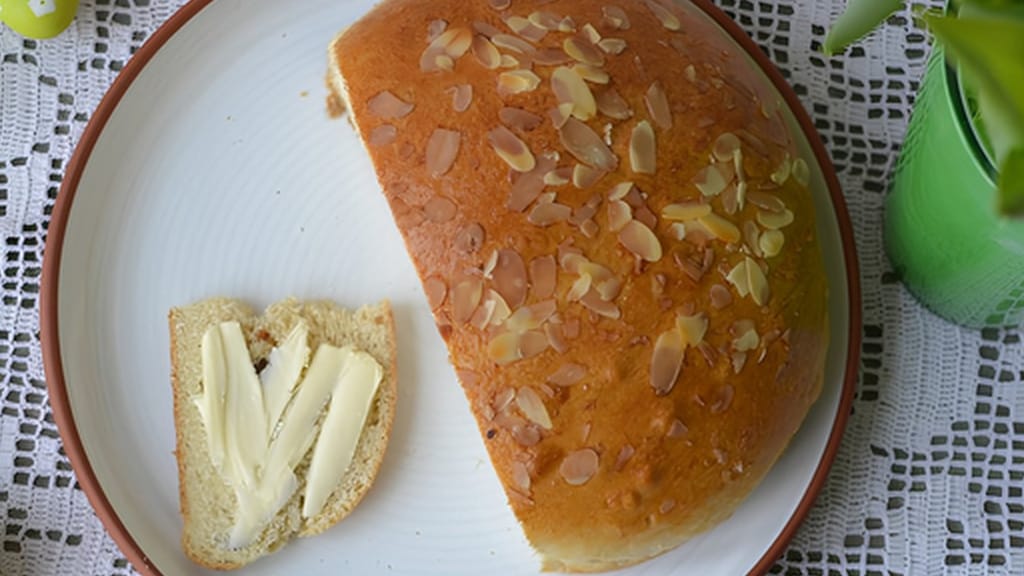
Easter classic: fragrant mazanec bread
Folar's Czech cousin: the fragrant Easter mazanec — another enriched, yeasted bread for the holiday table.
Folar tastes best on the day it's baked, warm or at room temperature, either on its own or with butter and fruit jam. Wrapped in a tea towel or kept in a sealed container at room temperature, it stays soft for 2–3 days; skip the fridge, as it dries out faster there.
On day two or three, it's lovely lightly toasted in a dry pan or toaster — the warmth brings back the softness and releases that cinnamon scent all over again. Pair the savoury Chaves-style folar with a glass of red wine; enjoy the sweet version with coffee.
Folar shares the table with other Portuguese Easter classics — the crisp pastel de nata with its caramelised custard and the buttery queijada cheese tart. Together with folar, they make up a small Portuguese Easter spread where tradition meets an after-lunch coffee.
Yes, the egg in folar is hard-boiled and perfectly edible. But because it bakes alongside the bread for quite a while, it tends to come out firmer and is often treated more as decoration — many people see it as symbolic and eat the bread on its own.
Fennel seeds make a good swap for aniseed, giving that same gentle liquorice note, or use vanilla extract if you're not keen on aniseed at all. Lemon or lime zest can stand in for orange zest, and even dried zest works — the aroma will be a touch more subtle, but you'll still get that fresh citrus lift.
The most common culprit is yeast killed off by milk that was too hot — keep it lukewarm, around 35°C. A dense dough can also come from adding too much flour while kneading, or not letting it prove long enough. Give the dough a full two hours, if needed, in a warm spot until it's doubled in size.
Yes. A baked folar stays soft wrapped in a tea towel for 2–3 days, and by the next day it's even better lightly toasted once sliced. For longer storage, freeze it whole once cooled, for up to a month; thaw at room temperature and warm briefly in the oven to bring back its softness.
Both are sweet Easter breads made from an enriched, yeasted dough, but they differ in flavouring and decoration. Folar is scented with aniseed, cinnamon and citrus zest, with a hard-boiled egg held in place under a cross of dough; mazanec is typically studded with raisins and almonds, scored with a cross on top, and doesn't include an egg.
One recipe worth heating the oven for, one tip, and one deal from the shop. Nothing else.