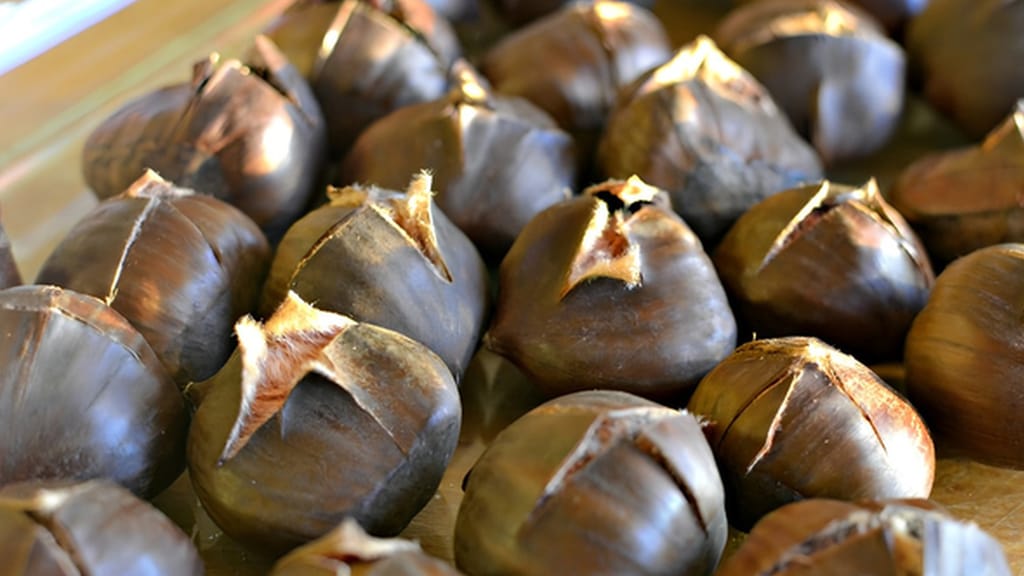
Roasted chestnuts
Edible Chestnuts: How to Roast, Boil and Store Them
Updated Nov 17, 2026
To roast edible chestnuts, cut a slit through the shell of each one and roast them in the oven for about 15–20 minutes, or boil them in water for 10–15 minutes. Peel them right away while they're warm, and store raw chestnuts in the fridge in a perforated bag. First, though, make sure you actually have sweet chestnuts (Castanea sativa) and not poisonous horse chestnuts from the park.
An edible chestnut is a smaller nut, flat on one side, with a pointed tip and a densely spiny husk. A horse chestnut is large and round, with a pale scar and no point. Edible chestnuts grow on the sweet chestnut tree (Castanea sativa). The "chestnuts" from a city park are almost always horse chestnuts (Aesculus hippocastanum), and those can't be eaten. They're two unrelated trees that just happen to share a name in Czech.
Here's how to tell them apart:
Nut: an edible chestnut is smaller, flat on one side and domed on the other, with a little tuft of leftover hairs (the catkin remnant) at the tip. A horse chestnut is large, round and glossy, with a wide pale scar on one side and no point.
Husk: the sweet chestnut's husk is densely covered in fine spines, like a hedgehog, and usually holds two or three nuts. The horse chestnut's husk is green with sparse, short spikes and usually holds a single nut.
Leaf: the sweet chestnut has simple, elongated leaves with toothed edges. The horse chestnut has a palmate leaf made up of 5–7 leaflets.
At a market or in a store, you'll always get edible chestnuts. Be careful mainly when you're foraging them yourself.
An unscored chestnut will burst in the oven or in the pot. There's a lot of water inside, which turns to steam as it heats up and tears the shell apart. Sometimes with a bang and a piece of hot chestnut stuck to the oven glass.
According to the University of Illinois Extension, one cut across the widest part of the nut is enough. The University of Missouri Center for Agroforestry advises:
Set the chestnut flat side down on a cutting board and hold it firmly.
On the domed side, use a sharp knife to make one shallow cut from edge to edge.
Cut through the shell only and go into the kernel as little as possible. A deeper cut won't hurt the flavor, but the kernel won't look as neat.
An "X" cut works too, and it makes the shell easier to peel back. Above all, don't skip a single chestnut.
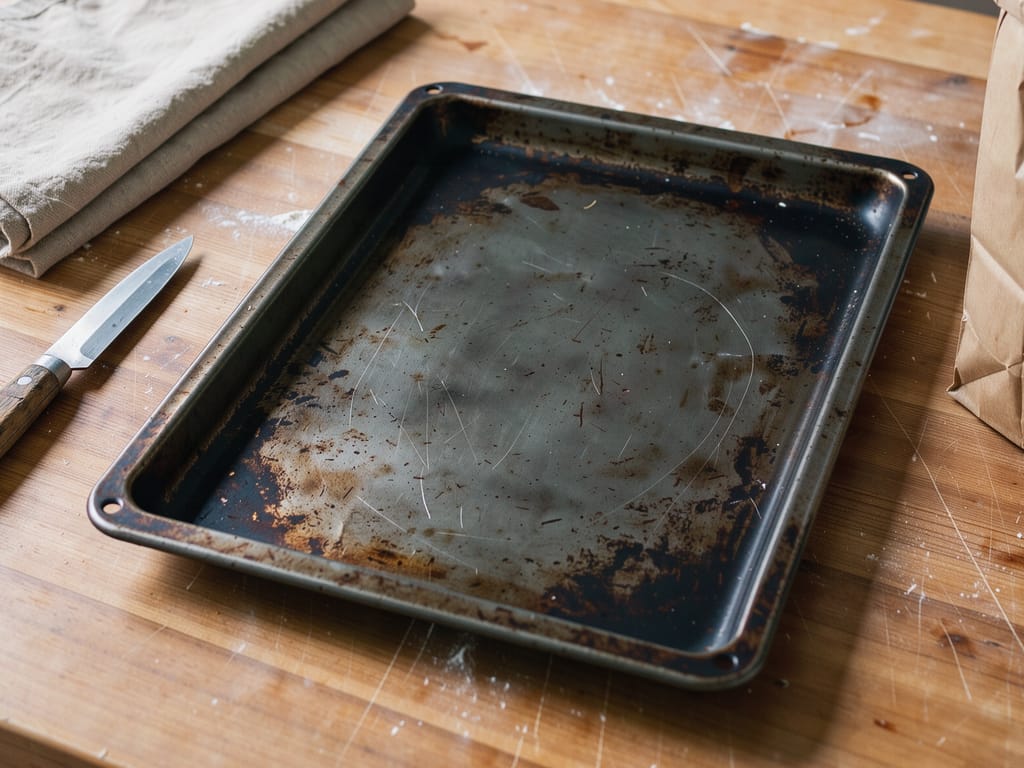
Edible chestnuts roast in the oven in 15–20 minutes at 150–160°C (300–325°F), according to the University of Illinois Extension. Spread the scored chestnuts on a baking sheet in a single layer so they roast evenly.
You'll know they're done when the shell opens and curls back at the cut and the kernel is soft and mealy when pierced, not firm and waxy.
Larger or very fresh chestnuts contain more water and need the upper end of the time range.
Steam helps: the Center for Agroforestry recommends putting a little water in the bottom of the roasting pan (for slow roasting at 120°C/250°F, see the questions below). The kernel then stays tender.
For a tested step-by-step method, see the recipe for oven-roasted edible chestnuts.
Roasted chestnuts
Oven-roasted edible chestnuts
Boil scored edible chestnuts in boiling water for 10–15 minutes. According to the University of Illinois Extension, the same time applies to steaming. Boiled chestnuts are softer and moister than roasted ones. That makes them best when you're going to process them further, for example into a purée, a soup or a stuffing.
Add the chestnuts only once the water is boiling, and keep it at a gentle boil so the kernel doesn't fall apart.
They're done when the shell opens at the cut and the kernel is easy to pierce.
Take them out of the water a few at a time and leave the rest in the hot water. Warm chestnuts are much easier to peel (see the next section).
To steam them, set them in a basket over about 1–1.5 cm (½ inch) of boiling water, as the Center for Agroforestry advises, until the kernel separates from the shell. Cover the pot with a lid so the steam doesn't escape needlessly.
Edible chestnuts peel most easily while warm, as soon as you can hold them. According to the University of Illinois Extension, chestnuts peel best when they've cooled just enough that you won't burn yourself. Once they cool completely, the thin brown skin under the shell sticks to the kernel again.
Wrap roasted chestnuts in a kitchen towel and let them steam for a few minutes. Then squeeze them in the towel, the shells will crack and come off along with the skin.
Peel the shell back from the cut. Remove the bitter brown skin from the kernel completely.
If a few chestnuts cool down on you, warm them briefly in the oven or in hot water.
Throw away any chestnut that's dark inside, moldy or smells musty.
Raw edible chestnuts belong in the fridge, not the pantry. Unlike other nuts, they contain a lot of water and spoil quickly. According to the University of Illinois Extension, at room temperature they dry out, harden and go moldy.
Fridge: in a perforated or partly open bag, ideally in the vegetable drawer. The University of Illinois Extension recommends using them within a few weeks. The Center for Agroforestry gives an ideal temperature of around 0°C (32°F) and use within about two weeks.
Larger quantities: according to the Center for Agroforestry, store them in a mesh bag or paper bag so air can circulate. A closed plastic bag traps moisture, and chestnuts go moldy in it.
Check them regularly: pick out any with mold or sprouts so they don't spread to the others.
When buying, choose heavy, glossy chestnuts with a taut shell. A light chestnut with a loose shell is dried out inside.
Recipe of the week, one tip that saves you time and one deal from the shop. Unsubscribe in one click.
The next issue goes out on Thursday, November 26.
Peeled edible chestnuts make soup, a stuffing for poultry, a purée or a sweet pie. Try, for example:
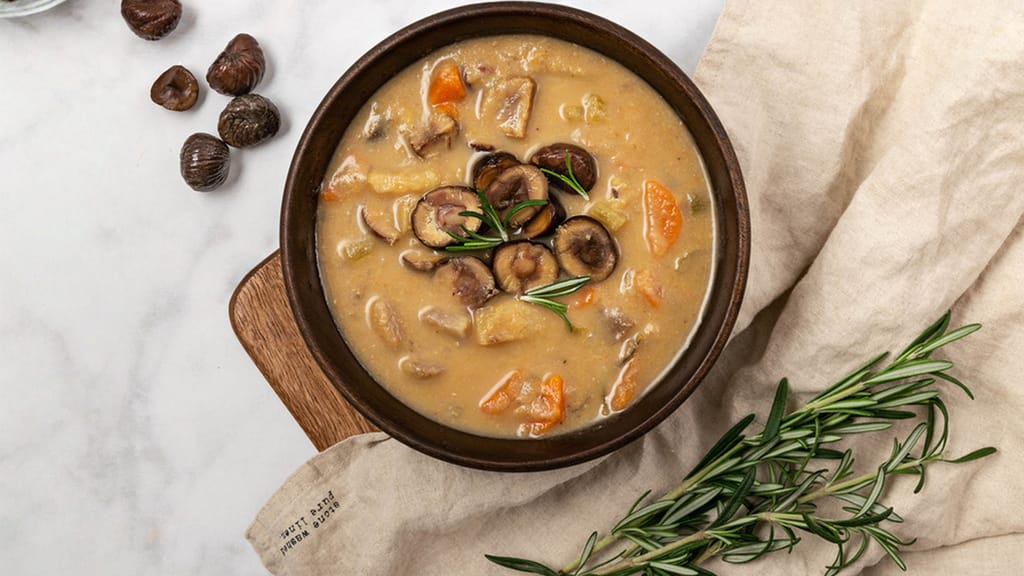
chestnut and vegetable soup made with boiled chestnuts,
chestnut stuffing for roast poultry,
chestnut and chocolate pie, where the sweetness of the chestnuts meets bittersweet chocolate.
Roasted chestnuts are best straight out of the oven, with just a little salt. Dried and ground chestnuts become chestnut flour. To find out how to bake Christmas cookies with it without gluten, read the article what to use instead of flour in gluten-free Christmas cookies.
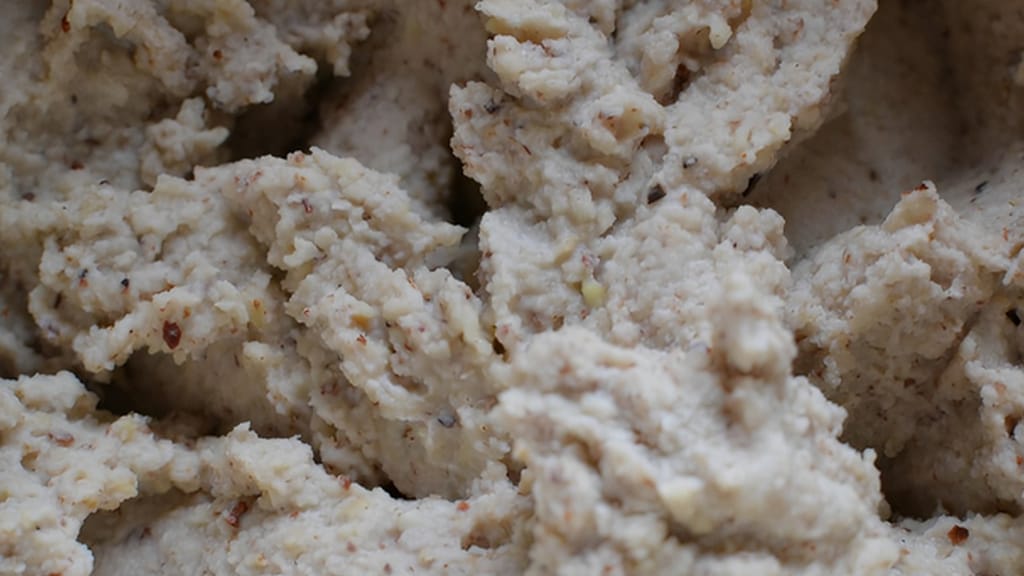
Chestnut filling
Chestnut stuffing for roast poultry
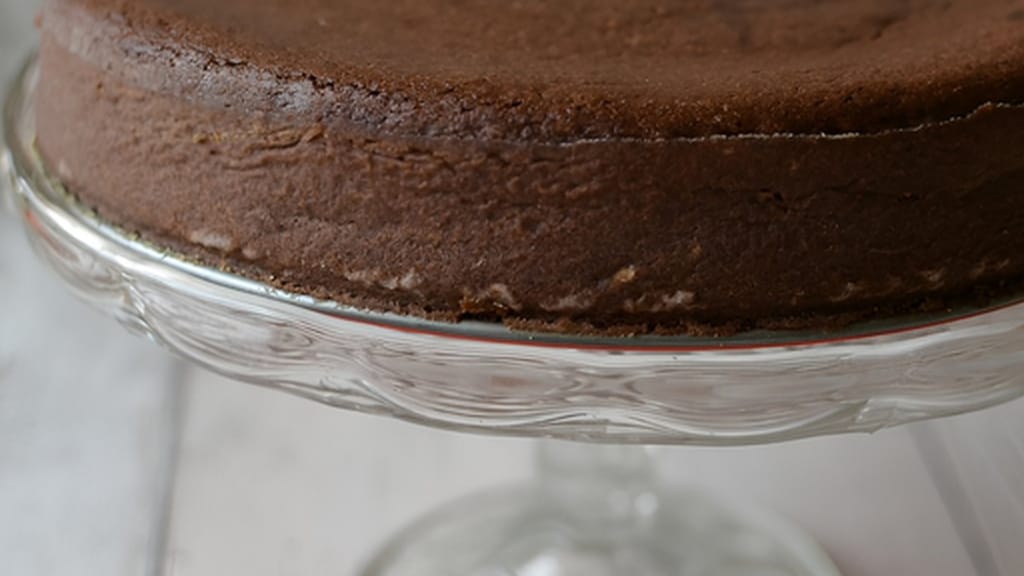
Chocolate chestnut cake
Chestnut and chocolate pie
Slow-roasting edible chestnuts takes about 20–30 minutes at 120°C (250°F) with a little water in the bottom of the roasting pan, according to the University of Missouri Center for Agroforestry. Spread the scored chestnuts in a single layer. The water is there for the steam, which keeps the kernel from drying out and turning hard.
Put the scored edible chestnuts in a bowl with a little water, cover them with a damp paper towel and microwave on full power for 2–5 minutes, depending on how many you have. This method comes from the University of Missouri Center for Agroforestry. They're done when the shells open up. Peel them right away while they're warm.
In a pressure cooker, scored edible chestnuts cook in about 2–3 minutes at high pressure, in a steamer basket over about 240 ml (1 cup) of water. This method comes from the University of Missouri Center for Agroforestry. Once you open the pot, peel them while they're warm.
Yes, you can freeze edible chestnuts raw, scored and in their shells, in bags or containers. This is what the University of Missouri Center for Agroforestry recommends. You can then roast or boil them straight from frozen, with no thawing. For long-term storage, it also mentions drying the peeled kernels to a moisture content below 8%. Before using them, simmer them like dried legumes.
Yes, according to the University of Illinois Extension, true edible chestnuts can be eaten raw too, although roasting is usually preferred. This applies only to sweet chestnuts (Castanea sativa). The horse chestnut is poisonous both raw and cooked.