Simple chocolate cake
Cocoa vs. Cocoa Powder vs. Baking Chocolate: The Difference, Dutch Cocoa & How to Substitute
Updated Oct 6, 2026
Cocoa and cocoa powder are exactly the same thing in baking — the difference that actually matters is between pure cocoa and sweetened drinking chocolate, between Dutch-process and natural cocoa, and between cocoa and baking chocolate. Cocoa is ground cocoa mass with most of the fat pressed out; baking chocolate still contains that fat (cocoa butter) plus sugar. That's why you can swap one for the other — you just need to make up for the missing fat and sugar. Below you'll find what's what, when the type of cocoa actually matters, and exact ratios in grams.
In the kitchen, there's no difference between cocoa and cocoa powder — when a recipe says "cocoa," it means pure, unsweetened cocoa powder. It's ground cocoa mass made from roasted cocoa beans, with most of the cocoa butter pressed out.
The swap that can actually ruin your bake is a different one — mixing up pure cocoa with instant cocoa drink mix. That's made for stirring into milk, and it's mostly sugar (usually the first ingredient), often with milk powder, flavourings and emulsifiers thrown in. In batter, it adds sweetness but not much cocoa flavour or colour.
Quick way to tell them apart from the label:
Cocoa powder – ingredients list just "cocoa" (possibly "treated with an alkalizing agent"). Under EU cocoa rules it must contain at least 20% cocoa butter on a dry-matter basis.
Reduced-fat cocoa – under 20% fat, flatter flavour, but still works fine for baking.
Drinking cocoa / hot chocolate mix – sugar listed near the top. Not for baking.
Cocoa beans and nibs – whole or crushed roasted beans, add crunch to batter, don't use instead of powder.
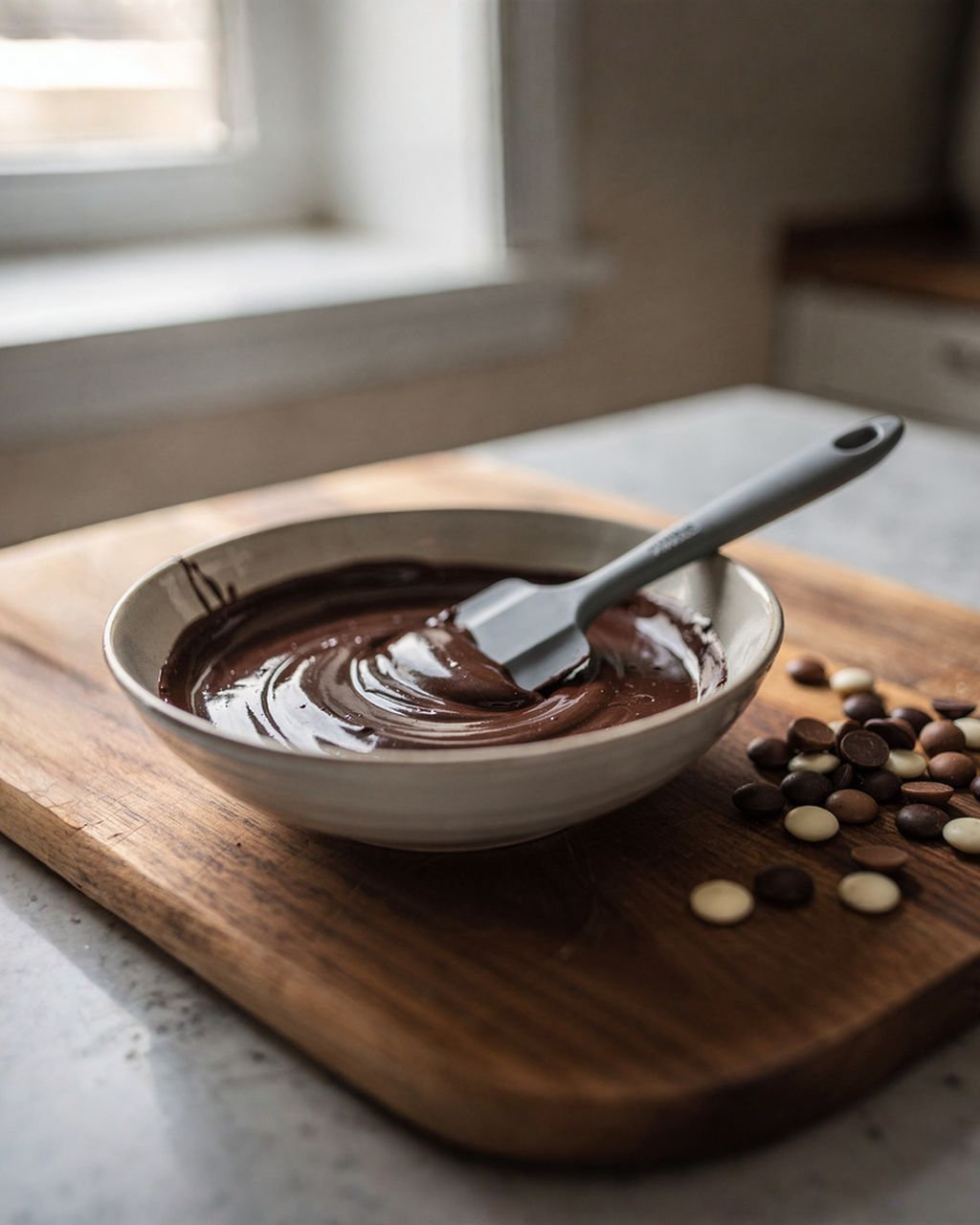
Baking chocolate is dark or semi-sweet chocolate meant for melting — made from cocoa mass, cocoa butter and sugar. Compared with cocoa powder, it has added fat and sweetness, and it's that cocoa butter that gives it shine, creaminess and the ability to set firm when it cools.
What this means for you:
Under EU rules (Directive 2000/36/EC), chocolate must contain at least 35% cocoa solids, including at least 18% cocoa butter. Good-quality dark baking chocolate usually sits around 50–70%.
More cocoa butter (as in couverture, legally called "coating chocolate" in some countries, at least 31%) means thinner melted chocolate — ideal for coatings, dipping and thin layers.
Cocoa-flavoured coating or "chocolate-style" confectionery made with vegetable fats isn't chocolate. Here, hardened vegetable fats replace cocoa butter, and actual cocoa content is often just a few percent. It melts differently, tastes waxy, and won't behave like real chocolate in ganache or mousse.
The difference between regular chocolate and couverture deserves its own explainer — check the links at the end of the article.
Dutch-process (alkalized) cocoa has been treated with an alkaline solution, making it less acidic, darker and milder; natural cocoa is acidic, lighter in colour and sharper in taste. The method was invented in the 19th century by Dutchman Coenraad van Houten — hence the name.
pH: natural cocoa sits around pH 5–6, Dutch-process around 6.5–8 (depending on how strongly it's alkalized).
Colour: natural cocoa is light to reddish-brown, Dutch-process is dark brown to almost black.
Flavour: natural cocoa is fruitier, more astringent and "tangier," Dutch-process is rounder, earthier and less bitter.
Solubility: Dutch-process dissolves more easily in liquid, which is why nearly all drinking cocoa is alkalized.
Spotting it on the label: look for "alkalized," "Dutch-process" or "treated with an alkalizing agent (potassium carbonate)."
Alkalizing also significantly reduces flavanol content — the natural compounds in cocoa beans that give natural cocoa its characteristic bitterness.
It depends on what's leavening the recipe: with baking soda you need natural cocoa, with baking powder either type works. Baking soda needs an acid to release carbon dioxide — and acidic natural cocoa provides exactly that. Dutch-process cocoa isn't acidic, so the soda won't react properly, the batter won't rise as much, and it can even taste soapy.
Recipes leavened with baking powder (most classic cakes, bundt cakes and spiced honey cakes): either cocoa works — it only affects flavour and colour.
Recipes with baking soda and no other acid (typically American-style chocolate cakes and brownies made with baking soda): use natural cocoa.
Want to use Dutch-process cocoa in a soda-leavened recipe? Swap the soda for baking powder — roughly 3 g of baking powder per 1 g of soda. Or add an acidic ingredient (buttermilk, soured cream, yoghurt).
Recipes with no leavening at all (creams, drinks, mousses, tiramisu dusting): either works — Dutch-process gives a darker colour and milder flavour.
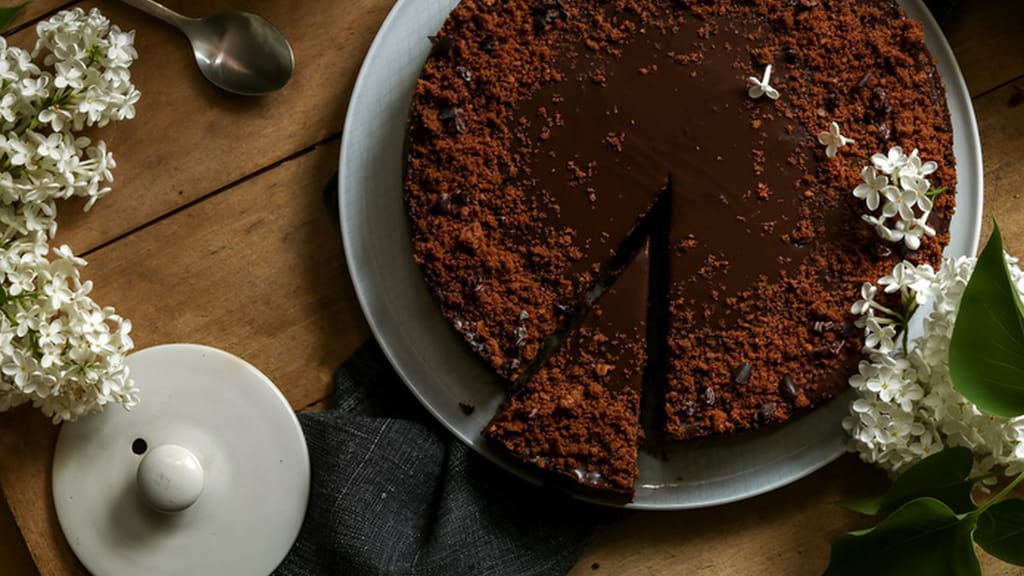
Simple chocolate cake
Simple chocolate cake – see the difference between Dutch-process and natural cocoa for yourself
For 100 g of dark chocolate (around 70%), use roughly 40 g cocoa, 30 g butter and 30 g sugar. Cocoa provides the cocoa solids, butter stands in for the missing cocoa butter, and sugar brings the sweetness. These ratios are approximate — they work well in batters, brownies, muffins and spiced cakes, where the chocolate is melted and mixed with other ingredients anyway.
Ratios per 100 g of chocolate:
Pure cocoa mass (100%, unsweetened): about 60 g cocoa + 45 g butter.
Dark 70%: about 40 g cocoa + 30 g butter + 30 g sugar.
Semi-sweet 50–55%: about 30 g cocoa + 25 g butter + 45 g sugar.
Milk chocolate: cocoa can't really replace this one — it's missing the milk solids, and the result tastes quite different.
How to do it: melt the butter over low heat, stir in the cocoa and sugar, and keep mixing until you get a smooth, glossy, lump-free paste. Use this exactly where melted chocolate would go.
Cocoa is also considerably drier than chocolate, so batter made with the substitute tends to come out a touch denser. For a softer crumb, add an extra tablespoon of milk or cream. You can also swap the butter for a neutral oil (use about a fifth less, since butter also contains water) — the result will be more tender, just without the buttery flavour.
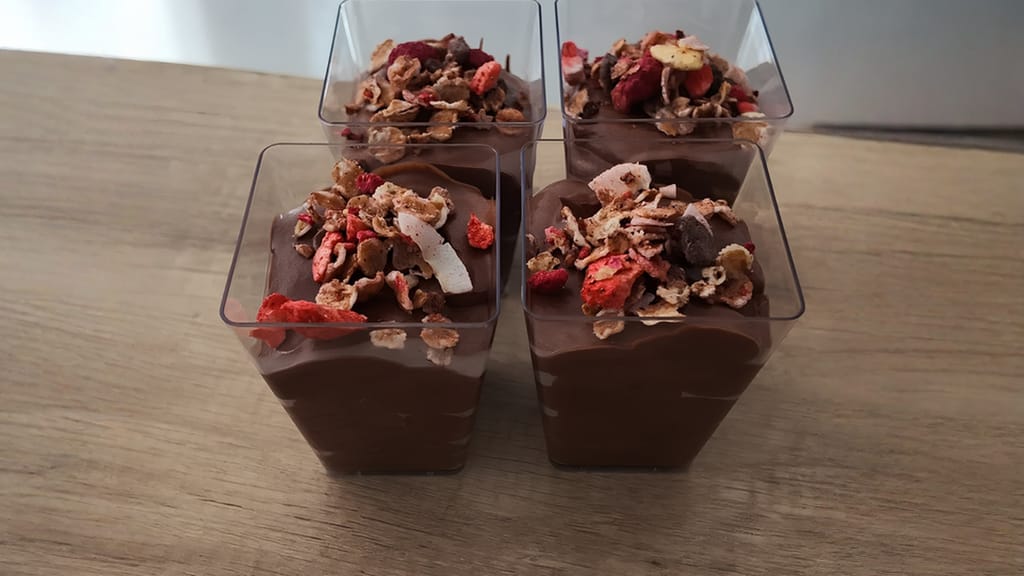
Chocolate mousse
Chocolate mousse – a recipe where cocoa can't stand in for baking chocolate
Instead of 30 g cocoa, use roughly 75 g of 70% dark chocolate, and cut back the recipe's butter and sugar by about 20–25 g each. Chocolate brings its own cocoa solids plus fat and sugar, so you need to subtract those from the rest of the recipe — otherwise the batter will turn out greasy and overly sweet.
Melt the chocolate first (in a water bath, or together with the butter from the recipe) and stir it into the wet ingredients, not the flour.
This works well in batters and creams. It doesn't work for dusting (tiramisu, truffles) or dry mixes — those need powder.
With chocolate, the result tends to be more tender and fuller-flavoured; with cocoa, it's more intensely chocolatey and darker in colour.
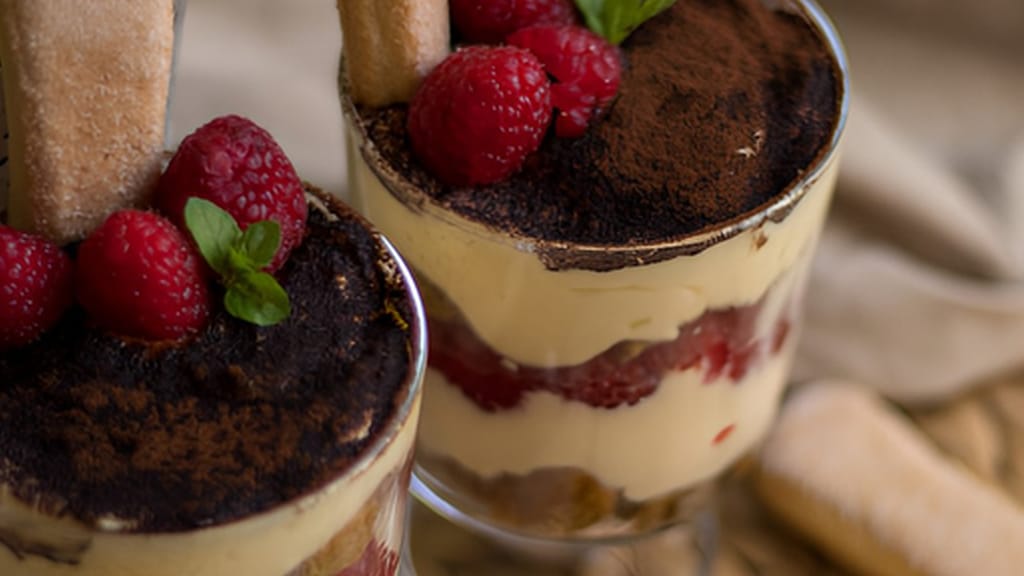
Raspberry tiramisu
Raspberry tiramisu – a dessert where you need cocoa powder, not chocolate, for the topping
For cocoa, check the ingredients list and fat content; for chocolate, check the cocoa percentage and type of fat. The label tells you everything you need to know.
Cocoa: ingredients should list just "cocoa" (plus an alkalizing agent for Dutch-process), nothing else. 20–22% fat gives a fuller flavour than reduced-fat cocoa (10–12%).
Baking chocolate: dark or semi-sweet with at least 50% cocoa, no vegetable fats added. If the label says it "contains vegetable fats in addition to cocoa butter," pick a different one.
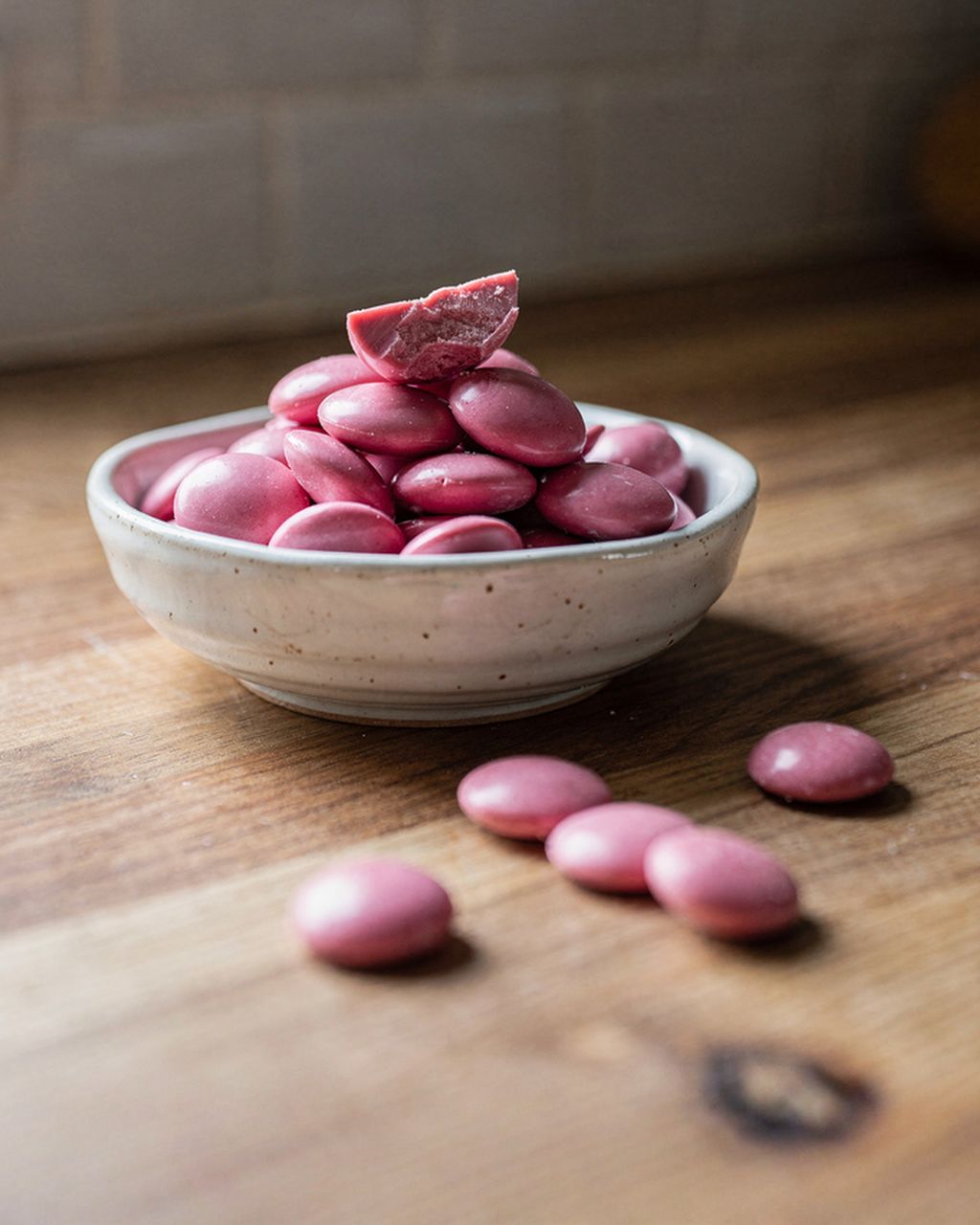
Callets (chocolate buttons) instead of a bar melt faster and more evenly, and they're easier to measure by weight. We've had great results with Belgian Callebaut 811 dark chocolate at 54.5% cocoa — versatile for batters, creams and ganache alike.
Find callets and bars for cooking and decorating in our selection of baking and cooking chocolate.
Kept dry and well sealed, cocoa powder easily lasts 2–3 years — it's usually still safe past the best-before date, just gradually loses its aroma. Store it in a sealed container away from heat and moisture (not above the stove) and well away from spices, since it readily picks up other smells. If it clumps, just sift it.
Cocoa powder clumps because it contains fat and fine particles that repel water and stick together into little balls on the surface. Stir it first with the sugar and a tablespoon or two of cold milk into a smooth paste, then pour in the rest of the warm milk. Dutch-process cocoa stirs in more easily than natural cocoa.
Yes, but only a little: according to the USDA database, a tablespoon of unsweetened cocoa (about 5 g) has roughly 12 mg of caffeine — about an eighth of a cup of coffee. It contains much more theobromine, a related compound. Theobromine is toxic to dogs, so cocoa baked goods are off-limits for them.
You can swap cocoa for carob 1:1, but it tastes different — sweet and caramel-like, without cocoa's typical bitterness. It's naturally sweeter, so you can cut back a little on the sugar in the recipe. It's a good option if you want to avoid caffeine and theobromine, but it won't fully replace chocolate.
Raw cacao is natural, non-alkalized cocoa powder made from beans processed at a lower temperature instead of being roasted in the usual way. It tastes fruitier and more acidic, and in baking it behaves like natural cocoa, reacting with baking soda. There's no major culinary difference from regular natural cocoa — it's mainly just pricier.
One recipe worth heating the oven for, one tip, and one deal from the shop. Nothing else.