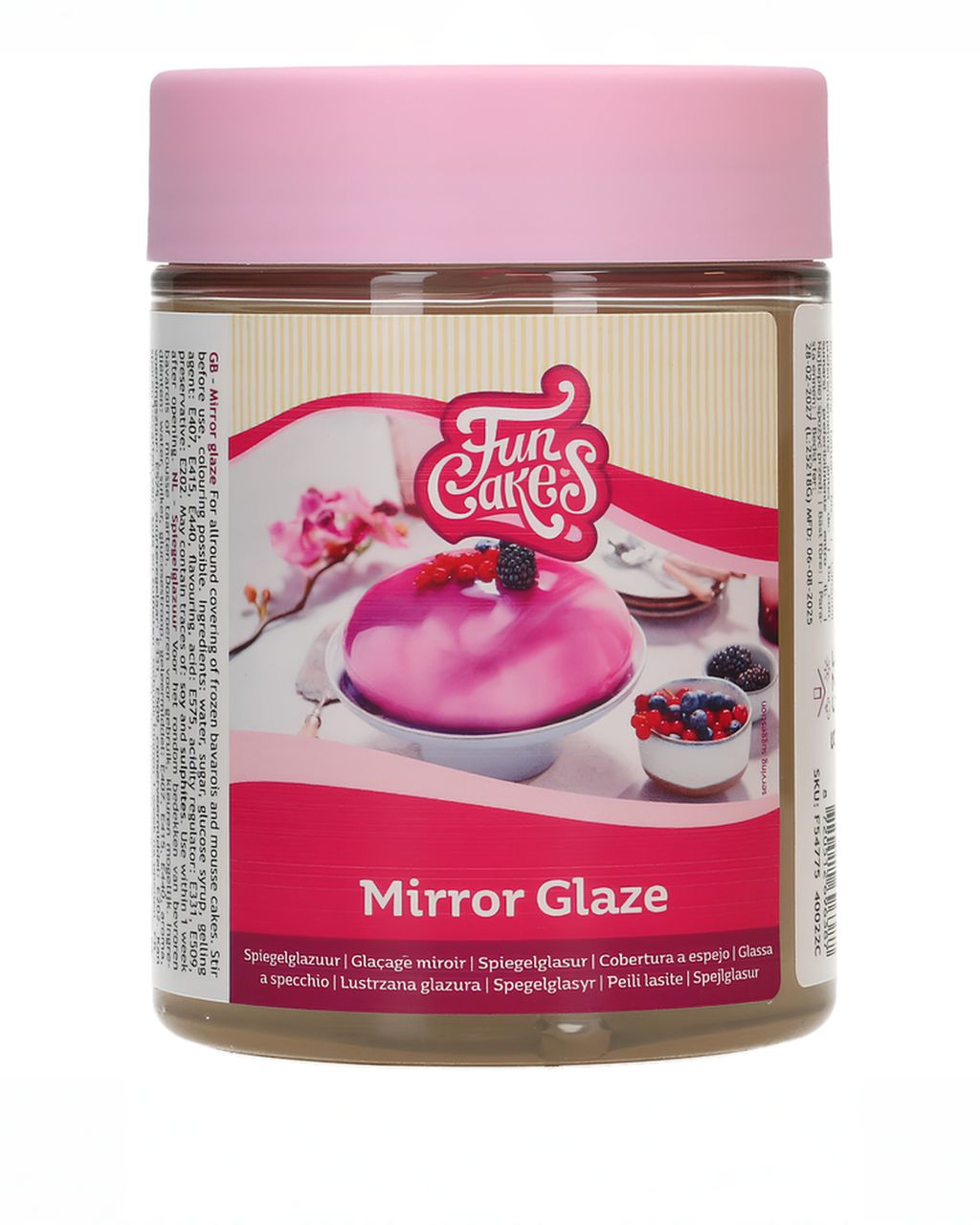
FunCakes Mirror Glaze (325 g)
Best Cake and Filling Under a Mirror Glaze: Getting a Smooth, Even Pour
Updated Nov 3, 2026
A mirror glaze needs a cake with a smooth, rock-hard frozen surface. The best choice is a mousse cake unmolded from a silicone mold, or a regular cake sealed with a thin layer of ganache or firm buttercream and frozen overnight at −18 °C (0 °F). The filling and coating under a mirror glaze must survive freezing and smooth out perfectly, because the glaze follows every bump. Crumbs, scratches and little air bubbles will all show through. Room-temperature cream and unstabilized whipped cream won't work.
The best cakes for a mirror glaze are a mousse cake, a cake sealed with ganache or firm buttercream, and a frozen cheesecake. They all share three things: a smooth surface, the ability to handle freezing, and a shape that holds after thawing.
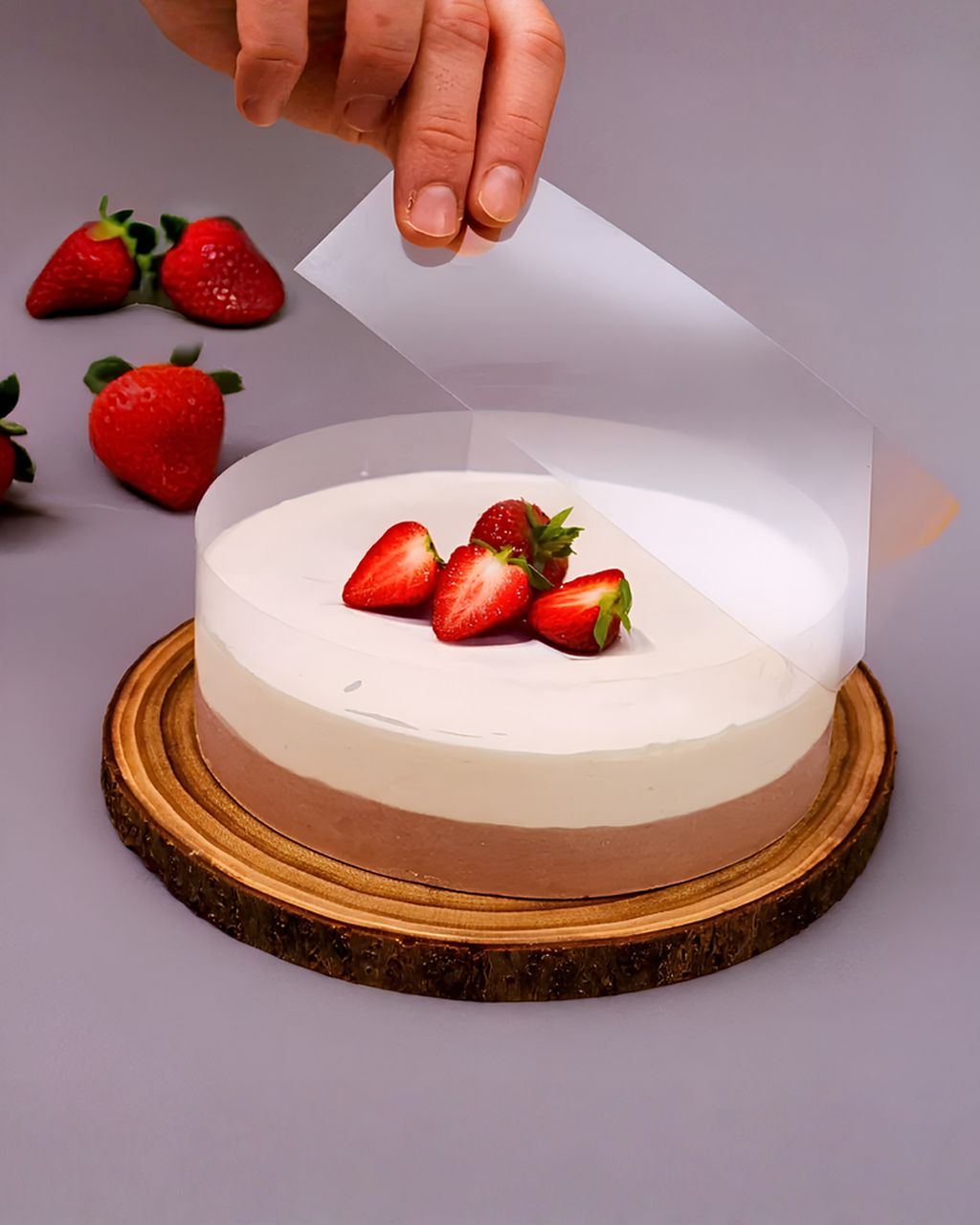
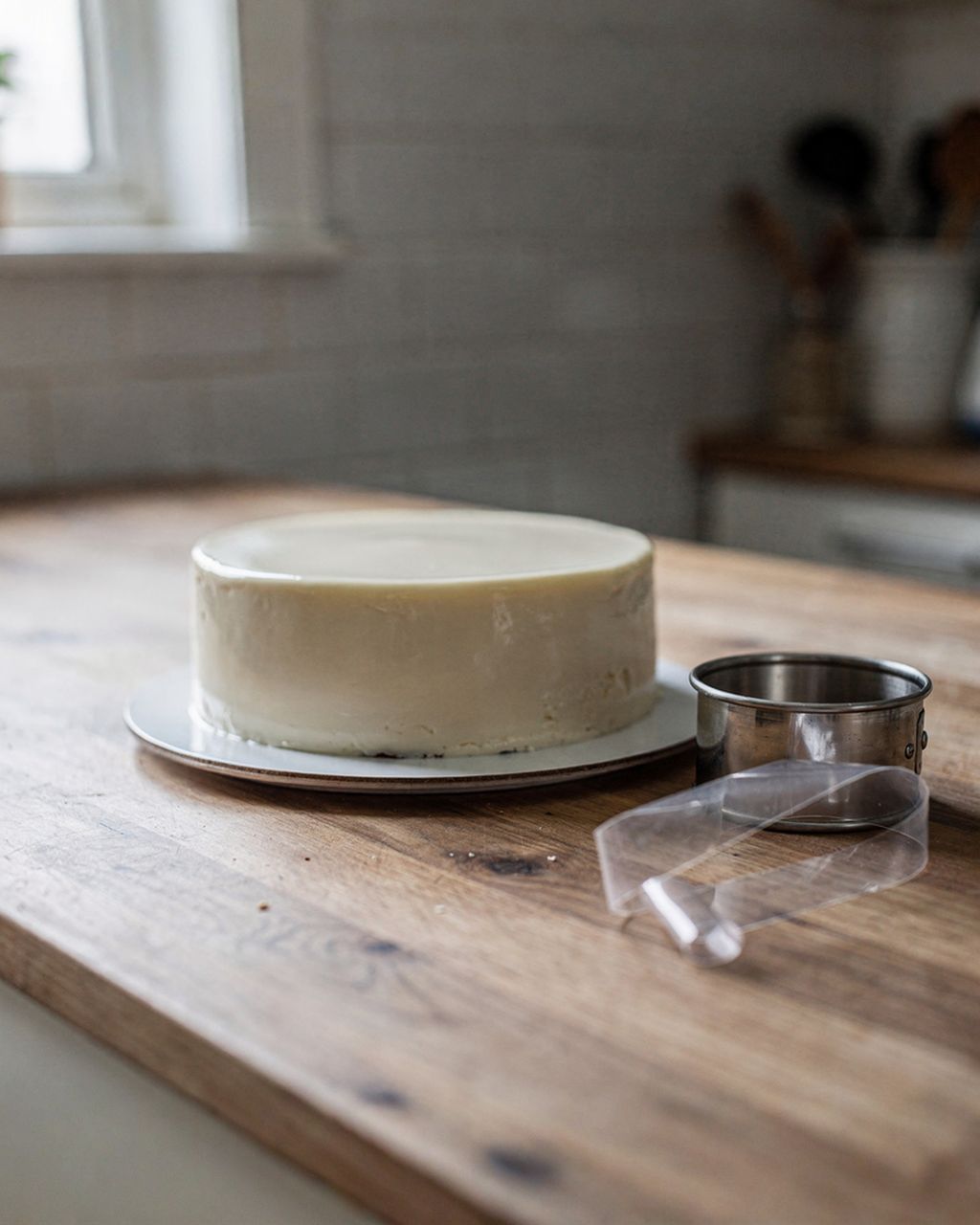
Mousse cake (entremet) – the ideal choice. Made in a silicone mold or in a ring lined with acetate strip, it comes out smooth with sharp edges.
Classic layer cake with sponge – works, but only if it's coated in a thin layer of ganache or buttercream.
Cheesecake – baked or no-bake, with a smooth top and well frozen.
Not suitable: naked cakes, cakes topped with fruit, sprinkles or nuts, drip cakes, cakes covered in fondant, and cakes with a filling that weeps liquid after thawing.
Seasonal baking plans, tested recipes and kitchen tricks that save you time. Unsubscribe in one click.
The most reliable choice under a mirror glaze is ganache in a thick ratio, because it smooths out perfectly, freezes well and holds up under the glaze. Buttercreams and gelatin-stabilized creams also work well:
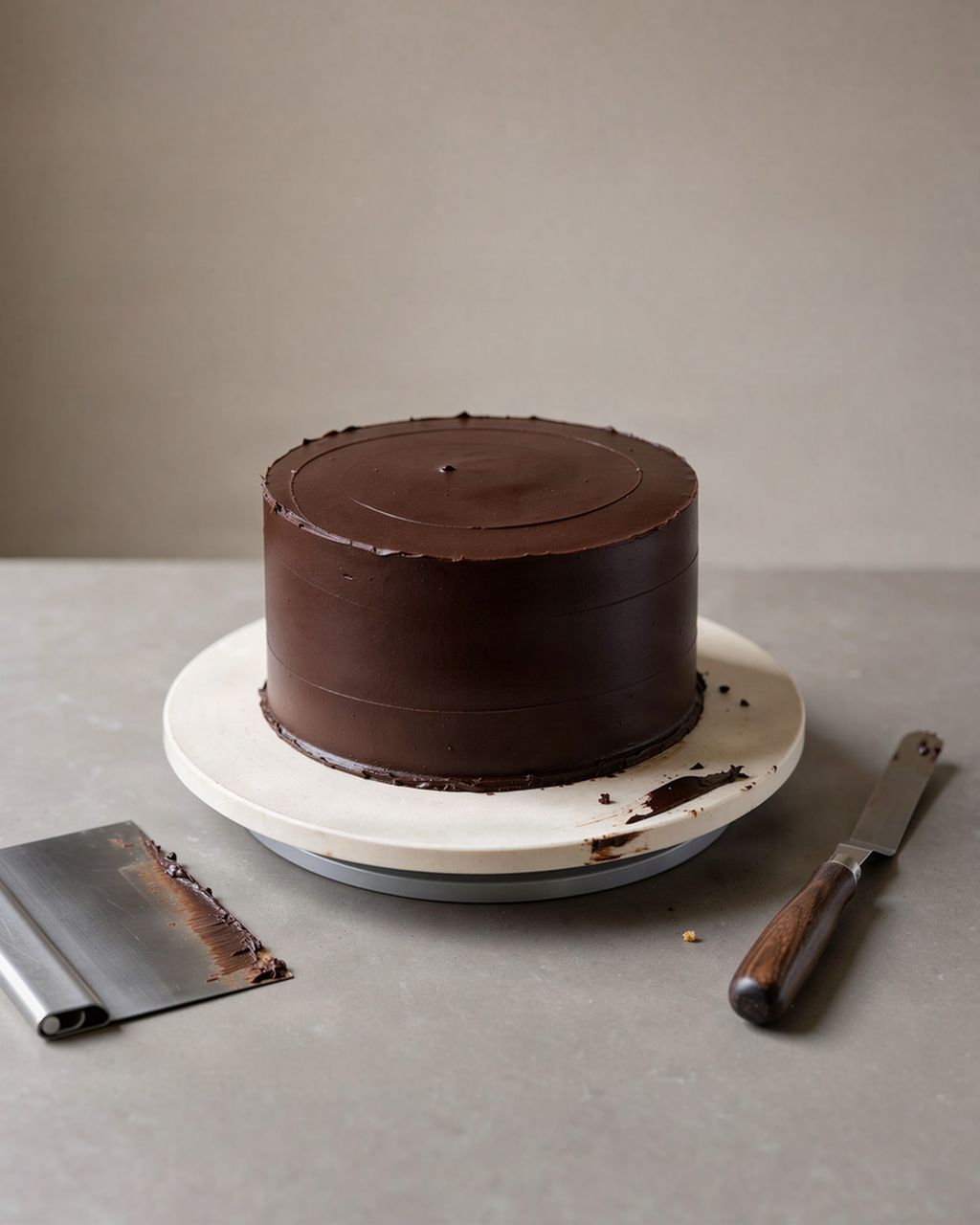
Coating ganache: 2:1 (chocolate to cream) for dark chocolate, 3:1 for milk chocolate and 4:1 for white. Spread it when it reaches the consistency of peanut butter.
Swiss meringue buttercream: smooth, easy to level and freezes without trouble.
Mascarpone cream or whipped cream stabilized with gelatin: holds up as long as it's firm enough and well chilled.
Parisian cream (whipped ganache): delicate and smooth, and handles freezing well.
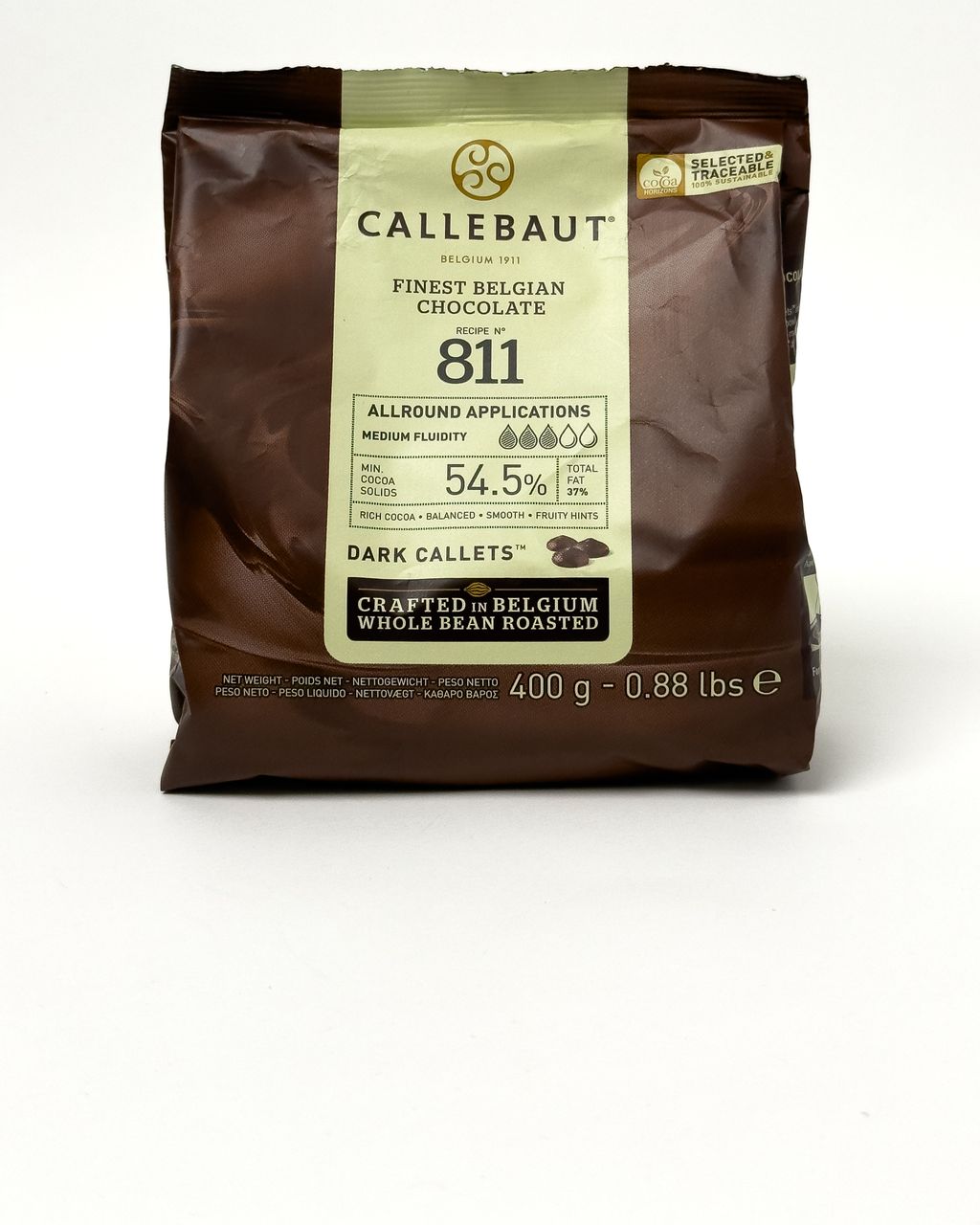
Be careful with pastry cream: starch-thickened creams often release water after thawing, which creates a wet layer under the glaze. You can make coating ganache with Callebaut 811 dark chocolate, for example. To learn how to coat a cake with cream or ganache so the sides come out straight, see How to coat a cake with cream or ganache.
Coat the cake in two layers: a thin first layer traps the crumbs, and the second evens out the surface.
Crumb coat: spread a thin layer of cream or ganache over the cake and smooth it. The crumbs from the sponge stay in this layer instead of on the surface.
15 minutes in the fridge: the first layer sets.
Final layer: apply a thicker layer and smooth it with a long, straight spatula, using a bench scraper for the sides. You can warm the spatula in hot water and dry it.
Top edge: pull the top edge toward the center in one stroke so no lip is left.
Check: look at the cake against the light. Every scratch will show under the glaze.
For perfectly smooth sides and a sharp edge, use acetate strip: wrap it around the cake or ring before filling and remove it only once the cake is frozen. For how to work with it, see Pastry strip (acetate film).
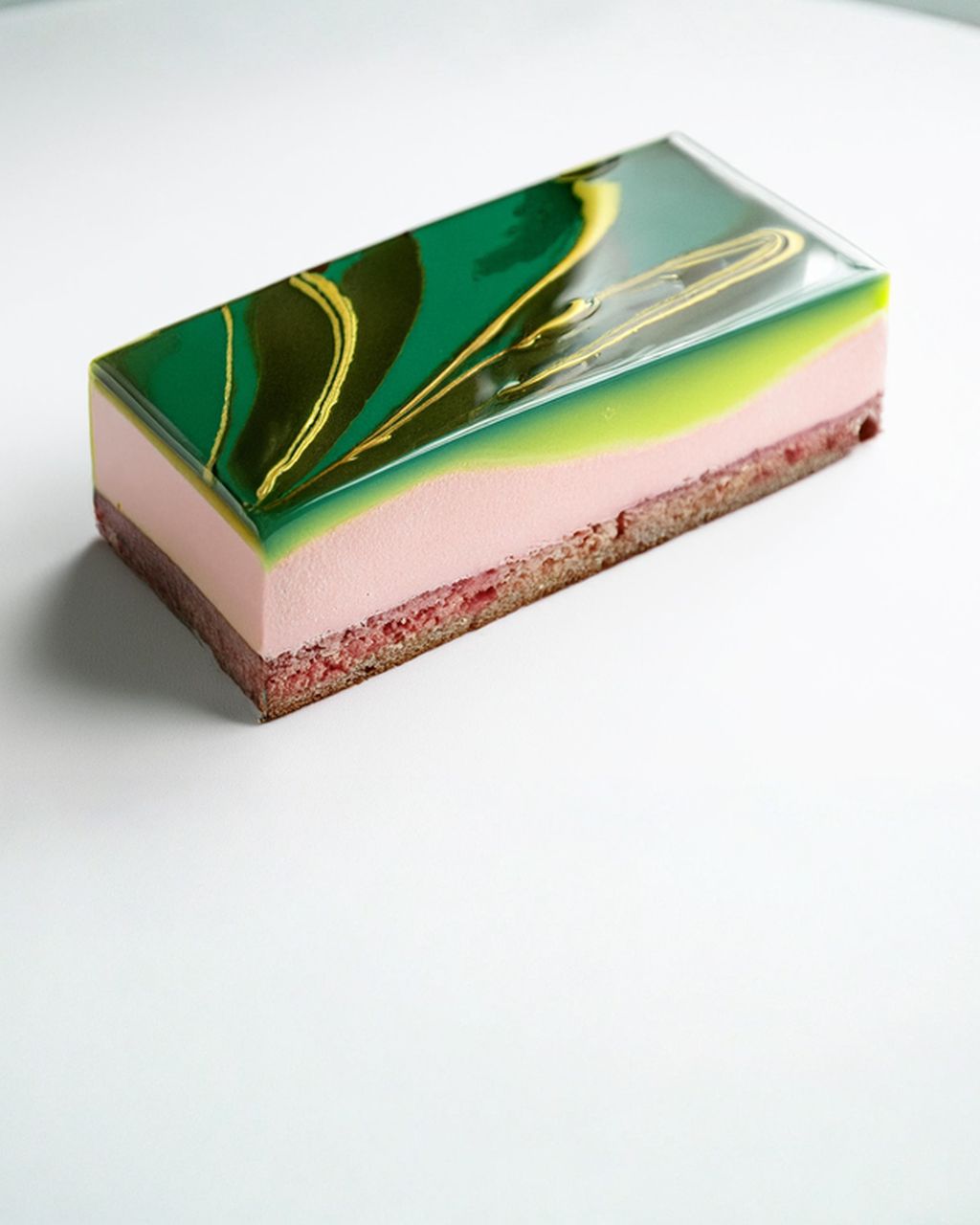
A mousse cake is ideal for mirror glaze because it sets in the mold and comes out perfectly smooth. A mousse stabilized with gelatin also freezes well and holds its shape after thawing.
Silicone mold: you unmold the cake frozen, and the surface is as smooth as the mold.
Ring with acetate strip: you assemble the cake upside down or right side up and level the surface with a spatula.
Insert in the middle: freeze a fruit jelly or cream insert separately so it doesn't sink into the mousse.
You'll find the method from the base layer to freezing in Mousse cake step by step: gelatin, ring and film.
Freeze the cake at −18 °C (0 °F) overnight, at least 12 hours, so it's frozen all the way through. A frozen surface stops the glaze instantly in a thin, even layer; on a cake that's only chilled, the glaze runs off and leaves bare patches.
Frost: once the cake is out of the freezer, a layer of frost forms quickly. Wipe it off with a gloved palm or a paper towel, or the glaze won't stick.
Pour right away: take the cake out only when the glaze is ready, and pour within a few minutes.
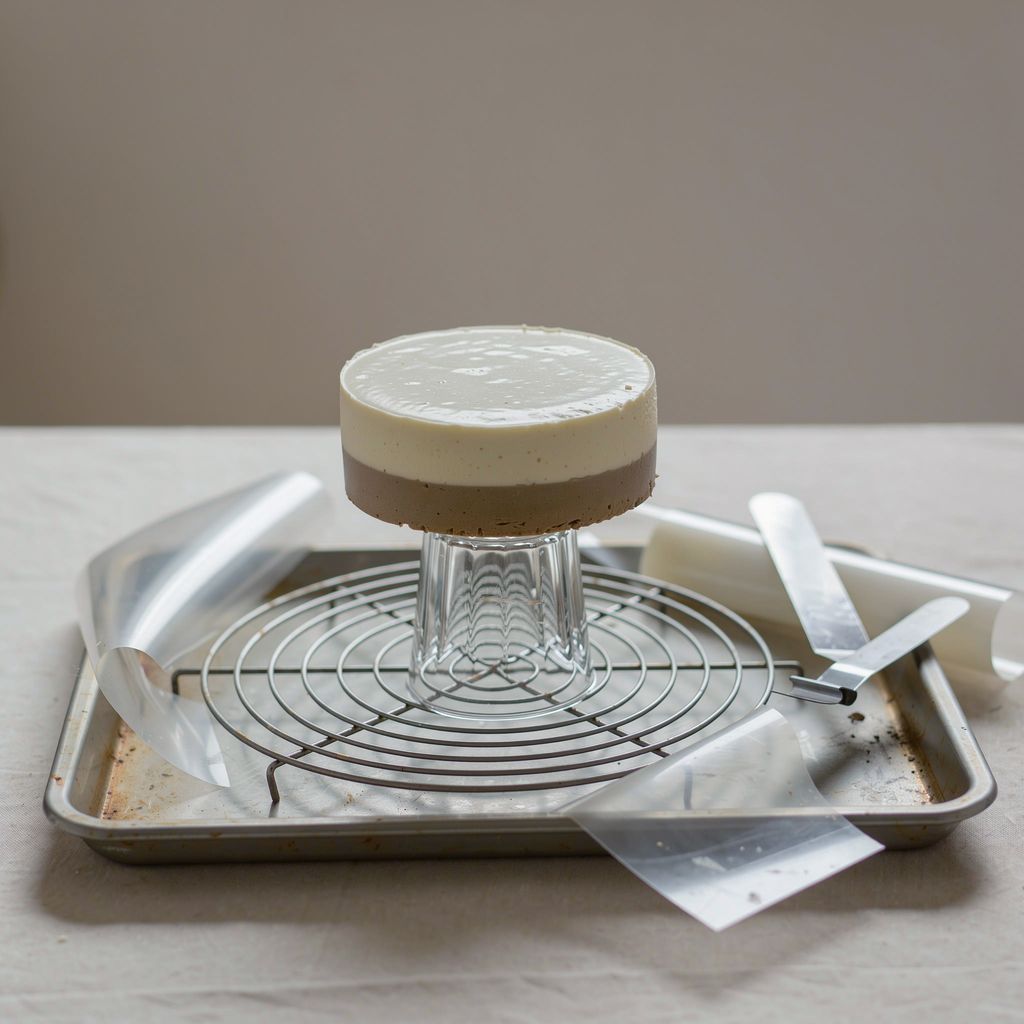
Stand: set the cake on an upturned glass or a smaller mold on a rack over a tray so the excess can drip off freely.
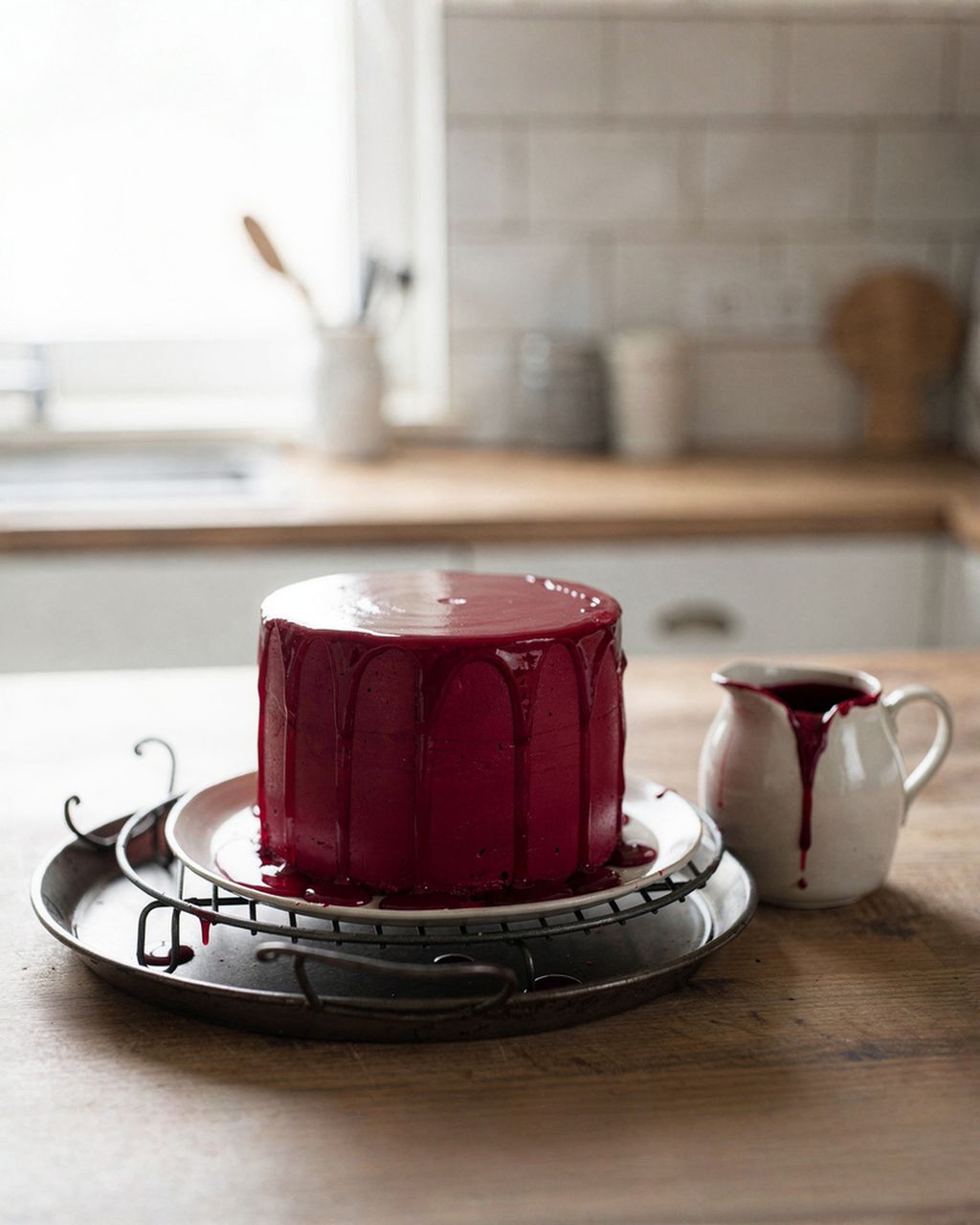
A ready-made mirror glaze saves you from boiling syrup and watching temperatures. According to the package instructions, FunCakes mirror glaze should be mixed well before use (and tinted with FunCakes colors if you like), then poured in one smooth motion over a frozen cake set on a rack over the sink. Keep the cake in the freezer until the moment you pour. Use opened glaze within 1 week, as stated by the manufacturer.
Pour homemade gelatin mirror glaze at 30–35 °C (86–95 °F). You'll find the recipe and method in Mirror glaze: how to get a perfect shine on cakes. For more glazes and icings, browse the glazes category.
Most mirror glaze problems start with the cake underneath. What you see tells you the cause:
Bare patches and glaze running off: the cake wasn't frozen enough, or frost was left on it.
Cake showing through: the glaze layer is thin, or there's a dark base under a light glaze. Under white or pastel glaze, use a light-colored ganache or cream.
Waves and bumps: an uneven cream surface. The glaze won't hide imperfections, it only highlights them.
Crumbs in the glaze: the cake wasn't crumb-coated with a first layer.
Wet layer under the glaze: the cream released water after thawing.
Cracks and droplets on the shine: the cake thawed in a warm place. Thaw it in the fridge for 4–6 hours.
What to do when the glaze itself doesn't flow smoothly or forms bubbles is covered in Mirror glaze won't flow smoothly.
You can pour mirror glaze over a whipped cream cake only if the cream is stabilized with gelatin, smoothed flat and the cake is frozen solid. Plain whipped cream slumps and weeps liquid under the glaze as it thaws. A safer option is to coat the cake in a thin layer of ganache or buttercream first.
Don't pour mirror glaze over a bare sponge. Crumbs get into the glaze, the porous surface soaks it up, and the result is neither glossy nor even. Coat the sponge with a thin layer of ganache or cream first, smooth it flat and freeze it overnight.
Thaw a mirror-glazed cake in the fridge for about 4–6 hours, or longer if it's a tall cake. At room temperature, condensation would form on the cold glaze and the shine would disappear. The glaze looks glossy right after pouring, but the inside of the cake needs time before it's soft enough to slice.
The best choice is a thick coating ganache: 2 parts chocolate to 1 part cream for dark chocolate, 3:1 for milk chocolate and 4:1 for white chocolate. Once chilled, it has the consistency of peanut butter, spreads smooth and holds its shape in the freezer. A thinner drip ganache isn't suitable.
One recipe worth heating the oven for, one tip, and one deal from the shop. Nothing else.