- Season
- Year-round. In Czech homes it is traditionally rendered in winter, at pig-slaughter time.
- Price
- Low
Calories and nutrition
per 100 g
902 kcal
Calories
0 g
Protein
0 g
Carbs
100 g
Fat
Pork Lard
Pork lard is pig fat: raw back fat or leaf fat is bought from the butcher for rendering, and rendered lard is the white fat used for frying, braising, baking and spreading on bread. It has about 900 kcal per 100 g, a smoke point of around 190 °C, and homemade lard keeps about 3 months in a closed jar in the fridge.
per 100 g
902 kcal
Calories
0 g
Protein
0 g
Carbs
100 g
Fat
Raw fat goes straight into the fridge. Rendered lard with no water keeps a few weeks in a cool, dark pantry; in a warm kitchen it goes rancid quickly. Czech rules allow shops to store animal fats at no more than 15 °C and out of direct sunlight.
Use raw fat within 2–3 days, and by the date on the pack at the latest. Homemade rendered lard keeps about 3 months in a closed jar; use shop-bought lard by the date on the pack. Always use a clean, dry spoon.
Rendered lard keeps up to 12 months in the freezer; freeze it in small jars and thaw in the fridge. Raw fat can be frozen, but cracklings from thawed fat tend to be rubbery, so render it straight away instead.
Choose raw back fat that is white and firm, with no smell and no grey or yellowish patches; it is sold with or without the rind. Leaf fat is softer and more crumbly. When buying rendered lard, look for a single ingredient, pork lard; lard with cracklings and crackling spread are different products with a shorter shelf life.
Goose or duck fat: they behave much the same for frying and braising, but are softer and taste stronger.
In dough, butter or vegetable baking fat; for frying, oil. Neither fully replaces the crumbliness and flavour of lard.
For 1 kg of raw fat, use a heavy-bottomed pot and about 250 ml of water. Cut the fat into cubes of about 2 × 2 cm and heat until the water has evaporated. Then lower the heat and render slowly, stirring now and then; do not let the fat go above about 120 °C or it darkens. When the fat stops foaming, strain it through a sieve into clean, dry jars, let it cool uncovered and then close the jars.
Salt the cracklings left after rendering just before eating and have them with bread and onion, or turn them into crackling spread or flatbreads. Strain lard after frying and use it once more for a similar dish.
Roughly what everyday kitchen measures weigh.
4.3 g
1 teaspoon
13 g
1 tablespoon
216 g
1 cup (250 ml)
250 g
1 piece
Lard is used to fry potato pancakes, schnitzels and doughnuts and to roast potatoes. Onions for goulash, cabbage and beans are braised in it. In baking it makes dough short and crumbly: Czech lard pastries (sádláky), lard rolls, savoury bread rolls and crackling flatbreads. Cold, it is spread on bread.
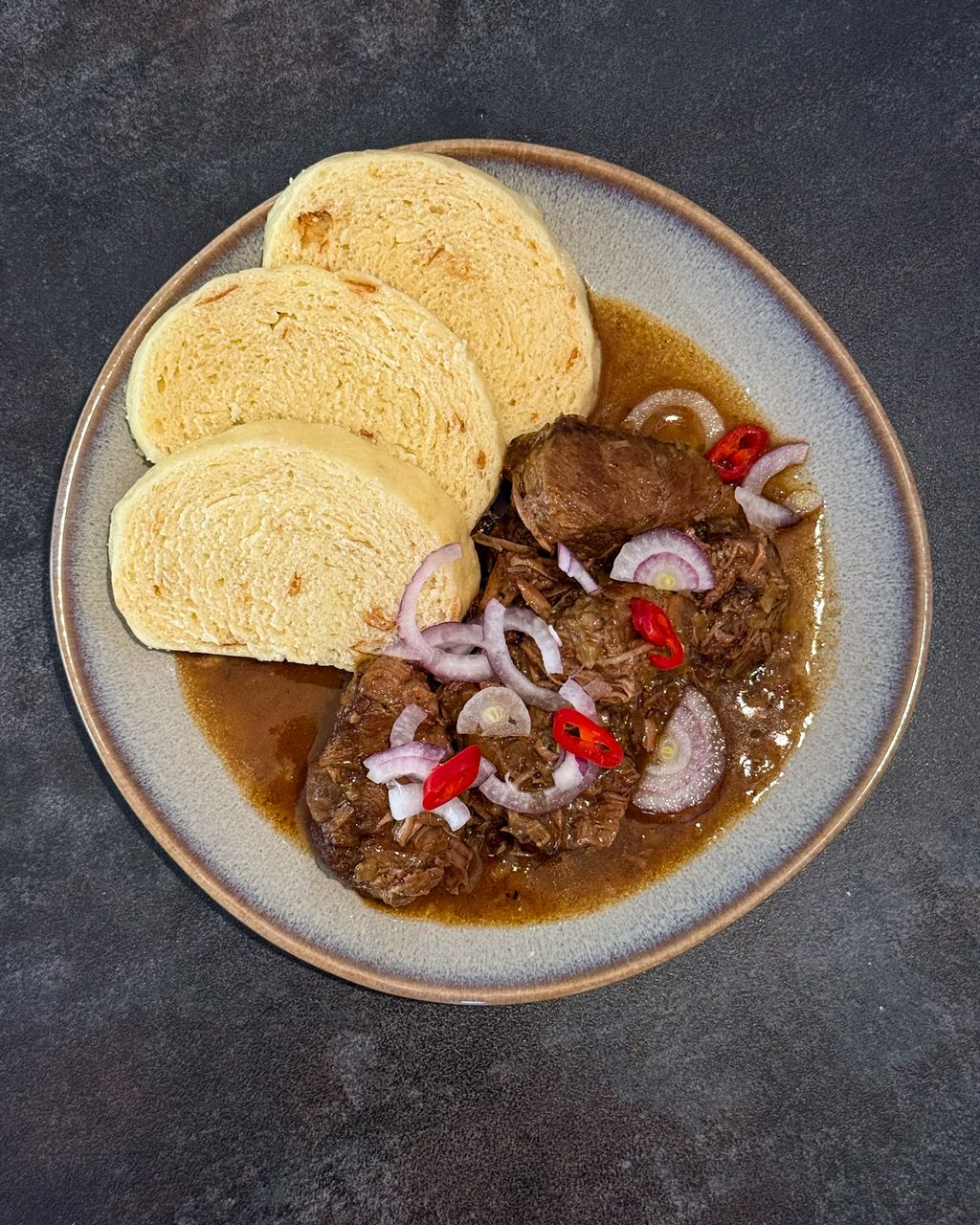
Classic czech beef goulash with chilli and bread dumplings
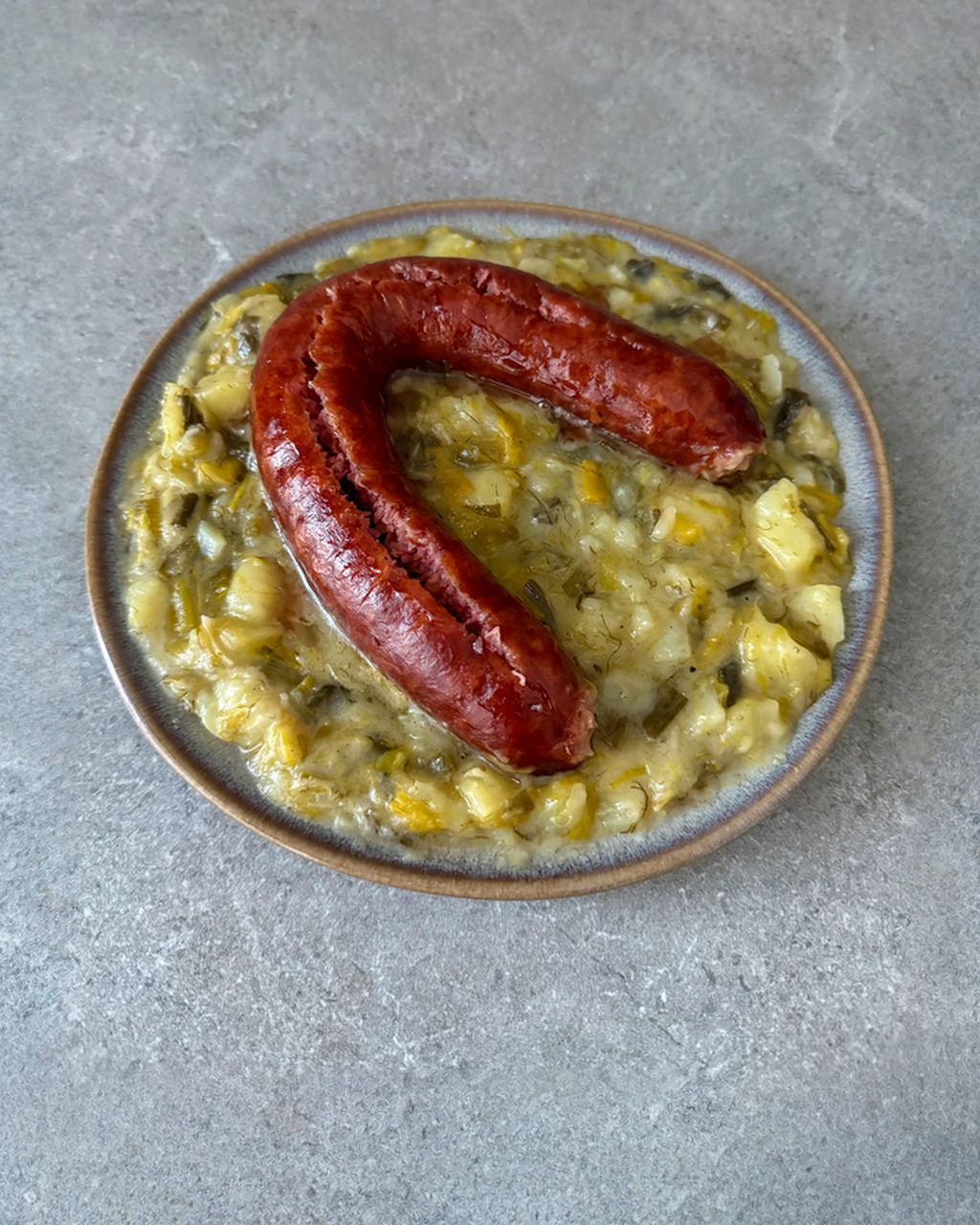
Papet vaudois: swiss cabbage sausage with leeks and potatoes
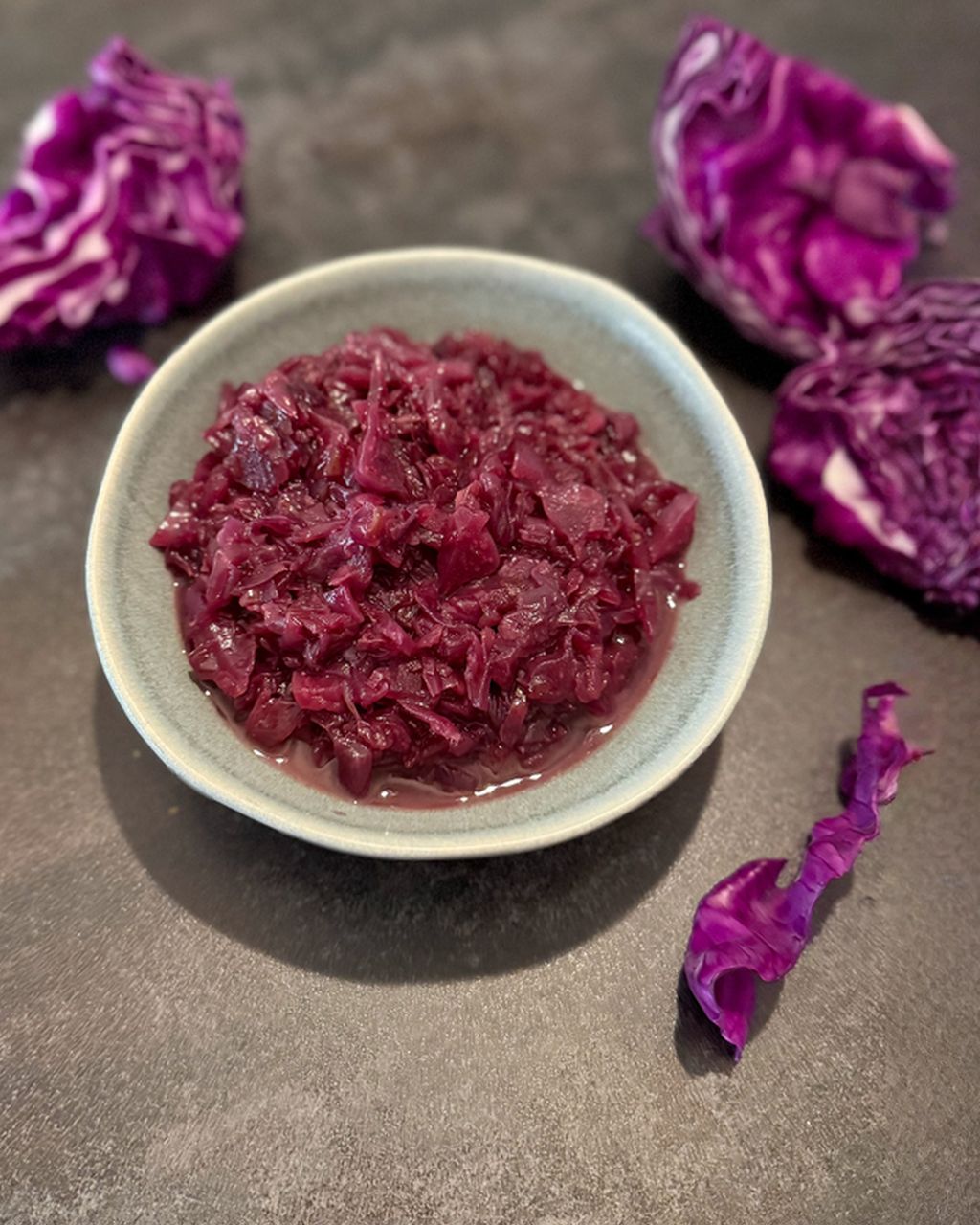
Sweet and sour braised red cabbage
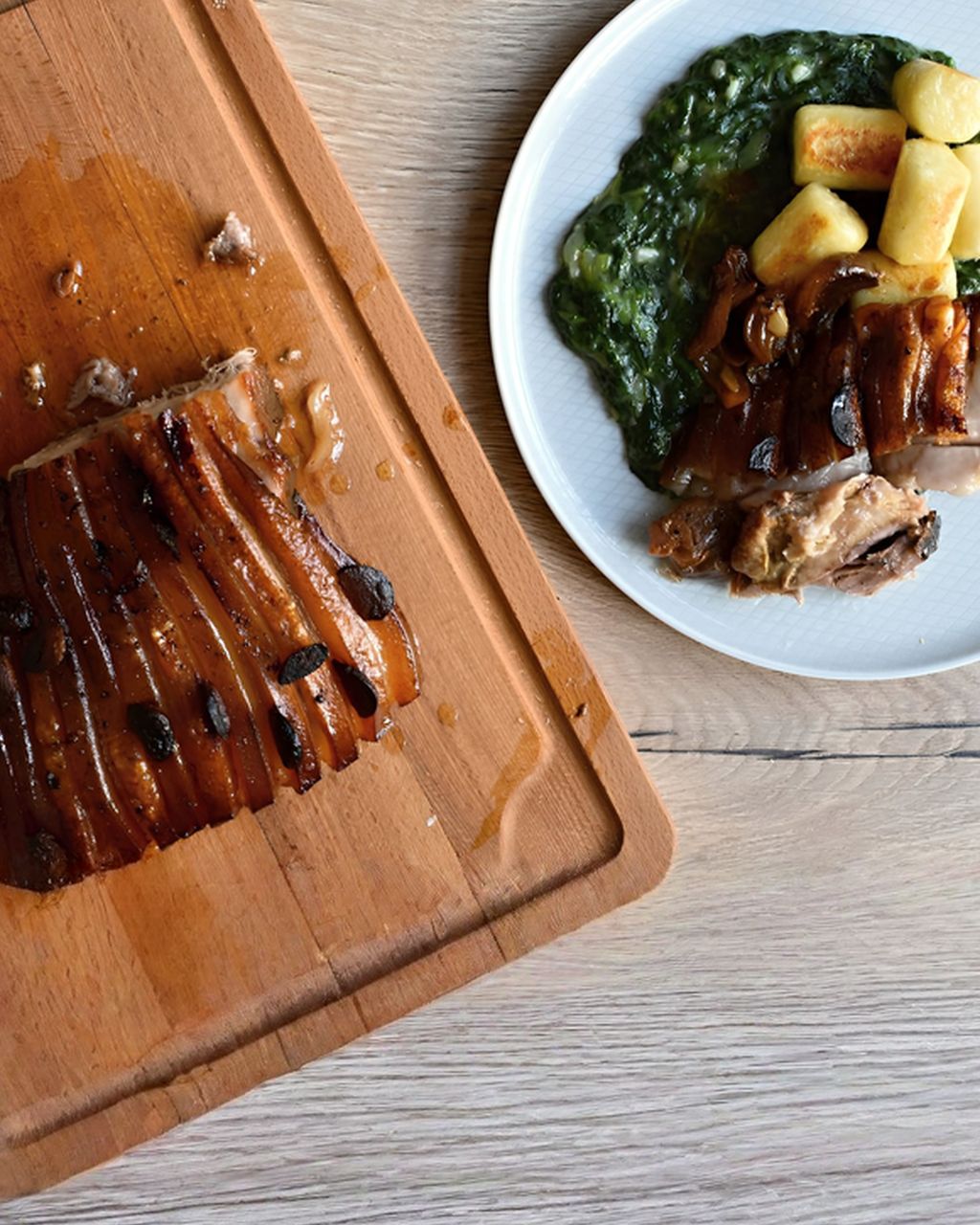
Crispy roast pork belly with homemade potato gnocchi and spinach
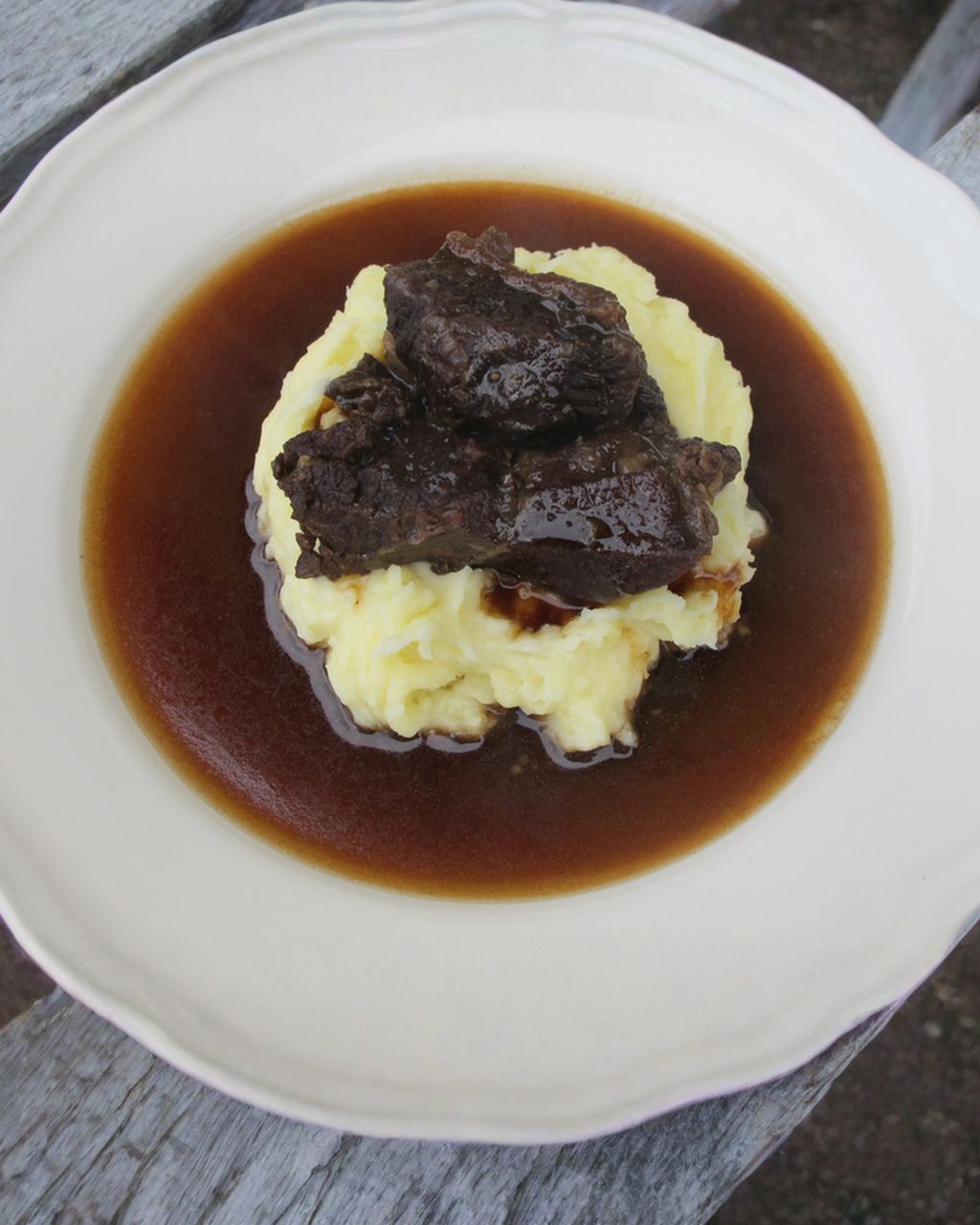
Beef cheeks braised in dark beer
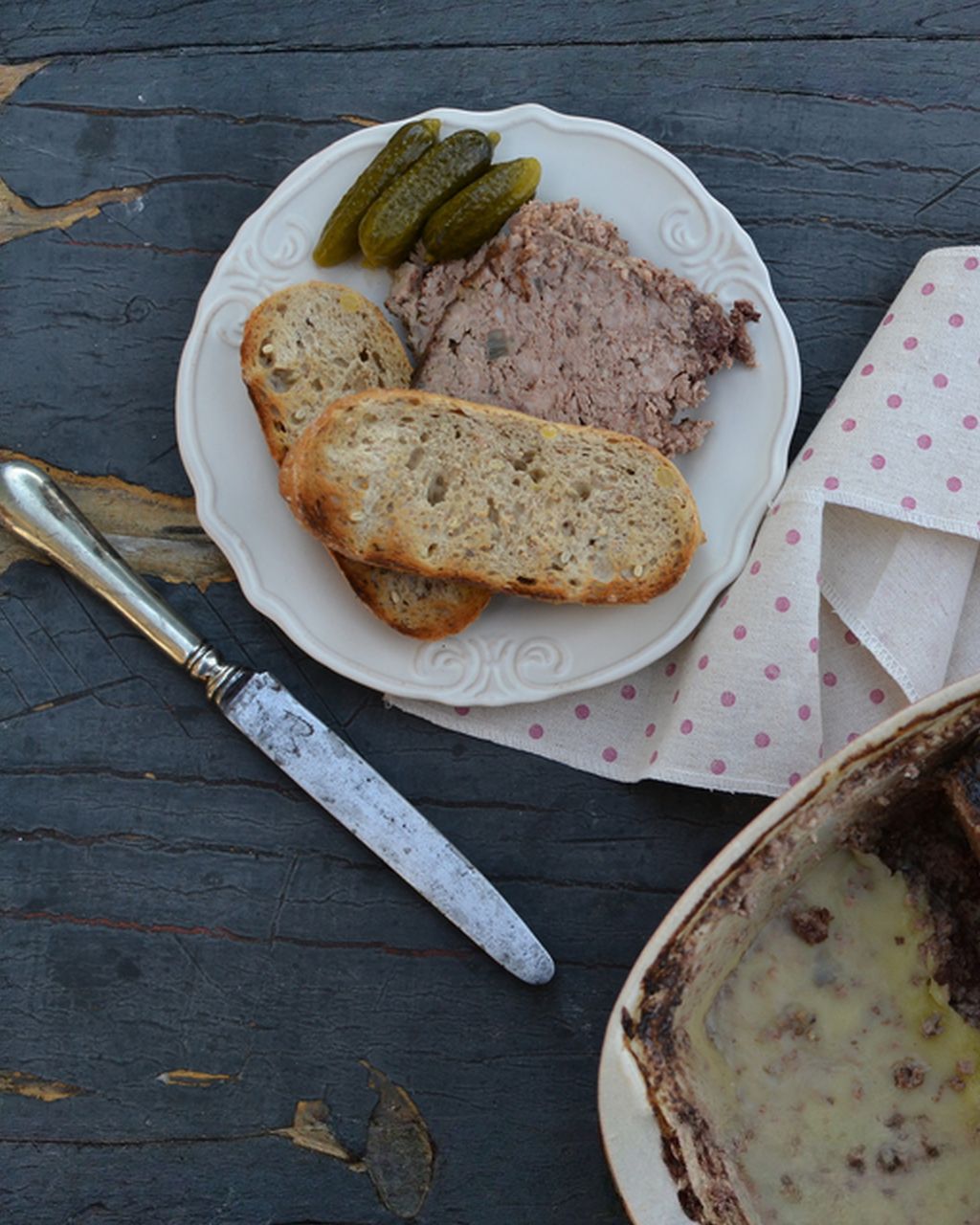
Homemade chunky pâté
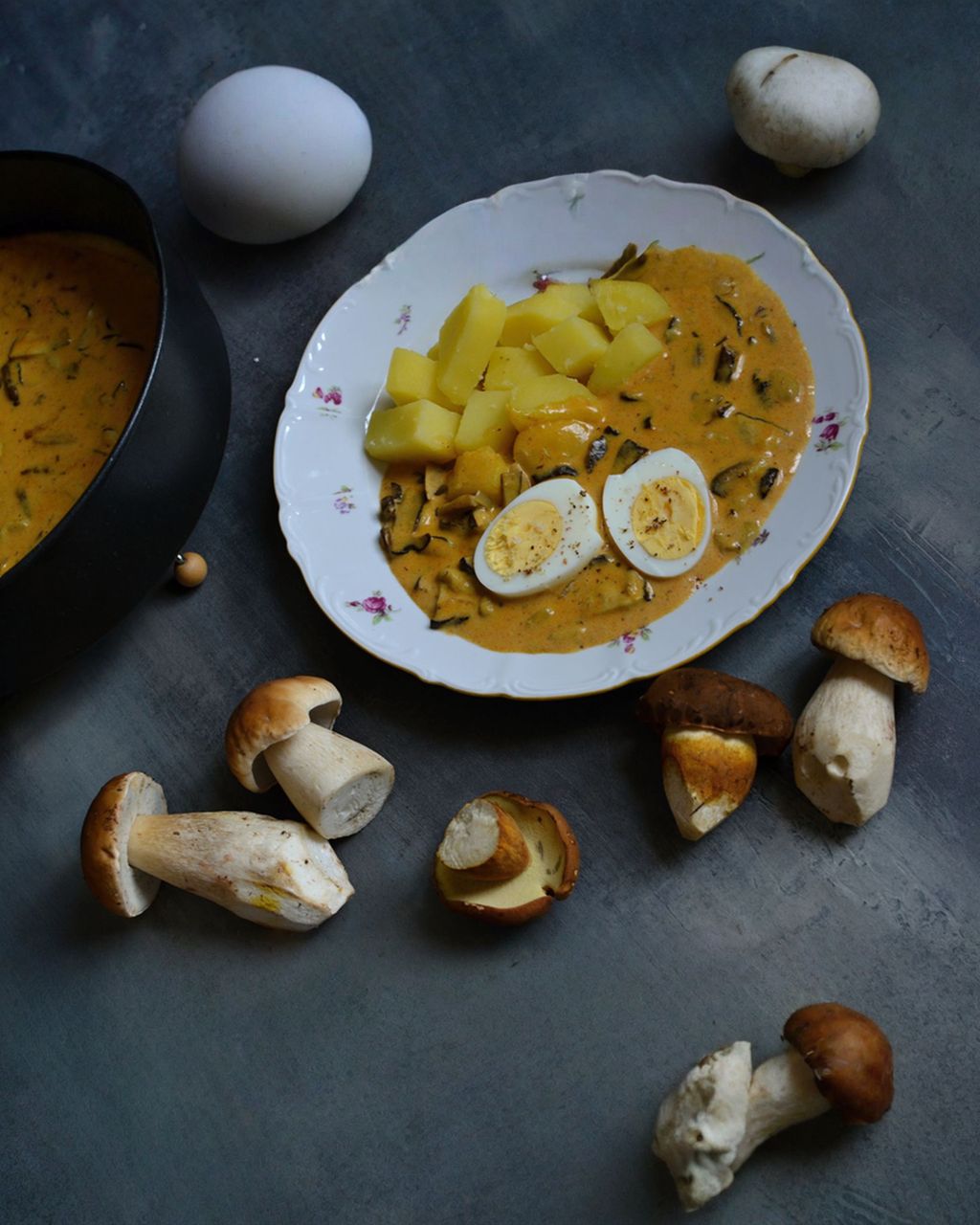
Mushroom sauce with cream
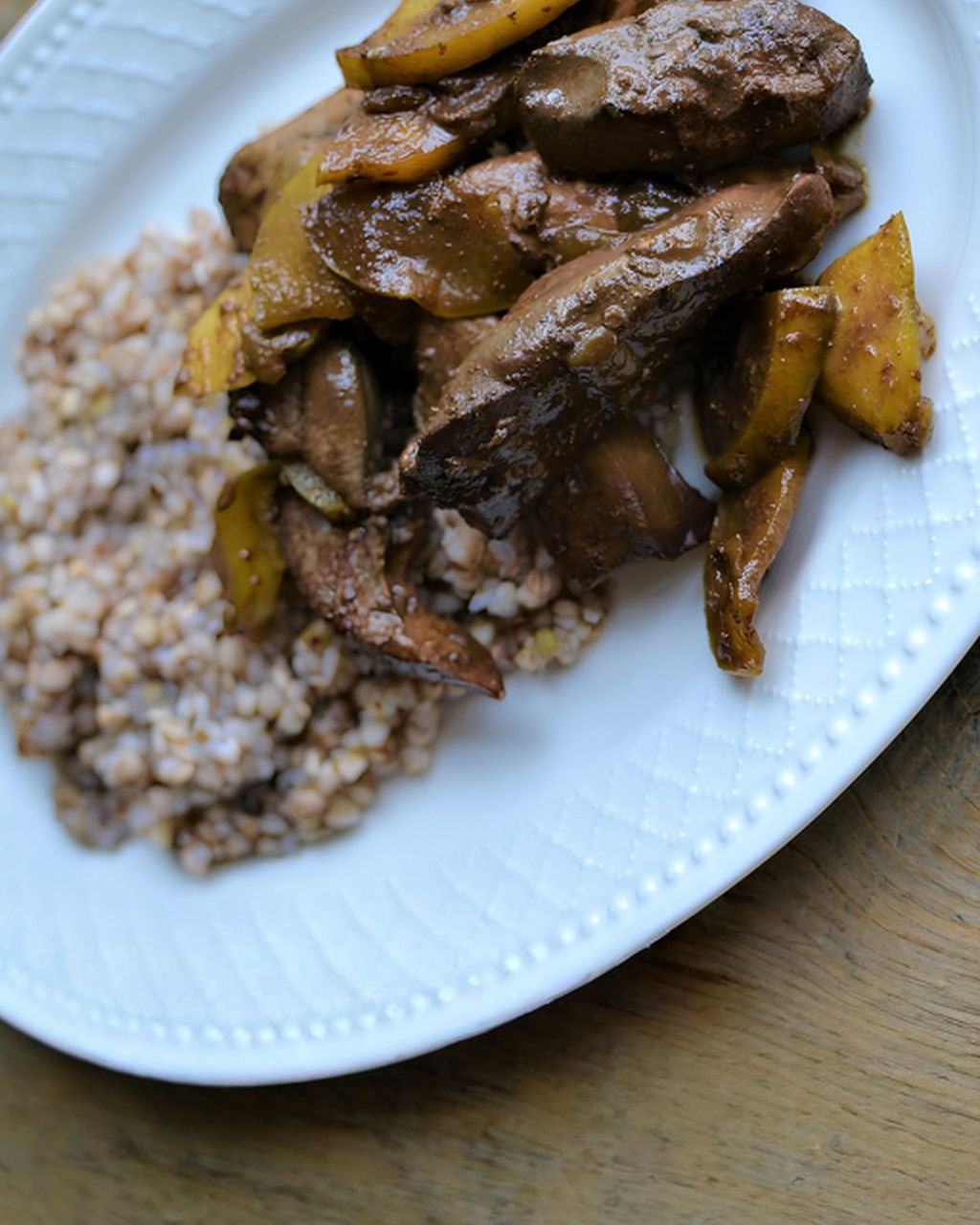
Braised pork liver with juicy apples
Pork lard is fat from the pig. In Czech, the word sádlo covers two things: the raw fatty tissue you buy from the butcher (back fat or leaf fat), and the pure fat you render out of it by slow heating. Recipes almost always mean rendered lard, which is white and spreadable when cold. Czech Decree No. 397/2016 classes pork lard among edible animal fats, meaning fats obtained from edible animal fatty tissue. In Czech cooking it is used to fry potato pancakes and schnitzels, to braise cabbage and onions for goulash, to bake short, crumbly doughs and to spread on bread with salt and onion.
Well-rendered lard is white, smells only faintly and tastes mild, slightly porky. Leaf lard is the most neutral, back-fat lard a little stronger. Lard rendered longer, with the cracklings fried dark, turns yellowish and smells toasty. Rancid lard smells sharp and bitter; do not use it.
4 min read
Butchers sell raw pork fat: fatty tissue from the pig, most often back fat, with or without the rind. It still needs rendering. In the shop chiller you will find rendered lard in tubs or jars, plain or with cracklings. When a recipe asks for "a spoonful of lard", it means rendered lard.
Cracklings (škvarky) are what is left of the fatty tissue after rendering: connective tissue and bits of meat and skin fried golden. Unlike lard, they contain protein and keep for a much shorter time.
Fat from under the skin along the pig's back, the most common fat for rendering in Czechia. It gives firm, white lard and the most flavourful cracklings. Good for frying, braising, spreading on bread and baking.
Internal fat from the abdominal cavity around the kidneys. It renders faster and gives softer lard with the most neutral flavour and few cracklings. Known as leaf lard in English, it is prized by bakers for short pastry. It is often rendered together with back fat.
Chill the raw fat briefly so it cuts cleanly, then cut it into even cubes of about 2 × 2 cm. For 1 kg, add about 250 ml of water to a heavy-bottomed pot so the fat does not catch at the start. Once the water has evaporated and the fat starts to melt out, lower the heat and render slowly, stirring now and then.
The lard is done when it stops foaming and the cracklings are pale gold. Strain it through a metal sieve into clean, dry jars. For the whitest lard, strain the fat earlier and finish the cracklings separately. Do not salt the lard; unsalted lard keeps longer.
Pork lard starts to smoke at around 190 °C. That is the reference value from smoke-point tables; the real figure depends on how clean the lard is. Homemade lard with traces of cracklings or water smokes sooner than well-strained lard. Frying breaded food needs 160–180 °C, so lard suits schnitzels, potato pancakes and doughnuts.
A spoonful of lard at the start of braising adds flavour to the onions in a classic Czech beef goulash and to sweet and sour braised red cabbage. Strain lard after frying and reuse it once or twice; throw it away when it darkens or smells rancid.
Lard is almost pure fat with no water, which is why it makes dough short and crumbly. It goes into yeast doughs such as savoury bread rolls, Czech lard pastries or crackling flatbreads. For sweet doughs, use leaf lard, which tastes the most neutral.
When swapping butter for lard in a recipe, use about a fifth less: butter is around 80 % fat and the rest is mostly water. How lard behaves in choux pastry compared with butter and oil is covered in our article choux pastry with oil, lard or butter.
Decree No. 397/2016 on dairy products and edible fats and oils defines animal fats as edible fats obtained from edible animal fatty tissue and lists pork lard as one of their groups. It does not define lard in more detail.
For retail, it requires animal fats to be stored at no more than 15 °C, protected from direct sunlight, and sold to consumers only pre-packed.
Pork lard is almost pure fat, with about 900 kcal per 100 g; one tablespoon (about 13 g) has roughly 115 kcal. According to the USDA database, 100 g of lard contains about 39 g saturated, 45 g monounsaturated and 11 g polyunsaturated fatty acids. That is why it is spreadable at room temperature, softer than beef tallow and firmer than goose fat.
Lard belongs to the Czech tradition of home pig slaughter, when a whole pig was processed for the winter. Rendered lard was kept in stoneware pots in the cellar or pantry, and bread with lard was an everyday snack. In the 20th century vegetable oils and hydrogenated fats largely replaced it in kitchens, but it stayed in Czech recipes for baked goods, potato pancakes and pig-slaughter dishes.