- Season
- Available all year in the chilled dairy section
- Price
- Low
Calories and nutrition per 100 g
- 49 kcal
- 7.6 g protein
- 0.1 g fat
- 4.4 g carbs
Quark Yogurt
Jogurt tvarohový (quark yogurt) is a Czech chilled dairy product sold in cups, a blend of tvaroh (Czech quark) and yogurt that is thicker than yogurt and smoother than quark. It comes plain or flavoured with fruit or chocolate, for example as Madeta's Jihočeský tvaroh & jogurt.
Do not keep it at room temperature. Take it out of the fridge just before eating and put an opened cup straight back.
Keep it in the fridge at 2–8 °C or as the pack says, and eat it by the use-by date. Cover an opened cup and eat it within 2 days at most, unless the producer gives a shorter time.
You can freeze it, but after thawing the whey separates and the texture turns grainy. Use thawed product only in baking, and within 2–3 months.
Look for it in the chilled section next to yogurts and tvaroh desserts, usually in cups of about 130–140 g. Tvaroh and yogurt should be the first ingredients. Choose plain for cooking and savoury dishes and flavoured cups for snacking. The lid should not be domed, and the use-by date should leave you enough time.
Mix soft tvaroh or quark with plain yogurt in roughly equal parts, then sweeten or flavour it to taste.
Thick plain yogurt or Greek-style yogurt, or a tvaroh dessert. Expect a slightly different texture and protein content.
Stir it before eating, as a little whey may collect on top. A plain cup can stand in for yogurt or soft tvaroh in quick dishes: stir in herbs and garlic for a dip, add fruit for breakfast or use it as a filling for pancakes. In baked fillings it is wetter than block tvaroh, so add a little semolina or starch to help it set.
Use a leftover half cup in pancake or bundt cake batter, blend it into a fruit smoothie, or mix it with chives and salt for a quick spread. Stir the whey that collects on top back in rather than pouring it off.
Roughly what one measure weighs, scooped the way you normally would in the kitchen.
It is mostly eaten cold, straight from the cup, as a snack or light dessert. The plain version works without cooking in dips, spreads, breakfast bowls with fruit and oats and in no-bake creams. In baked fillings it behaves like a softer tvaroh. Do not boil it on its own, as the proteins curdle in strong heat.
Jogurt tvarohový is a ready-to-eat dairy product in which tvaroh, the Czech quark, is blended with yogurt. Madeta's plain Jihočeský tvaroh & jogurt lists 54 % tvaroh and 46 % yogurt; the flavoured versions list 46 % tvaroh, 39 % yogurt and 15 % fruit or chocolate component. The result is thicker than yogurt but smoother and softer than tvaroh. It is not the same as tvaroh, which is a fresh curd cheese, or Greek yogurt. Tvaroh desserts are close relatives with even more tvaroh: Milko's Ovofit, for example, lists 68 % tvaroh and 20 % cream yogurt.
The plain version tastes fresh and milky, with the gentle tang of yogurt and a slightly cheesy note from the tvaroh. It is smooth, thick and easy to spoon. Flavoured cups are sweetened with sugar, some desserts with sweeteners, and taste more like a light dessert.
Seasonal baking plans, tested recipes and kitchen tricks that save you time. Unsubscribe in one click.
2 min read
Jogurt tvarohový is a blend of two dairy products. Yogurt is milk fermented with yogurt cultures; tvaroh is a fresh cheese drained of its whey after the milk sets. Madeta's plain Jihočeský tvaroh & jogurt lists 54 % tvaroh, 46 % yogurt and the enzyme lactase; the flavoured versions list 46 % tvaroh, 39 % yogurt and 15 % fruit or chocolate component with sugar.
Madeta's plain tvaroh & jogurt has 49 kcal, 7.6 g protein, 4.4 g sugars and 0.1 g fat per 100 g. The same producer's flavoured versions have 75–77 kcal, 6.5–6.9 g protein and 11 g sugars, because the fruit or chocolate component contains sugar. Figures vary between producers, so always check the label of the cup you buy.
The plain cup is unsweetened and the most useful for cooking. Flavoured versions with fruit or chocolate are sweetened with sugar. Tvaroh desserts such as Milko's Ovofit contain more tvaroh and less yogurt, and some are sweetened with sweeteners such as aspartame and acesulfame K.
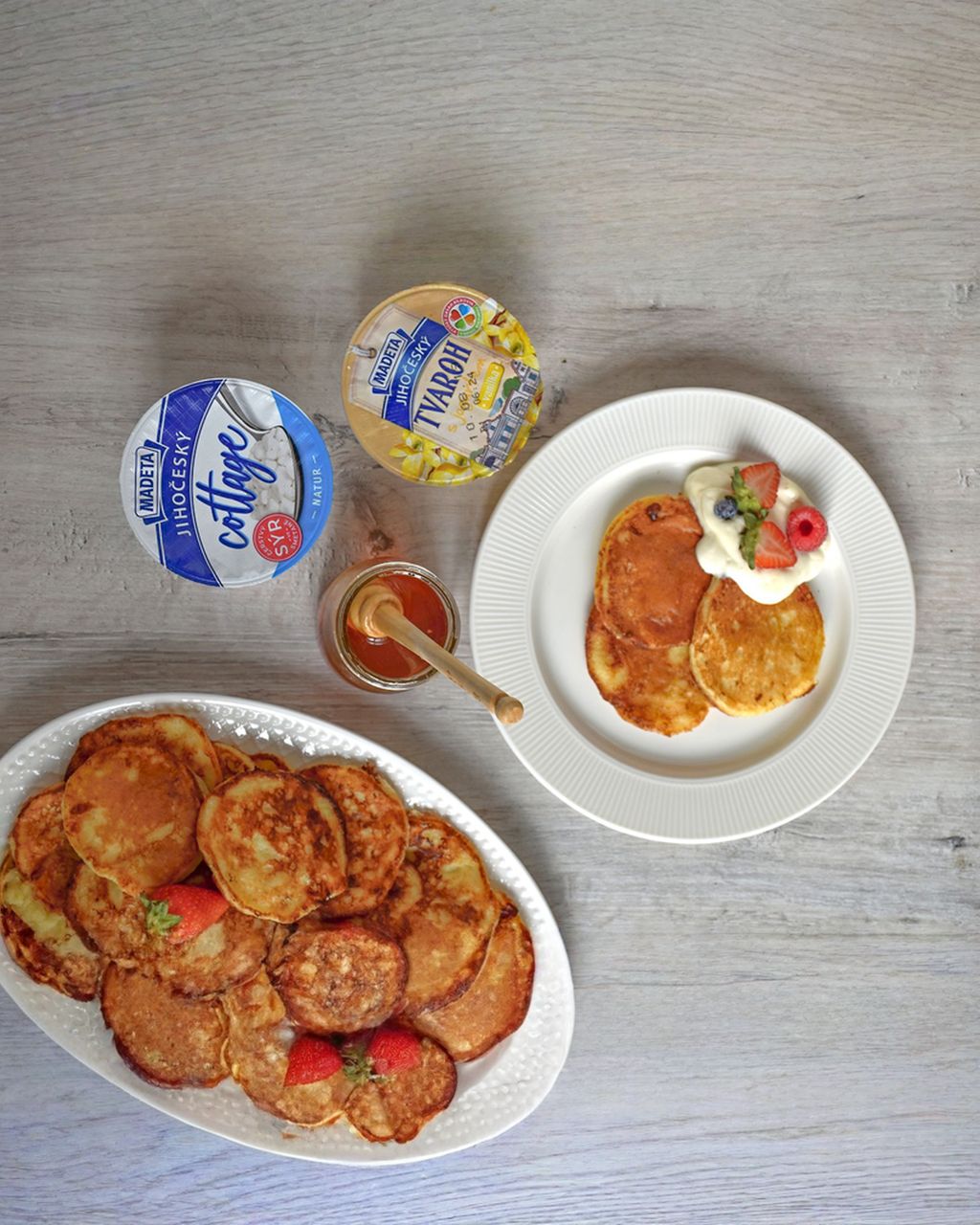
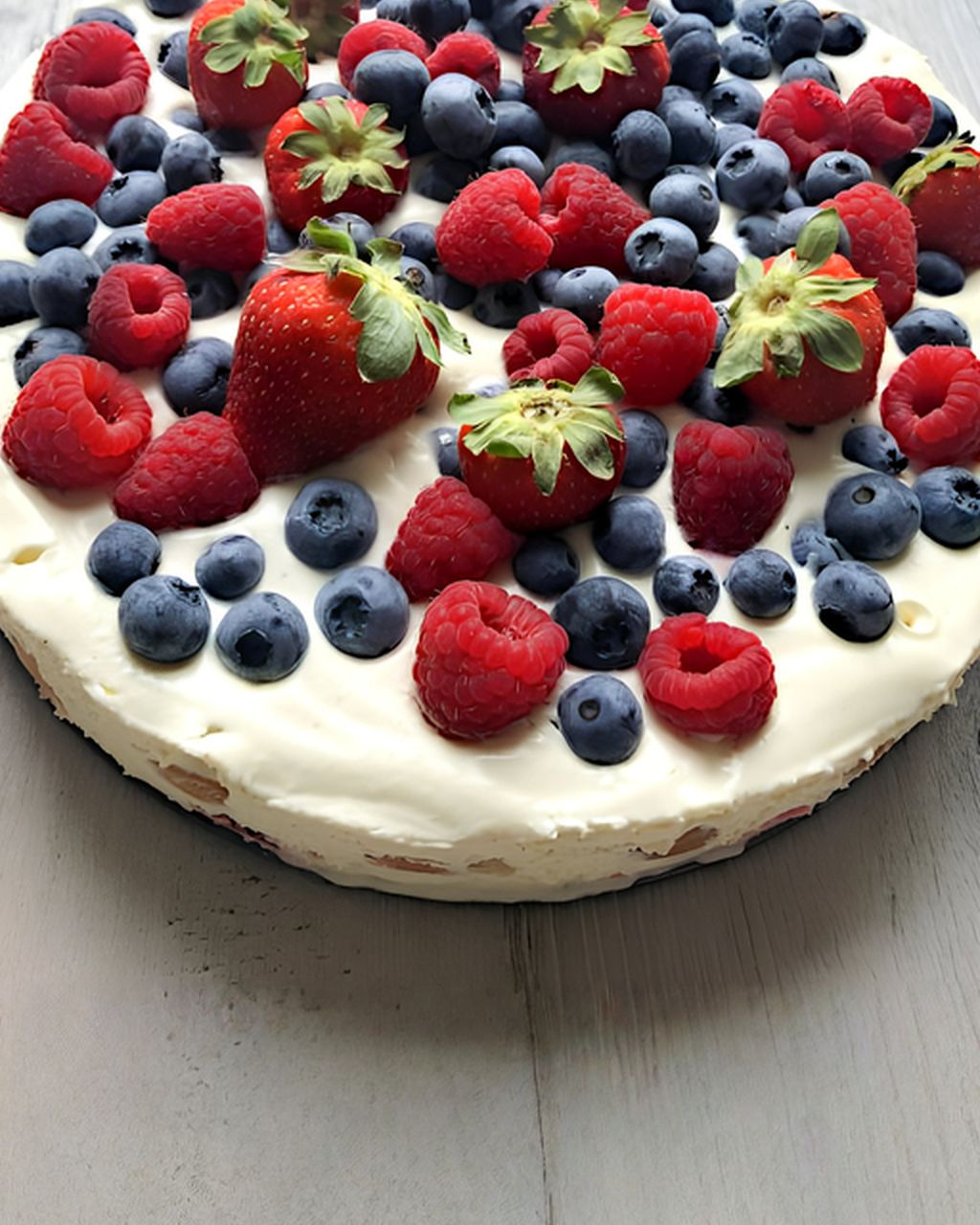
Plain jogurt tvarohový works anywhere you want something between yogurt and tvaroh: in breakfasts, dips and no-bake desserts such as no-bake fruit cake, or alongside pancakes, for example cottage cheese pancakes with fruit and vanilla curd cheese.
In baked fillings it is wetter than block tvaroh, so add a spoonful of semolina or starch so the filling holds its shape after baking.
Keep an unopened cup in the fridge and eat it by the use-by date; cover an opened one and eat it within 2 days at most. You can freeze it, but like tvaroh it releases whey and turns grainy after thawing, so it is then only suitable for baking. More on freezing tvaroh and other fresh cheeses is in our article can you freeze cheese.
Jogurt tvarohový is made from milk, so it contains the milk allergen and is not suitable for anyone allergic to milk protein. Madeta adds the enzyme lactase to its cups, which breaks down milk sugar. Whether a particular product suits lactose intolerance is shown by the labelling on the pack.