Oyster mushroom sandwich with bbq sauce, avocado and wasabi

Updated Jul 19, 2026
You don't need to go full eco-warrior to pull off a zero-waste picnic – just swap disposable plastic for a handful of reusable containers and wraps that'll last you years. Plastic plates, cups and film take decades, even centuries, to break down in nature, yet you can replace them with things you probably already own. Here's what to use instead, how to pack food so it stays fresh, and a few zero-waste recipes that travel well in a jar.
A zero-waste picnic simply means swapping disposable plastic for a few reusable containers and wraps – it saves decades of decomposition time in a single afternoon, and your food benefits too. It's not about deprivation, it's about smarter packing.
Disposable plates, cups and film don't just disappear in nature. According to estimates (WEF, NOAA), items left in the wild take anywhere from decades to centuries to break down:
plastic bag: ~20 years
polystyrene cup: ~50 years
PET bottle: ~450 years
fishing line: ~600 years
A large share of that plastic ends up in the ocean, where it crumbles into microplastics and works its way back up the food chain – and, according to repeated scientific studies, potentially onto our own plates. The fewer disposable wrappers you use, the less you feed into that cycle.
There's an instant perk too: food doesn't pick up that plastic taste in stainless steel or glass, a salad in a jar holds its shape, and you head home with empty containers instead of a bag full of dirty plastic.
You can replace disposable plastic at a picnic with five things: beeswax wraps, glass containers, stainless steel boxes and bottles, silicone bags, and bamboo cutlery. Each material suits something different – here's when to reach for what.
Beeswax wraps are the best swap for plastic film and sandwich bags when it comes to sandwiches, bread, cheese or chopped vegetables. It's cotton infused with beeswax; the warmth of your hands lets you mould it around food or a bowl, and it stays put on its own.
Wash them in cold water with a bit of mild soap and air-dry them – with regular use they last around a year, after which you can compost them. Two things to watch out for: they're not suitable for raw meat (you can't disinfect them with hot water) or very greasy food (fat breaks down the wax), and they can't handle heat – the dishwasher, microwave or hot water will ruin them.
Glass is the most versatile option: it doesn't absorb smells or flavours, doesn't leach anything into food, and works for salads, dressings, pickled vegetables and layered desserts alike. A screw-top jar seals well, and a salad inside stays crisp all morning.
The downside is the weight and fragility – for an active day out with kids, reach for stainless steel or silicone instead. Tried-and-tested options include Weck jars or the ordinary preserving jars you probably already have at home.
Stainless steel is ideal for carrying around: it's light, practically unbreakable, and holds temperature well, so a bottle keeps drinks cold and a flask keeps food warm. It's great for anything you don't want to risk breaking in a backpack.
The one downside – you can't see what's inside through the wall, so label your containers or use a clear lid. Klean Kanteen makes solid stainless steel bottles and boxes, for example.
Silicone bags (Stasher being a well-known brand) are a flexible swap for zip-lock plastic bags – they won't break, they handle both the freezer and hot water, and once empty they fold flat into a pocket. Great for chopped fruit, nuts or kids' snacks. Look for food-grade silicone with no filler additives.
Pack a set of bamboo or stainless steel cutlery with a cloth napkin once, and you can use it forever – it replaces a pile of plastic forks. Take compostable (bio) bags with a grain of salt: most only break down in an industrial composting facility, not in a garden or out in nature, so they're not a true substitute for a reusable solution – more of a backup.

For your first zero-waste picnic, what you probably already have at home is more than enough: a few preserving jars, one stainless steel bottle per person, cloth napkins and cutlery from your kitchen drawer. You don't need to buy anything new.
If you do want to pick up a few things, this basic kit is worth having:
2–3 screw-top jars (salads, desserts)
a stainless steel bottle per person (water, homemade lemonade)
1–2 stainless steel or silicone boxes (sandwiches, fruit)
a couple of beeswax wraps for bread and cheese
cloth napkins, bamboo or stainless steel cutlery, and a foldable tote bag
Add to your kit gradually, based on what you actually need, not what looks good in a photo. Reusable gear pays for itself after just a few outings, since you stop buying disposables over and over.
A sustainable picnic comes down to three things: a menu that doesn't need disposable packaging, proper cooling, and cleaning up after yourself. Sort these out ahead of time and you can just relax once you're there.
Choose foods that travel well and don't need single-use packaging: salads and desserts in jars, sandwiches wrapped in beeswax paper, quiche or frittata sliced into portions, and homemade lemonade in a stainless steel bottle. The fewer packaged products you buy, the fewer wrappers you bring home.
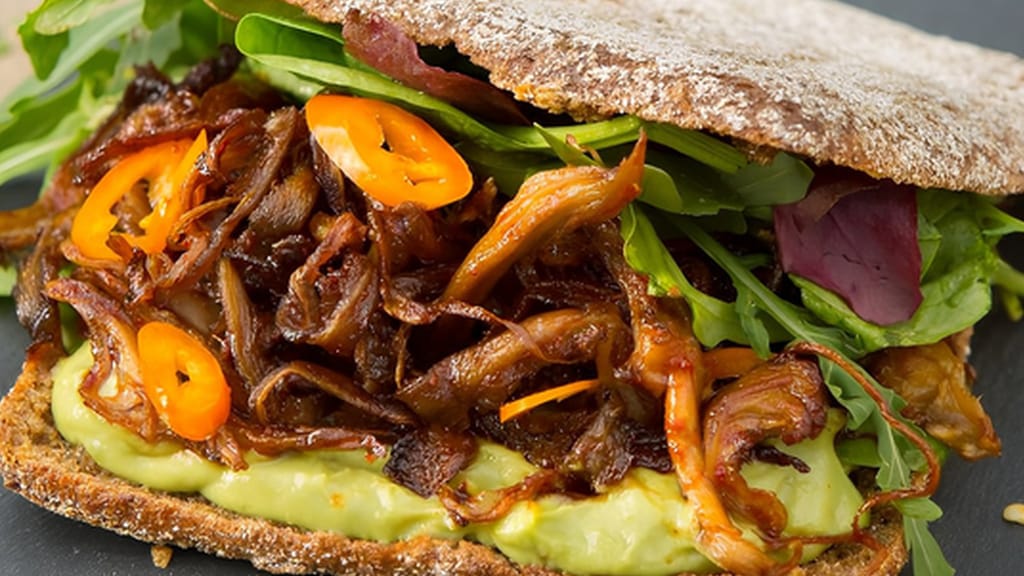
Oyster mushroom sandwich with bbq sauce, avocado and wasabi
An oyster mushroom sandwich with BBQ sauce, avocado and wasabi – a hearty picnic sandwich, best wrapped in a beeswax wrap.
Seasonal produce from a farmers' market has travelled less, comes with less packaging, and tastes better – think strawberries, peas, radishes, young courgette or salad leaves in June and July. Buy them loose into a cloth bag and build your picnic menu straight from there.
Pack a cooler box or bag with ice packs and use it for anything containing meat, eggs, dairy or mayonnaise. Keep raw and ready-to-eat food separate, so meat never touches anything that's going to be eaten straight away.
Bring a cloth bag for dirty dishes and a small bag for sortable and compostable scraps. Fruit peels and leftovers belong on the compost heap, not in the grass. Golden rule: whatever you brought, take back with you – and leave the spot cleaner than you found it.

Three sure bets that pack without a scrap of plastic: a layered salad in a jar, quiche sliced into portions, and a fruit dessert in a jar. All three travel well and can be eaten by hand or with a spoon straight from the container.
A salad in a jar is perfect for a picnic: put the dressing at the bottom, then hardy vegetables (carrot, beetroot), and leaves and cheese on top – nothing wilts, and the jar doubles as a bowl. A great combo is salad leaves, roasted beetroot, nuts and goat's cheese, with a honey, mustard and lemon dressing.
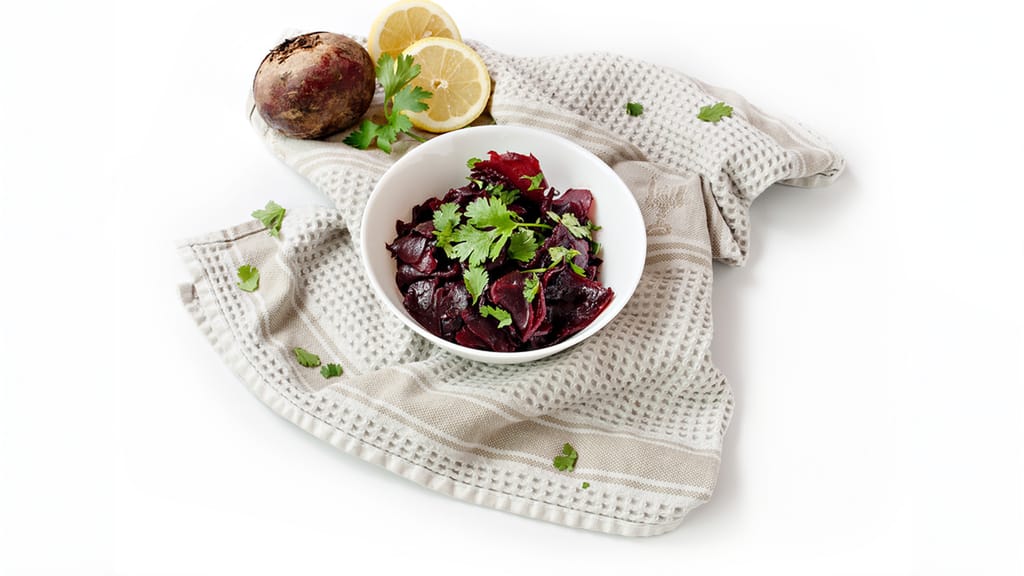
Roasted beetroot salad
Roasted beetroot salad – layers up beautifully in a jar and travels without a hitch.
Quiche is just as good cold and slices beautifully for packing – bake it with seasonal vegetables (spinach, courgette, tomatoes) and you've got a satisfying main course without a single disposable wrapper.
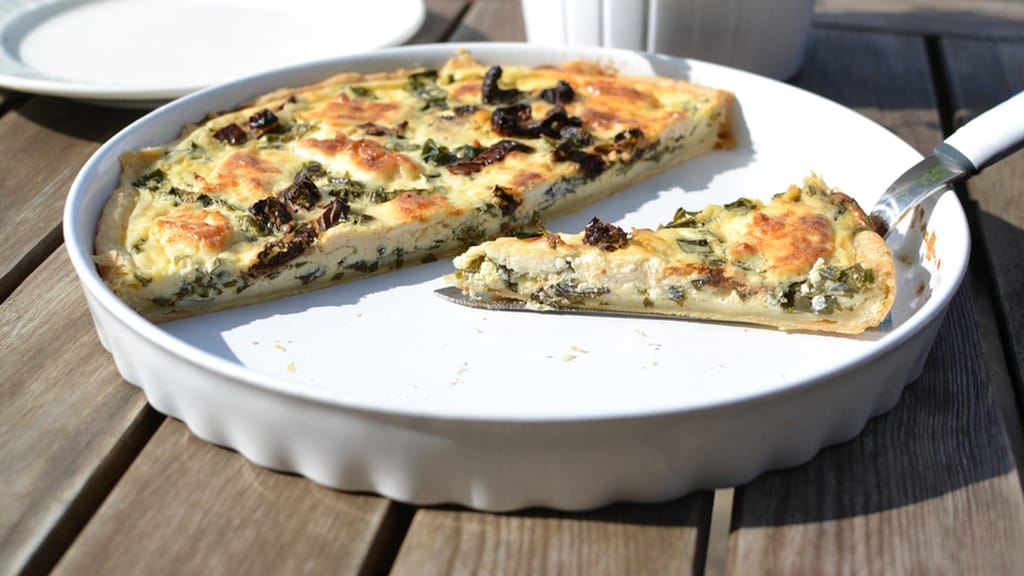
Wild garlic and goat cheese quiche
Wild garlic and goat's cheese quiche – tastes great cold, practically made for a picnic.
Instead of ice lollies wrapped in plastic, layer seasonal fruit into a jar or thread it onto wooden skewers – no plastic cocktail sticks, no packaging. Fruit in a jar with a bit of yoghurt or mint stays cool and looks great too. Pair it with homemade lemonade in a stainless steel bottle instead of store-bought soda in a plastic bottle.
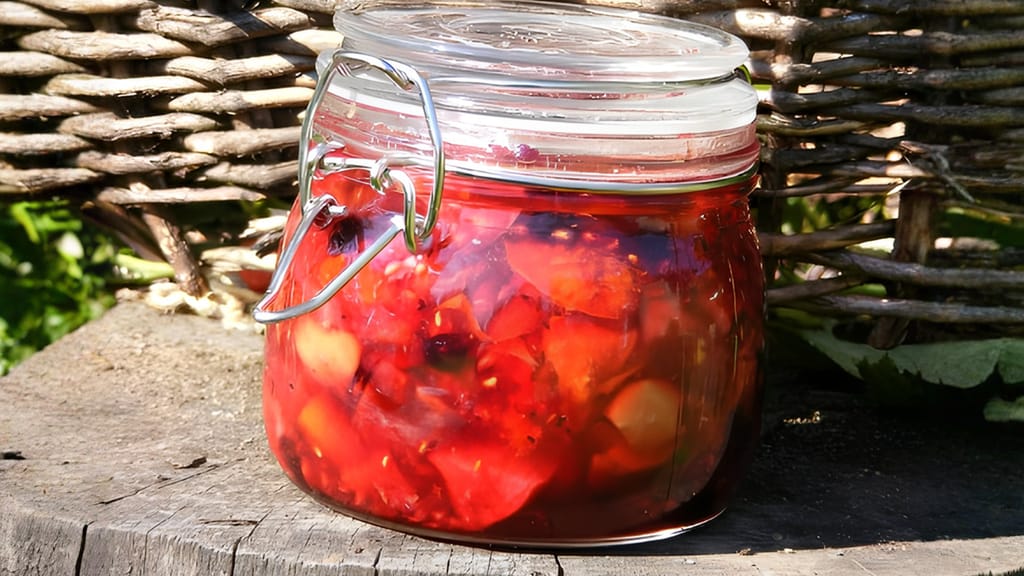
Summer fruit in a jar
Summer fruit in a jar – a refreshing, completely plastic-free picnic dessert.
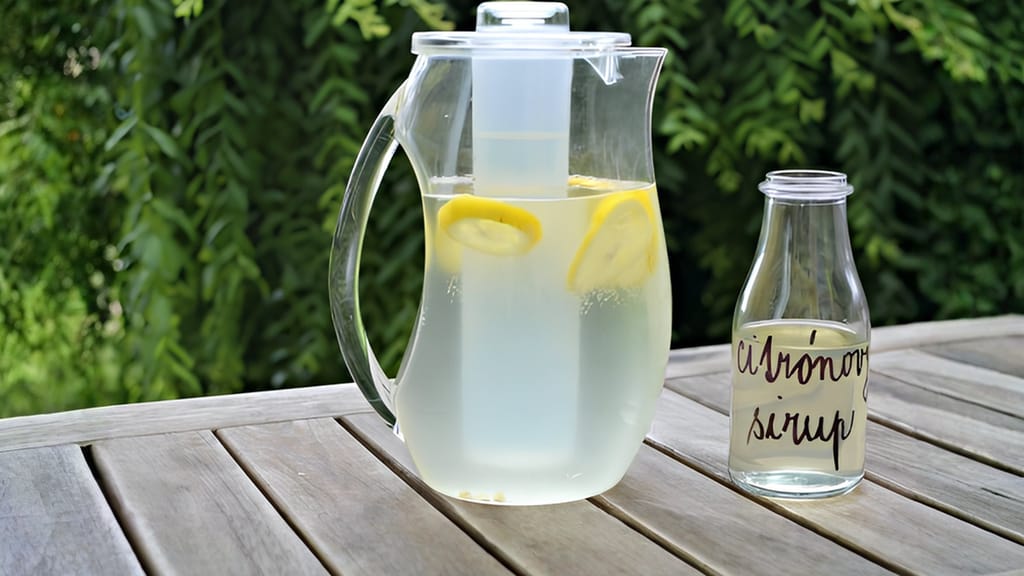
Homemade lemonade syrup and other fruit syrups
Homemade lemonade and other syrups – pour into a stainless steel bottle instead of plastic-bottled lemonade.
Use a cloth napkin or tea towel tied with string, a stainless steel lunchbox, or a silicone bag. All three hold a sandwich together without making it soggy the way plastic wrap does, and you just wash them at home afterwards. In a pinch, baking paper works too, and you can compost it after.
Layer from the bottom up: dressing first, then hardy vegetables, and leaves and cheese on top, then screw the lid on tight. This way the dressing never touches the leaves, so nothing wilts, and the screw-top lid keeps everything in place even if the jar tips over. Just give it a shake right before eating.
Mostly not – standard compostable bags need the heat and conditions of an industrial composting facility to break down properly. In a home compost bin or out in the wild, they can hang around for a very long time. Treat them as a backup option, not an equal substitute for reusable containers.
In the long run it pays off, because you stop buying disposable plates, cutlery and film over and over again. You probably already have jars and cutlery at home, so you're starting close to zero cost. A stainless steel bottle or box pays for itself after just a few outings.
Take it home with you – that's why it's worth packing a tote bag and a small bag for scraps. Compostable bits like peels can go on your home compost, and sort the rest once you're back. Don't leave food waste in the grass either – it doesn't belong in a natural setting and it attracts animals.
One recipe worth heating the oven for, one tip, and one deal from the shop. Nothing else.