Why Is My Rice Mushy? Water, Stirring, Rinsing and Rice Type
Why Is My Rice Crunchy? How to Fix Undercooked, Hard Rice
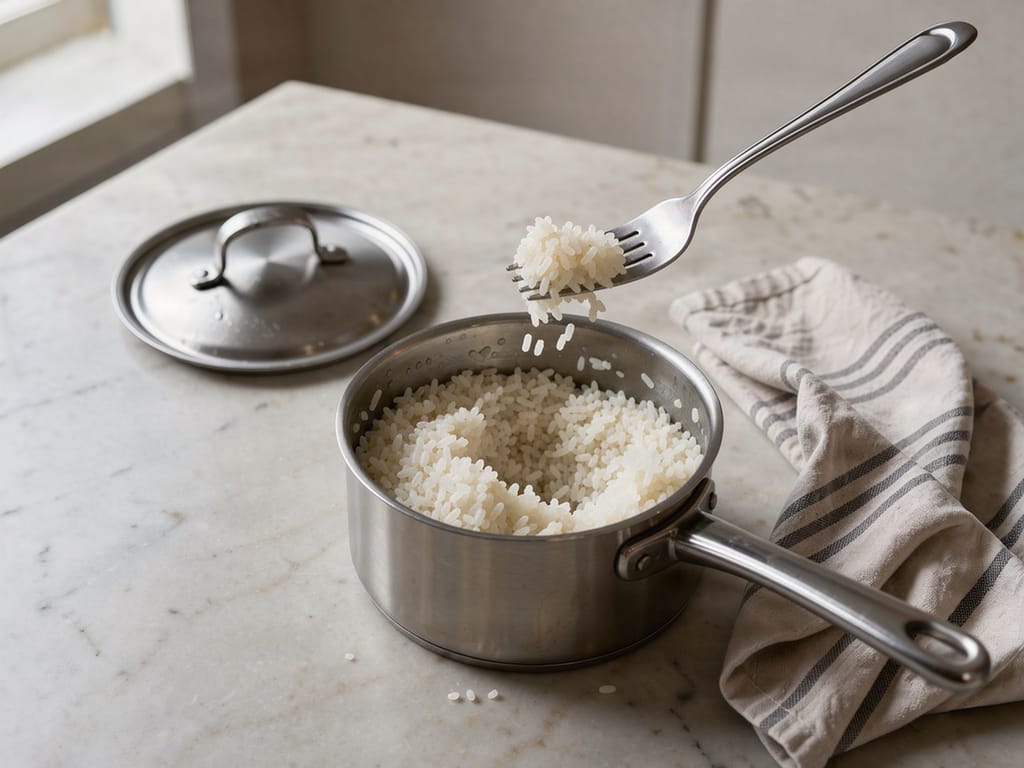
Updated Nov 21, 2026
Crunchy rice is undercooked: it got too little water, lost its water as steam, or didn't cook or rest long enough. You can usually fix it with a few tablespoons of hot water and a few minutes under a tight lid. Here is why it happens and how to stop it.
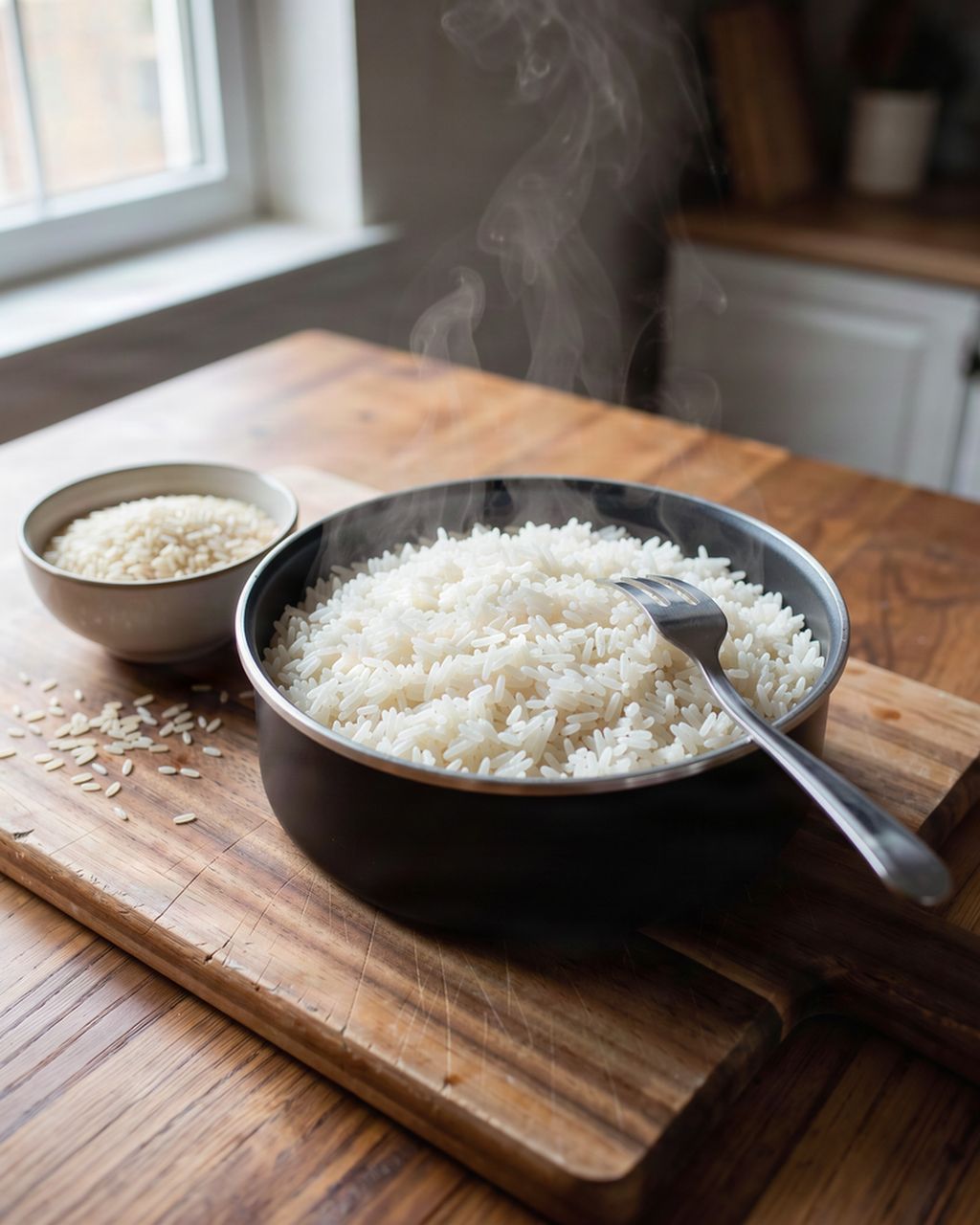
Crunchy rice is undercooked rice. Either it didn't get enough water, the water escaped as steam before the rice could absorb it, or the heat was too low or too short for the grains to soften all the way through.
Look at the pot:
Dry pot, hard grains throughout: too little water, or too much evaporation.
Soft on top, crunchy at the bottom, or the other way round: uneven heat, or the rice wasn't level.
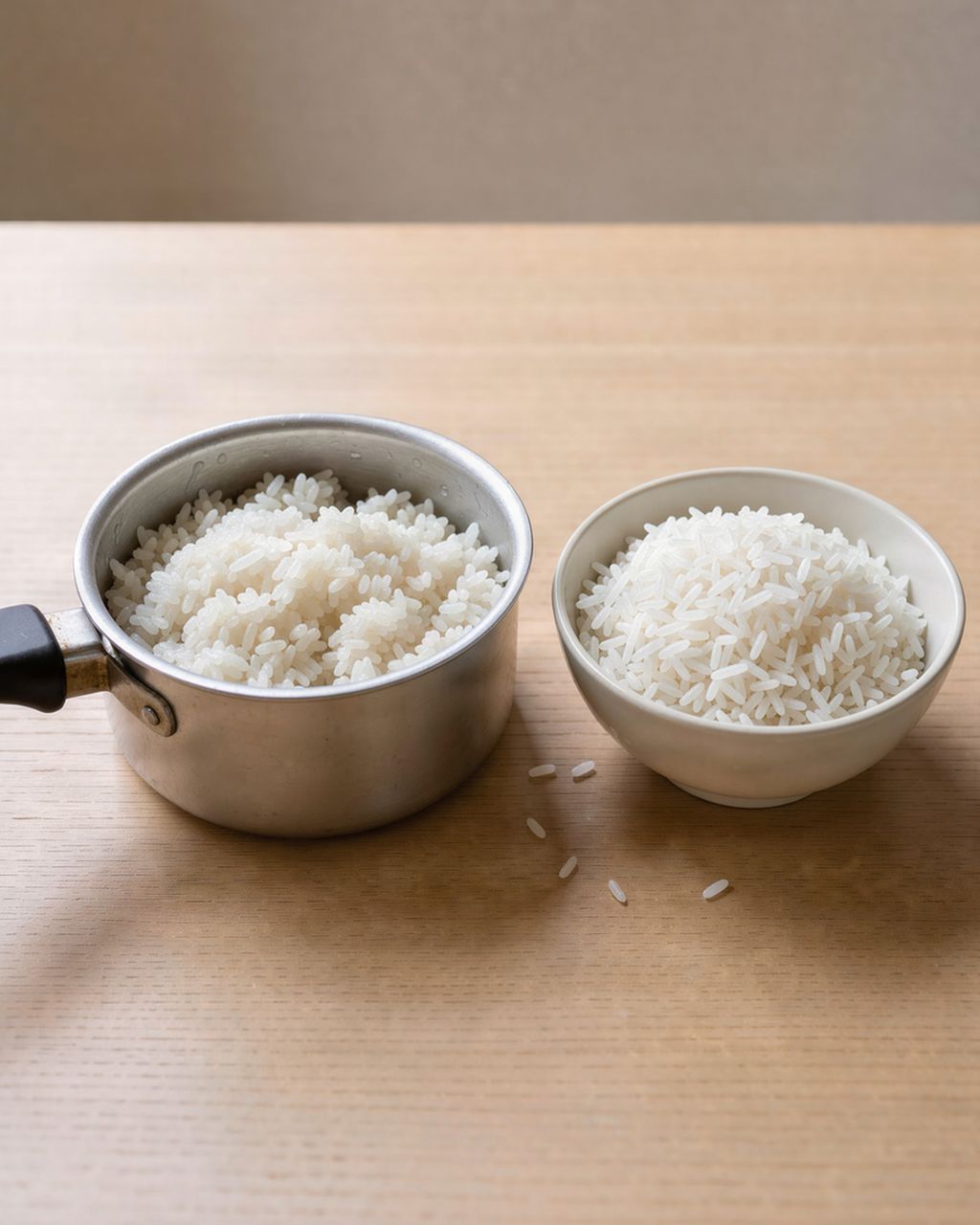
Soft outside, chalky white dot in the middle: not cooked long enough, or not rested.
Crunchy and burnt on the bottom: too much heat. See below.
Our guide to how to cook rice gives water ratios and times for basmati, jasmine and other rice. This article is about what to do when it comes out hard.
Rice needs enough water to soften the whole grain. The most common reasons it runs short:
A loose lid. Steam carries water out of the pan. If your lid rattles or has a steam hole, put a clean tea towel or a sheet of foil under it.
Heat too high. A strong boil after you cover the pan drives water off fast and can leave the top grains raw.
A wide, shallow pan. More surface means more evaporation. A smaller, deeper pot holds water better.
The wrong ratio for the rice. Brown rice and wild rice need more water and more time than white rice. Basmati cooked with a brown rice ratio will be mushy; brown rice cooked with a basmati ratio will be crunchy.
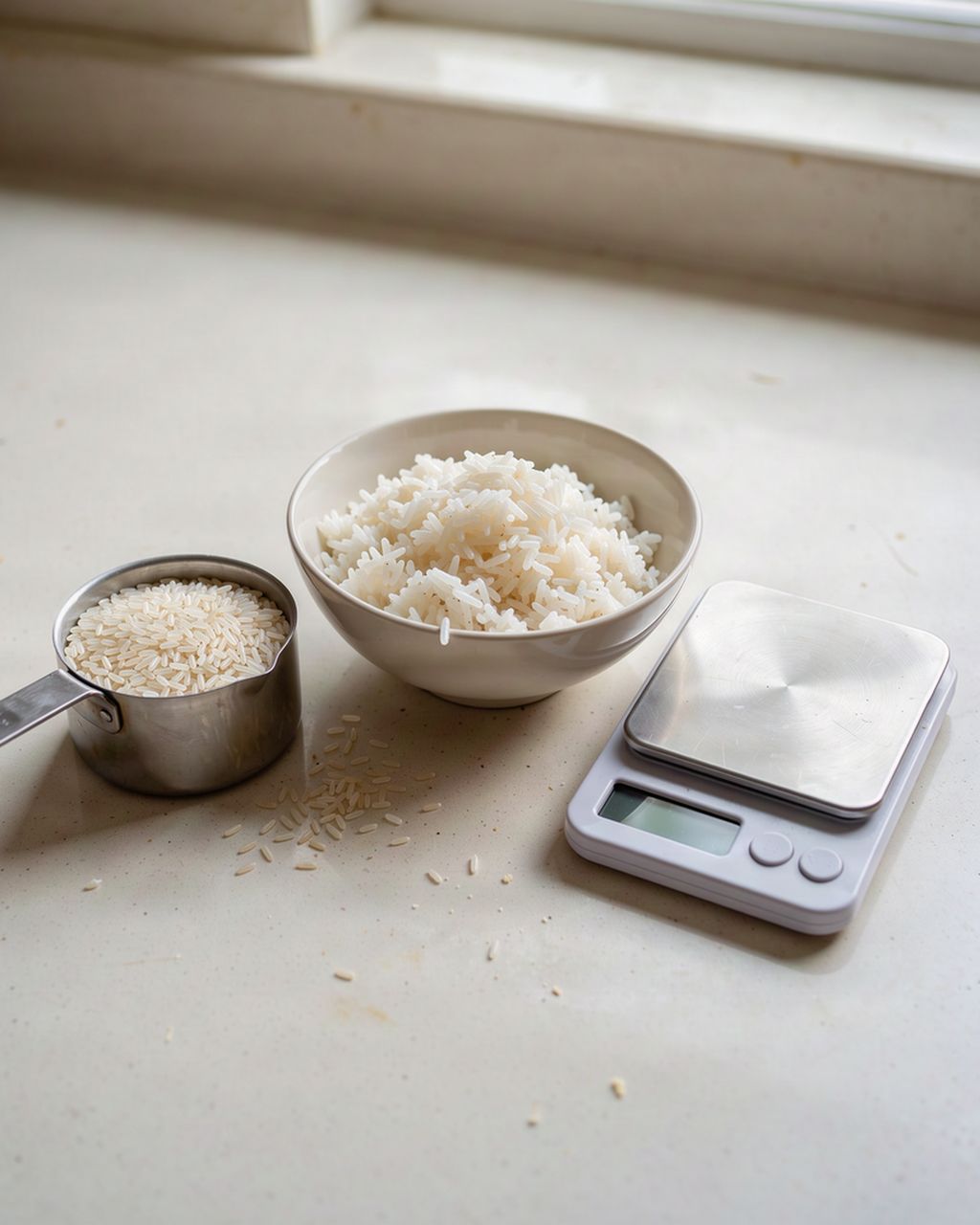
Measuring with different cups. Use one cup, or weigh. Our cup of rice in grams guide has figures.
Older rice, stored for a long time, is drier and can need a little more water than fresh-crop rice.
Every time you lift the lid, steam escapes and the temperature in the pot drops. Rice on the stove is partly steamed, so the top layer is the first to suffer.
The rest at the end matters as much as the cooking. When you take the pan off the heat and leave it covered, the moisture spreads from the softer outside of each grain into the center. Skip it, and grains that seemed nearly done can still be firm in the middle.
So: bring to a boil, stir once, cover, turn the heat right down, set a timer, and don't look until it rings. Then rest it covered, off the heat, before you fluff it.
Crunchy rice is easy to rescue, because the grains just need more water and time.
Sprinkle a few tablespoons of hot water from the kettle, not the hot tap, over the rice. Use more if the pot is completely dry.
Put the lid on tight, with a tea towel or foil underneath if it doesn't seal well.
Cook on the lowest heat for about 5 to 10 minutes, then take it off and leave it covered for a few minutes more.
Taste a few grains from the top, middle and bottom.
Don't stir hard while you do this, or the softening grains will break and turn sticky. If only the top layer is hard, turn it over gently with a fork before adding water so the dry grains sit lower down.
You can also fix it in the oven: cover the dish tightly and give it a little longer in a moderate oven with a splash of hot water.
A rice cooker should be reliable, so crunchy rice there points to a few things:
Too little water for the rice type. Brown rice needs the brown rice mark, if your cooker has one.
Measuring rice with a US cup. A US cup (about 240 ml) holds about a third more rice than the cooker's 180 ml cup, so the water marks are too low for it.
Opening the lid early. Many cookers keep steaming after they click to keep-warm.
A very large batch. Rice at the top of an overfilled cooker can stay firmer.
If the cooker has finished and the rice is still hard, add a little hot water from the kettle, close the lid and start the cycle again or leave it on keep-warm for a few more minutes.
If you added water and time and the rice is still hard, check these:
High altitude. Water boils at a lower temperature at altitude, about 1 °F lower for every 500 ft, so rice needs more time and a little more water. Colorado State University Extension suggests 2 to 4 extra tablespoons of liquid for rice.
Acid in the cooking liquid. Cooking rice in tomato or other acidic liquid can keep grains firm. This is why rice in some tomato-based dishes stays chalky, and why many cooks soften the rice in water or stock first.
Brown or wild rice. The bran layer slows water getting in, so these need much longer than white rice.
It was risotto rice cooked like plain rice. Arborio and carnaroli are meant to be cooked by adding hot stock gradually; see our risotto guide.
Recipe of the week, one tip that saves you time and one deal from the shop. Unsubscribe in one click.
The next issue goes out on Thursday, November 26.
Soaking helps some rice cook more evenly, but it changes how much water you need.
Basmati: many cooks soak it briefly before cooking. The grains absorb some water first, cook more evenly and stay long and separate. Reduce the cooking water a little to make up for what the rice has already taken in.
Brown rice: soaking can shorten the cooking time and soften the bran layer, which helps if your brown rice is always firm in the middle.
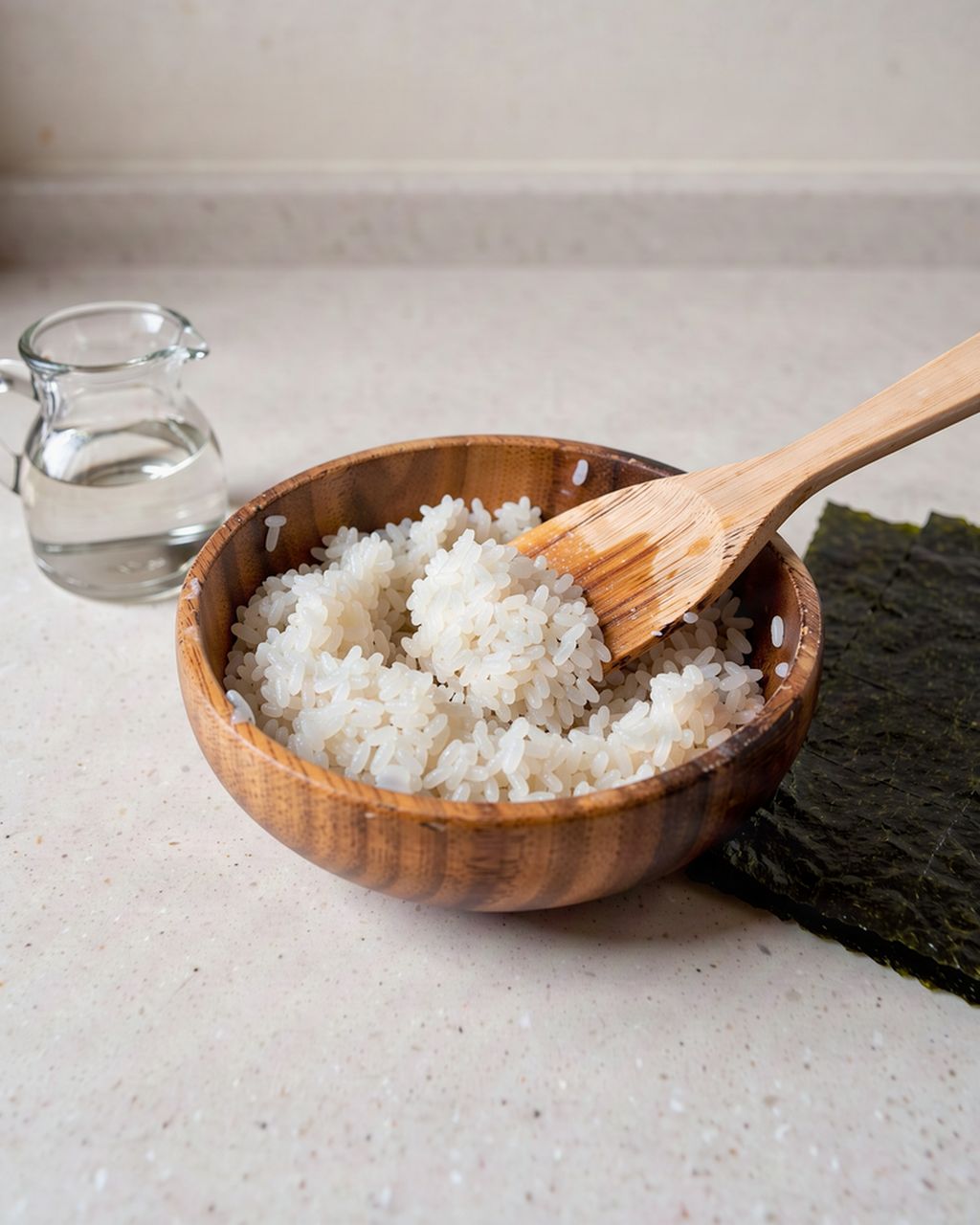
Sushi rice and other short-grain rice: it is usually rinsed and then left to drain before cooking, so the grains are evenly moist.
Long-grain white rice: usually fine without soaking.
If you soak, keep the rice in cold water, then drain it well before measuring the cooking water. Soaked rice that goes in with the full dry-rice ratio is likely to turn out soft, not crunchy, so adjust once and note what works with your rice and pot.
Sprinkle a few tablespoons of hot water over the rice, cover it tightly and cook on the lowest heat for about 5 to 10 minutes, then let it rest covered. Taste grains from the top and bottom before serving.
Rice is crunchy on top when steam escaped through a loose lid or when the lid was lifted during cooking. Seal the pot with a tea towel or foil under the lid and turn the top layer under before adding a splash of water.
Rice that is still hard after cooking usually had too little water, too short a rest, or was brown or wild rice that needs longer than white. High altitude and acidic cooking liquids also keep grains firm.
Yes, crunchy rice is undercooked. The grains have not absorbed enough water to soften through, and a little more water and time on low heat usually fixes it.
Crunchy rice from a rice cooker usually means too little water for the rice type, or rice measured with a US cup instead of the cooker's smaller 180 ml cup. Add a little hot water and restart or leave it on keep-warm.
One recipe worth heating the oven for, one tip, and one deal from the shop. Nothing else.