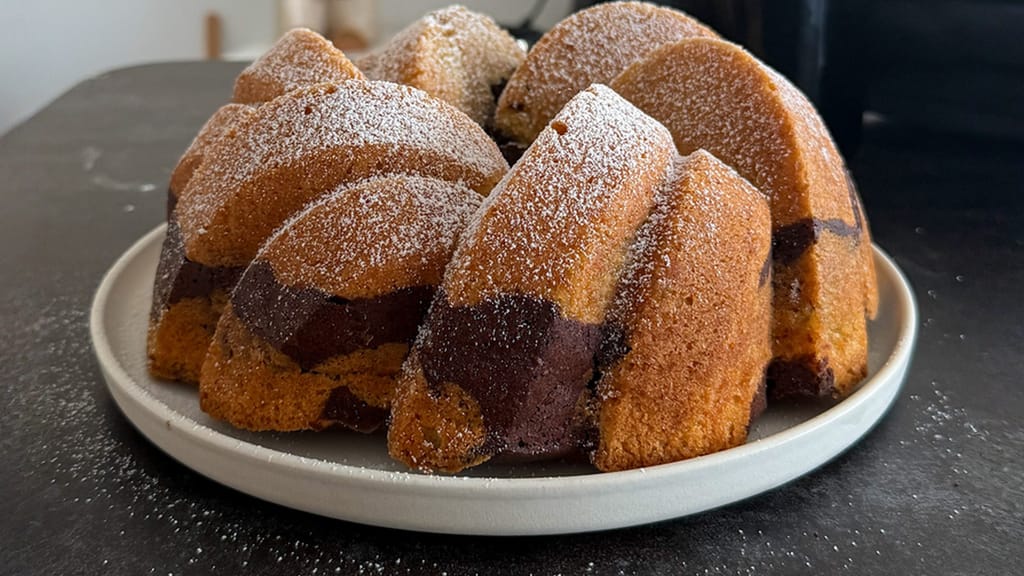
Marble bundt cake with buttermilk and vanilla
Why Is a Bundt Cake Called a "Bábovka" in Czech? The Name's Origin, Kugelhopf and a Short History
Updated Nov 17, 2026
Bábovka gets its name from "bába" – the old Czech word for a round bake made from yeasted or poured batter – and the word bábovka originally meant the pan the bába was baked in. According to linguists, it most likely has nothing to do with grandmothers: the word bába for a bake is explained as coming from baby talk (pápa, papat, "to eat"), not from the word for an old woman. Below you'll find how the name moved from the pan to the cake, what bábovka has in common with German Gugelhupf and Moravian kuglof, why it has a hole in the middle and why someone might call you "a bábovka".
Bábovka comes from the word bába, which in Old Czech meant a type of baked good; bábovka was originally the pan in which a bába was baked. Only later did the name pass from the pan to the cake itself.
According to Václav Machek's etymological dictionary (Etymologický slovník jazyka českého), a bábovka was first a round clay baking dish, and a bába was the bake that cooked evenly in it, mostly from a poured batter. According to Czech Radio, the word has appeared in Czech since the 15th century.
Moving a name from a container to its contents is nothing unusual – today you might say "let's have a pot of goulash" in the same way. Once the typical fluted pan became widespread, "bábovka" came to mean mainly the cake baked in it, and the word bába for a bake faded from everyday speech.
Recipe of the week, one tip that saves you time and one deal from the shop. Unsubscribe in one click.
The next issue goes out on Thursday, November 26.
Most likely not – according to linguists today, the bake called bába has nothing to do with an old woman. Four folk explanations exist, though, and they're still passed around:
older women liked bábovka,
grandmothers mostly baked it,
the original pan resembled an old woman's face,
it was given to midwives (porodní báby) for helping with a birth.
Czech Radio, citing linguists, notes that none of them is accepted today. The explanation it gives leads to baby talk: the word for the bake is related to older forms such as pápa and the verb papat – so bába is "yummy food", something to eat, not a grandmother.
It isn't that simple, though. Machek considered bába as a name for a bake to be a Germanism in Czech (German Babe, Bäbe), whereas the German etymologists Friedrich Kluge and Alfred Götze claimed the opposite – that German borrowed the word from the Slavic languages. All that's certain is that the word bába for a bake is known to Czechs, Poles and southern Germans, and that bábovka is derived from it.
Bábovka, kuglof and the German-Austrian Gugelhupf all name the same type of tall cake baked in a fluted tube pan; Gugelhupf and kuglof are traditionally yeasted, while Czech bábovka is now mostly made with creamed batter.
Gugelhupf (also Guglhupf, Kugelhopf) is a word used in southern Germany, Austria and Switzerland. According to Wolfgang Pfeifer's etymological dictionary, it is made up of Gugel – a close-fitting hood or cowl, from Latin cuculla – and -hupf, -hopf, a dialect variant of Hefe, meaning yeast. So, literally, something like "a hood-shaped yeast cake".
Kuglof is a Czechized Gugelhupf, borrowed from Austrian German. In Czech it caught on mainly in dialects, especially in Moravia; in Hungarian it's kuglóf, in French Alsace kouglof.
Bábovka is the native Slavic word for the same type of cake; its Polish counterpart is babka.
The names differ mainly in origin: Gugelhupf and kuglof name the cake after its shape and yeast, while bábovka names it after the pan the bába was baked in. If you're looking for a recipe abroad, search for Gugelhupf in German and, in English, most often for bundt cake.
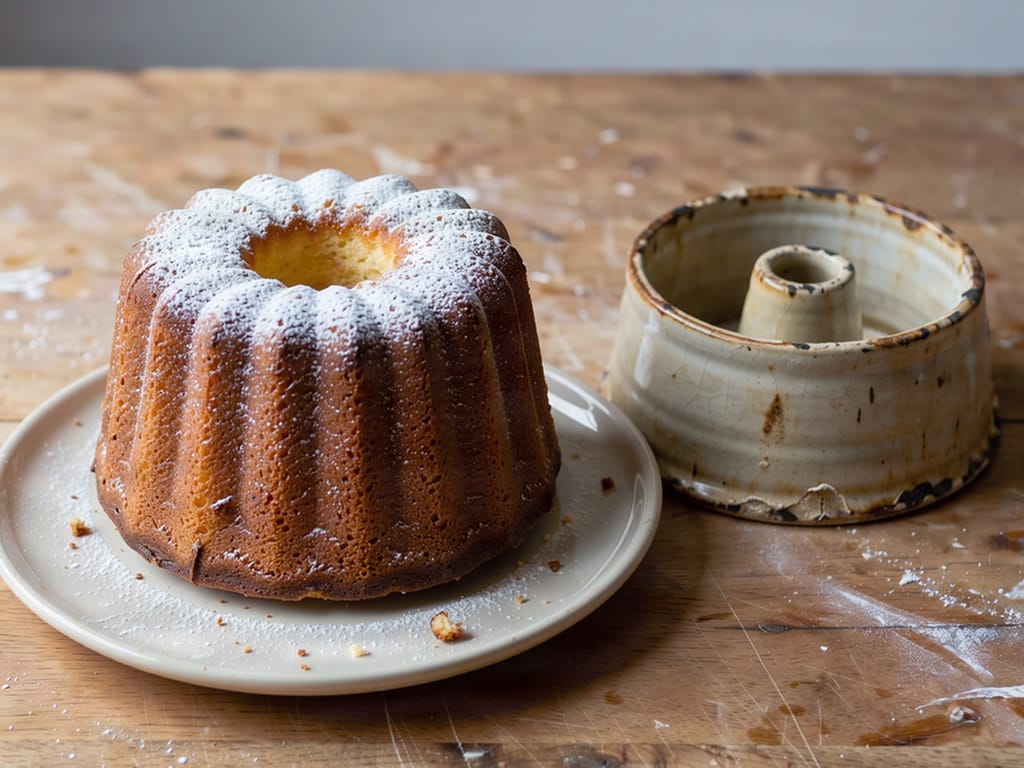
The hole is there for baking: a metal or ceramic tube carries heat into the center of the tall batter, so the bábovka bakes evenly and the edges don't burn before the middle is done.
Without the tube, a tall round cake would have its thickest layer of batter in the center, and that part takes longest to bake. The tube removes this slowest part entirely, leaving the batter at roughly the same thickness all the way around. The ridges on the walls of the pan also increase the surface area, so the bábovka has more crust, and the ridged pan is sturdier.
For a yeasted bába this was doubly true – heavy yeasted dough bakes through more slowly than a light creamed batter. For how to choose between ceramic, silicone and cast-iron pans today, see the article bábovka pan: ceramic, silicone or cast iron.
The first bábovky were yeasted; the creamed bábovka you most often bake today spread only with the arrival of baking powder.
The yeasted era. In Magdalena Dobromila Rettigová's Domácí kuchařka, first published in 1826, cakes similar to bábovka appear under other names – good buchta, imperial buchta, cheap buchta – according to museum staff from the Rakovník region cited by Czech Radio. The dough was raised with yeast.
Baking powder. Only with baking powders – which housewives bought in packets under names like Květa or Vacatův Kynetín – was it possible to bake bábovka without letting it rise. Butter was creamed with sugar until fluffy, eggs were added, then flour with the powder, and the batter went straight into the oven. Recipes for bábovka with baking powder commonly appear in cookbooks in the first half of the 20th century.
The classic settles in. According to Czech Radio, in the first half of the 20th century bábovky became a permanent fixture of the festive table, and cookbooks from that time already offer several kinds.
That's why today's bábovka in Czechia is almost always creamed and often marbled – light batter swirled with cocoa batter. How to get a bold pattern is covered in the article marble bábovka: how to make a bold pattern. For what temperature and how long to bake a bábovka depending on the pan and batter, see bábovka baking temperature and time.
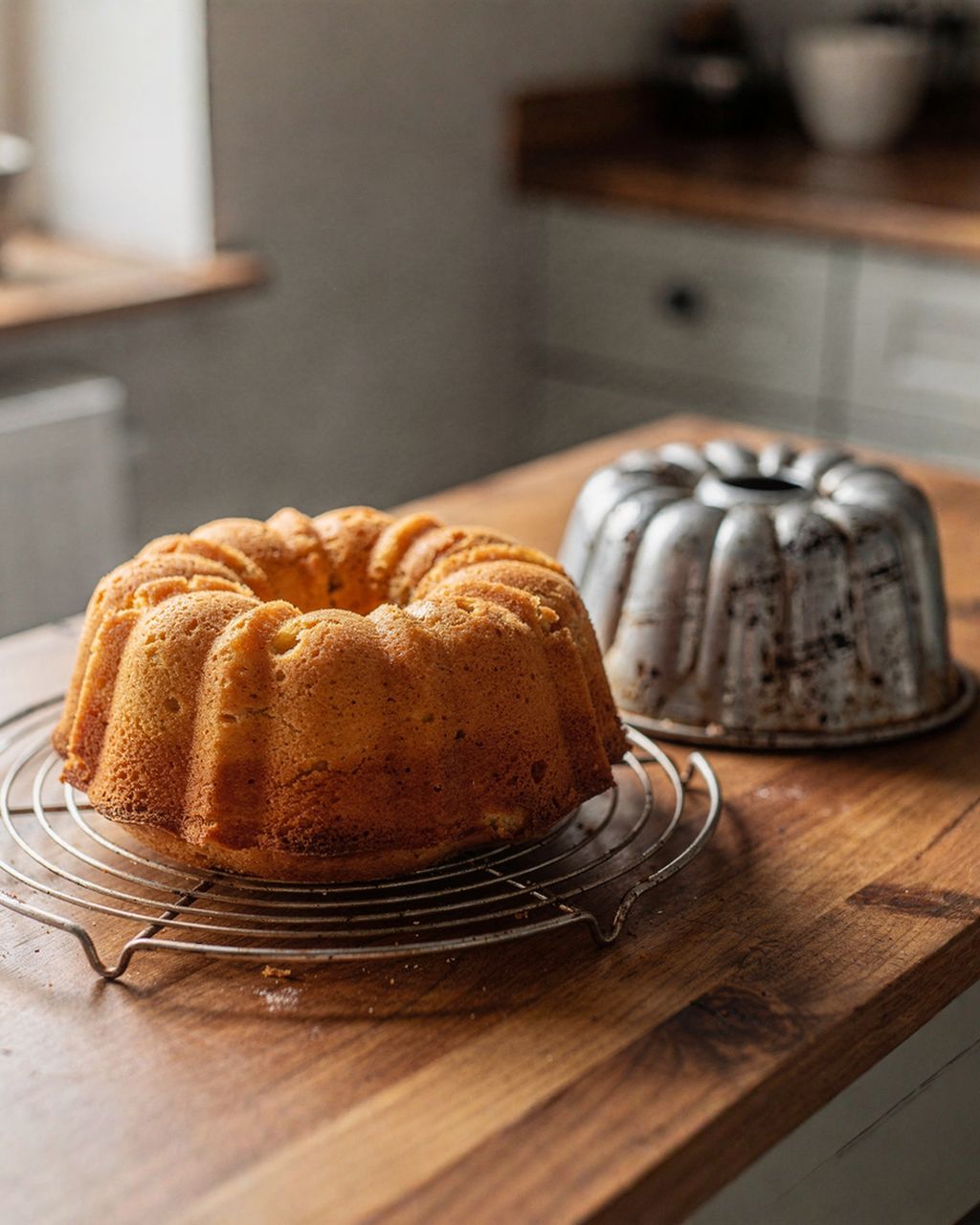
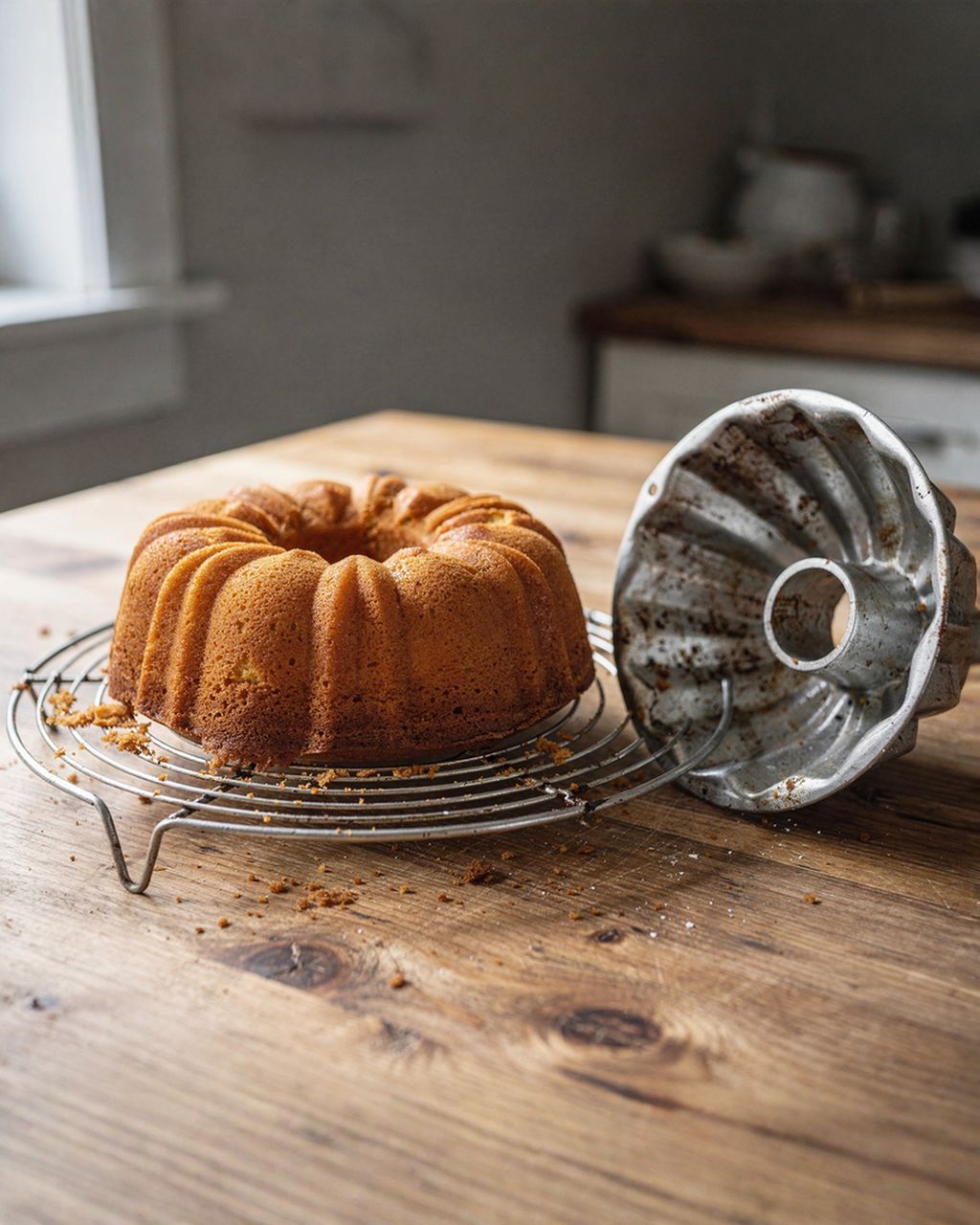
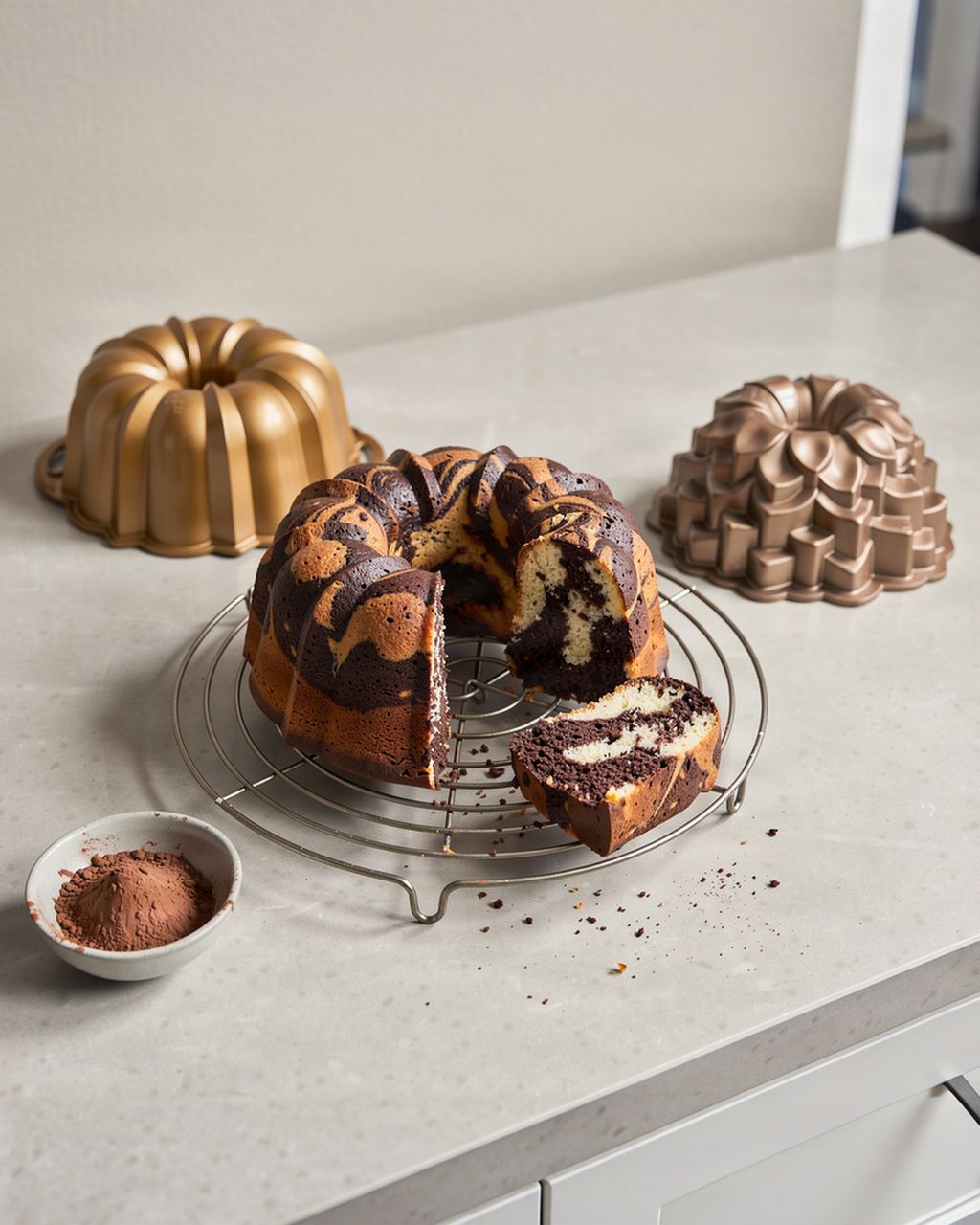
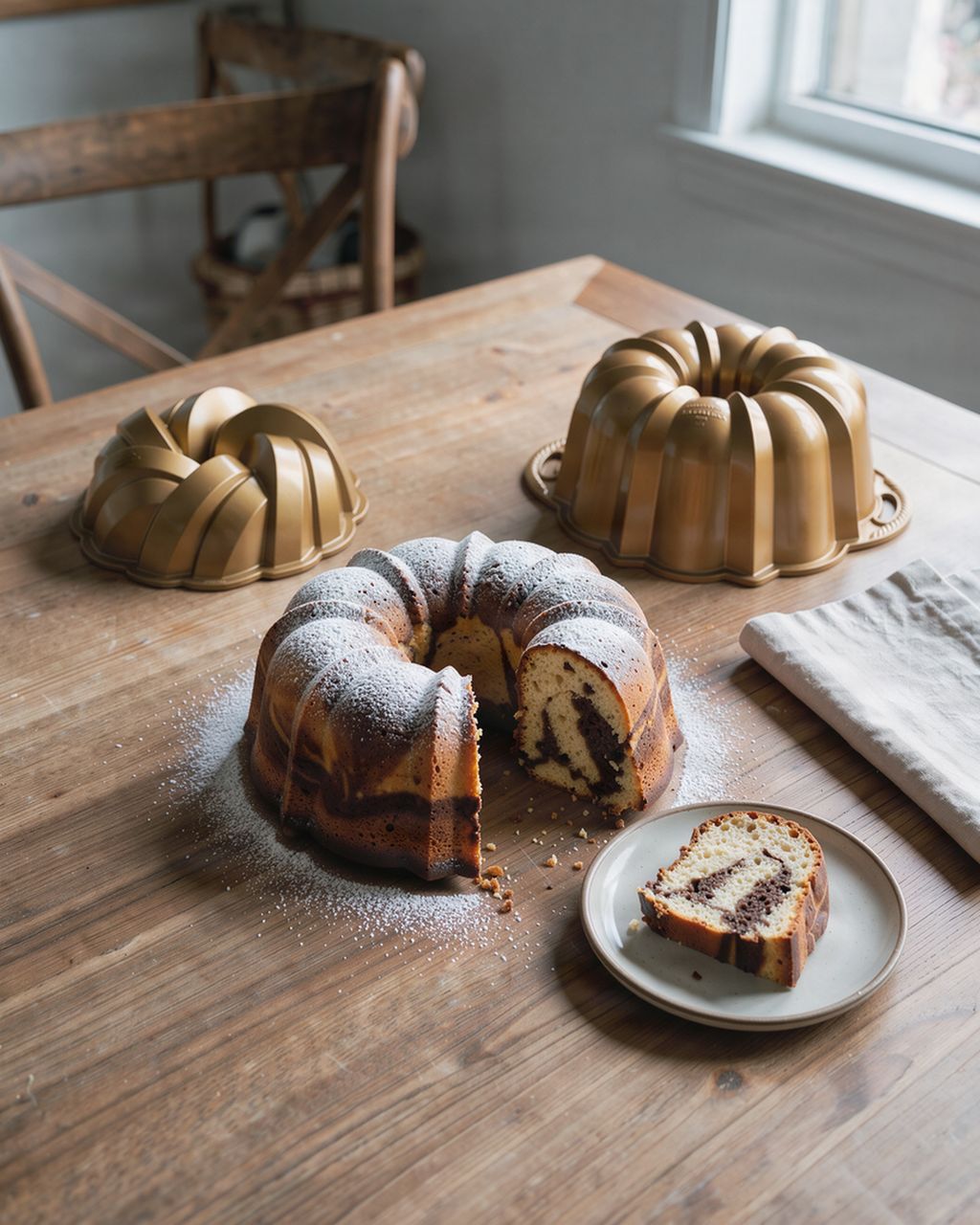
Marble bundt cake with buttermilk and vanilla
A creamed-batter classic: marble bábovka with buttermilk and vanilla
As an insult, bábovka means a coward or a pushover, a weak person – "ty jsi ale bábovka" means roughly "you're such a softie". The word has three common meanings in Czech:
a cake baked in a tube pan,
pejoratively, a coward or weakling,
a sand cake made at the beach or in the sandbox.
This whole article is about the first meaning. For the second, dictionaries list it alongside synonyms such as weakling, scaredy-cat or wimp, and bábovka can even be masculine in this sense – "ten bábovka se bál skočit" (that bábovka was afraid to jump). The figurative use rests on bábovka being soft and yielding, with an echo of the word bába in the sense of "fearful person" (compare zbabělec, "coward").
You know the third meaning from the sandbox: a sand bábovka is the shape a child turns out of a plastic mold. It's called that simply because it looks like a little bábovka turned out of its pan.
Polish babka is basically a bábovka: a tall cake baked in a tube pan, most often yeasted and made especially at Easter. The babka you know from American and Israeli bakeries is something else, though – a braided yeasted loaf with a chocolate or cinnamon filling, baked in a loaf pan. The name is shared; the shape and dough are not.
The correct form is bábovka with a long á, because the word comes from bába. "Babovka" without the accent is just writing without diacritics; standard Czech doesn't recognize it.
A creamed-batter bábovka, wrapped and kept at room temperature, stays moist for roughly 3–4 days; a yeasted one goes stale faster. It keeps longest whole, uncut and well wrapped.
In Slovakia, yes: bábovka is used just as in Czech, and Slovak dictionaries define it as a round cake baked in a pan with a hole in the middle. In Poland a similar cake is called babka or baba – from the same word for a bake that gave rise to Czech bábovka.
One recipe worth heating the oven for, one tip, and one deal from the shop. Nothing else.