Cocoa vs. Cocoa Powder vs. Baking Chocolate: The Differences, Dutch-Process Cocoa and How to Substitute Them
Why Does My Cocoa Powder Taste Bitter, Sour or Like Dirt?
Updated Nov 21, 2026
Cocoa powder tastes bitter because it is unsweetened cocoa solids with most of the cocoa butter pressed out, so nothing softens its natural bitterness until you add sugar, fat and liquid. A sour edge points to natural (non-alkalized) cocoa, and an earthy, dirt-like taste to heavily alkalized or raw cacao powder. Blooming it in hot liquid and balancing it with sugar, fat and a pinch of salt fixes most of it.
Cocoa powder is what's left after most of the cocoa butter is pressed out of ground roasted cocoa beans. That leaves the cocoa solids, which carry the bitter and astringent compounds of the bean, with little fat and no sugar to soften them.
So a spoonful of plain cocoa is supposed to taste bitter. Chocolate tastes pleasant because it puts sugar, cocoa butter and often milk back. When a cocoa recipe tastes bitter, one of these is usually missing or out of balance:
Not enough sugar for the amount of cocoa.
Not enough fat, such as butter, oil, cream or milk.
The cocoa wasn't dissolved, so dry pockets taste raw and dusty.
The wrong cocoa for the recipe, natural where Dutch-processed was meant, or the reverse.
Too much cocoa, often when it replaces chocolate one for one.
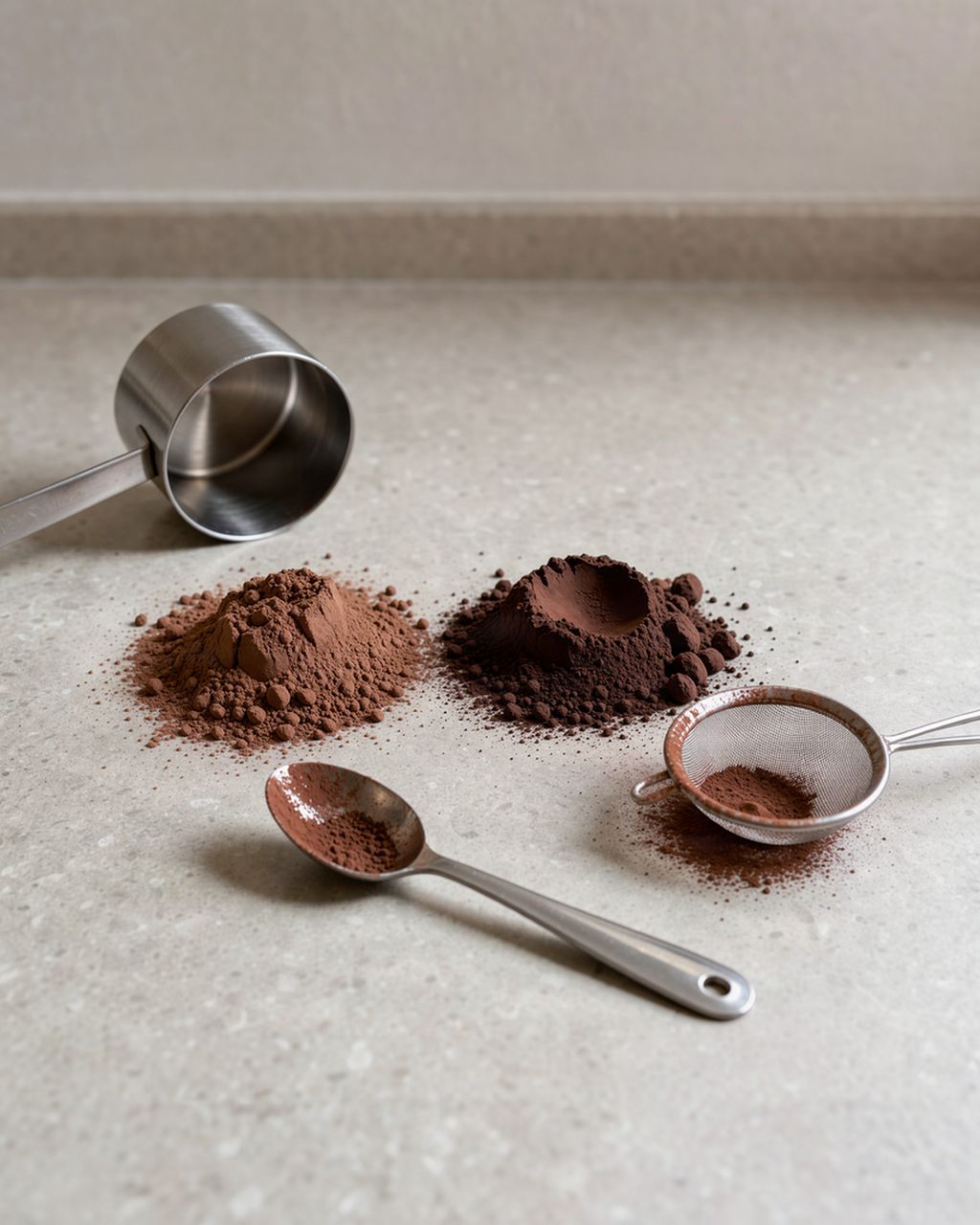
There are two main kinds of cocoa powder, and they taste different. Our full guide to cocoa, cocoa powder and Dutch-process cocoa covers swaps; here is only what matters for taste:
Natural cocoa is acidic, with a pH of roughly 5 to 6. It tastes sharp and fruity, and on its own it can read as sour.
Dutch-processed (alkalized) cocoa is treated with an alkali, bringing it to around neutral. It tastes milder and rounder and is usually darker. See Dutch-processed cocoa.
Read the label to know which you have: Dutch-processed cocoa says "alkalized" or "processed with alkali", or lists an acidity regulator such as potassium carbonate. Many US supermarket cocoas labeled simply "unsweetened cocoa" are natural; European baking cocoas are more often alkalized, so check the label. If a recipe tastes sharper than you expected, the type of cocoa is a likely reason.
Cocoa described as tasting like dirt or soil usually falls into one of these:
Very dark cocoa, often heavily alkalized and sometimes sold as black cocoa. The strong alkalizing gives a deep color and an earthy, almost smoky flavor with little fruitiness. It works mixed with regular cocoa but can taste flat and earthy on its own.
Raw cacao powder, made from unroasted or lightly processed beans. It tastes more astringent and earthy than roasted cocoa.
Undissolved powder. Dry cocoa coats the tongue with a dusty, chalky taste. In a drink or a frosting, that reads as dirt.
Stale cocoa or cocoa stored near strong smells. Cocoa picks up odors from spices, coffee and cleaning products. Keep the lid tightly closed.
Sugar, fat, a pinch of salt and blooming in hot liquid soften all of these.
Blooming is the simplest fix for raw, bitter cocoa flavor. Instead of adding dry cocoa to a batter, you first stir it into a hot liquid.
Take the liquid your recipe already uses: hot water, freshly brewed coffee, hot milk, or the melted butter.
Whisk the cocoa into it until smooth, with no dry lumps.
Let it sit for a minute or two, then continue with the recipe.
The hot liquid dissolves the cocoa evenly and releases more of its flavor, so the result tastes deeper and rounder instead of dusty. Coffee is a classic choice in chocolate cake because it deepens the chocolate taste. Many chocolate cake and brownie recipes are built this way; our guide to what chocolate to use for brownies and chocolate cake covers the choices.
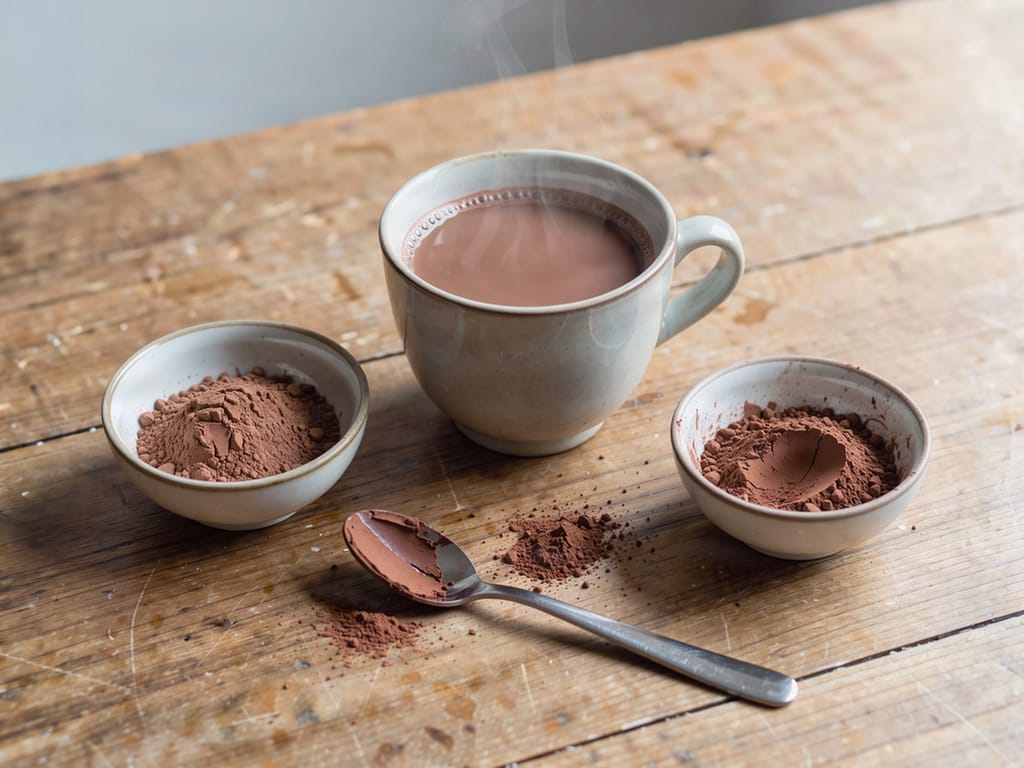
Hot cocoa is where bitterness shows most, because there is nothing else to hide behind.
Make a paste first. Mix the cocoa and sugar with a splash of milk until smooth, then whisk in the rest of the hot milk. Dry cocoa stirred into a full mug clumps.
Use milk, not water. Milk fat softens bitterness.
Add a pinch of salt. It makes cocoa taste less bitter and more chocolatey.
Sweeten to taste. Cocoa powder has no sugar; a drink mix does. Swapping one for the other without adding sugar gives a very bitter mug.
Don't scorch it. Heat gently and don't let the milk boil hard; scorched milk tastes bitter too.
For a richer cup, our guide to hot chocolate from real chocolate gives a ratio per mug.
Recipe of the week, one tip that saves you time and one deal from the shop. Unsubscribe in one click.
The next issue goes out on Thursday, November 26.
Cake tastes bitter and slightly soapy: check the leavening. Natural cocoa is acidic and reacts with baking soda; Dutch-processed is not. Using Dutch cocoa in a recipe that relies on baking soda can leave unreacted soda, which tastes soapy and bitter. Stick to the cocoa your recipe names, or switch the leavening as our cocoa guide explains.
Cake tastes too dark and dry: cocoa absorbs liquid, so a cocoa-heavy batter with too little fat or sugar bakes up bitter and dry. Don't add extra cocoa to a recipe without also adding liquid and sugar.
Frosting tastes dusty and bitter: sift the cocoa, beat it in well, and add a pinch of salt. For a smoother result, bloom the cocoa in a little hot cream or melted butter, cool it, then beat it in.
Cocoa replaced chocolate: chocolate brings sugar and cocoa butter that cocoa doesn't. Swap by the substitution ratios rather than one for one.
Cocoa powder is naturally bitter: it is unsweetened, and most of the cocoa butter that would round out the flavor has been pressed out. It needs sugar, fat and liquid around it, and blooming it in a hot liquid makes it taste smoother.
A sour or sharp taste usually means natural cocoa, which is acidic, with a pH of about 5 to 6. Dutch-processed cocoa is treated with an alkali to bring it to about neutral, which tastes milder and less sharp.
An earthy, dirt-like taste usually comes from very dark, heavily alkalized cocoa or from raw cacao powder, and it is strongest when the powder is eaten unsweetened or not dissolved. Sugar, fat, a pinch of salt and blooming in hot liquid soften it.
Blooming means stirring cocoa powder into a hot liquid, such as water, coffee, milk or melted butter, before adding it to a recipe. It dissolves the powder evenly and gives a rounder, deeper chocolate flavor with less raw, dusty bitterness.
Mix the cocoa with the sugar and a splash of milk into a smooth paste, then whisk in hot milk and add a pinch of salt. Milk fat and a little more sugar soften the bitterness; don't let the milk boil hard or scorch.
One recipe worth heating the oven for, one tip, and one deal from the shop. Nothing else.