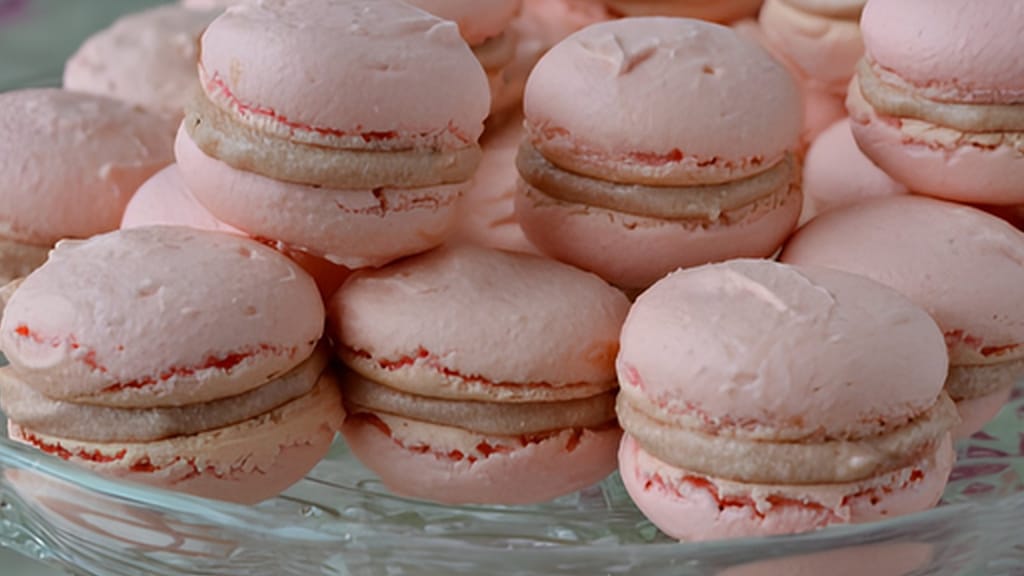
Salted caramel cream - great for macarons and more
Saint-Honoré: The Story of the Cake Named After the Patron Saint of Bakers

Updated Jul 19, 2026
Saint-Honoré is a French cake built from caramelised choux puffs, a puff pastry base and billowy chiboust cream – created in 1847 in a Parisian pâtisserie on Rue Saint-Honoré. It takes its name from Saint Honoré, the patron saint of bakers and pastry chefs, and has stood as a symbol of French pâtisserie ever since. Here's where the cake came from, who the saint behind the name was, exactly what it's made of, and how today's pastry chefs are reinventing it – from salted caramel to matcha.
The Saint-Honoré cake was created around 1847 at the Parisian pâtisserie of the confectioner Chiboust, on Rue Saint-Honoré, from which it takes its name. This is also where its famous filling was born – crème chiboust, pastry cream lightened with whipped meringue.
The cake's name works on two levels. It references Rue Saint-Honoré, but also Saint Honoré, the patron saint of bakers and pastry chefs – making the dessert a tribute to the craft itself.
The original version looked quite different from today's. It's said that the first take on the cake used a richer, brioche-like dough, and it was only later refinements that turned it into the dessert we know now. Around 1863, the recipe was perfected by the pastry chef Auguste Julien – he swapped the base for puff pastry and added the signature ring of caramelised choux puffs. (The common claim that the cake was invented by an "Auguste Chiboust" actually conflates two separate names: the Maison Chiboust pâtisserie, and the chef Julien.)
19th-century Paris was a hotbed of pastry innovation – you can read more about it in our article on how Paris changed the world of French desserts.
Seasonal baking plans, tested recipes and kitchen tricks that save you time. Unsubscribe in one click.
Saint Honoré (in French, Honoré; in Latin, Honoratus) was the seventh bishop of Amiens in the 6th century, and the Catholic Church venerates him as the patron saint of bakers and pastry chefs; his feast day falls on 16 May.
A charming legend is tied to his patronage. When news reached his home village that Honoré had become a bishop, his old nurse happened to be baking bread and refused to believe it – she said she'd believe it only once her wooden baker's shovel took root in the ground. According to the story, the shovel then turned into a mulberry tree on the spot.
It's this very tale that permanently linked Honoré with the baking trade. His name went on to be adopted by numerous bakers' guilds and by the Parisian street Rue du Faubourg Saint-Honoré – and eventually, by the cake itself.
A classic Saint-Honoré rests on five elements:
Puff pastry – the thin, crisp base the cake sits on.
A ring of choux pastry – a circle of choux piped around the edge of the base.
Caramelised choux puffs – small profiteroles dipped top-down in caramel, forming the "crown".
Crème chiboust – pastry cream lightened with Italian meringue, light yet firm enough to hold its shape.
Caramel – the glossy shell that holds the puffs together and adds crunch along with a bittersweet edge.
The magic of this cake lies in its contrast of textures: crisp base, soft puffs, airy cream and glassy caramel all in one bite. At its heart is the crème chiboust – made by folding Italian meringue (egg whites cooked with hot sugar syrup) into warm pastry cream. This gives the cream volume and structure without weighing it down. The smaller profiteroles are filled with the same cream, and their tops are dipped in caramel, which hardens to work as both edible glue and decoration.
Over more than 150 years, Saint-Honoré has moved from a rich, brioche-like base to today's lighter version built on puff and choux pastry. The original crème chiboust, technically demanding to make, is often replaced in modern pâtisseries with easier creams – crème diplomate (pastry cream folded with whipped cream) or simple Chantilly cream.
Over the 20th century, pastry chefs began experimenting with both fillings and decoration: fresh fruit was added for brightness, along with chocolate and caramelised nuts. The classic ring of puffs has gained a rival in the form of a striking swirl of cream piped using a special "Saint-Honoré" nozzle.
Today you'll also commonly find gluten-free or dairy-free versions, letting more people enjoy the cake. But the core idea never changes – a play of crisp and creamy textures, crowned with caramel.
Modern pastry chefs treat Saint-Honoré as a blank canvas: swapping in salted caramel, adding fruit, chocolate or matcha, and playing with the shape of the ring. The essence of the cake stays the same – it just speaks with a new voice.
The most common twist is using salted caramel instead of the classic version – its bittersweet depth beautifully balances the sweet cream. You'll also find exotic fruit notes (passion fruit, mango), berries like raspberries or blueberries, and chocolate ranging from white to dark. In Italy, mascarpone and pistachio are folded into the cream; in Japan, matcha lends the cream a green hue and a gentle bitterness.
Salted caramel cream - great for macarons and more
Salted caramel cream – a modern twist on the classic Saint-Honoré caramel
Beyond ingredients, techniques are evolving too. The filling for the profiteroles is often piped from a whipped cream dispenser, which aerates it for an even lighter texture. Pastry chefs experiment with the temperature and colour of the caramel (from pale gold to deep amber) and pipe the choux more precisely so the puffs come out uniform in size, giving the cake a cleaner look.
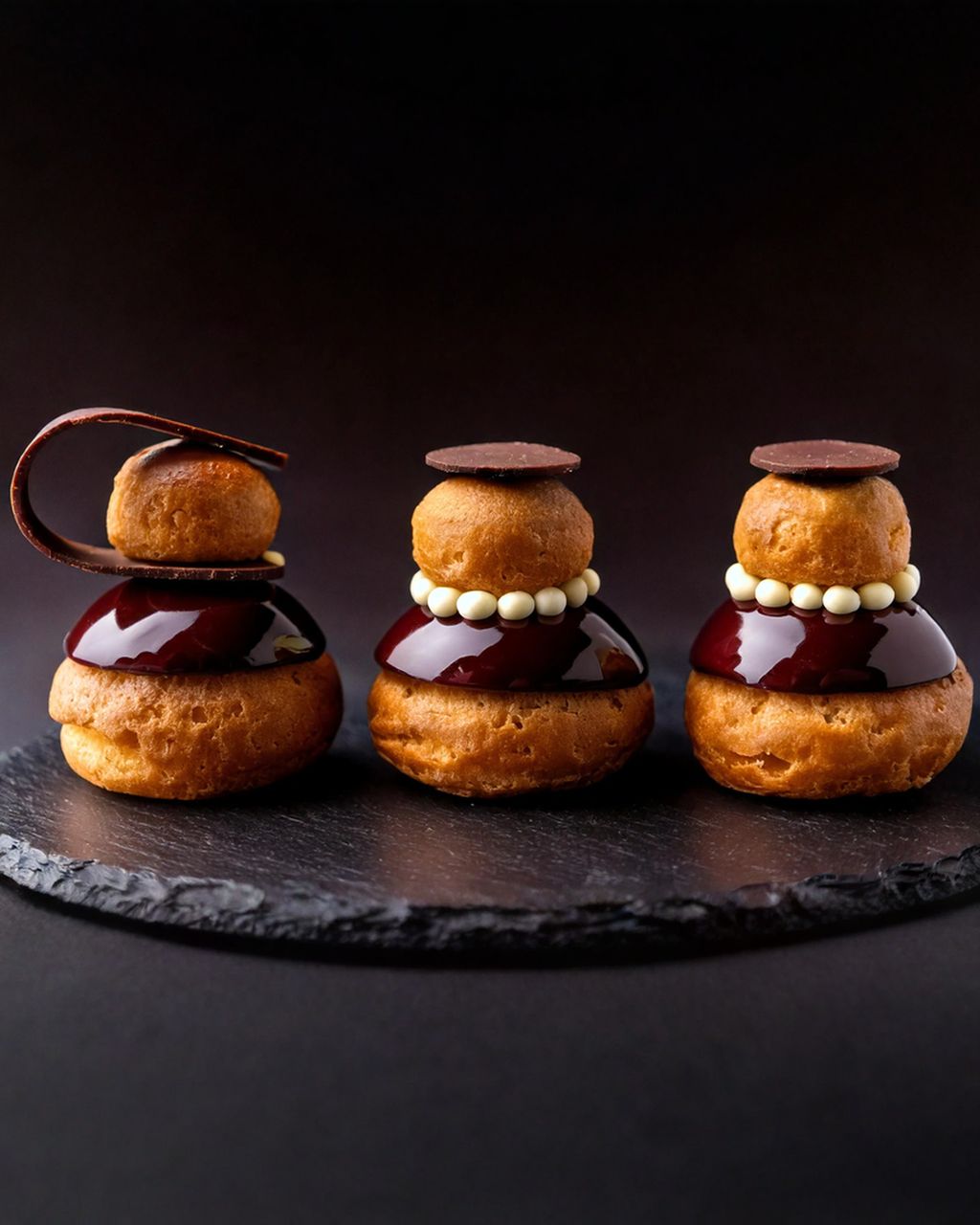
Modern Saint-Honoré puts real emphasis on visual appeal. Instead of the classic ring of puffs, you'll often see an elegant swirl of cream piped with a nozzle, minimalist lines, geometric shapes and edible flowers. Every element serves both function and aesthetics – the cake ends up looking more like a small sculpture than a classic dessert case staple.

In France, Saint-Honoré is a fixture in pâtisserie display cases and a go-to cake for special occasions – weddings, celebrations and Sunday lunches alike. Its sophisticated combination of choux pastry, cream and caramel makes it a choice for moments meant to feel special.
Even after more than 150 years, the cake still holds its place among the classics. French pâtisseries regularly refresh it with new flavours and presentations, winning over new generations without losing its original charm. For many French people, Saint-Honoré is a piece of cultural heritage, not just a sweet treat.
Saint-Honoré has spread far beyond France, with pastry chefs adapting it to local tastes – from Italian mascarpone and pistachio to Japanese matcha and American berries with salted caramel. Yet the foundation stays recognisable: the base, the choux ring, the cream and the caramel.
American pastry chefs often lean on seasonal fruit (blueberries, raspberries) and salted caramel in place of the classic version, giving the cake a more contemporary edge. It's precisely this ability to absorb local flavours while staying true to itself that explains its worldwide popularity.
Saint-Honoré is pronounced roughly "sant-oh-noh-RAY" (French: [sɛ̃t‿ɔnɔʁe]). The stress falls on the final syllable, the closing "é" is a crisp, closed sound, and the "r" is a soft, guttural French r.
Crème chiboust is pastry cream (crème pâtissière) lightened with whipped Italian meringue, which makes it airier and gives it enough structure to hold its shape. Crème pâtissière on its own is a denser egg custard with no meringue folded in, and it's the base used for many other fillings.
Saint-Honoré is at its best on the day it's made, since the caramel quickly turns soft and sticky in the fridge. Chilled, it holds for about 24 hours – fill and caramelise it as close to serving as possible, and never freeze it, as neither the choux pastry nor the caramel would survive thawing.
The easiest substitute for crème chiboust is crème diplomate (pastry cream lightened with whipped cream), or simply whipped cream folded into pastry cream. The flavour and lightness stay close to the original, without the fuss of working with hot Italian meringue.
Saint-Honoré is one of the trickier desserts to make, since it combines three techniques at once – puff pastry, choux pastry and cooked caramel. It's absolutely doable at home, but it helps to prepare each component separately and assemble the cake only just before serving.
One recipe worth heating the oven for, one tip, and one deal from the shop. Nothing else.