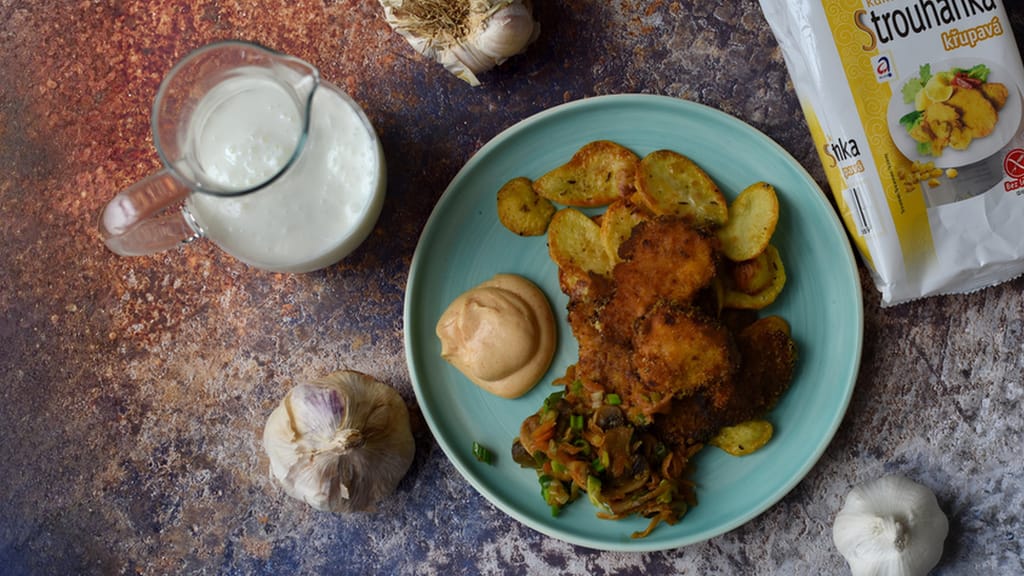
Baked crispy cutlets in cornmeal breading
Oven-Baked Schnitzel: Temperature and Time for a Crust as Crispy as Fried
Updated Nov 17, 2026
Bake schnitzel in the oven at 200°C (400°F) conventional (top and bottom heat), or 180–190°C (350–375°F) with fan, for roughly 15–20 minutes. They're done by internal temperature, not by the clock: chicken needs 74°C (165°F) in the center, according to the US food safety agency FSIS. For a crispy coating without frying, you need just three things: lightly spritz the breading with oil, preheat the oven first, and bake on a rack or a properly hot baking sheet. Here's how to do it with chicken, pork and Dutch-style schnitzel (holandský řízek, a ground-meat and cheese schnitzel), with breaded cauliflower, and with schnitzel from the freezer.
Bake breaded schnitzel for 15–20 minutes in a preheated oven: at 200°C (400°F) conventional (top and bottom heat), or 180–190°C (350–375°F) with fan. Our recipe for crispy baked schnitzel in cornflake crumbs and the maker of frozen breaded schnitzel Nowaco both give 200°C (Nowaco says 16 minutes), but neither states the oven mode. So treat 200°C as conventional heat. A fan oven bakes more intensely, so lower the temperature by roughly 10–20°C and start watching the schnitzel a few minutes earlier.
Why so hot: breadcrumbs need strong heat so the moisture evaporates quickly and they turn golden before the meat inside dries out. At a lower temperature the coating tends to dry out and turn hard rather than get crisp.
Treat the time as a guide only. A thin chicken cutlet is often done sooner, a thicker pork or shaped holandský řízek later. The only reliable way to tell is an instant-read thermometer inserted from the side into the thickest part:
chicken schnitzel: 74°C (165°F) inside (FSIS)
pork schnitzel from whole-muscle meat: 63°C (145°F) inside, then a 3-minute rest (FSIS)
holandský řízek made from ground meat: 71°C (160°F) inside (FSIS, ground meat)
Seasonal baking plans, tested recipes and kitchen tricks that save you time. Unsubscribe in one click.
Spritz the breaded schnitzel with oil, arrange in a single layer in an oven preheated to 200°C (400°F) (fan 180–190°C / 350–375°F), flip halfway and take out by thermometer. In detail:
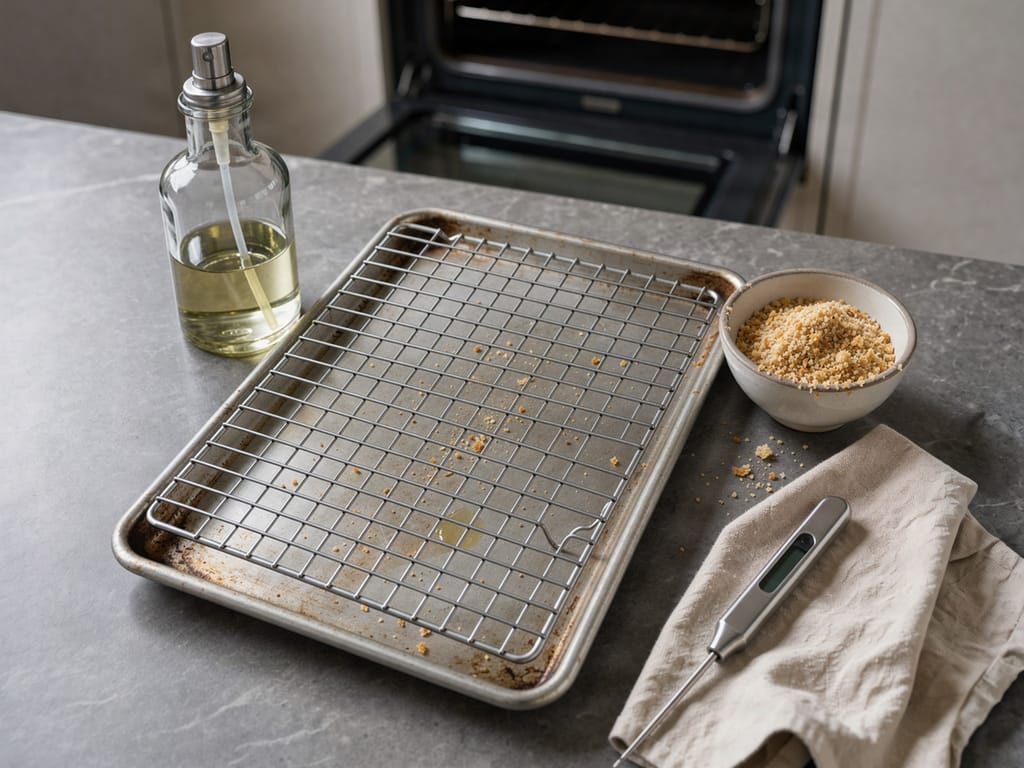
Preheat the oven to 200°C (400°F) conventional, or 180–190°C (350–375°F) with fan. Heat the baking sheet along with it, or set a rack over a sheet. A schnitzel put into a cold oven first sweats and the coating goes soft.
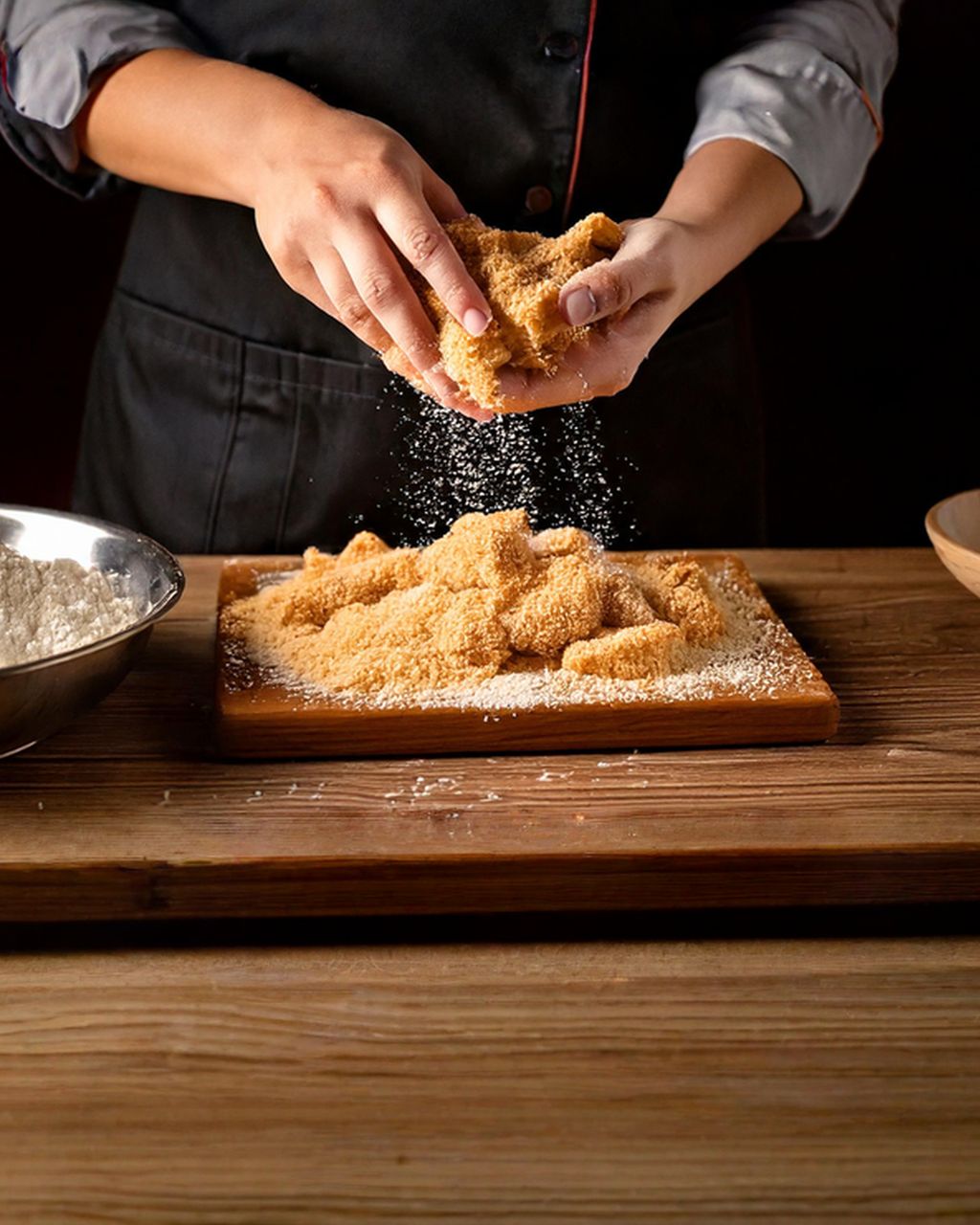
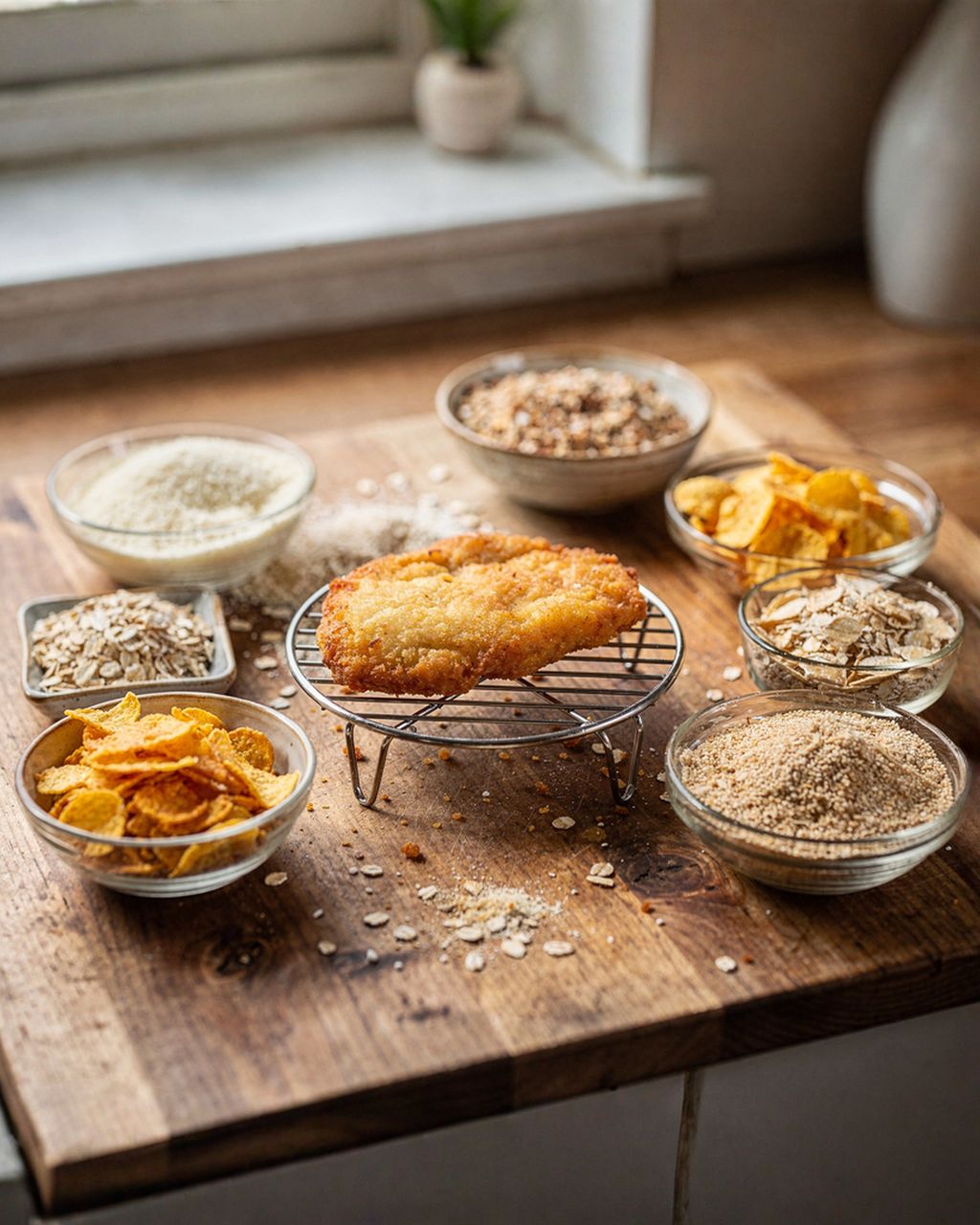
Bread the meat as usual: flour, egg, breadcrumbs. Press the crumbs on with your palm so they stay put. For a coating that won't fall off, see our step-by-step triple breading guide. If you run out of breadcrumbs, see what to use instead of breadcrumbs for coating.
Spritz the coating with oil on both sides, lightly and everywhere, including the edges. Dry spots stay pale and powdery.
Arrange the schnitzel in a single layer with gaps between. If they touch, the steam between them has nowhere to escape and the sides stay soft.
Flip halfway through baking (frozen products' makers say this too) and lightly spritz the second side again.
Check the inside temperature with a thermometer, and only then take them out.
For crispness, oil spray wins. It spreads a thin, even layer of fat over all the breadcrumbs, and that fat is what turns them into a "fried" crust. Plain canola or sunflower oil in a sprayer is enough, which is what our recipe used.
Melted butter smells better, but it contains water and milk proteins. The water dampens the coating, and the milk proteins brown quickly in strong heat, so the schnitzel goes blotchy brown before it's cooked through. Want butter flavor? Use clarified butter (ghee), which contains almost no water or milk proteins, and brush it lightly over the coating.
Don't pour oil onto the baking sheet. The schnitzel would bathe in it from underneath and stay greasy, while the top would be dry.
The crispiest schnitzel is the one baked on a rack over a baking sheet. Hot air flows around it from all sides, the underside doesn't steam in its own moisture, and you hardly need to flip it.
A baking sheet lined with parchment paper works too. Just heat it along with the oven and lightly brush the paper with oil, as our recipe does. On a cold sheet the underside stays pale and damp, so here you really do have to flip it halfway to catch it up.
Flip it once, roughly halfway through the time. That's also what the maker of frozen breaded schnitzel says (200°C / 400°F, 16 minutes total, flip halfway). Flipping more often just lets heat out of the oven, and the coating gets scuffed a little each time you reach in with tongs. On a rack, flip for color; on a baking sheet, for the underside, which would otherwise stay soft.
Chicken schnitzel is done at 74°C (165°F) inside, pork from whole-muscle meat at 63°C (145°F) plus a 3-minute rest, and holandský řízek from ground meat at 71°C (160°F) (FSIS). The oven temperature stays the same; the only difference is when you take the schnitzel out.
Chicken schnitzel is done at 74°C (165°F) in the thickest part (FSIS). The UK Food Standards Agency (FSA) works differently, with a holding time: it recommends 70°C (158°F) for 2 minutes, or 75°C (167°F) for 30 seconds. Chicken breast is lean and dries out quickly past this point, so cut or pound it to an even thickness. Then it all cooks through at the same time.
Pork schnitzel from whole-muscle meat (chop, leg) needs only 63°C (145°F) and then a 3-minute rest out of the oven (FSIS). It may stay slightly pink in the middle. For pork roasts and larger cuts, we have a separate article on pork in the oven.
Holandský řízek is made from ground meat and cheese, so the ground meat limit applies: 71°C (160°F) inside (FSIS). If your holandský řízek is made with ground chicken or turkey, bake it to 74°C (165°F). Grinding moves bacteria from the surface to the inside, which is why ground meat is never left pink. The cheese inside melts, and a holandský řízek can easily burst and leak in the oven. A properly sealed coating and baking on parchment paper, not on a rack, help.
Bake breaded cauliflower the same way as schnitzel: at 200°C (400°F) (fan 180–190°C / 350–375°F), spritzed with oil, in a single layer and flipped halfway. Unlike with meat, you're not watching for a safe temperature but for tenderness. It's done when a knife slides through a floret without resistance and the coating is golden.
Raw florets often don't have time to soften in the oven before the coating darkens. So briefly parboil or steam them first, dry them well and only then bread them. Wet cauliflower would repel the coating. For how long to cook cauliflower, see how long to cook cauliflower and broccoli. It also helps to slice it into slabs about as thick as a finger instead of whole florets: they have more surface for the coating and cook evenly.
Put frozen breaded schnitzel into the oven straight from the freezer and follow the package instructions. Manufacturers expressly say not to thaw them. For example, for its breaded chicken schnitzel Nowaco says: bake at 200°C (400°F) for 16 minutes, flip halfway, do not thaw before cooking. Do not refreeze after thawing (manufacturer).
Why stick to the instructions to the letter: the UK FSA warns that frozen breaded chicken products often look precooked but are raw inside. The coating has only been set by brief pre-frying. The FSA therefore recommends always following the instructions on the specific product's package. So here too, the chicken inside must reach 74°C (165°F) (FSIS).
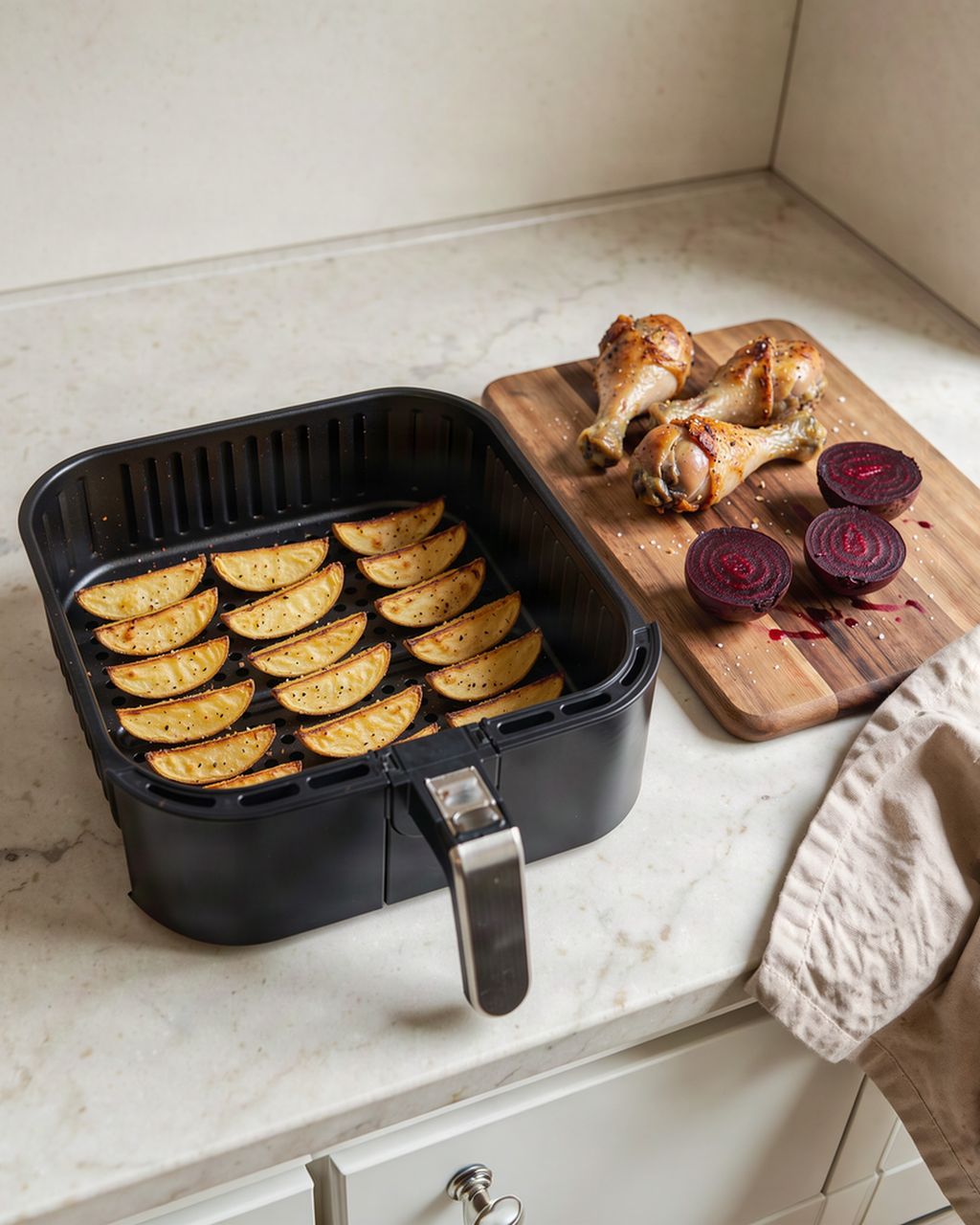
Homemade schnitzel that you bread and freeze yourself should also be baked without thawing. Expect them to take longer than fresh ones, and check doneness with a thermometer. Frozen schnitzel can also be cooked in an air fryer, and homemade oven fries are a natural side for oven schnitzel.
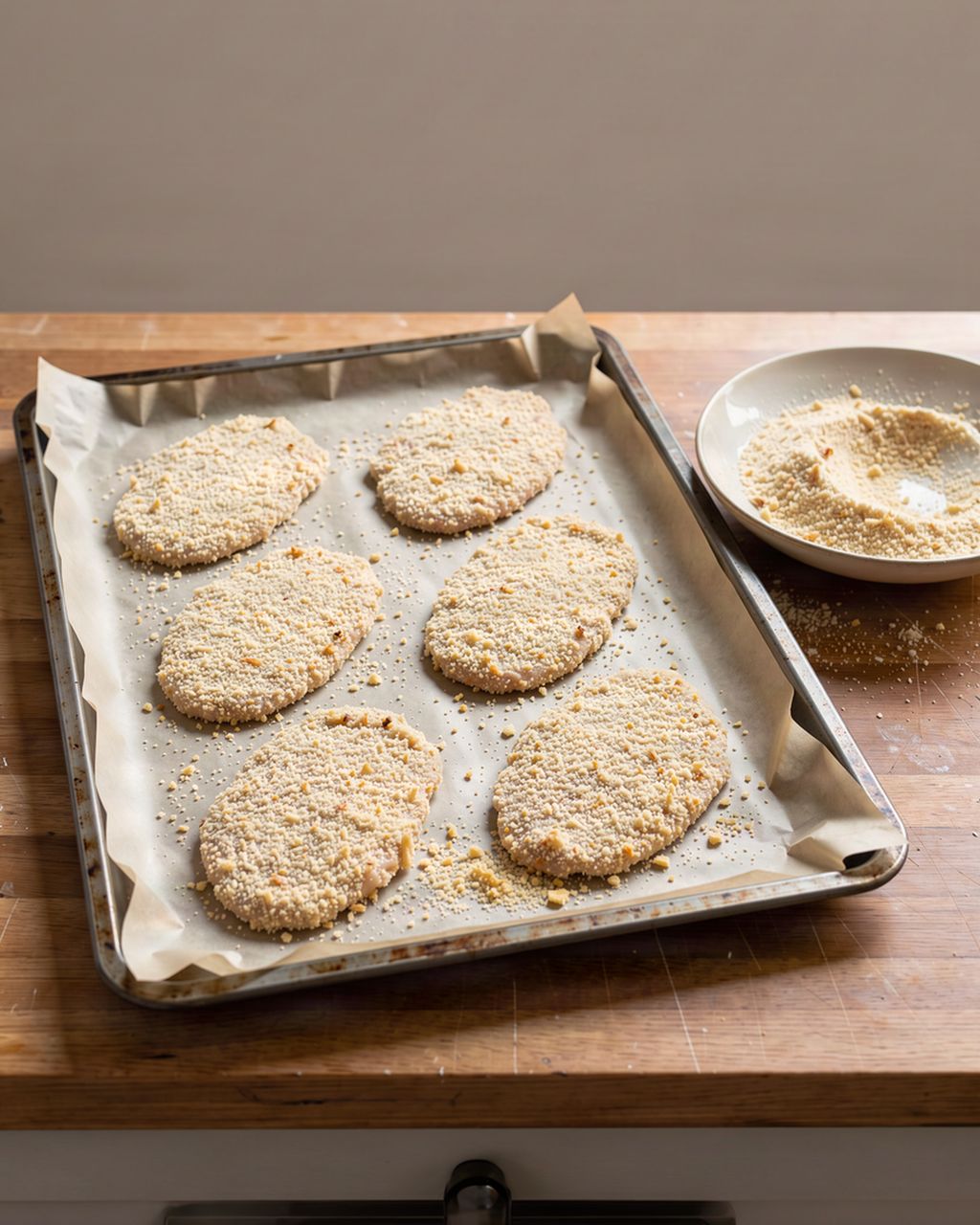
Baked crispy cutlets in cornmeal breading
Crispy baked schnitzel in cornflake crumbs
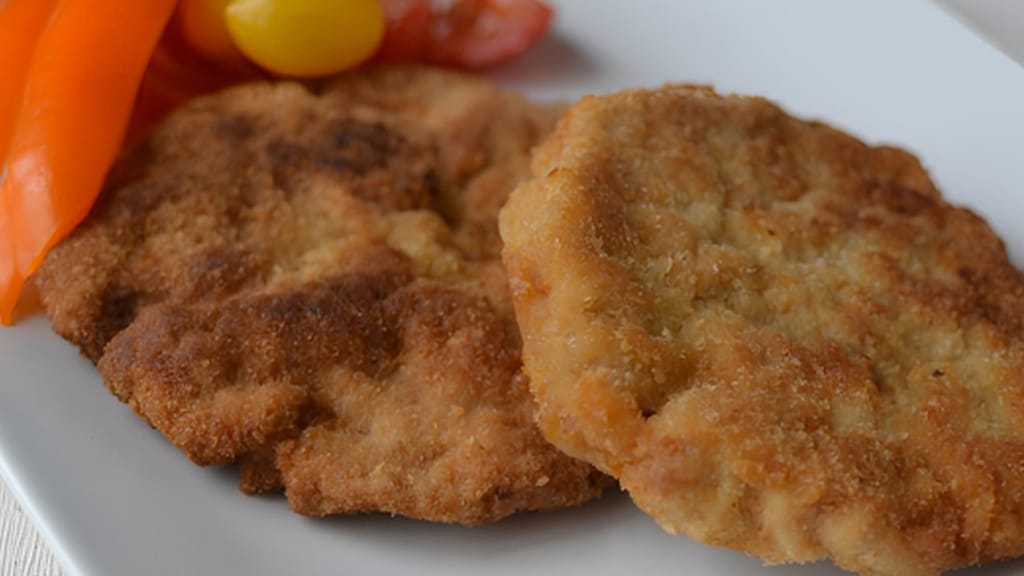
Dutch-style pork schnitzel
Holandský řízek with Gouda cheese
A holandský řízek (a ground-meat and cheese schnitzel) bursts in the oven when the cheese inside melts and the coating around it isn't properly sealed. Press the breadcrumbs firmly all over the surface and along the edges with your palm, and bake the schnitzel on parchment paper, not on a rack, so any cheese that escapes doesn't drip into the oven. It's done at 71°C (160°F) inside (FSIS, ground meat). If your holandský řízek is made with ground chicken or turkey, bake it to 74°C (165°F).
You can bake schnitzel without oil, but the coating won't be crispy like fried. Without fat, the breadcrumbs just dry out in the oven, stay pale and powdery, and tend to turn hard. A thin layer of oil spray on both sides is all it takes, not the quantities you'd use in a frying pan.
For oven schnitzel, cut or pound the meat into slices about 0.5–1 cm (¼–½ inch) thick, all the same. A slice that's too thin cooks through and dries out before the coating has time to turn golden, and one that's too thick stays undercooked inside while the coating is already darkening. Pound it through plastic wrap from the center outward so the meat doesn't tear.
Oven-baked chicken schnitzels most often dry out because they bake too long or vary in thickness. Chicken breast is lean, and once it goes past the safe 74°C (165°F) inside (the FSIS minimum), it quickly loses its juices. Pound them to an even thickness, bake in a preheated oven and take them out as soon as the thermometer reads 74°C (165°F).
Reheat cold schnitzel on a rack in an oven preheated to 180°C (350°F) for about 8–10 minutes, until the center reaches 74°C (165°F) (FSIS). A microwave makes the coating soggy because it heats the water in the meat and the steam softens the breadcrumbs. On a rack the steam escapes and the coating dries out crisp again. Reheat only once, and store leftovers in the fridge beforehand, not on the counter.
One recipe worth heating the oven for, one tip, and one deal from the shop. Nothing else.