New Year's Lentils: Why We Eat Them and How to Cook Them So They Don't Turn to Mush
New Year's Day Lunch: What Tradition Says to Eat and What to Avoid
Updated Nov 16, 2026
According to folk tradition, a New Year's lunch means lentils so that money sticks around, and pork because a pig roots forward. Poultry is left off the table so luck doesn't fly away, and so is fish so luck doesn't swim off. It's a custom, not a rule, but it's practical too: both dishes can be cooked on December 31 and simply reheated on January 1 after a long night. Below you'll find what tradition puts on the table and what it leaves off, a menu you can make a day ahead, and how to handle New Year's Eve leftovers so your New Year's lunch doesn't turn risky.
According to folk tradition, the New Year's table is all about lentils and pork, along with bread and, in some regions, garlic. Each one has its own meaning:
Lentils – the small round lentils look like coins, so whoever eats them will have money stick around all year.
Pork – a pig roots forward with its snout, so it's meant to push you forward too. Smoked, roasted or braised are all fine.
Bread – a symbol of plenty; a full table on New Year's Day is supposed to make sure you never run out of food all year.
Garlic – in some regions it was added for luck and protection against evil.
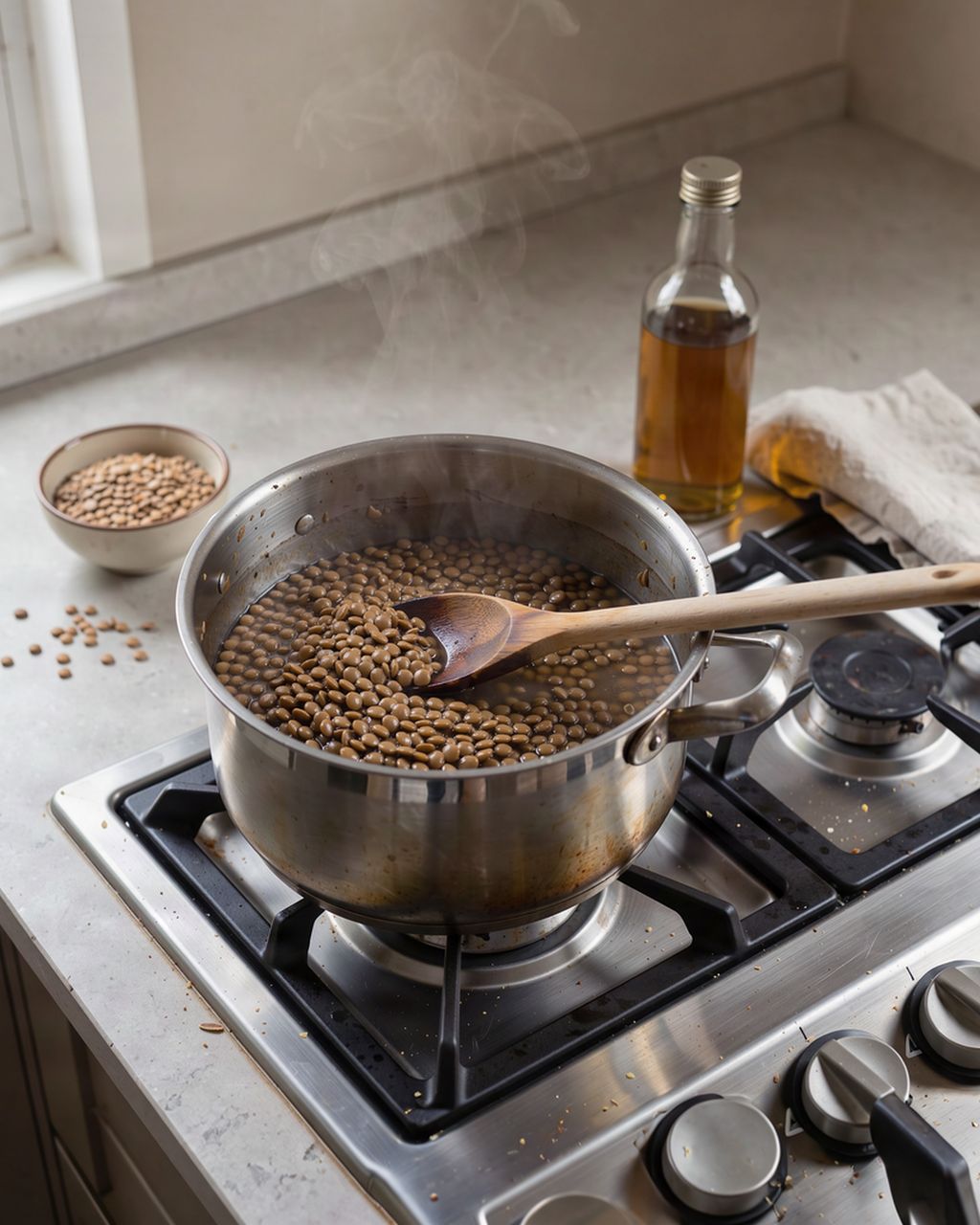
Why lentils in particular, and how to cook them so they stay whole instead of turning to mush, is covered separately in our article New Year's lentils: why we eat them and how to cook them. Here we focus on how to build a whole lunch around lentils and pork.
Seasonal baking plans, tested recipes and kitchen tricks that save you time. Unsubscribe in one click.
According to superstition, you don't eat poultry, fish or game that runs away on New Year's Day, which means anything that might carry luck off:
Poultry (chicken, duck, goose, turkey) – luck would fly away. Another explanation is that a hen scratches backward, the exact opposite of a pig.
Fish – luck would swim away. Carp belongs to Christmas Eve, not to January 1.
Hare and rabbit – luck would run away.
Whether you care is up to you. Most people stick to it "just in case," and since pork and lentils can be cooked the day before and just reheated on January 1, you lose nothing.
The best-known New Year's superstition is "as on New Year's Day, so all year long": whatever you do that day is what awaits you all year. Most of the customs come from it:
A full table, and not finishing every last bite – so there's always something to take all year.
Not lending money or paying off debts – otherwise money will keep leaving.
No laundry and no big cleaning – the holiday is meant to be spent in peace, not at work.
Keeping a scale from the Christmas carp in your wallet – a custom carried over from Christmas Eve that lasts through New Year's Day.
You'll find more ideas for the holiday in our collection of New Year's recipes.
The best New Year's lunch after a long night is one you cook on the morning of December 31 and simply reheat on January 1: lentils and braised or slow-roasted pork. Neither loses anything when reheated, and braised meat actually improves overnight, as the sauce thickens and the flavors come together.
Avoid dishes that have to be made at the last minute: schnitzels, fried food, or freshly roasted meat cooked to pink. Reheated, they turn dry or rubbery, and on January 1 at noon you won't feel like standing at the stove anyway.
Lentils are ideal for making ahead. Just expect them to thicken in the fridge: when reheating, add a few spoonfuls of water or broth and stir so they don't stick.
Tangy lentils with a fried egg – a classic; cook the lentils the day before and just fry fresh eggs on January 1.
Perfect handful-of-lentils soup – the whole pot can be reheated at once and is ready in a few minutes.
Lentil salad – no reheating at all; just take it out of the fridge half an hour ahead.
The simplest way to combine pork and lentils: slice smoked pork or sausage and fry it to serve alongside tangy lentils.
For reheating, choose cuts with connective tissue, such as cheeks, shoulder or pork belly. They're braised or roasted long and slow and stay juicy in the sauce even after reheating; leaner pork leg stays tender only when it's braised in a sauce.
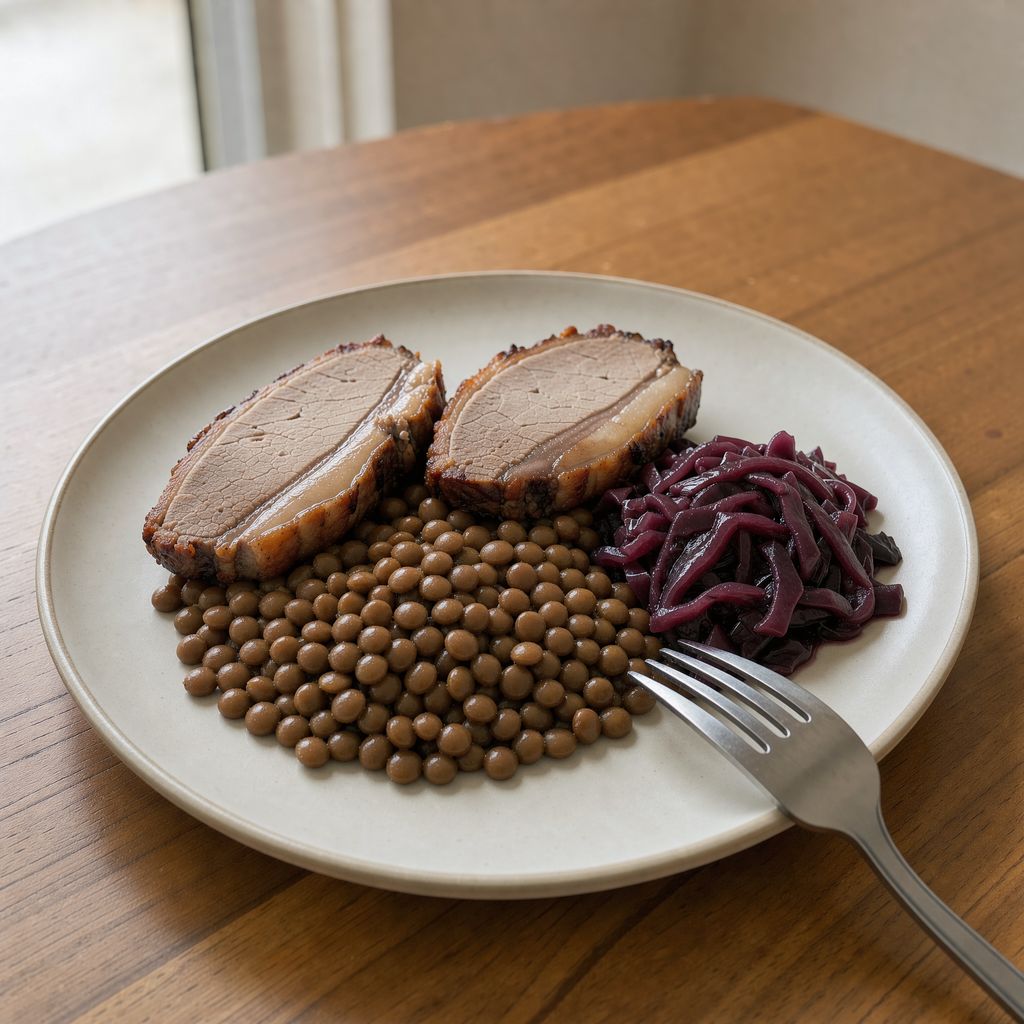
Slow-roasted pork with red cabbage – roast it on December 31, halve it or cut it into larger pieces so it cools quickly, and slice it only once it's cold; then reheat the slices in the pan juices under a lid.
Pork cheeks with olives and tomatoes in red wine – a braised dish that's best the next day.
Pork leg with mushrooms – the sauce keeps the meat tender even after reheating.
Šunkofleky with cabbage – pasta squares with smoked meat, baked in a single dish; in the morning you just put it in the oven.
For a side that works well made a day ahead, try sweet-and-sour braised red cabbage. After a night in the fridge its flavor is more balanced than when freshly made.
You can have New Year's lunch on the table with an hour of work on January 1 if you plan it like this:
Dec 31, morning – start the pork braising or roasting and cook the red cabbage.
Dec 31, afternoon – cook the lentils or lentil soup. Cool everything and refrigerate it within two hours of cooking (see below).
Jan 1, an hour before lunch – reheat the meat under a lid in the oven or over low heat, and the lentils on the stovetop with a little water.
Right before serving – fry the eggs, slice the bread and garnish the lentils with onion or a pickle.
If you're still planning the evening itself, our make-ahead New Year's Eve canapés show what you can prepare as early as the afternoon.
Put cooked food in the fridge within 2 hours at the most of cooking it or setting it out on the table, use it up within 3–4 days, and reheat it to 74°C (165°F) at the thickest point. That is the advice of the USDA's Food Safety and Inspection Service (FSIS). Bacteria multiply fastest between roughly 4 and 60°C (40–140°F), so food shouldn't spend long in that range.
Cool in shallow containers. A big pot of lentils or goulash takes hours to chill in the fridge; divide it among several flat containers so it cools quickly and evenly.
Cut large pieces of meat. A roast cools faster as slices or halves.
Bring soups and sauces to a boil. For thick dishes like lentils or braised meat, stir so they heat all the way through, not just at the sides of the pot.
Reheat only the portion you'll eat. Repeatedly reheating and cooling the same pot needlessly prolongs the time in the danger zone.
An instant-read thermometer is the best way to check the temperature; without one, make sure the sauce is bubbling and the meat is piping hot in the center.
Yes, you can keep the tradition without meat. Lentils are all you need, for example tangy lentils (čočka nakyselo) with a fried egg and bread. Pork with lentils is the custom, not a requirement, and a vegetarian lentil soup or lentil salad carries the same meaning: bringing money.
Traditionally, lentils are eaten at lunch on New Year's Day, January 1. Many families, though, serve them as lentil soup at midnight on New Year's Eve. Both are fine, and neither is "wrong."
You don't need to bake anything new. Use up a vánočka (Czech braided Christmas bread) that has gone stale after the holidays: in a quarter of an hour you can fry it into chudí rytíři (Czech fried bread slices, similar to French toast) or turn it into žemlovka (a Czech baked bread pudding). You use up leftovers and get dessert with no extra work.
Yes, you can cook New Year's lentils even weeks ahead and freeze them. Cool them, divide them into containers, and they keep their best quality for about 2–3 months. Thaw them in the fridge and add a little water when reheating, because they thicken after thawing.
One recipe worth heating the oven for, one tip, and one deal from the shop. Nothing else.