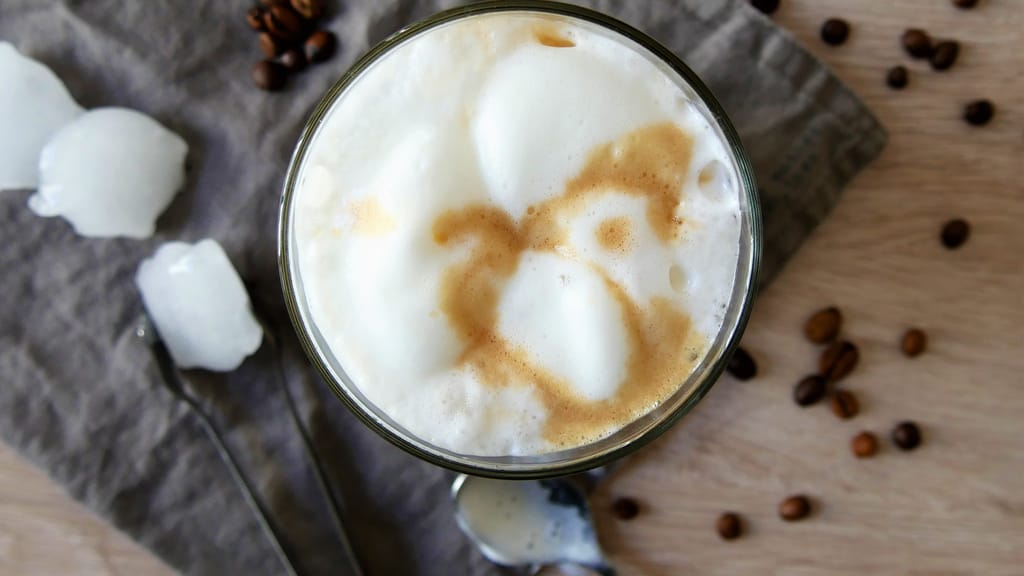
Iced frothy caffè latte
Updated Jul 19, 2026
Iced coffee is chilled coffee served over ice — and you can make it at home in five minutes, once you know how to stop it turning watery. In this article you'll find the basic recipe plus tried-and-tested variations: Greek frappé, cold brew, espresso over ice, affogato with ice cream, coffee smoothie, and even a whiskey-spiked version. For each one, we'll cover not just the method but why it works and what to avoid. The key to the best iced coffee is always the same: strong coffee and as little melted ice as possible.
The best iced coffee comes from brewing noticeably stronger coffee than usual, cooling it quickly, and pouring it over a glass packed with ice. It needs to be stronger because the melting ice will dilute it — brew it at normal strength and you'll end up with a watery, flavourless drink.
Here's the method:
Brew a double batch of coffee (a moka pot, French press, or drip machine all work). Aim for roughly 200 ml per serving.
Let it cool, ideally in the fridge. Don't pour hot coffee straight over ice unless you want to melt that ice into water instantly.
Fill a glass to the brim with ice and pour the coffee over it.
Top up with milk or a plant-based alternative to taste, and sweeten with syrup rather than granulated sugar, which won't dissolve properly in a cold drink.
If you want a clean, bright flavour, try the Japanese method (flash brew): brew a more concentrated coffee directly over ice. The rapid chilling locks in aromas that would otherwise escape, giving the coffee a fresher, fruitier taste than classic cold brew.
Iced frothy caffè latte
Iced frothed caffè latte — a creamy base for homemade iced coffee
The difference comes down to temperature and time: iced coffee is hot-brewed coffee chilled over ice, while cold brew steeps in cold water for 12–24 hours. It's not just about serving temperature — the different methods produce genuinely different flavours.
Cold brew is, according to producers and taste tests, around 60% less acidic than hot-brewed coffee. It tastes smooth, rounded, and chocolatey, with no bitter edge. It's typically steeped at a ratio of about 1:8 (or 1:4 for a thicker concentrate) overnight, then strained through a filter.
Iced (flash) coffee keeps the bright, aromatic, slightly more acidic notes of hot extraction — and it's ready in a matter of minutes.
You can make cold brew concentrate ahead of time and dilute it all week long. It's not "better" than iced coffee — it's simply a different flavour profile for a different mood.

Jasmine cold brew with pear and thyme
Jasmine cold brew with pear and thyme — a mellow, low-bitterness cold brew
Greek frappé is whipped instant coffee with water, ice, and milk, known for its thick, stable foam. According to a popular story, it was invented by accident in Thessaloniki in 1957 by Nescafé representative Dimitris Vakondios, who had no way to make his instant coffee with hot water — so he whisked it up with cold water instead.
The whole trick lies in the ratio and the whisking:
Put 2 teaspoons of instant coffee, 1–2 teaspoons of sugar, and just a little cold water (about 50 ml) into a glass — using very little water is the key to a thick foam.
Whisk with a handheld mini mixer (or shake it in a shaker) for 20–30 seconds, until a pale, creamy foam forms.
Pour over a glass of ice, top up with water or milk, and stir.
Frappé is made exclusively with instant coffee — ground coffee won't whip up properly. This is the one case where instant coffee is unquestionably the right choice for iced coffee.
Espresso-based iced coffee has the boldest flavour of all the variations, thanks to its concentrated extraction. Brew a double espresso and pour it straight over ice — the instant chilling stops further bitterness from developing and locks in the aroma.
From here you have two options: top up with cold water for a clean, bold cup (an espresso tonic does the same thing with tonic water), or add milk for a creamy iced latte. If you want it sweet, reach for syrup rather than sugar. A pinch of cinnamon or a few drops of vanilla can round out the flavour nicely — without overpowering it.
Affogato is both an Italian dessert and a coffee drink: a scoop of vanilla ice cream drowned in hot espresso. The hot coffee bites into the cold ice cream, which melts into a silky cream — that contrast of hot and icy is the whole point.
Put 1–2 scoops of good-quality vanilla (or chocolate) ice cream into a glass and pour freshly brewed espresso over it right before serving, so the ice cream doesn't melt too early. You'll want a dense, cream-based ice cream rather than a milk-based one — otherwise it'll all melt into a milky puddle. Grated chocolate or a few toasted hazelnuts make a great topping.
A coffee smoothie combines your morning coffee with breakfast: just blend cooled espresso, a ripe banana, and plant-based milk until smooth. The banana gives it natural sweetness and creaminess, so you usually won't need any added sugar.
A spoonful of oats or peanut butter turns it into a filling breakfast. According to nutrition guidelines, a combination of protein and fibre provides steadier energy than coffee with sugar alone. For an extra-smooth texture, add a chunk of avocado — you won't taste it, just feel the creaminess.
Irish iced coffee is a variation for adults: chilled espresso over ice, 30 ml of Irish whiskey, and a spoonful of sweetened cream or whipped cream on top. The cream softens the whiskey and creates a striking pale layer over the dark coffee.
Serve it in a tall glass and add the whiskey carefully — it should complement the coffee, not overpower it. This drink contains alcohol, so it's for adults only, enjoyed in moderation.
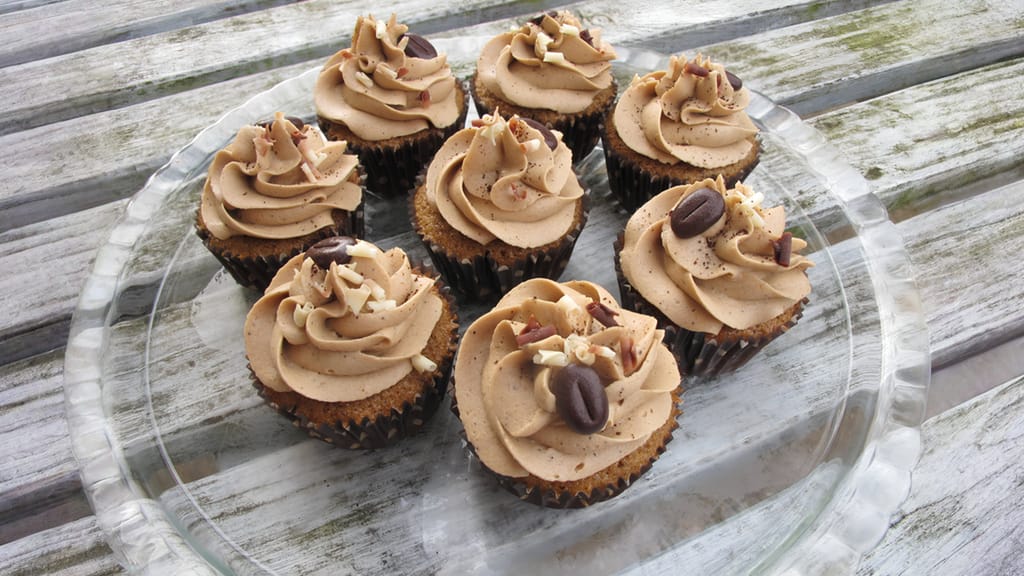
Coffee cupcakes with smooth cream frosting
Coffee cupcakes with a delicate frosting — a sweet finish to go with your iced coffee
Cold brew concentrate keeps in a sealed container in the fridge for about a week to ten days. Classic iced coffee tastes best fresh — drink the finished drink (with milk and ice) the same day, and store the chilled coffee on its own for a maximum of 2–3 days.
Yes — and for Greek frappé, instant coffee is actually essential, since it's the only kind that whips up into a thick foam. For the other variations, feel free to use instant if you don't have espresso on hand, though freshly brewed coffee gives a bolder, less "flat" flavour.
Watery-tasting iced coffee is almost always down to melted ice. Brew your coffee noticeably stronger than you would for a hot cup, and make sure to chill it before pouring it over ice. The most reliable trick is to freeze coffee into ice cubes, so any dilution comes from more coffee, not water.
Cold brew tends to be stronger — typically around 150–250 mg of caffeine per 350ml serving, compared to roughly 120–180 mg for classic iced coffee. Once diluted with water or milk, though, the difference evens out. The exact amount always depends on the beans, the ratio, and the steeping time.
For a sweeter, chocolatey cold brew, go for a darker roast; for a bright, fruity iced or flash coffee, choose a lighter roast of good-quality arabica. Either way, grind coarsely for cold brew and finely for espresso — the grind size affects the flavour more than the bean's origin does.