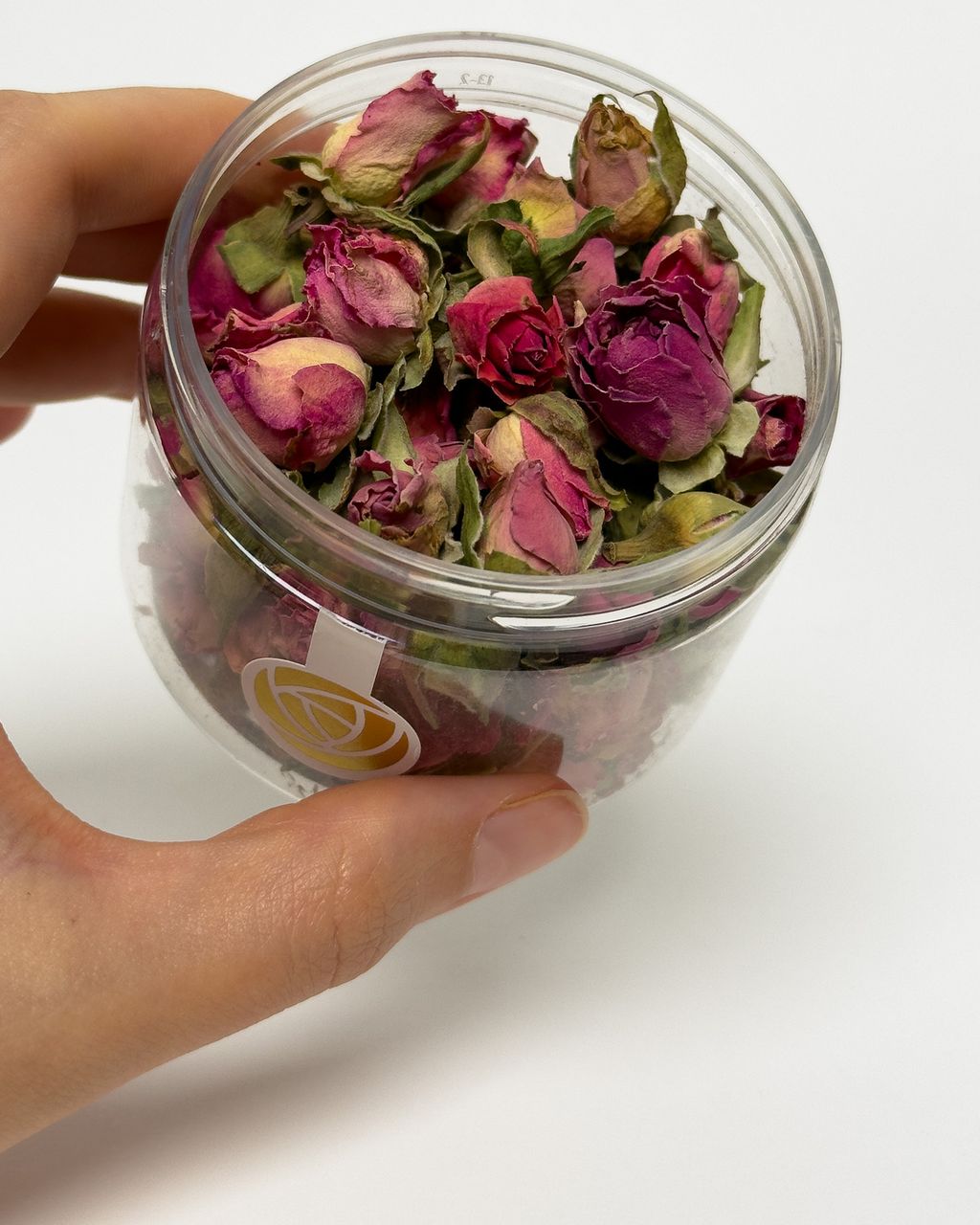
Rosebuds – Dusty Rose
How to Store Edible Flowers So They Keep Their Color: Light, Moisture, and When to Put Them on a Cake
Updated Oct 17, 2026
How do you store edible flowers so they don't lose their color? Keep dried flowers and rosebuds **dry, dark, and in a tightly closed container at room temperature**. Don't put them in the fridge or on a sunny windowsill. Two things strip their color: light and moisture. Keep them away from both and, according to the manufacturer Rosie Rose, they'll last up to 3 years. When it comes to cakes, time it by how wet the surface is: on a dry glaze you can add them a day ahead, but on whipped cream wait until just before serving.
Dried edible flowers last longest when you follow these five rules:
Darkness. Use an opaque jar or a closed cupboard, never an open shelf by the window.
Dryness. Keep them well away from the stove, dishwasher, sink, and kettle.
A tightly closed container. After every use, zip the bag shut again or screw the lid back on the jar.
Room temperature. A pantry or kitchen cupboard, not the fridge.
Dry hands and a dry spoon. One wet spoon does more harm than a month on the shelf.
The same goes for rosebuds, cornflower, and pansies. They differ only in how fragile they are (more on that below).
Dried edible flowers fade because of light and soften because of moisture. The pink, red, purple, and blue of most flowers come from anthocyanins, natural pigments that break down in light, heat, and humidity. In direct sun, buds fade much faster than they do in the dark.
A dried flower also soaks up moisture from the air like a sponge. The more water it absorbs, the softer and darker it gets, and the more easily its color bleeds into cream. That's why darkness alone isn't enough. The flowers also need a sealed container that keeps out steam from cooking.
The best option is an opaque container with a tight lid, kept in a cupboard. The original packaging is fine as long as it reseals well. Your options:
The original zip bag or the manufacturer's jar. This is plenty for everyday use. Press the air out and store it in a cupboard.
A tin or dark glass jar with a screw lid. This blocks light and moisture most reliably. It's handy when you have several kinds open at once.
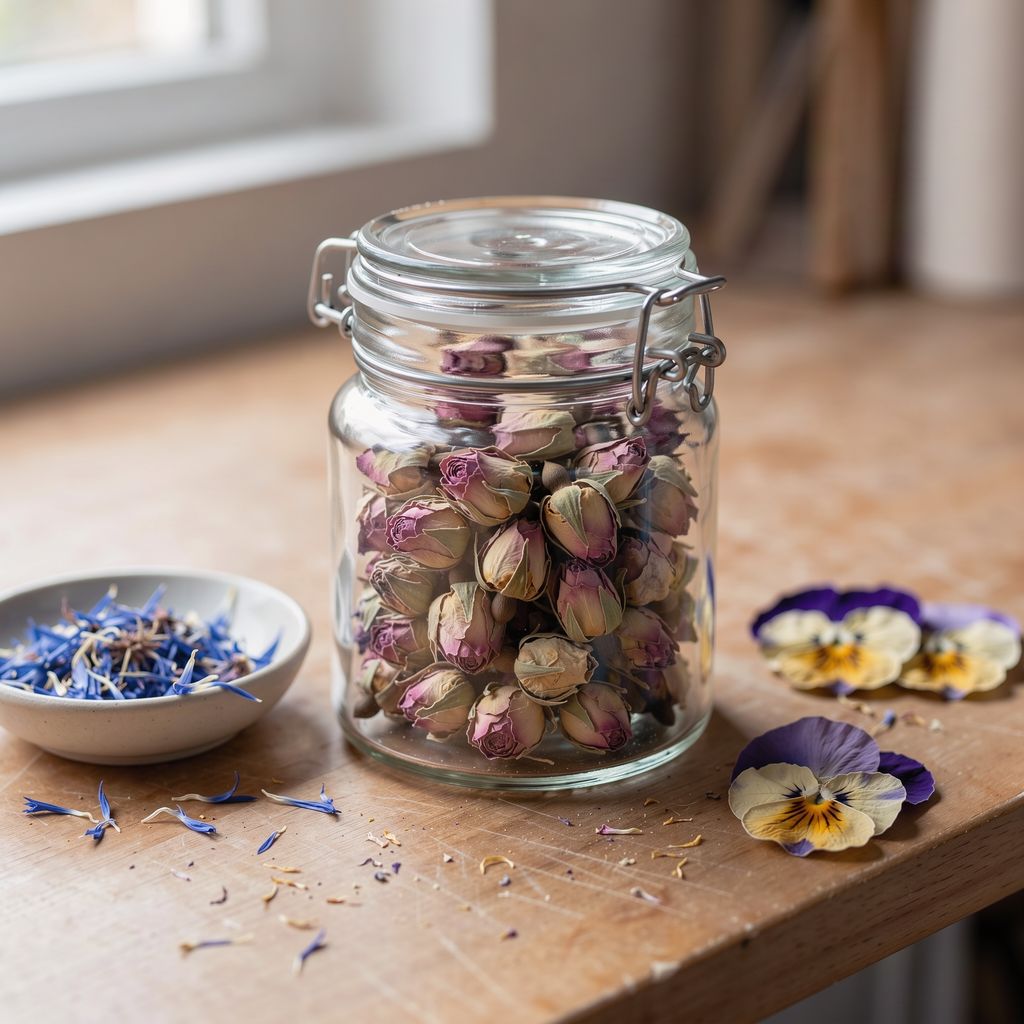
A clear glass jar. It looks pretty, but only use it inside a closed cupboard. On an open shelf, the flowers will gradually fade.
A silica gel packet. This is worth it mainly in a humid kitchen. Use only one that's made for contact with food. The one from a shoebox doesn't belong in the jar. We don't sell silica gel, so look for it at a drugstore or a packaging supplier.
What about the fridge? Dried flowers don't belong in the fridge. The American FoodKeeper (opens in a new tab) guide (USDA, Cornell University, and FMI) advises keeping dried herbs and spices in a tightly closed container away from heat, moisture, and direct sun, which means in the pantry. A fridge wouldn't help them, and could even hurt. Whenever you open a cold jar in a warm kitchen, moisture condenses inside it and the flowers soak it up.
Stored dry and dark at room temperature, dried edible flowers last for years. You'll always find the exact figure on the packaging, though.
Rosie Rose (rosebuds, cornflower, pansies): the manufacturer says they last up to 3 years, even after opening, when stored dry, dark, and at room temperature, not in the fridge. After opening, close the package carefully again.
For comparison, dried herbs: the FoodKeeper guide (USDA) gives 1–2 years in the pantry, both unopened and opened. Dried flowers aren't listed separately there, and herbs are the closest category.
Both figures refer to quality, meaning color, shape, and aroma. A dry, properly stored flower doesn't spoil the way fresh food does. It just fades and turns brittle over time. Moisture is a different story. Once a flower gets damp, the warning below applies.
Put dried edible flowers on a dry glaze (ganache, fondant) up to a day ahead, and on whipped cream or a moist filling only just before serving.
Dry surfaces, where you can add flowers ahead of time:
set ganache, or melted chocolate that has set
fondant and marzipan
buttercream that has dried on the surface (so-called crusting buttercream)
The manufacturer Rosie Rose says its flowers can go on a cake even 48 hours before serving without absorbing moisture. Keep in mind that this applies to a dry surface, not to whipped cream.
Moist surfaces, where flowers go on just before serving:
whipped cream, mascarpone cream, quark cream
fresh fruit, fruit syrup, and jelly
lemon curd and other tart fillings
On a moist cream, the flower soaks up water, goes limp, and the pigment spreads into the cream like watercolor. Acid also changes the color. Cornflower blue comes from an anthocyanin bound in a complex with metals, and in an acidic environment it shifts to purple or even pink. For example, with pistachio cupcakes with lemon curd and mascarpone cream, put the buds or cornflower on the cream at the table, not the evening before. You run into the same problem of bleeding color with colored glazes, and you'll find more about it in the article marbled glaze that doesn't bleed.
Cakes from the fridge: a cream cake has to stay cold. But a cold cake that you bring into a warm room collects condensation. So the routine is: take the cake out, decorate it, and serve. If you have to decorate ahead of time, set the flowers on a dry island, such as a chocolate shard or a dab of set ganache, not directly into the whipped cream.
Of the dried edible flowers, rosebuds are the sturdiest and pansies the most delicate. Cornflower is hardy but quickly gets lost in cream.
Rosebuds, such as Rosebuds – Antique Pink. They are compact and firm, and almost impossible to crush. You can pour them from jar to jar without worry. They keep their shape longest on a cake, and the muted antique pink doesn't stand out much in cream if it releases a little pigment.
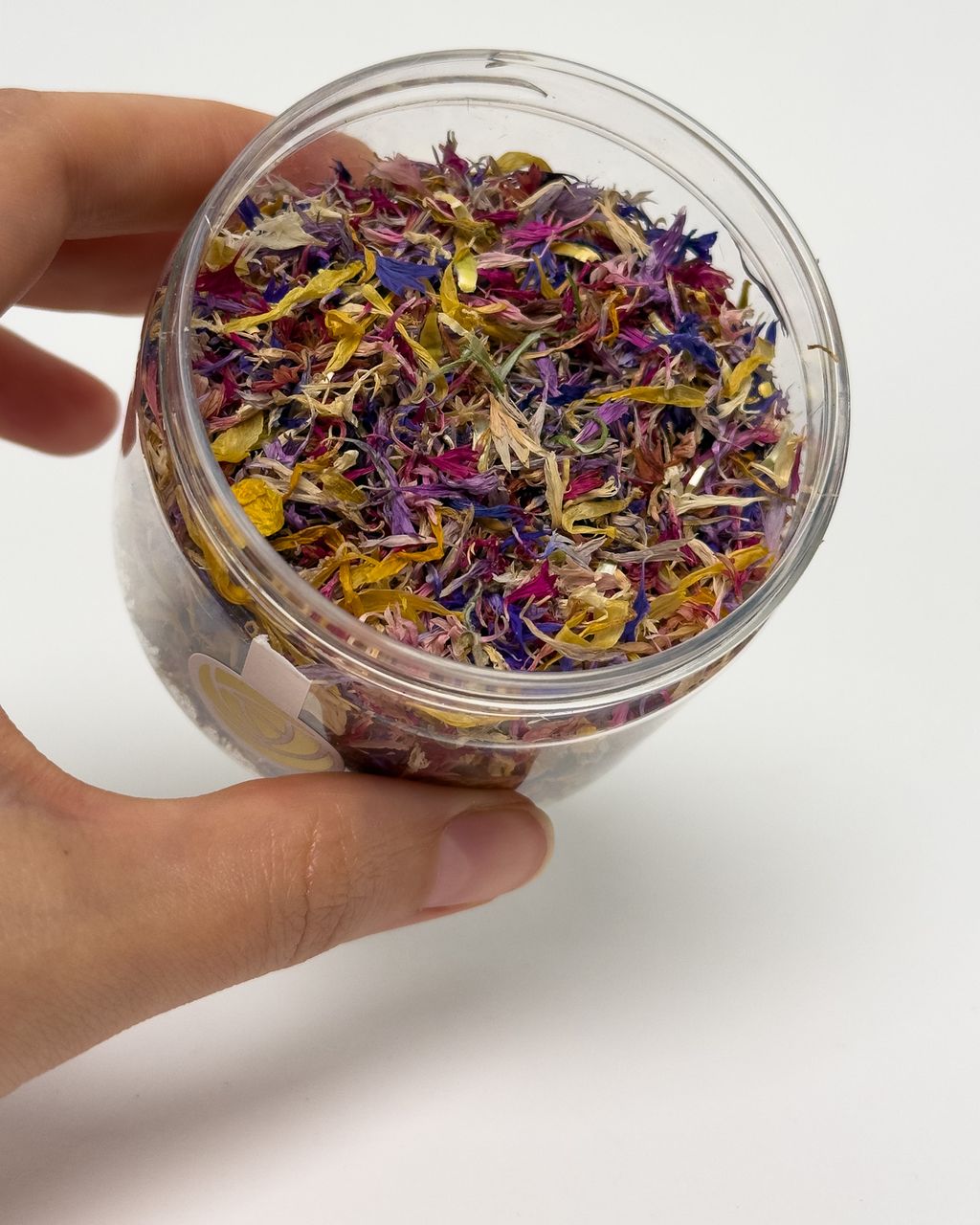
Cornflower, such as Dried Cornflower Petals – Classic Mix. These are small, light petals that blow away easily and disappear first on a moist surface. Open the bag calmly, not over a countertop in a draft. On a moist or tart cream, it's the first to change color.
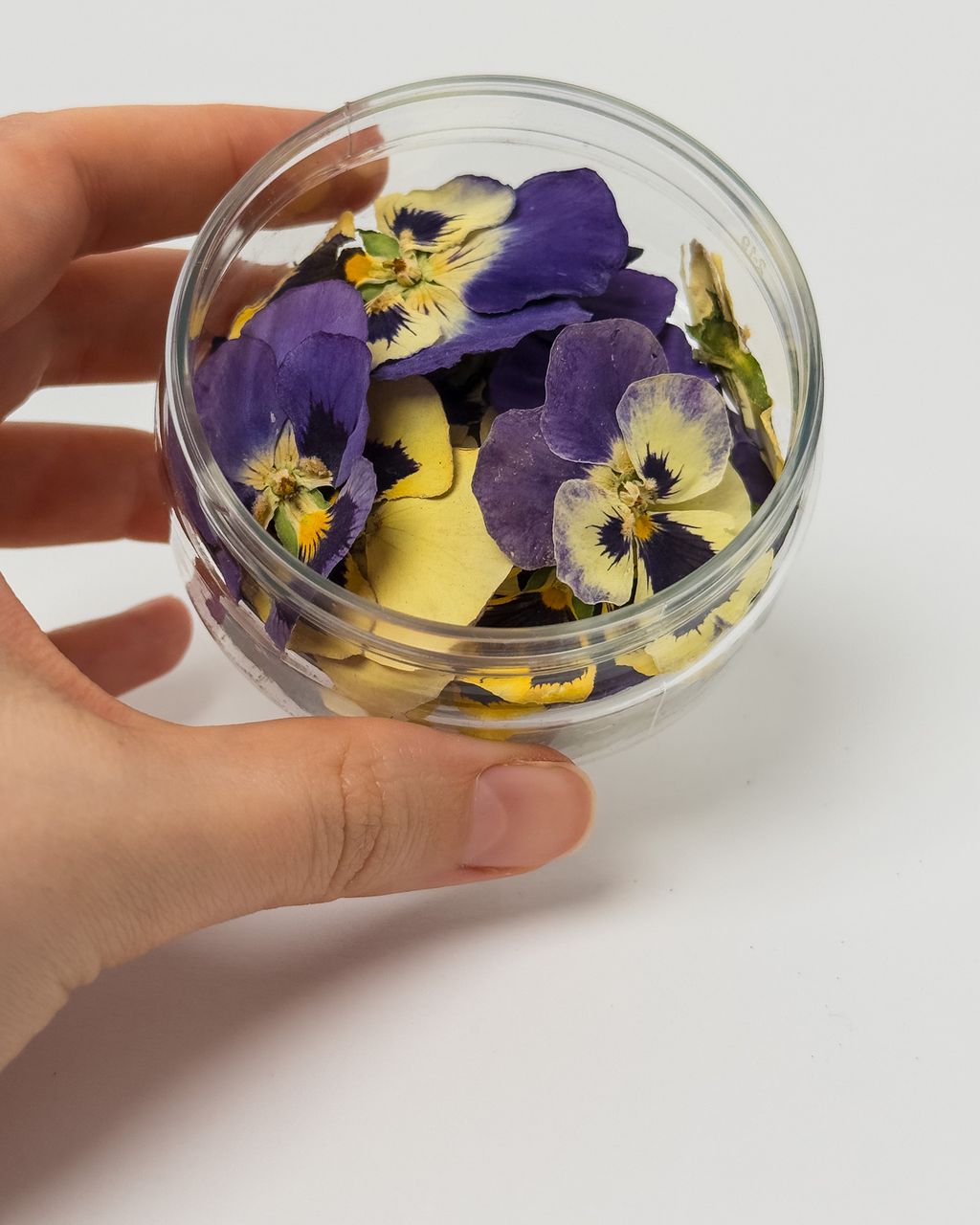
Pansies, such as Dried Flowers – Pansies. These are whole, flat flowers as thin as paper. Store them flat and don't weigh them down, because in a jar among the buds they'll break. Place them on a cake with tweezers and press gently, ideally on a dry glaze.
What we don't carry: fresh edible flowers belong in the fridge and last only days, not years. They look the most alive on a cake, but they're the hardest to plan around. Sugared edible flowers coated in egg white and sugar are a middle step you can make at home. Fondant sugar flowers never lose their color at all, but they don't look like real flowers. You'll find our whole range of dried flowers among the edible flowers for cakes. Where to put them on a cake and how to work with them is covered in the article dried edible flowers and rosebuds.
You don't need to freeze dried edible flowers, and we don't recommend it: every time you take them out of the freezer, moisture settles on them. Stored dry and dark at room temperature, they last up to 3 years according to the manufacturer Rosie Rose, so the freezer adds nothing. And moisture is the biggest enemy of dried flowers.
You can bake edible flowers into batter, but heat and moisture will take most of their color. The anthocyanins that give flowers their color break down when heated. For a visible decoration, add the flowers to a cooled cake, and use them in batter only where small flecks are enough.
Dried cornflower releases a little color into a drink, and in tart lemonade it shifts toward purple. Add it to drinks only at serving time, and expect the petals to go limp after a while.
Only flowers sold as food are edible, or species you know for certain are edible and haven't been sprayed. Florist flowers and flowers from cake decorating sets don't belong on food. For an overview of safe and unsafe species, see the article [Edible Flowers: Which Ones Are Really Edible](/cs/articles/jedle-kvety).
One recipe worth heating the oven for, one tip, and one deal from the shop. Nothing else.