How Many Grams in a Cup of Cocoa Powder? Natural, Dutch-Process, Sifted
How Many Grams in a Cup of Powdered Sugar? Sifted vs Unsifted
Updated Nov 20, 2026
A US cup (236.6 ml) of unsifted powdered sugar weighs about 120 g, and a US cup of sifted powdered sugar about 100 g, according to USDA FoodData Central. A metric cup (250 ml) holds about 127 g unsifted and about 106 g sifted. Powdered sugar, confectioners' sugar and icing sugar are names for the same finely ground sugar, so these figures work for all three.
USDA FoodData Central gives two weights for a US cup of powdered sugar, one unsifted and one sifted. The metric cup (250 ml) figures are scaled from them:
1 US cup (236.6 ml), unsifted: about 120 g
1 US cup, sifted: about 100 g
½ US cup, unsifted: about 60 g (sifted, about 50 g)
¼ US cup, unsifted: about 30 g (sifted, about 25 g)
1 metric cup (250 ml), unsifted: about 127 g
1 metric cup, sifted: about 106 g
1 level tablespoon, unsifted: about 8 g
1 level teaspoon: about 2.5 g
In this article, "unsifted" means sugar spooned straight from the bag into the cup and leveled with a knife, not packed down. Other kitchens measure a little lighter: King Arthur Baking, for example, lists a US cup of unsifted confectioners' sugar at 113 g. So if your cup weighs anywhere between about 113 and 120 g, you are measuring normally.
Powdered sugar is far lighter than granulated sugar by volume. A US cup of granulated sugar weighs about 200 g; the same cup of powdered sugar only about 120 g, because the fine powder traps a lot of air.
Seasonal baking plans, tested recipes and kitchen tricks that save you time. Unsubscribe in one click.
Read the wording closely. American recipes use two phrasings that look alike but give different amounts:
"1 cup sifted powdered sugar" means sift first, then spoon the sifted sugar into the cup. That is about 100 g.
"1 cup powdered sugar, sifted" means measure first, then sift. That is about 120 g, sifted afterwards to remove lumps.
The gap of about 20 g per US cup matters most in frostings and glazes, where powdered sugar is the main ingredient and decides how thick the result is. If a buttercream or glaze comes out too runny or too stiff, the cup is the first thing to suspect.
When a recipe just says "1 cup powdered sugar" with no mention of sifting, assume unsifted, spooned in and leveled: about 120 g.
These are regional names for the same thing, granulated sugar ground to a fine powder:
Powdered sugar and confectioners' sugar are the US names. You may also see "10X" on American packs, a grade name for a very fine grind.
Icing sugar is the UK, Irish, Australian and New Zealand name.
Moučkový cukr or cukr moučka (powdered sugar) is what you will find in Czech shops.
What differs is the anti-caking agent. US powdered sugar usually contains a small amount of cornstarch, often around 3%, to keep it from clumping. Brands elsewhere may use a different starch, a mineral anti-caking agent, or nothing at all. The difference in weight per cup is too small to matter. It can matter for a corn allergy, so read the ingredient list on the package.
For how powdered sugar behaves in dough compared with granulated and caster sugar, see our guide to types of sugar for baking.
Czech recipes give powdered sugar in grams, so you rarely need a cup. If you are cooking from one in a kitchen with metric cups (250 ml), as in Australia, use the same USDA-based figures:
1 metric cup of cukr moučka, unsifted: about 127 g
1 metric cup, sifted: about 106 g
100 g of powdered sugar: about ¾ of a metric cup, or a little over ¾ of a US cup, unsifted
Czech powdered sugar is ground from beet or cane sugar the same way. Some brands add a little starch as an anti-caking agent (one we checked lists up to 3% potato starch), others list sugar only. Either way it measures like American powdered sugar. You will also see cukr pudr in Czech shops, sold for dusting and icing; use the same figures for it.
In Czech Christmas baking, powdered sugar goes into short doughs like linecké (jam-filled shortbread cookies) and onto vanilkové rohlíčky (vanilla crescents) as a thick coating. Our article on powdered sugar in cookies explains why those doughs use it instead of granulated sugar.
By weight, roughly yes; by volume, no. Powdered sugar is plain sugar plus a little anti-caking agent, so 100 g of it sweetens about as much as 100 g of granulated sugar. But a US cup of granulated sugar weighs about 200 g, against about 120 g for powdered sugar, so swapping cup for cup makes a recipe much sweeter.
Texture is the bigger problem. Granulated sugar will not dissolve in a quick glaze or an uncooked frosting, and it makes short cookie doughs spread and turn crisp. If you run out, you can grind granulated sugar in a dry blender or spice grinder until it is a fine powder. Weigh it after grinding, not before, if the recipe gives cups.
Weigh it if you can. Powdered sugar is one of the hardest everyday baking ingredients to measure by cup: it settles in the bag, forms lumps and compresses when you scoop. A cup scooped straight from a settled bag can weigh more than the 120 g USDA lists for a spooned cup.
If you only have cups:
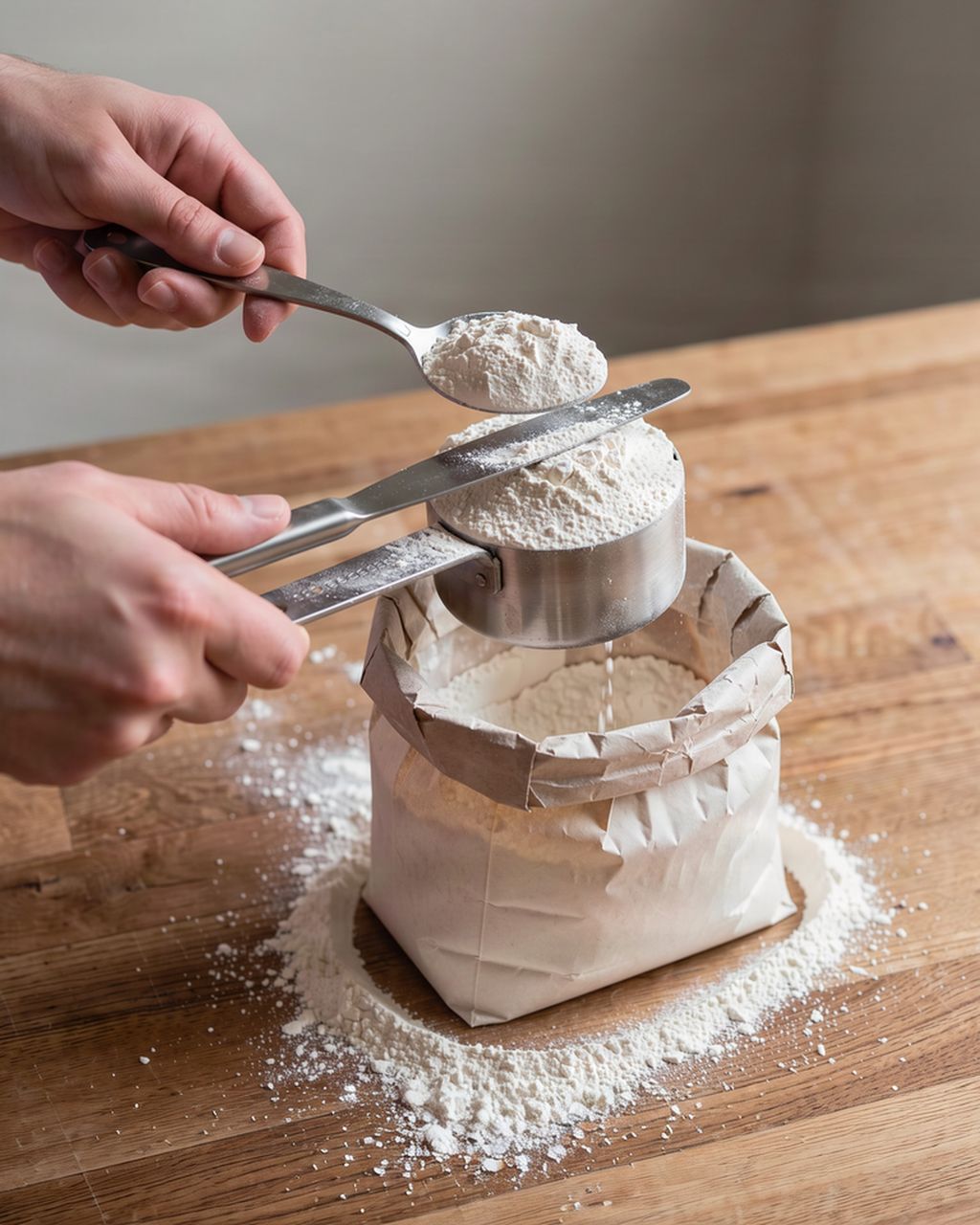
Stir or whisk the sugar in its bag to loosen it.
Spoon it into the cup without pressing or tapping.
Level it with the back of a knife.
Sift afterwards if the recipe asks for it.
Our cups and spoons to grams calculator converts powdered sugar and other baking staples between US cups (236.6 ml), metric cups (250 ml), spoons and grams.
One US cup (236.6 ml) of unsifted powdered sugar is about 120 g, according to USDA FoodData Central. Sifted, the same cup holds about 100 g. A metric cup (250 ml) holds about 127 g unsifted.
Half a US cup of unsifted powdered sugar is about 60 g, and a quarter cup about 30 g. Sifted, half a US cup is about 50 g and a quarter cup about 25 g.
A level tablespoon of unsifted powdered sugar weighs about 8 g, and a teaspoon about 2.5 g, according to USDA FoodData Central. A heaped spoon can weigh noticeably more, so level it off.
Yes, icing sugar (the UK and Australian name) and powdered or confectioners' sugar (the US names) are the same finely ground sugar. The anti-caking agent can differ: US powdered sugar usually contains a little cornstarch, while other countries' brands may use a different starch or none, so check the label.
Sifting breaks up lumps and fills the sugar with air, so less sugar fits in the cup. USDA lists about 100 g for a sifted US cup against about 120 g unsifted, a difference of roughly a sixth.
One recipe worth heating the oven for, one tip, and one deal from the shop. Nothing else.