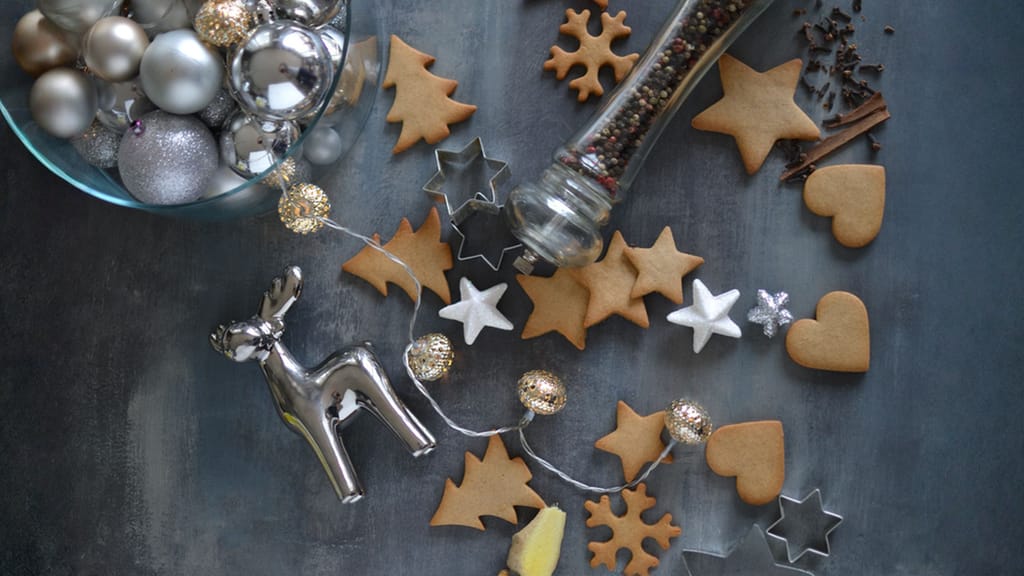
Pepparkakor – swedish gingerbread cookies (not just for christmas)
How to Decorate a Christmas Cake: Stars, Leaves & Edible Gold
Updated Oct 8, 2026
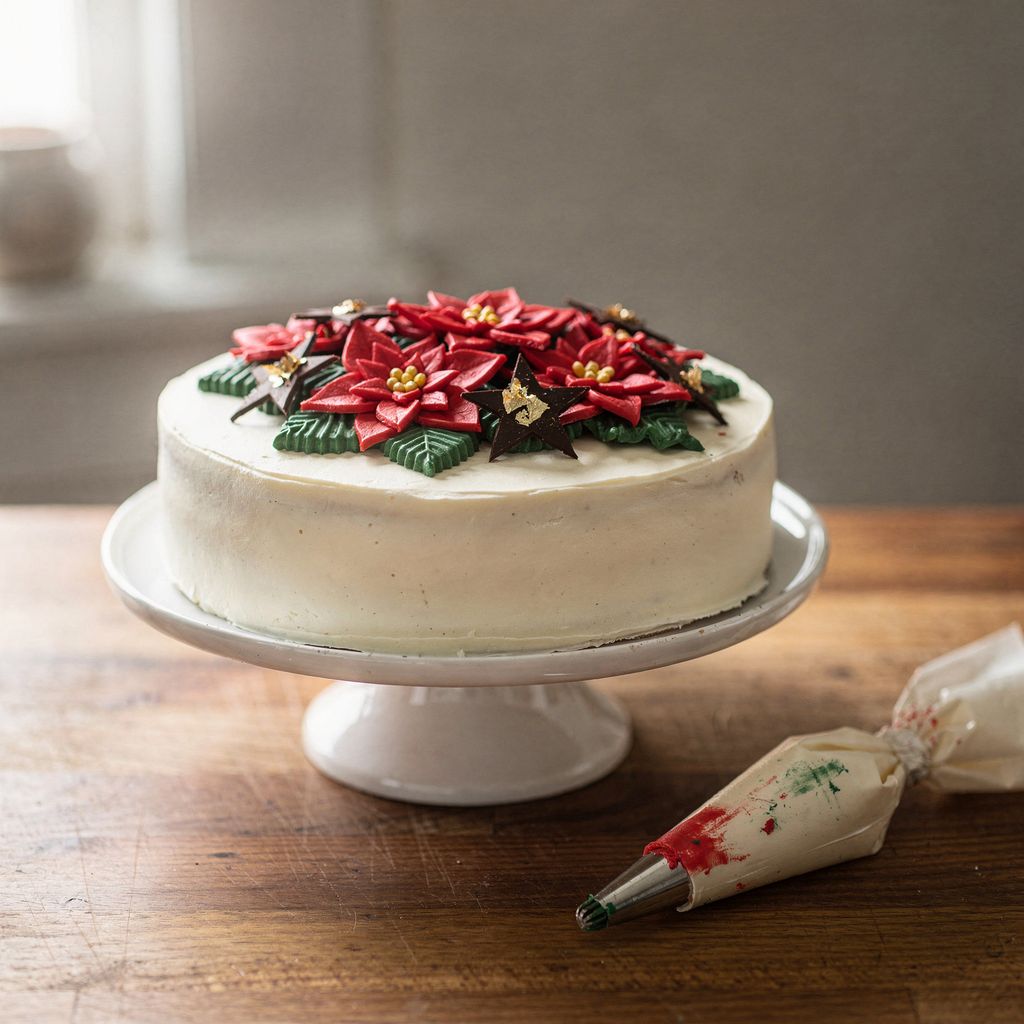
You can decorate a Christmas cake at home with just five things: a buttercream Christmas star, green leaves, gingerbread or chocolate stars, edible gold, and red glitter dust. Two or three of these are enough for one cake. No fondant or pastry course required — just stiff buttercream, a well-chilled cake, and the right order of steps. Below you'll find how thick the buttercream should be, how to hold the piping tip, how to get gold onto chocolate decorations without it sticking to your fingers, and what to do when a shape won't hold.
Five things work best on a Christmas cake: a buttercream Christmas star (poinsettia), green leaves (holly, mistletoe, pine sprigs), gingerbread or chocolate stars, edible gold, and red or gold glitter dust. You don't need to use all of them — two or three per cake is plenty.
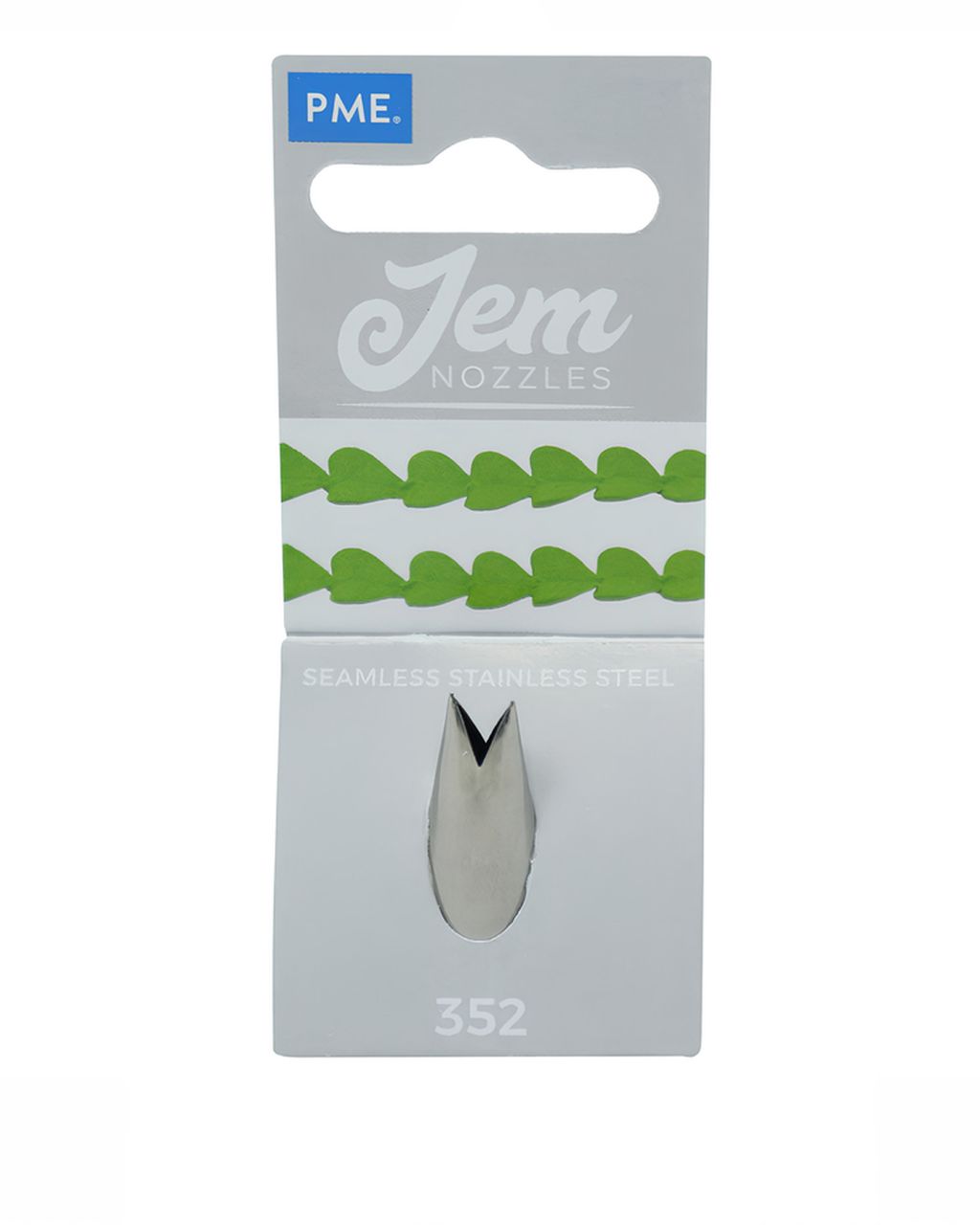
The buttercream star and leaves form the main composition. Both are piped with a single tip, typically a leaf tip no. 352 (often marked "Leaf 352" on the packaging).
Gingerbread or chocolate stars add height and shape that buttercream can't hold on its own.
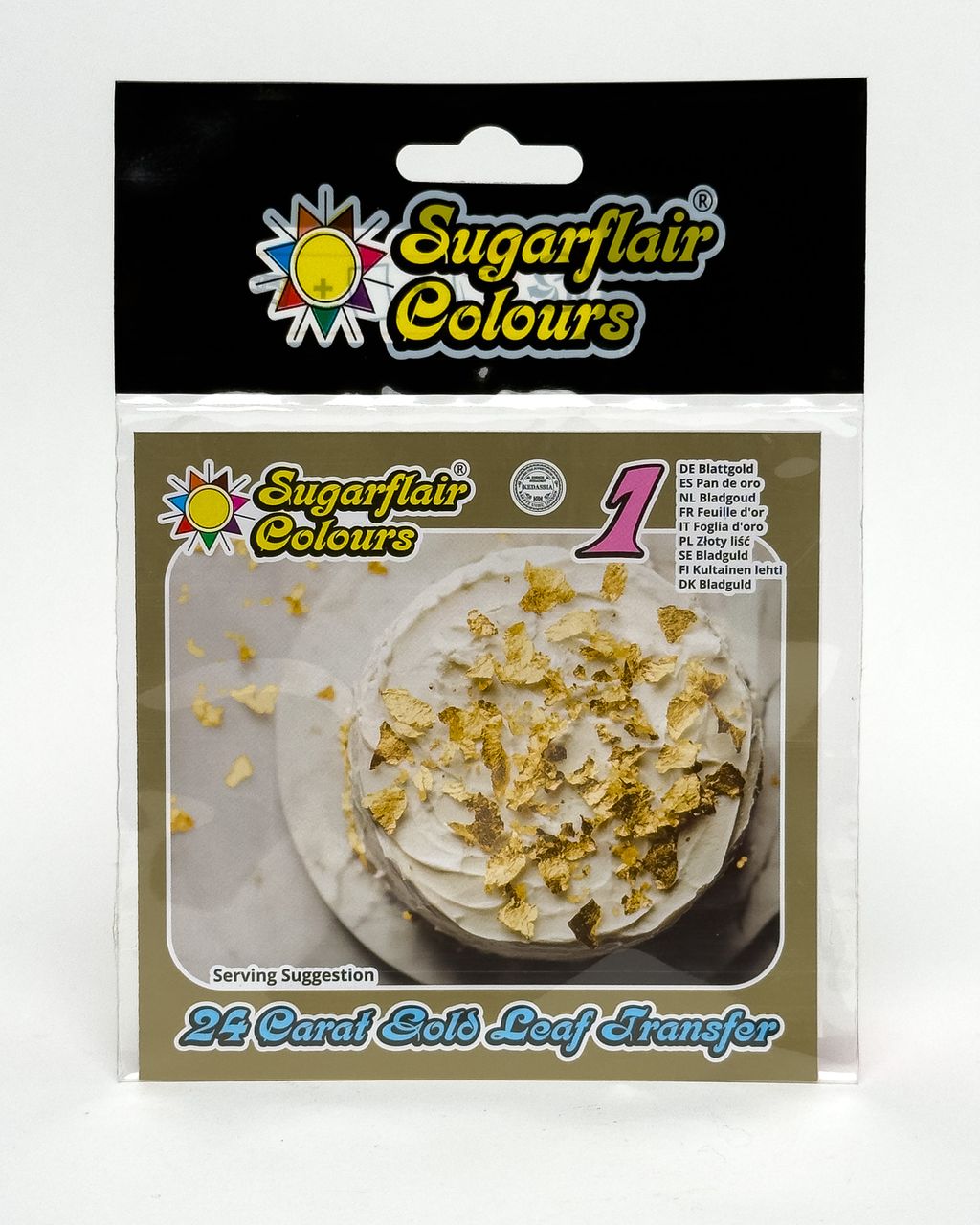
Edible gold goes on chocolate stars and chocolate decorations. A few small torn pieces of a gold leaf sheet, placed where the eye should land, are enough.
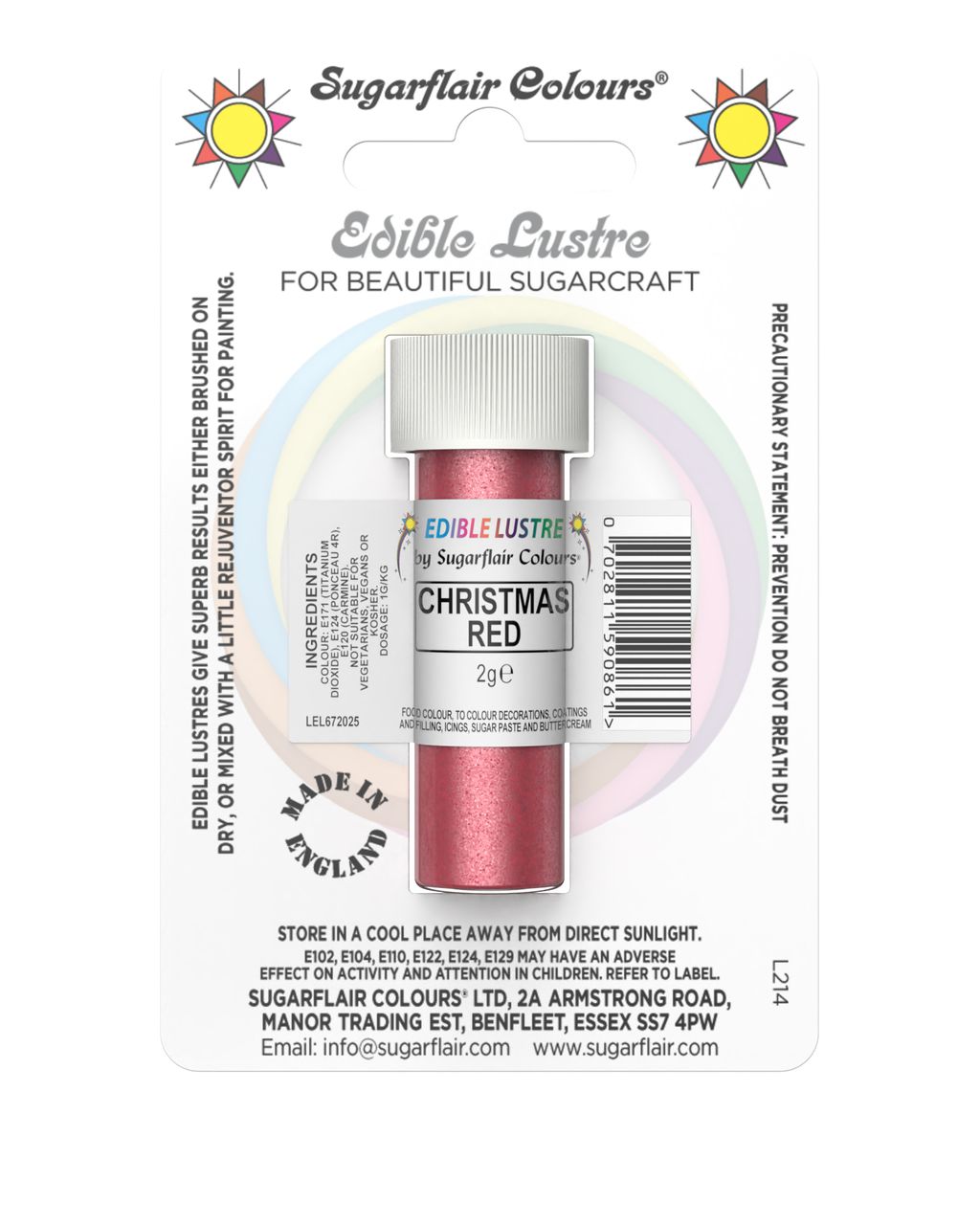
Glitter dust softens the edges of the leaves and adds shine, without overpowering the buttercream's colour.
One simple rule applies: one focal point (a cluster of stars on one side of the cake), with leaves and a touch of gold around it. If you decorate all the way around the edge, it reads more like a wreath — that works too, just plan on using twice the buttercream.
You'll find piping tips, gel colours and glitter dust all together among cake decorating supplies.
Stiff buttercream is what holds the star and leaves — the kind that stands up in a sharp peak on a spatula and doesn't droop. Soft buttercream, whipped cream or mascarpone without stabiliser will slump into blobs and the leaves will lose their point.
Buttercream made with icing sugar (roughly 1 part butter to 1.5–2 parts sugar) holds its shape best and takes colour well.
Swiss or Italian meringue buttercream is smoother but softens in warm rooms. Pipe it chilled, in a room at 18–20°C (64–68°F).
Ganache (chocolate and cream, 2:1) also works for leaves, but only in dark brown or white — you can't get it to a deep red.
Consistency check: pipe one leaf onto baking paper. If the tip flops over after a minute, mix in 1–2 tablespoons of icing sugar. If the leaf's edges tear, the buttercream is too stiff or cold — knead the piping bag in your hands for a bit.
A rich red takes time. Add gel colour to the buttercream the day before, or at least 2 hours before decorating, as colour deepens as it sits. If you keep adding colour until it looks red right away, you'll overdo it and the buttercream will taste bitter. For pine-green leaves, add a pinch of brown or black to the green — pure green looks like grass on a cake.
You pipe a Christmas star from six large leaves arranged in a circle plus six smaller leaves in between, with yellow dots in the centre. This is the method used by piping tip manufacturers (Wilton describes the same technique for tip 352):
Fit tip 352 into a piping bag and fill it no more than halfway with red buttercream. An overfull bag warms up in your hand and softens the buttercream.
Hold the bag at a 45° angle, with the tip's points horizontal (left and right), so the leaf lies flat.
Touch the tip to the centre of where the star will be, squeeze firmly and pull outward about 2–3 cm. Ease off the pressure near the end, stop completely, then lift the tip away — this finishes the leaf with a point.
Turn the paper (or cake) a third of the way around and pipe a second leaf, then a third. You'll get a Y shape.
Pipe three more leaves into the gaps between them, for six total.
Add six shorter leaves (about 1.5 cm) on top of and between them.
Finish the centre with 5–7 yellow dots using a round tip or a snipped corner of a piping bag. Sugar pearls work instead too.
On the cake, or off it? Beginners do well piping the stars onto squares of baking paper, freezing them for 20 minutes, then transferring the finished stars onto the cake. If a star doesn't turn out, just scrape it off and pipe again without damaging the cake's smooth surface.
If you're using a classic tip and bag, check out how to fill a piping bag. Tip 352 needs a coupler or a medium-sized bag.
Pipe green leaves with the same tip 352, holding it the same way as for the star: tip points horizontal (left and right). This gives the leaf a flat shape with a vein down the middle.
Short leaf (holly, mistletoe): Squeeze, let the buttercream build up slightly at the tip, then ease off and pull away. About 1–1.5 cm long.
Long leaf: Rock your hand gently up and down as you pull, so the leaf ripples and looks more lifelike.
Pine needles: Use a small round or star tip (or a snipped corner of a bag). Short strokes outward from a central twig, 3–5 mm each.
Holly berries: Three small red dots at the base of the leaves — buttercream or sugar pearls both work.
Pipe the leaves around the finished stars, not before. They'll cover the base of the star and the join between the star and the buttercream on the cake, so the star doesn't look stuck on. Plan on 4–6 leaves per larger star.
We cover the full range of tips and their uses in our cake decorating tips guide.
In place of buttercream stars, add gingerbread stars, chocolate stars, or natural decorations (rosemary, dried cranberries) to a Christmas cake.
Gingerbread stars. Cut stars out of gingerbread dough with a cutter — Swedish pepparkakor gingerbread works well — and stand them upright in the buttercream. They add height. Add them on the day of serving only, otherwise they'll draw moisture from the buttercream and go soft.
Chocolate stars. Spread tempered chocolate onto baking paper about 2–3 mm thick, let it set, then cut out stars with a warmed cutter. These keep in the fridge for several days.
Natural decorations. Rosemary sprigs standing in for pine needles, dried cranberries. Just don't put garden mistletoe or holly on the cake — both are poisonous.
A buttercream star piped with tip 352 looks more like proper pastry work, while gingerbread feels more rustic. Feel free to combine them: buttercream stars along the side, a gingerbread star on top.
Pepparkakor – swedish gingerbread cookies (not just for christmas)
Pepparkakor: Swedish gingerbread for gingerbread stars on a Christmas cake
Place edible gold onto chocolate stars and chocolate decorations with a dry brush or tweezers, never your fingers. It's thinner than a hair and will stick to warm skin instantly and fall apart. Genuine edible gold is approved in the EU as the additive E 175, for use only on the surface of confectionery, for decorating chocolate, and in liqueurs. It's usually 22–24 carat (the EU requires at least 90% gold).
Close the window and switch off the extractor fan. Even your breath can blow a gold leaf away.
Pick up a piece of gold with tweezers or lift it with a dry brush, and lay it onto a chocolate star or chocolate decoration.
Press it gently with the brush. The edges will tear, and that's fine — torn gold looks natural, while a neat square looks more like a sticker.
Place the finished gold-leafed chocolate decorations onto the cake.
Where to put the gold: on chocolate stars and chocolate decorations — along the edge of a chocolate star, on chocolate drops, or on pralines around the cake. Use it in only 3–5 spots. One 8 × 8 cm sheet will stretch to 2–3 cakes.
We go into what's actually edible versus just decoration in our article on edible gold and glitter dust for cakes.
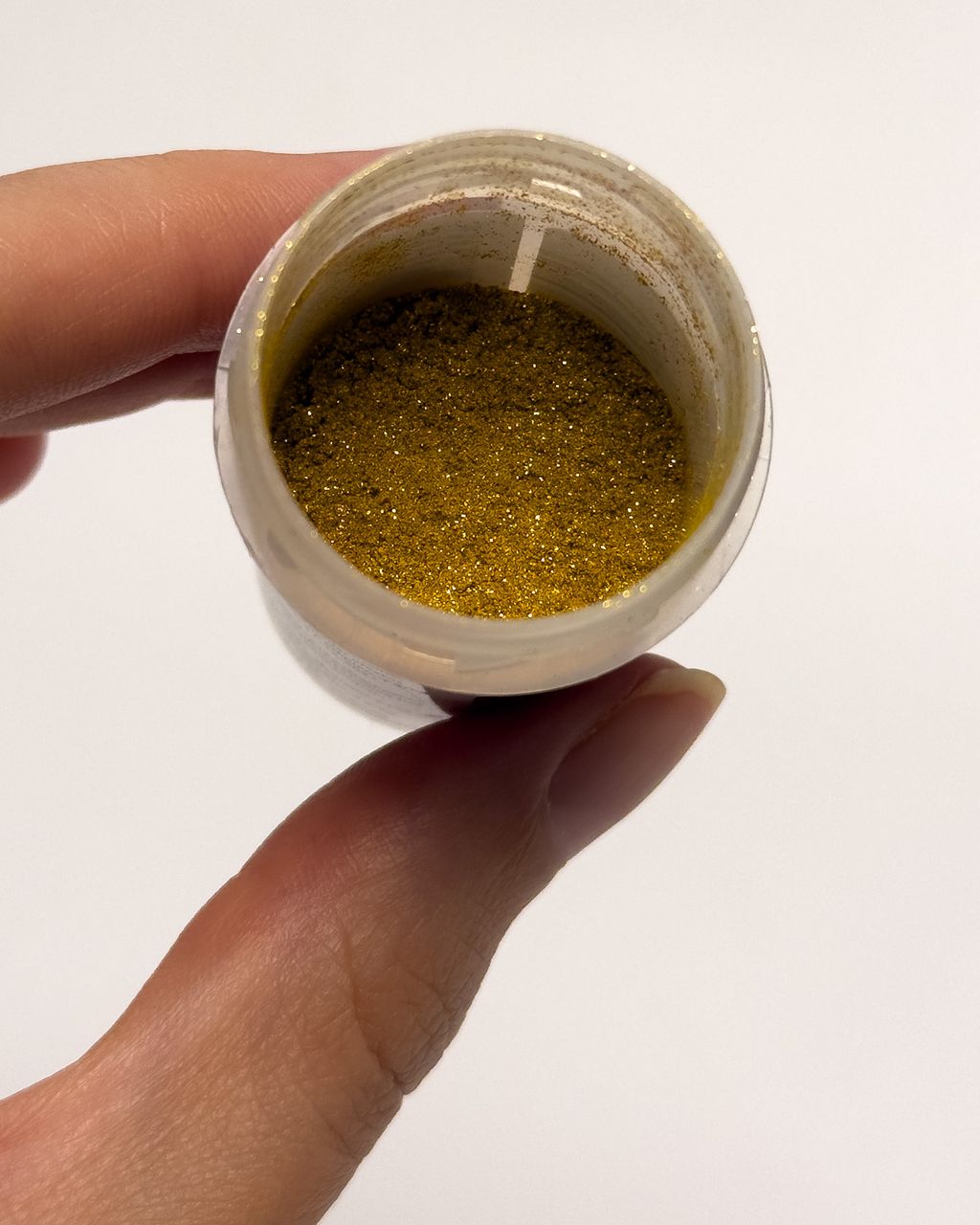
There are two ways to apply glitter dust: dry, with a soft brush for a subtle shimmer, or mixed with a few drops of alcohol as a paint for firm surfaces. It won't recolour buttercream, though — it only adds sparkle.
Dry, on buttercream: Pick up a little dust on a dry brush and lightly dust the edges of the Christmas star's leaves. Red glitter dust gives a red star more depth; gold dust adds contrast to the tips of green leaves.
As a paint: Mix ¼ teaspoon of dust with 3–5 drops of vodka or lemon extract. The alcohol evaporates, leaving the dust behind. Paint it onto chocolate, gingerbread, fondant or set glaze — not soft buttercream, which would smear.
Don't use water. It dissolves the sugar on the surface and the dust turns into sticky streaks.
On damp buttercream or whipped cream, the dust will absorb moisture within a few hours and lose its shine. That's why it should go on just before serving.
Decorate from coarse to fine: buttercream and colours, stars, leaves, gingerbread and chocolate with gold, glitter. Each new layer covers the joins of the one before, and the most delicate elements go on last.
The day before: Crumb-coat and chill the cake. Colour the buttercream for the stars and leaves so the colour has time to deepen.
The evening before, or the morning of serving: Pipe the stars (onto paper in the freezer, or straight onto the cake), then the leaves around them. Let the coloured buttercream rest for at least 2 hours. Keep the finished cake in the fridge.
Just before serving (0–2 hours): Add the gingerbread stars and the gold-leafed chocolate stars, and dust with glitter.
If you're still unsure about the buttercream or the sponge itself, start with the basics — take a look at types of cake frosting. As a base for Christmas decorating, the most chocolatey pomegranate cake is a great choice. A dark surface with ruby-red seeds and a few gold-leafed chocolate stars already feels festive, even without buttercream stars.
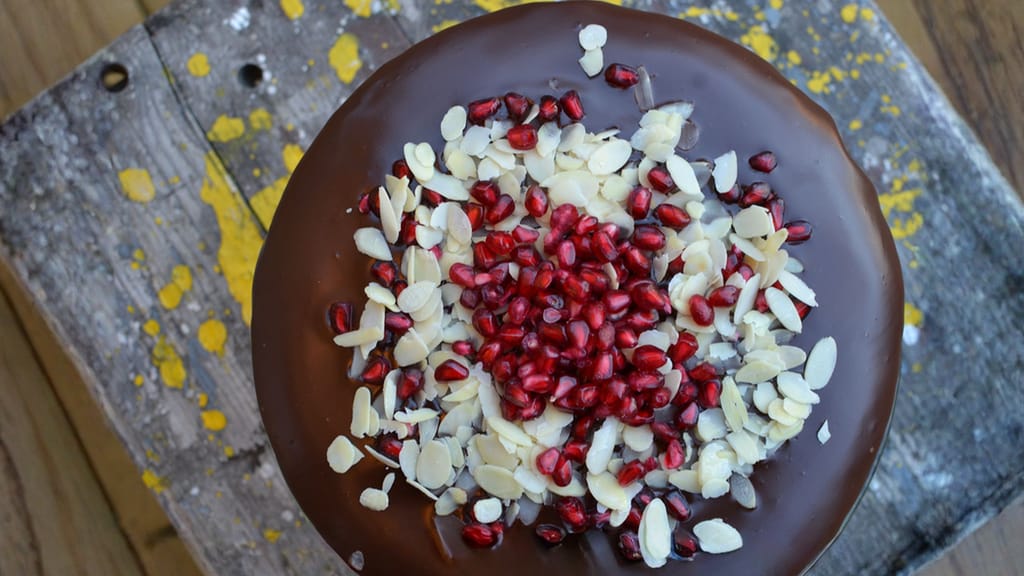
The ultimate chocolate cake with pomegranate
The most chocolatey pomegranate cake as a base for a Christmas cake
You can pipe leaves without tip 352 using a disposable piping bag: flatten the tip of the bag and snip it into a V-shape, about 5 mm on each side. The leaves will be less sharp than with tip 352, but it's fine for a few pieces.
Transport a decorated Christmas cake chilled straight from the fridge, in a box taller than the stars, standing on a flat surface — the car floor, not the seat. Pack gingerbread and chocolate stars separately and press them into the buttercream once you arrive.
Whipped cream without stabiliser won't hold a buttercream Christmas star or leaves — it slumps into droplets and the leaves lose their point. Use stiff buttercream for piped stars and leaves. If you're covering the cake in whipped cream, decorate it with gingerbread or chocolate stars instead, and add glitter dust only just before serving, since it loses its shine on damp whipped cream.
For a 20 cm Christmas cake, a third to a half of an 8 × 8 cm gold leaf sheet is enough for the chocolate stars and decorations. Tear the gold into small pieces and use it as an accent, not a solid area — a whole sheet on one cake usually looks overdone.
One recipe worth heating the oven for, one tip, and one deal from the shop. Nothing else.