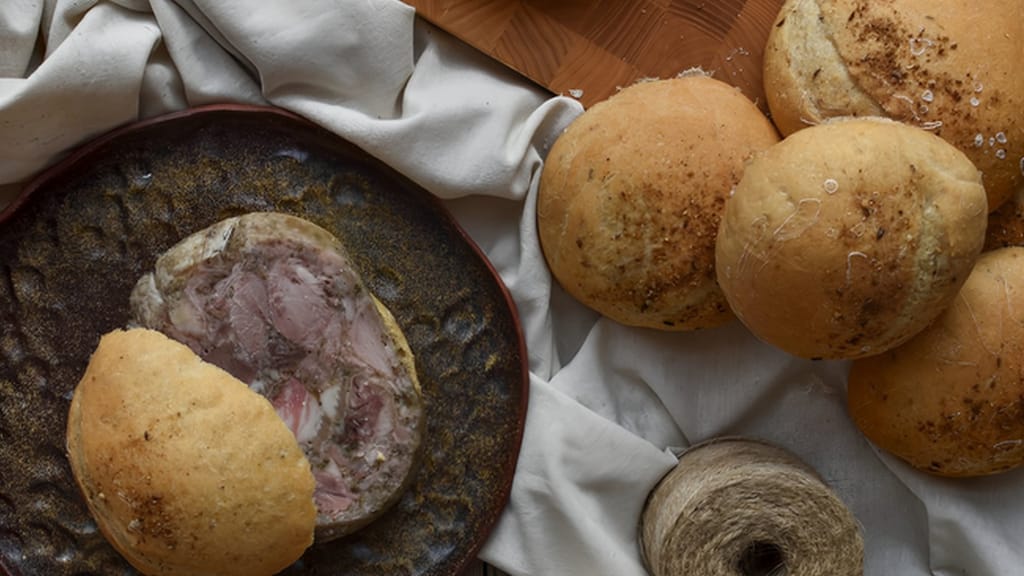
Crusty fennel rolls - perfect with headcheese!
How Long Tlačenka, Jitrnice and Jelita Last in the Fridge, and Whether You Can Freeze Them
Updated Nov 17, 2026
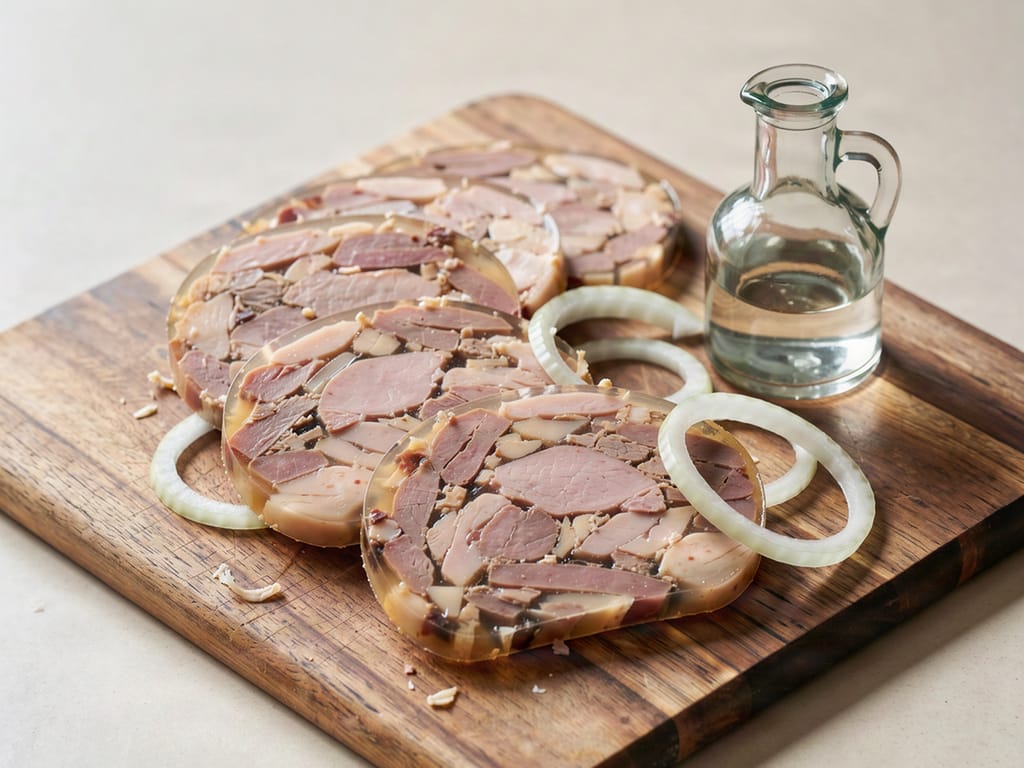
How long does tlačenka (Czech head cheese in aspic) last in the fridge? Store-bought tlačenka, jitrnice (Czech liver sausages) and jelita (Czech blood sausages) keep in the fridge at up to 4°C (39°F) until the use-by date on the label. Once opened, eat them within 48 hours, as Czech producers state on their labels. Sliced tlačenka from the deli counter and unpackaged jitrnice and jelita from the counter keep just as briefly. If the label or the shop assistant gives a shorter time, or the use-by date runs out sooner, go by the shorter one. Homemade products from a pig slaughter (zabijačka) keep 3–4 days (USDA/FSIS guidance for sausages cooked at home), and in the freezer at −18°C (0°F) you can count on 1–2 months. The homemade window is shorter because large batches cool slowly at home and nobody has tested their shelf life. The Czech Ministry of Agriculture and the Chief Public Health Officer recommend 4°C for the fridge and −18°C for the freezer. The State Veterinary Administration also reminds consumers to follow the use-by date and the storage temperature given by the producer.
Store-bought tlačenka, jitrnice and jelita keep in the fridge at up to 4°C (39°F) until the use-by date; once opened, or from the deli counter, 48 hours; homemade from a pig slaughter 3–4 days; and in the freezer at −18°C (0°F) 1–2 months.
In the fridge at up to 4°C, these time limits apply:
Store-bought, unopened package: until the use-by date (\"Spotřebujte do…\") on the label. This is a safety date, not just a quality one. SZPI (the Czech Agriculture and Food Inspection Authority) and the State Veterinary Administration oversee compliance with it and with the producer's temperature.
Packaged jitrnice and jelita after opening: no more than 48 hours (that's what Czech producers state on their labels; USDA/FSIS allows up to 7 days for opened hot dogs, but the shorter limit applies). If the label or the shop assistant gives a shorter time, or the use-by date runs out sooner, go by the shorter one.
Tlačenka sliced at the deli counter or opened, and unpackaged jitrnice and jelita from the counter: 48 hours (the same as opened packaged products; USDA/FSIS gives 3–5 days for sliced deli meats, but the shorter limit applies). If the label or the shop assistant gives a shorter time, or the use-by date runs out sooner, go by the shorter one.
Homemade from a pig slaughter: 3–4 days (USDA/FSIS guidance for sausages you cook at home). Eat an opened homemade tlačenka within 48 hours, just like a store-bought one.
In the freezer at −18°C (0°F): 1–2 months. That's what USDA/FSIS gives for store-bought cooked sausages. For homemade products it's a more cautious limit that we recommend. According to FSIS it's a quality limit: at a steady −18°C food stays safe for longer, it just loses flavor and texture.
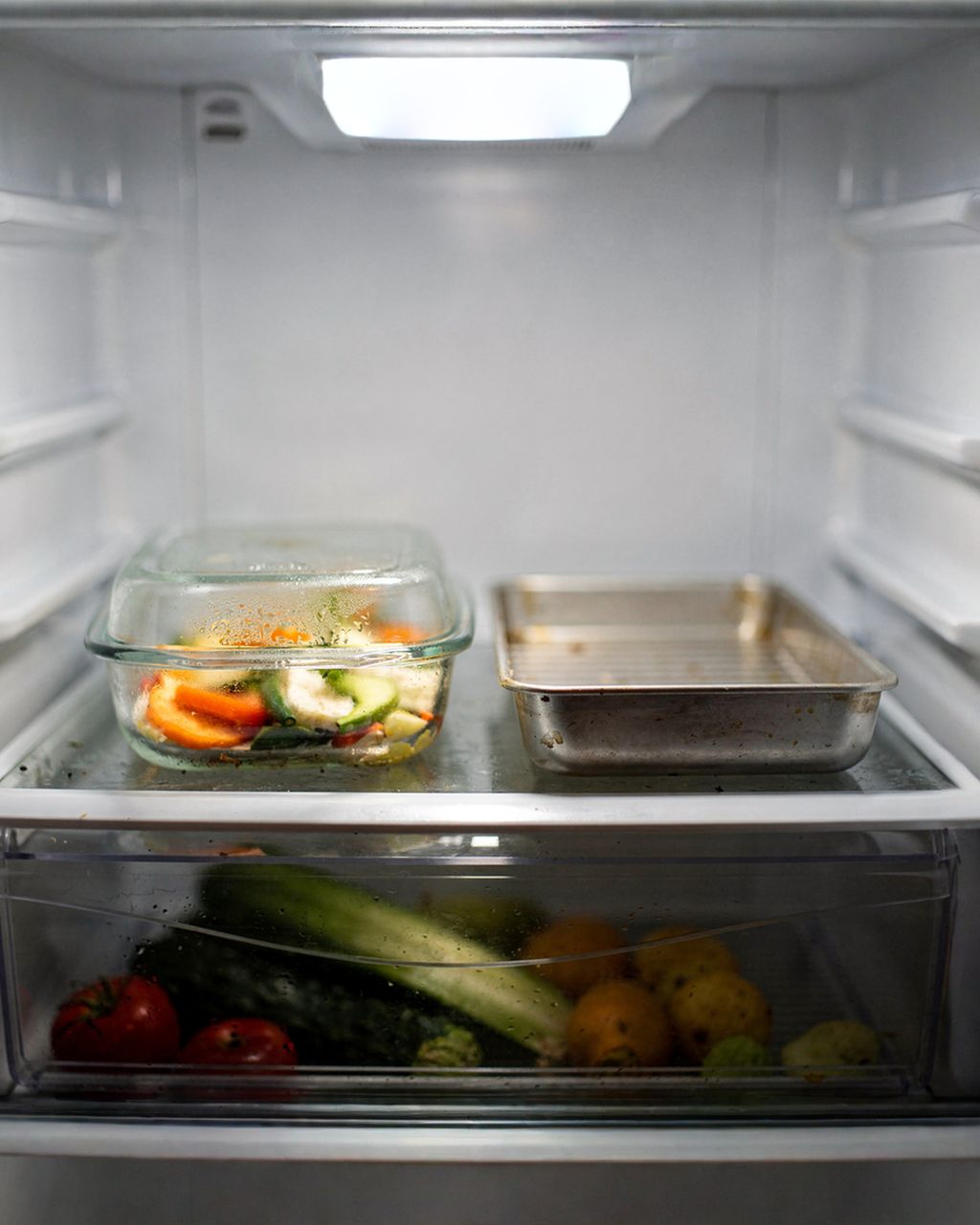
Check your fridge temperature with a thermometer, because the display or dial only shows an approximate value. The coldest spot is usually the back wall above the vegetable drawer, never the door.
Seasonal baking plans, tested recipes and kitchen tricks that save you time. Unsubscribe in one click.
Homemade products spoil faster because at home you don't have the controlled chilling and hygienic packaging that producers do. Specifically, the differences are these:
Slow cooling. A pig slaughter produces dozens of jitrnice and whole pots of tlačenka at once. A big warm batch takes hours to cool in the fridge, and bacteria multiply fastest in the range of roughly 5–60°C (41–140°F; the \"danger zone\" according to USDA/FSIS). USDA/FSIS recommends putting cooked food in the fridge within 2 hours. Divide it into smaller containers so it cools faster.
No protective packaging. Store-bought products are usually vacuum-packed or packed in a protective atmosphere right after production. At home, jitrnice are piled in a bowl, covered with a kitchen towel and handled by more hands.
The date is tested. A producer verifies the time limit through lab analyses and stands behind it. At home you have nothing like that, so count on a shorter time.
Homemade jitrnice and jelita contain cooked offal, blood, groats or bread rolls. That kind of moist, meaty filling suits bacteria. If you won't eat them within 3–4 days, freeze them on day one, not on day four. Under Czech veterinary law, products from a home pig slaughter are only for your own household and close persons and must not be sold.
Once cut, tlačenka is riskier than jitrnice because it's eaten cold and nothing heats it again. You cook jitrnice or jelita through before eating, and the heat destroys most bacteria. With tlačenka dressed with vinegar and onion, that step is missing.
Aspic is moist, and moist conditions suit bacteria.
Cutting opens up the surface. Every slice transfers something from the knife, the board and your hands onto the cut surface. That's why tlačenka is associated with the bacterium Listeria monocytogenes. In October 2025 the State Veterinary Administration recalled tlačenka from a Czech producer because of listeria.
Listeria tolerates cold. According to a joint statement from the Ministry of Agriculture and the Chief Public Health Officer, fridge temperatures are favorable for listeria, and it survives freezing too. USDA/FSIS adds that it gradually multiplies in the fridge. Only heating the food until the inside reaches 72°C (162°F) and holds it for 10 minutes destroys it. That's out of the question for tlačenka.
In practice: slice tlačenka just before eating and keep it whole until you need it. Don't leave sliced pieces sitting on the table; wrap the rest right away and put it back in the fridge. Eat sliced tlačenka within 48 hours at the latest.
You can tell spoiled tlačenka, jitrnice or jelita by a sour or ammonia-like smell, a slimy surface, a gray-green cut surface, cloudy aspic, mold or a bloated package. Throw the product out if any of these changes appear:
Smell: sour, sweetish-rotten or ammonia-like. Fresh tlačenka smells of meat and spices, jitrnice of marjoram and garlic.
Surface: a sticky or slimy film that stays on your finger. The same goes for a tacky casing on jitrnice and jelita.
Color: a gray-green or greenish tinge on the cut surface, darkening edges.
Aspic: it turns cloudy, thins out, weeps liquid or foams.
Mold: any fuzz or spots. With moist meat products, don't just cut off the affected spot; throw out the whole piece.
Packaging: bloated, or with cloudy liquid inside.
Note: the fact that a product doesn't smell and looks fine doesn't mean it's safe. According to USDA/FSIS, the bacteria that cause food poisoning, including listeria, usually don't change the smell, taste or look of food. So the time limit and the temperature decide, not a sniff test. If you don't know how long a product has been in the fridge, throw it out.
Freeze jitrnice, jelita and tlačenka as soon as they've cooled, wrapped airtight, at −18°C (0°F), and use them within 1–2 months; tlačenka handles freezing worst. The method at a glance: cool → portion → wrap → label → freeze.
Freeze as soon as you know you won't eat the product within its time limit. What goes in the freezer should be fresh, not something whose time limit is just running out.
Let it cool quickly: into the fridge within 2 hours of cooking (USDA/FSIS), into the freezer right after it has cooled.
Divide into single-meal portions so you don't end up with a thawed leftover. Wrap jitrnice and jelita individually so they don't freeze together and the casings don't split.
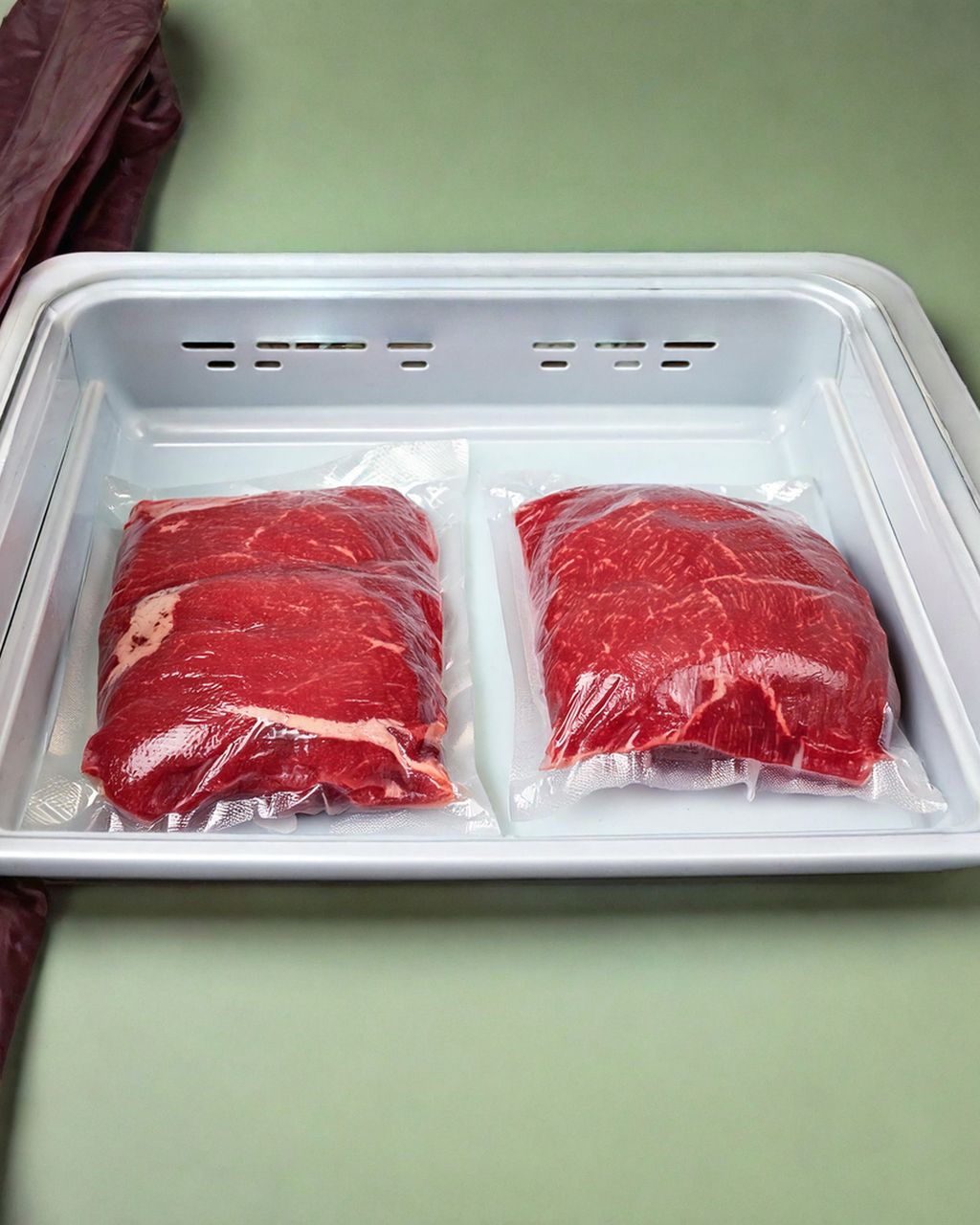
Wrap airtight: in a freezer bag with the air pressed out, or vacuum-sealed. Air dries the product out and gives it a freezer taste.
Write the freezing date on the package and use it within 1–2 months, while the product still holds its flavor.
Freeze at −18°C (0°F) or colder.
Tlačenka handles freezing worst. Safety doesn't suffer, but the aspic releases water after thawing and the tlačenka falls apart. If you have to freeze it, freeze it whole, not sliced. Jitrnice and jelita handle freezing well because you cook them through afterward anyway.
Thaw jitrnice, jelita and tlačenka in the fridge, ideally overnight, never on the kitchen counter. USDA/FSIS recommends fridge thawing as the safest, because the surface of the product doesn't warm above fridge temperature while the center is still frozen.
Put the product in a bowl so thaw water doesn't drip onto other food.
Cook thawed jitrnice or jelita through so that the whole thing reaches at least 75°C (167°F) for 5 minutes. That's what the Ministry of Agriculture and the Chief Public Health Officer recommend for home cooking. Check the inside temperature with a probe thermometer.
For how to bake or pan-fry them so they don't split, see the guide to jitrnice and jelita in the oven and in a pan.
Eat thawed tlačenka right away, don't freeze it a second time and don't leave it sitting out.
Serve tlačenka with onion, vinegar and fresh bread such as dalamánky (Czech crusty rolls), and bake or grill jitrnice and serve them with potato or cabbage salad. The best way not to throw a product out is to eat it in time. Crunchy fennel dalamánky to go with tlačenka suit tlačenka with onion and vinegar. Jitrnice from a pig slaughter don't have to end up with sauerkraut every time, so try grilled jitrnice with potato-cabbage salad. For more of what's baked and cooked in the season from Epiphany to Shrove Tuesday (masopust), see the article Masopust at Home.
Crusty fennel rolls - perfect with headcheese!
Crunchy fennel dalamánky to go with tlačenka
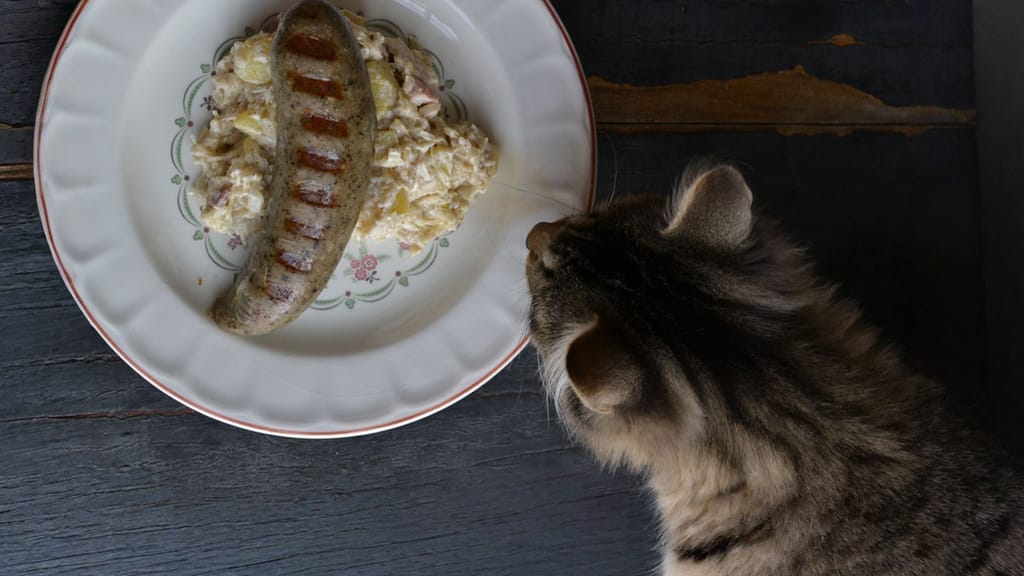
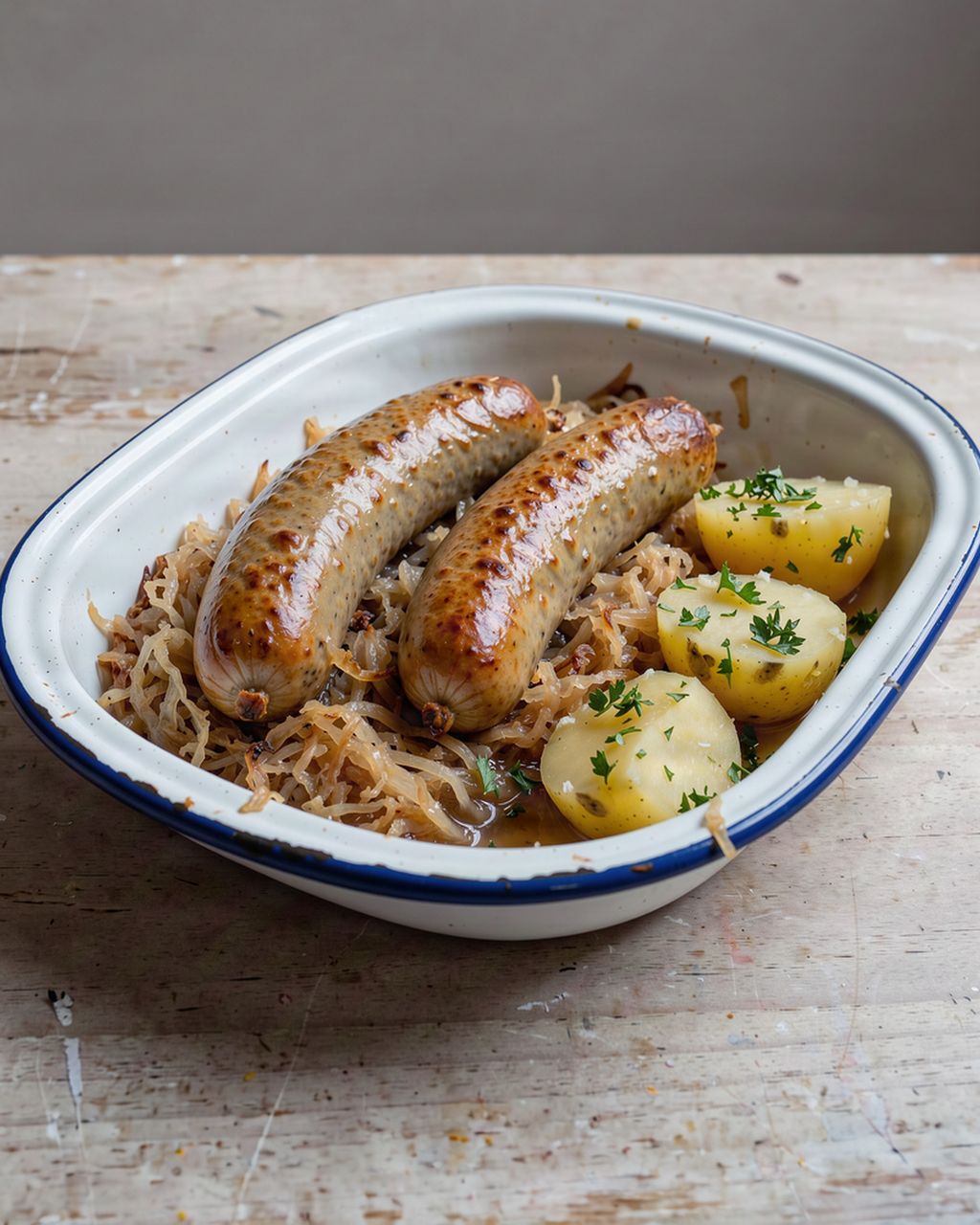
Grilled jitrnice (czech liver sausage) with warm potato and sauerkraut salad
Grilled jitrnice with potato-cabbage salad
Tlačenka, jitrnice and jelita shouldn't stay at room temperature for more than 2 hours, which is the USDA/FSIS guidance for cooked food. In a warm room it's even less. For a feast, put out smaller platters and keep the rest in the fridge.
No, don't eat tlačenka or jitrnice after the use-by date ("Spotřebujte do…", or "Use by…"). Unlike a best-before date, this is a safety date, and the State Veterinary Administration advises following it along with the storage temperature given by the producer. Neither look nor smell will tell you whether listeria has multiplied in the food.
According to USDA/FSIS, thawed jitrnice or jelita that haven't been cooked yet can safely be refrozen if they were thawed in the fridge. We don't recommend it for quality reasons, though: repeated freezing breaks down the casing and the filling, and the product loses flavor. It's better to freeze single-meal portions from the start.
Prejt (a Czech pork-and-groats sausage mixture) and pig-slaughter soup (prdelačka) keep in the fridge at up to 4°C for 3–4 days, as USDA/FSIS states for cooked leftovers, soups and stews. Put them in the freezer as soon as they've cooled, ideally divided into portions.
One recipe worth heating the oven for, one tip, and one deal from the shop. Nothing else.