How Long Tlačenka, Jitrnice and Jelita Last in the Fridge, and Whether You Can Freeze Them
Jitrnice and Jelita in the Oven or Pan: What Temperature and How Long So They Don't Burst
Updated Nov 17, 2026
Bake jitrnice (Czech liver sausages with bread and marjoram) and jelita (Czech blood sausages with barley or bread) gently: jitrnice at 170°C (340°F) for about 25–30 minutes, jelita at 150–160°C (300–320°F) for about 30–35 minutes. To keep them from bursting, what matters is gentle heat and a few pricks with a thin needle (not a fork), which let steam escape without letting the fat or filling run out. Store-bought jitrnice and jelita are already cooked, so you're only heating them through and browning them until golden. Below you'll find step-by-step instructions for the oven and the pan, what to serve with them and how to reheat leftovers.
Bake jitrnice at 170°C (340°F) for 25–30 minutes and jelita at 150–160°C (300–320°F) for 30–35 minutes (top and bottom heat, preheated oven). Jelita need a lower temperature because their filling of blood and barley or bread is looser and moister. At a higher temperature, steam builds up inside so fast that it splits the casing.
Jitrnice: 170°C (340°F), 25–30 minutes, covered for the first 15 minutes
Jelita: 150–160°C (300–320°F), 30–35 minutes, covered for the first 20 minutes
Thicker links from a home pig slaughter: add 5–10 minutes
Convection (fan) setting: lower the temperature by 10°C (about 20°F); the time stays the same.
They're done when the casing is golden, taut and slightly crisp, and the filling is hot all the way to the center. If you have a probe meat thermometer, insert it from the side into the thickest part. You want at least 75°C (167°F) in the middle, then bake for another 5 minutes.
Seasonal baking plans, tested recipes and kitchen tricks that save you time. Unsubscribe in one click.
Jitrnice and jelita burst because of steam: the water in the filling heats up faster than it can escape, and the pressure splits the casing. That's why there's one rule: gentle heat and a few pricks with a thin needle.
To prick or not to prick? Prick them, but with a thin needle or a toothpick, 3–4 times along the length. Small holes let the steam out and keep the fat inside. A fork makes big holes that let fat and filling run out, and the jitrnice dry out.
Don't bake them cold from the fridge. Let them rest for an hour at room temperature. Straight from the fridge they heat unevenly and burst more easily.
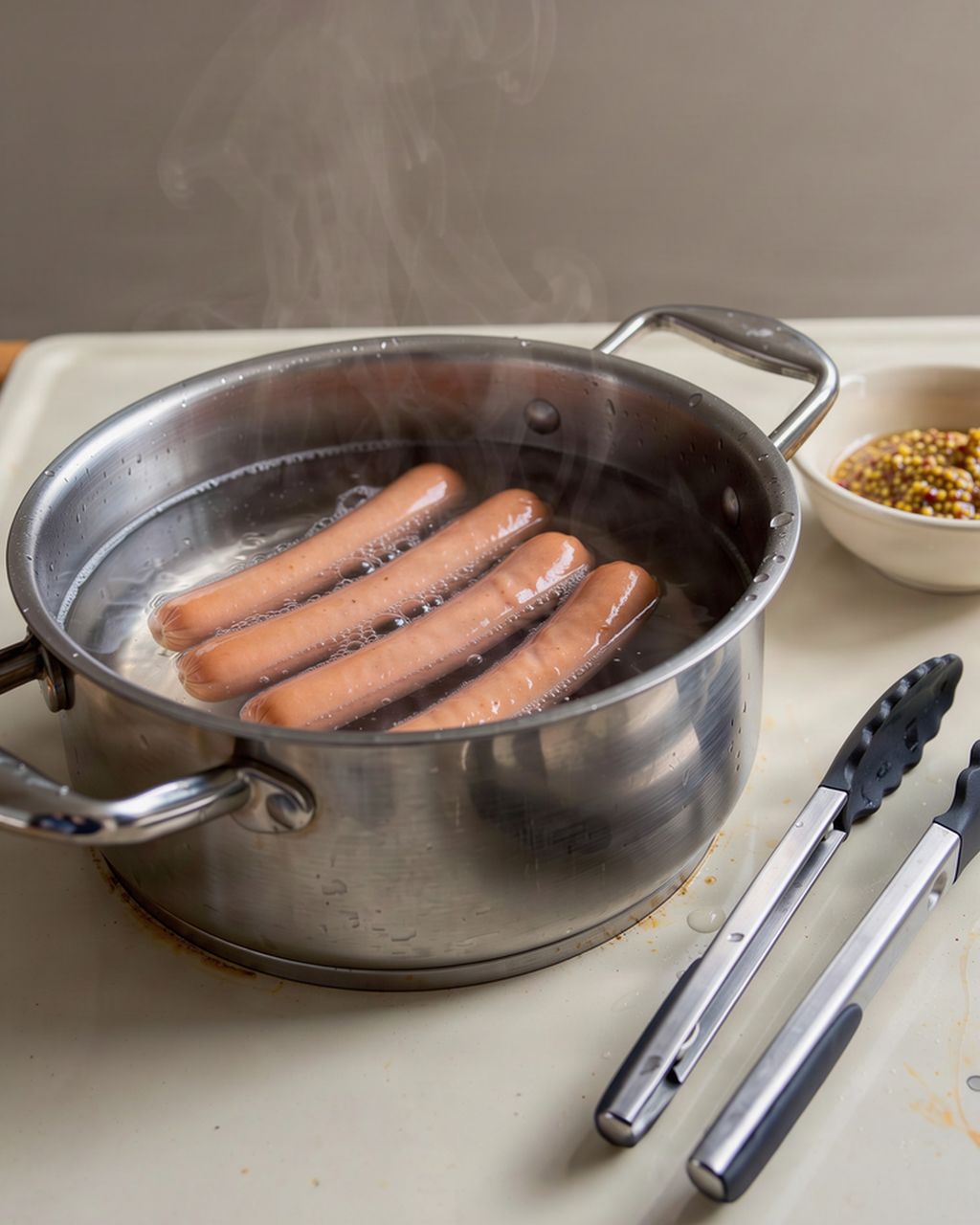
Scald them. It helps to dunk them in boiling water for 30 seconds, which makes the casing tighten. Then pat them dry.
Brush them with fat. Lard or oil keeps the casing supple, so it stretches instead of tearing. Butter isn't suitable because it burns during longer baking.
Start covered. Under a lid or aluminum foil, the filling heats through in the steam, and then the uncovered casing browns until golden.
In the oven, you prepare jitrnice and jelita in seven steps: bring to room temperature, preheat the oven, scald, prick, arrange in a baking dish, bake covered, then finish uncovered until golden.
Take the jitrnice and jelita out of the fridge an hour ahead.
Preheat the oven: 170°C (340°F) for jitrnice, 150–160°C (300–320°F) for jelita. If you have them in one baking dish, set it to 160°C (320°F) and give the jitrnice an extra 5 minutes.
Scald them in boiling water for 30 seconds and dry them with a kitchen towel.
Prick them 3–4 times with a thin needle and brush with lard or oil.
Arrange them in a greased baking dish with gaps between them so they don't touch. Casings that stick together tear when you turn them. Add 2–3 tablespoons of water to the bottom.
Cover and bake for 15 minutes (20 minutes for jelita).
Uncover and finish baking until golden. Turn them once at most, with a spatula, not a fork.
In a pan, cook jitrnice over low to medium heat for 12–15 minutes, covered with a lid for the first 8 minutes. The method is the same as in the oven, just faster and with a crispier casing.
Let the jitrnice come to room temperature, scald them, dry them and prick them with a needle.
Heat 1–2 tablespoons of lard or oil in a pan, not butter, which burns before the jitrnice are heated through.
Put them in the pan, cover with a lid and leave for 8 minutes over low heat.
Uncover, carefully turn them with a spatula and keep cooking for another 5–7 minutes, until the casing is golden on all sides.
Jelita in a pan burst more easily than jitrnice, so give them even gentler heat and keep the lid on the whole time. Or do what has always been done at a pig slaughter: scoop the filling out of the jelito and fry it in lard with sliced onion until crisp. Then you don't have to worry about bursting at all.
Store-bought jitrnice and jelita are not raw. They are heat-treated meat products. Under Czech Decree No. 69/2016 Sb., such a product must already have been heated during production, in all its parts, to the equivalent of 70°C (158°F) for 10 minutes. So at home you aren't cooking them "for the first time", only heating them through and browning them.
Even so, you need to heat them until they reach at least 75°C (167°F) throughout for 5 minutes. Jitrnice contain liver and offal, and bacteria can multiply in them again after production, even in the fridge. That is the heat treatment for home cooking recommended by the Czech Ministry of Agriculture together with the Chief Hygienist; for reheating ready-to-eat smoked meats and leftovers, the US USDA gives 74°C (165°F). The surest way is a probe meat thermometer, if you have one. Without it, cut one jitrnice in half: the filling must be hot and steaming all the way to the center, not just lukewarm.
If you have jitrnice from a home pig slaughter, ask whether they were cooked. A raw, uncooked filling needs longer cooking, and the times given here don't apply to it. Bake it until it reaches at least 75°C (167°F) inside for 5 minutes, and check with a thermometer.
The best way to reheat baked jitrnice and jelita is in the oven at 150°C (300°F) for 15–20 minutes under aluminum foil, with a spoonful of water in the bottom of the dish. The steam heats them through without drying them out or splitting them. Uncover them for the last 5 minutes so the casing crisps up again. Inside, they must again reach at least 75°C (167°F).
In a pan: low heat, a drop of lard, lid on, 8–10 minutes, turn once.
How many times to reheat: only once. Reheat only as much as you'll eat, and don't put it back in the fridge.
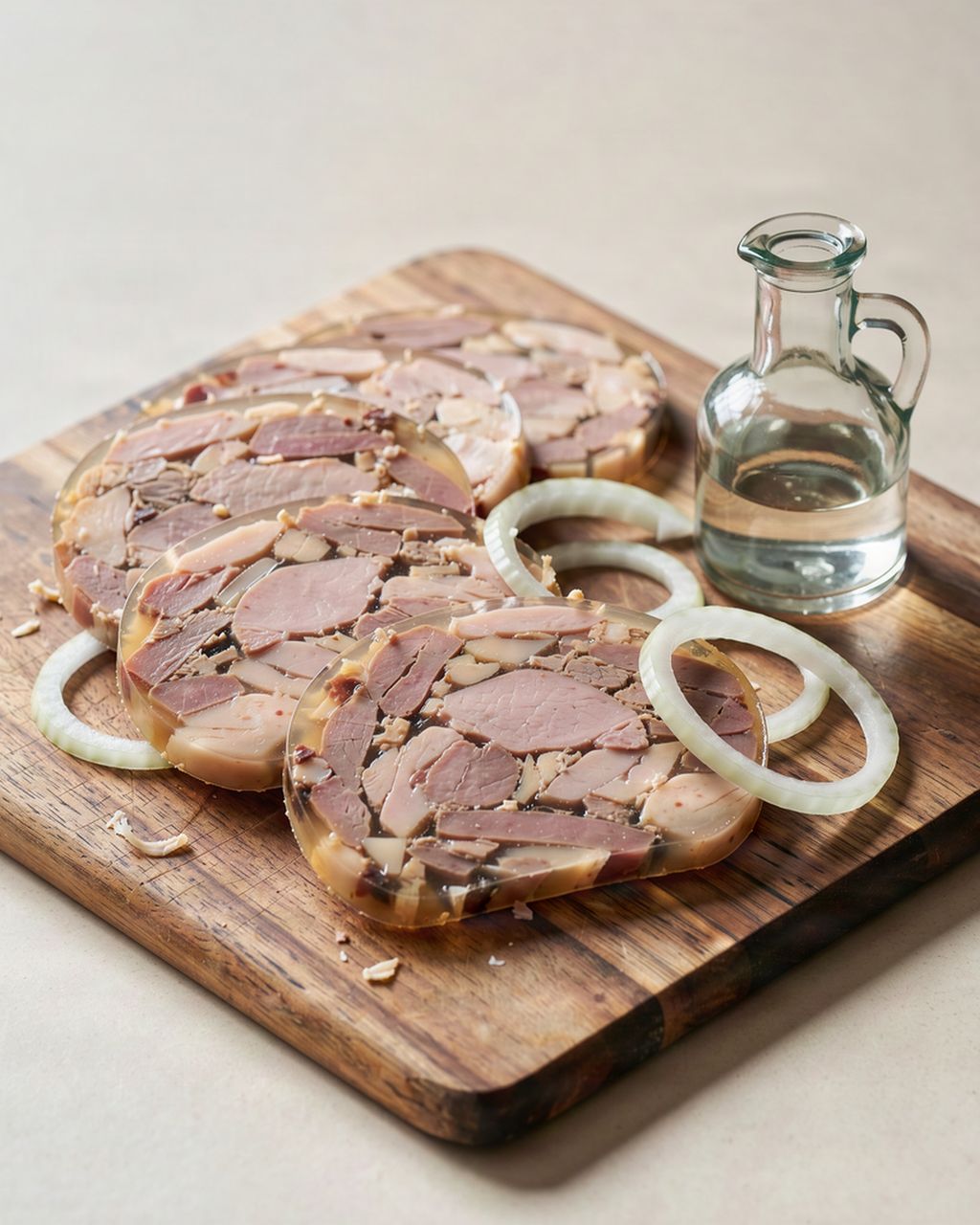
For how long baked and unbaked jitrnice and jelita keep in the fridge and whether you can freeze them, see the article how long tlačenka, jitrnice and jelita keep in the fridge.
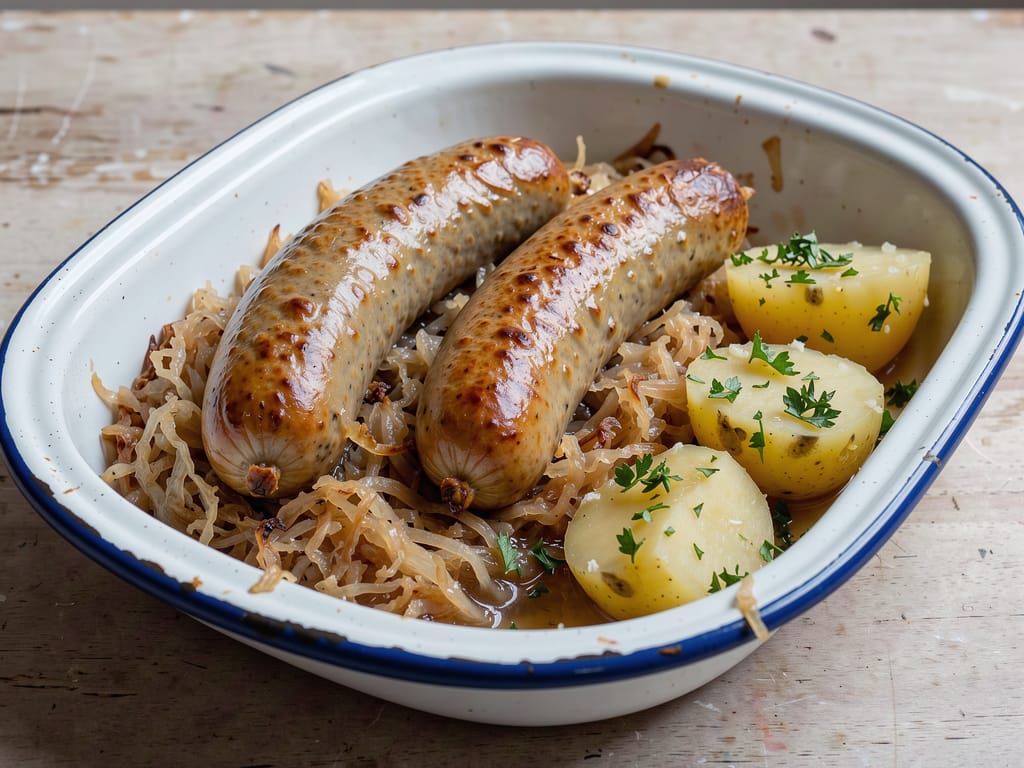
Jitrnice and jelita are classically served with potatoes, sauerkraut and bread. The sourness of the sauerkraut balances the rich, spiced filling.
Potatoes: boiled with parsley, mashed with fried onion, or smooth, creamy mashed potatoes.
Sauerkraut: braised sauerkraut with caraway, or for a change sweet-and-sour braised red cabbage.
Bread: fresh caraway bread or homemade bread, with mustard, horseradish and a pickle.
In summer, feel free to throw a jitrnice on the grill. Try grilled jitrnice with potato-cabbage salad, where potatoes and cabbage meet in one fresh salad.
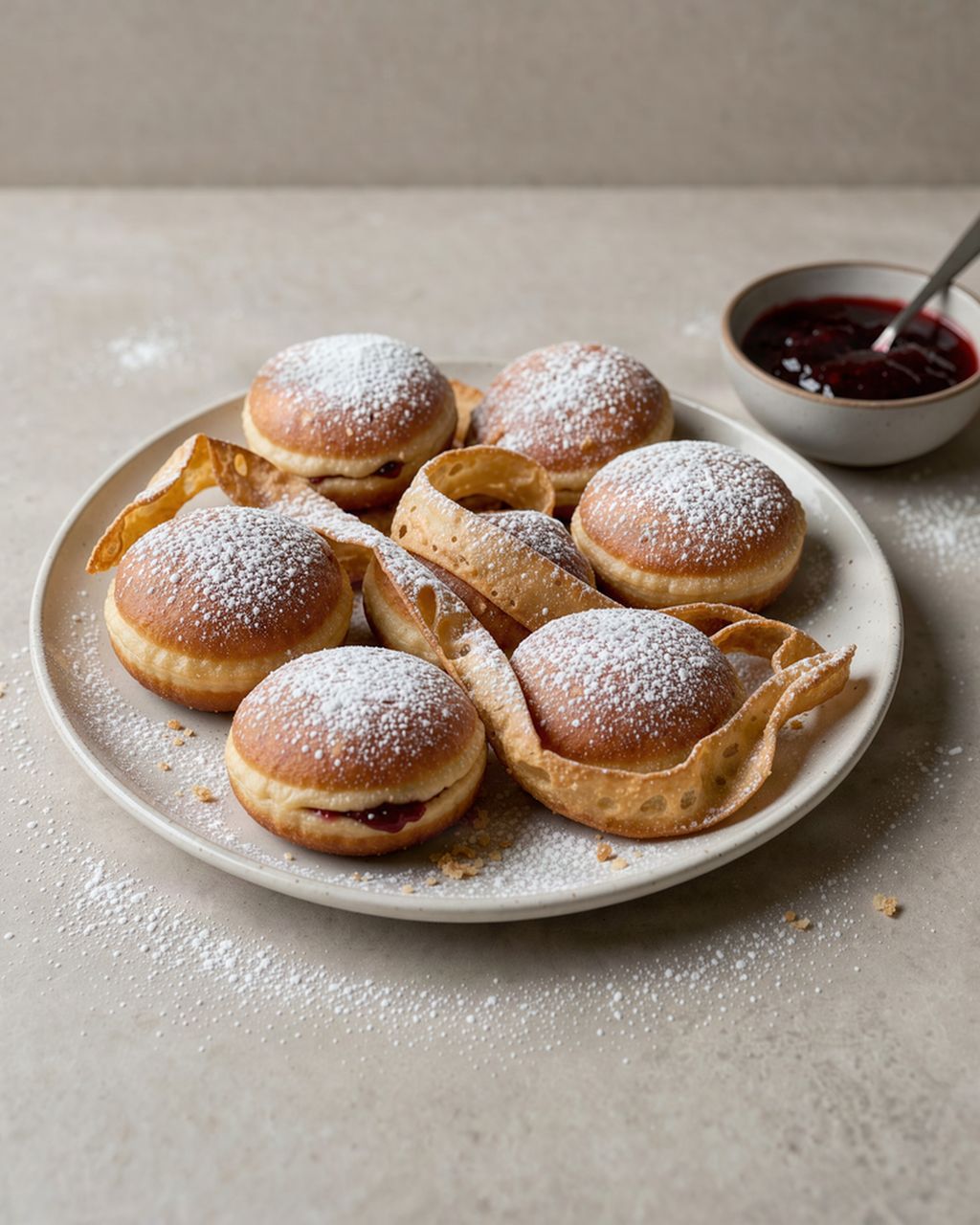
Jitrnice and jelita belong above all to the winter pig slaughter and to masopust (Czech pre-Lent carnival season). For what else is baked and cooked at that time, from doughnuts to pig-slaughter specialties, see the article Masopust at home.
Jitrnice are pale and filled with pork, liver and other offal along with bread and marjoram. Jelita are dark because, besides pork and skin, the filling contains pork blood, along with barley or bread. The filling of jelita is looser and moister, so they bake at a lower temperature (150–160°C / 300–320°F) than jitrnice (170°C / 340°F).
You can grill jelita, but they burst more easily than jitrnice because the filling is looser and moister. Grill them over gentle heat, not directly over hot coals, prick them first with a thin needle and turn them with a spatula, not a fork.
Don't put frozen jitrnice or jelita straight into the oven. Let them thaw slowly overnight in the fridge, then rest for an hour at room temperature. A frozen filling heats unevenly, the casing overcooks in the meantime and will almost certainly burst.
You can reheat jitrnice in the microwave, but the casing almost always bursts and turns rubbery. If you're in a hurry, scoop the filling into a bowl, heat it in 30-second bursts and stir until it's hot all the way through.
One recipe worth heating the oven for, one tip, and one deal from the shop. Nothing else.