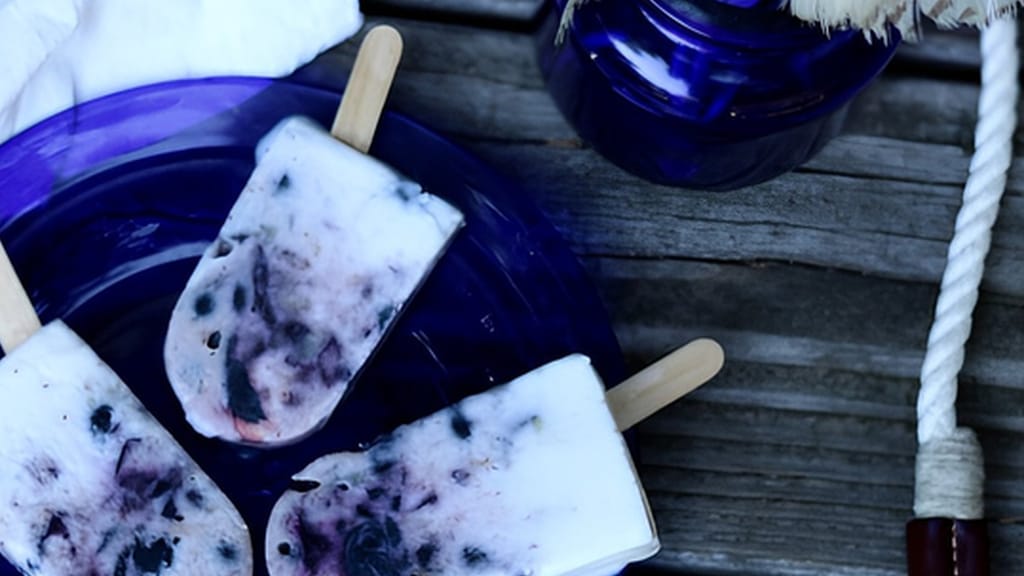
Blueberry popsicles
Homemade Fruit Popsicles: Healthy and Additive-Free for Kids and Adults

Updated Jul 19, 2026
Homemade popsicles come together from just three things: blended fruit, a creamy base (yoghurt or coconut milk), and a pinch of sweetener — no artificial colours, preservatives, or added sugar like you'd find in store-bought versions. You can whip them up in ten minutes plus a few hours in the freezer, flavour them exactly how you like, and stay in full control of how much sugar goes in. Below you'll find a foolproof basic ratio, tips for a creamy texture with no ice crystals, and flavour ideas for kids and adults alike.
Homemade popsicles beat store-bought ones in three clear ways: you control the amount of sugar, there's zero artificial additives and you tailor the flavour exactly to your taste.
Sugar control – sweeten with a touch of honey, ripe fruit, or not at all.
No additives – no colourings, flavourings or preservatives, just what you put in yourself.
Custom flavours – from strawberry-basil to mango-lime, even a pinch of cinnamon if you fancy.
Store-bought popsicles are often built on added sugar, glucose-fructose syrup and colourings – if you check the label, fruit is usually near the bottom of the ingredient list. At home it's the other way round: fruit is the foundation, and everything else is just seasoning.
A good popsicle rests on three ingredients: fruit, a creamy base and a little sweetener. A tried-and-tested ratio is roughly 2 parts blended fruit to 1 part base (yoghurt or coconut milk).
Fruit (the base, ~2 parts): strawberries, raspberries, blueberries, banana, mango, melon, kiwi. Seasonal, ripe fruit tastes best and sweetens naturally, so you need less added sweetener.
Creamy base (~1 part): plain Greek yoghurt (thick, subtly tangy, adds protein) or full-fat coconut milk as a dairy-free option that's just as creamy.
Sweetener (go easy): a teaspoon of honey or maple syrup per cup of fruit, or even less. Ripe fruit often doesn't need any at all.
If you want purely fruity, refreshing popsicles, skip the yoghurt and milk altogether – they'll be more refreshing but icier. More on why in the next section.
Popsicles turn hard and icy because water in the fruit forms large ice crystals during slow freezing. What makes them creamy is fat and sugar – both shrink the crystals and lower the freezing point.
Add fat: full-fat coconut milk, Greek yoghurt or cream bind free water so it doesn't freeze into big crystals. According to standard pastry-kitchen wisdom, this is the most reliable route to a creamy texture.
Keep a little sugar: sugar (even from honey or ripe fruit) lowers the freezing point of the mixture, keeping crystals smaller and the popsicle softer. Completely fat-free, unsweetened mixtures tend to freeze hardest.
Freeze fast: the quicker the mixture freezes, the smaller the crystals. Place moulds at the back of the freezer, where it's coldest.
A thickener as backup: a spoonful of cornstarch (cooked briefly with liquid, then cooled) per 6–8 popsicles noticeably smooths out the texture.
Your main options are silicone and plastic moulds: go for silicone for easy unmoulding and fun shapes, and plastic for price and speed.
Silicone: flexible, so popsicles pop out without tearing; freezer- and dishwasher-safe, and comes in fun shapes kids love. Tends to be pricier and, because the walls are thicker, freezes a bit more slowly.
Plastic: cheaper, lightweight, often comes with a freezer stand; thin walls transfer cold faster. Look for BPA-free options.
No moulds? Small cups or glasses with wooden sticks or spoons handle in a pinch – just insert the stick once the mixture has slightly set, so it stays upright.
The easiest place to start is blueberry popsicles – blueberries, yoghurt and a pinch of sweetener, just blend and freeze. Blueberries are naturally sweet, so you'll need barely any added sweetener. Find the exact quantities and method in the recipe:
Blueberry popsicles
Blueberry popsicles with yoghurt and fresh blueberries – step by step
The best pairings put sweet fruit alongside something fresh, tangy or herby.
Strawberry + basil – a summer classic; also works as homemade strawberry-basil-vanilla ice cream poured into moulds.
Mango + lime – exotic and zesty, the lime cuts through the mango's sweetness.
Watermelon + lime + a pinch of salt – the most refreshing option for hot days; the salt brings out the melon's sweetness.
Mango + full-fat coconut milk – creamy, tropical, and a favourite with kids.
Blueberry + banana – naturally sweet, no extra sweetener needed.
A pinch of vanilla or cinnamon adds depth without a single extra gram of sugar.
Let popsicles set at −18°C for at least 4–6 hours, ideally overnight; once made, store them for up to 2 months in an airtight container.
Temperature: −18°C. A lower, steady temperature means smaller ice crystals and better texture.
Time: 4–6 hours to set fully; if you're planning ahead for a party, leave them overnight.
Unmoulding: if a popsicle won't budge, dip the mould in warm (not hot) water for 5–10 seconds and gently pull the stick.
Storage: transfer unmoulded popsicles to an airtight container or bag (press out the air) so they don't pick up freezer odours. Label with the date and use within 2 months – they'll stay safe longer, but flavour and texture will fade.
The easiest way is to lean on naturally sweet fruit – ripe banana, mango or blueberries will sweeten the mix on their own. If you need a bit more, try mashed banana, a few soaked dates, or a spoonful of apple purée instead of sugar or syrup.
Never give honey to children under 1 – it can cause infant botulism, and freezing doesn't destroy the spores. For the littlest ones, sweeten popsicles with ripe fruit only, or skip sweetener altogether; save honey and maple syrup for older kids and adults.
Yes, just swap the creamy base for full-fat coconut milk or a plant-based yoghurt, or use pure blended fruit instead. Coconut milk keeps the texture creamy while also being dairy-free and vegan.
The mixture separated because the heavier fruit purée settled to the bottom while the lighter creamy base or trapped air bubbles rose to the top. Blend everything really thoroughly until smooth, use a thicker base (Greek yoghurt holds together better than thin milk), and tap the moulds on the counter a few times before filling to release any air bubbles.
Yes, frozen fruit works just as well as fresh and is often cheaper out of season. Blend it straight from the freezer or let it thaw slightly first; the mixture will just be a touch thicker, which actually helps the final texture.
One recipe worth heating the oven for, one tip, and one deal from the shop. Nothing else.