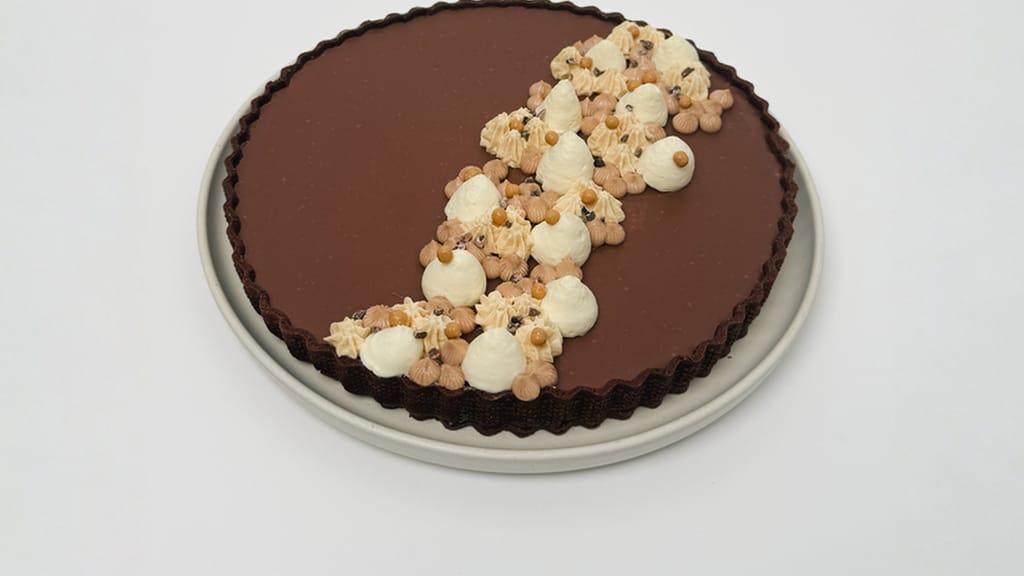
Chocolate tart with salted caramel
French Chocolate Tart: Crisp Pastry and Silky Ganache

Updated Jul 19, 2026
A French chocolate tart (tarte au chocolat) lives or dies on two things: a crisp, buttery pâte sucrée shell and a silky-smooth chocolate ganache. There's nothing else to it — which is exactly why it has nowhere to hide. The most common mistake? Treating the pastry like a yeasted cake dough, kneading it at length with yeast thrown in. But crisp tart pastry isn't kneaded, doesn't rise, and the whole point is to avoid developing gluten. In this guide I'll show you both halves: pastry that won't shrink and stays wonderfully crisp, and ganache that melts on the tongue.
A French chocolate tart, or tarte au chocolat, is a simple dessert made of two layers: a pre-baked crisp shell (most often pâte sucrée, a sweet buttery pastry) and a dense chocolate ganache made from good dark chocolate and cream. No sponge layer, no extra cream filling — the whole effect comes from the contrast between the crunchy pastry and the melt-in-the-mouth filling.
The dessert took off in France in the 19th century, once chocolate stopped being a luxury reserved for the wealthiest and became cheap enough to appear in ordinary pâtisseries. Countless variations have emerged since then — with nuts, caramel, citrus or a pinch of chilli — but the foundation stays the same: crisp pastry and a rich chocolate filling.
Chocolate tart with salted caramel
Chocolate tart with salted caramel — our tried-and-tested French chocolate tart recipe
Seasonal baking plans, tested recipes and kitchen tricks that save you time. Unsubscribe in one click.
A chocolate tart calls for crisp buttery pastry — pâte sucrée or pâte sablée — and definitely not a yeasted dough. No yeast, no long kneading: the goal is actually to avoid developing gluten, so the shell stays crisp and crumbles 'like sand' once baked, rather than turning chewy.
Pâte sucrée is firmer and holds its shape better — ideal for thin, clean tart edges.
Pâte sablée has more butter, so it's more crumbly and buttery, but harder to work with.
Both types share one rule: work fast and keep the butter cold. The longer you handle the dough and the warmer it gets, the more gluten develops, and the tougher and more shrink-prone the shell becomes.
Pâte sucrée is built on five ingredients: plain flour, cold butter, sugar, egg and a pinch of salt. In such a simple dough, the quality of each one really shows.
Plain flour gives the pastry its structure. It has less protein than bread flour, so less gluten develops and the pastry stays crisp. Replacing 10–20% of the flour with ground almonds adds flavour and extra crumbliness.
Butter is what makes the pastry crisp and flavourful — use good-quality unsalted butter with at least 82% fat. For pâte sucrée it should be cold; for softer versions, softened, but never melted.
Sugar: go for icing sugar rather than granulated. It dissolves evenly, keeping the pastry smooth without gritty bits that could scorch during baking.
Egg binds the pastry and adds colour. For a small tin, one egg yolk or one small egg is usually enough.
A pinch of salt isn't there for saltiness — it sharpens the flavour of both the chocolate and the butter.
The method has four steps: cream the butter with the sugar, work in the egg and flour just until combined, press the dough together (don't knead it), and let it rest in the fridge. All told, it's a few minutes of hands-on work plus an hour of waiting.
Cream the butter with the sugar (the crémage method) until pale and fluffy. Beat in the egg yolk and a pinch of salt.
Add the sifted flour and mix only until the dough just comes together. As soon as no dry flour remains, stop — every extra turn develops more gluten.
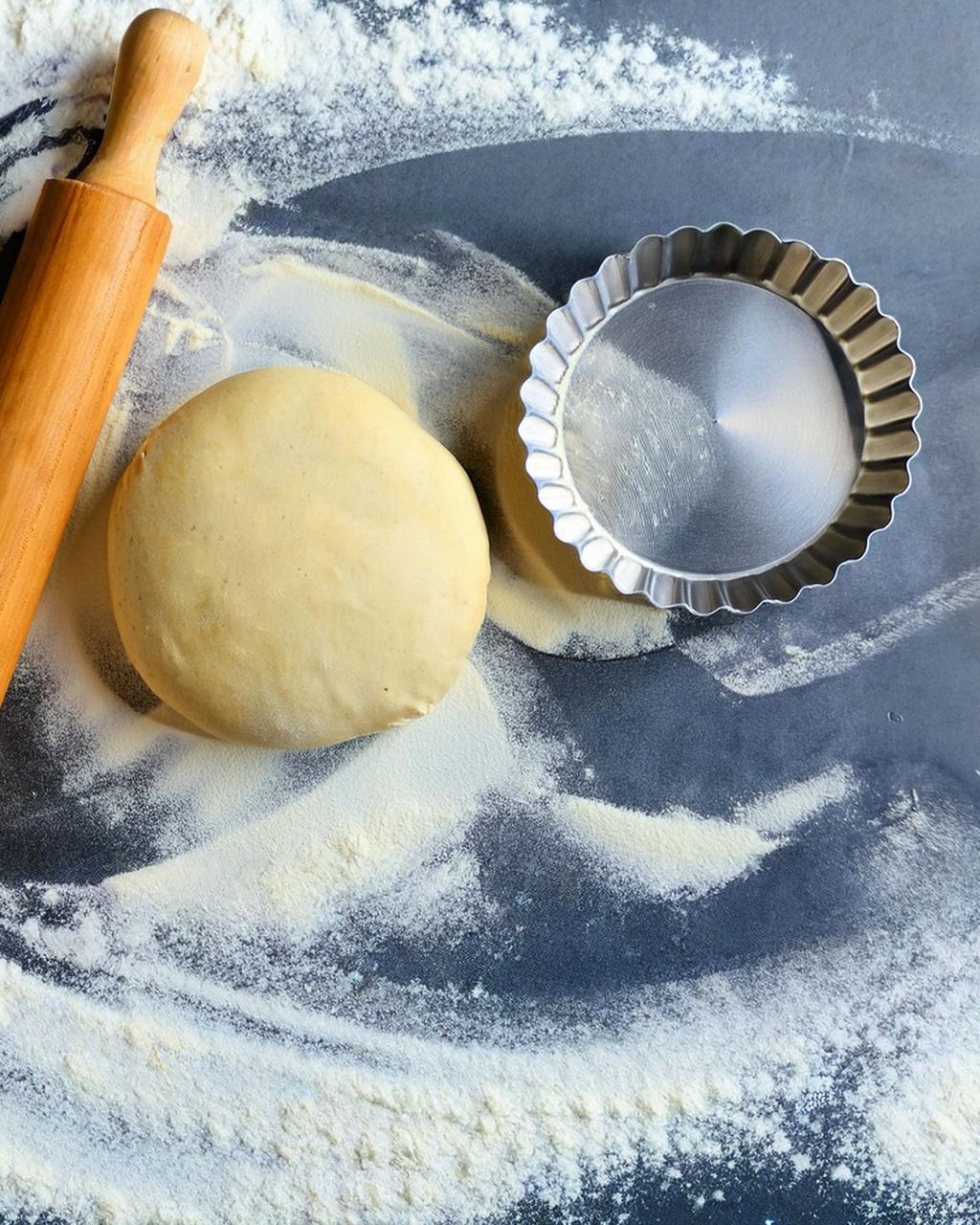
Briefly press it out with the heel of your hand on the work surface (fraisage) — this smears the butter through the dough without developing gluten. Shape it into a disc, not a ball.
Wrap it and chill it for at least an hour (overnight is fine too). The cold firms up the butter and relaxes the gluten, so the pastry won't shrink during baking.

A chocolate tart shell is baked blind — that is, empty, weighed down — because the chocolate ganache won't be baked afterwards. Skip this step and you'll end up with a raw, soggy base. Bake at 170–180°C for about 15 minutes with weights, then another 5–10 minutes without them.
Roll out the chilled pastry to 3–4 mm, line the tin with it and trim off the excess. Prick the base all over with a fork.
Put the lined tin back in the fridge or freezer for 20–30 minutes — cold pastry shrinks less in the oven.
Line the shell with baking paper and fill it with ceramic baking beads, dried pulses or rice. Bake for 15 minutes at 170–180°C.
Remove the paper and weights and bake for another 5–10 minutes, until the base is dry and the edges are golden. As extra insurance against a soggy base, brush the hot shell with beaten egg white and pop it back in the oven for 2 minutes — this creates a thin sealing layer.
Ganache for a tart is made in roughly a 1:1 ratio — equal weights of dark chocolate and whipping cream. Chop the chocolate finely, pour over hot (not boiling) cream, let it sit for a minute to soften, then stir from the centre outwards until smooth.
Use dark chocolate with 55–70% cocoa.
Above 70%, the ganache turns firmer and more bitter — add a little more cream in that case.Don't boil the cream — just bring it to the point of boiling and take it off the heat straight away. Scorched cream will ruin the ganache.
Stir from the centre outwards in small circles until the emulsion comes together into a smooth, glossy mixture. At the end, you can stir in a knob of butter for extra shine and softness.
Pour it into the cooled shell and let it set at room temperature, ideally overnight. In the fridge the ganache sets faster, but it loses its silky shine and smoothness.
Tip: you can infuse the cream with orange zest, coffee or a pinch of salt, then strain it — this gently flavours the filling without disturbing its texture.

Most chocolate tart failures come down to a handful of recurring causes: overworked pastry, an under-chilled shell, and overheated ganache. Here's how to spot them and fix them.
The shell shrinks and slides down the sides: the pastry was too warm or overworked. Mix it only until it comes together and chill it thoroughly before baking — even after it's rolled out and pressed into the tin.
The base is soggy: the shell wasn't baked enough, or the filling went in too soon. Bake the base further until golden and brush it with egg white.
The pastry is crumbly and won't come together: it's too dry — add half a teaspoon of cold water at a time, or a little extra yolk. If the dough is too sticky instead, a pinch of flour will fix it.
The ganache is dull or grainy: the emulsion has split. Warm it gently over a bain-marie to about 35°C and stir in a spoonful of hot cream or milk until it comes back together and turns glossy.
There are two easy ways to put your own spin on the classic tart: flavour the pastry or the filling, and then finish it with a garnish. Bold but simple additions that pair well with dark chocolate work best.
In the pastry: vanilla extract, ground almonds, or a tablespoon of cocoa for a chocolate shell.
In the ganache: grated orange zest, a pinch of chilli, sea salt, or a tablespoon of strong coffee.
As a garnish: fresh raspberries or sliced strawberries, flaky salt, toasted nuts, cocoa powder or edible flowers. Fruit also helps cut through the sweetness.
Small tartlets are also perfect for a party, letting you give everyone their own individual portion.
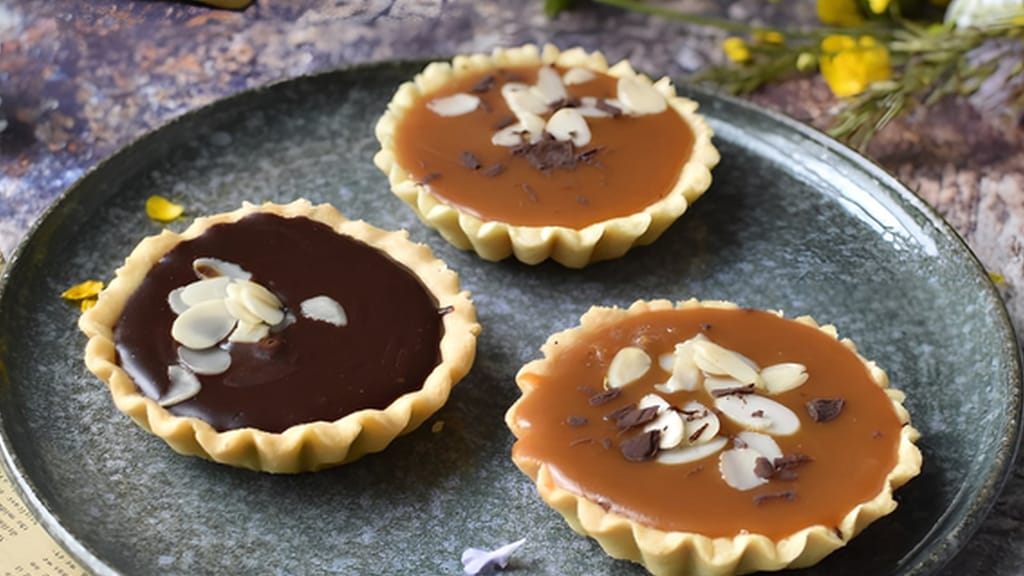
Crisp tartlets with salted caramel and chocolate
Crisp tartlets with salted caramel and chocolate — an individual-portion take on the chocolate tart
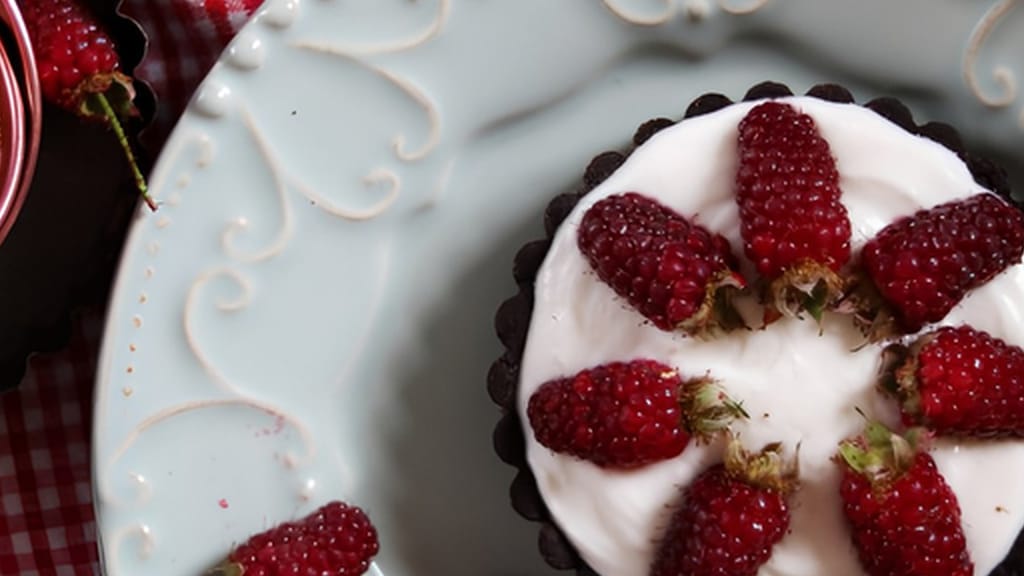
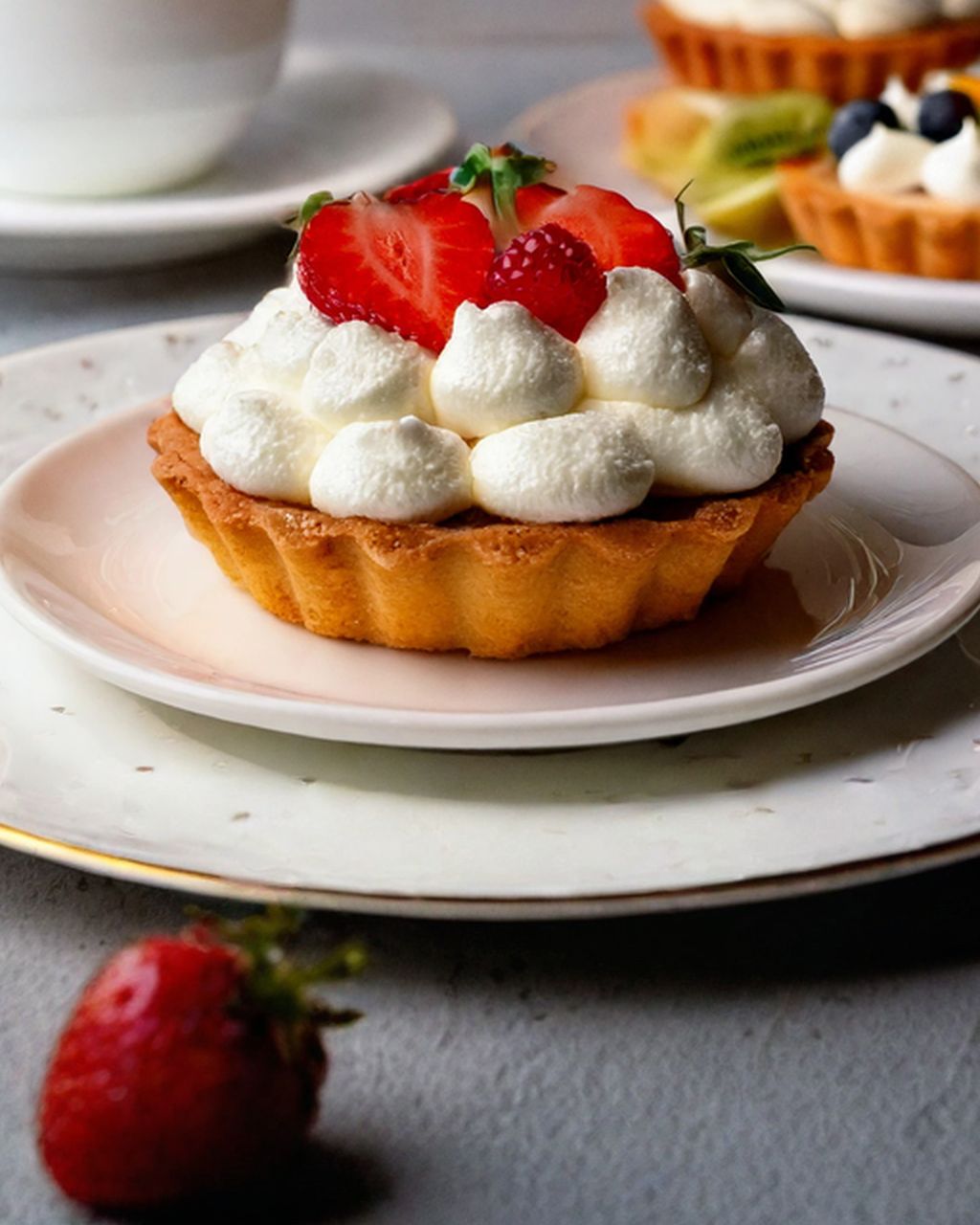
Tartlets with light ricotta and curd cheese cream
Tartlets with a light ricotta and curd cheese cream — a fresh fruity variation on the same crisp shell
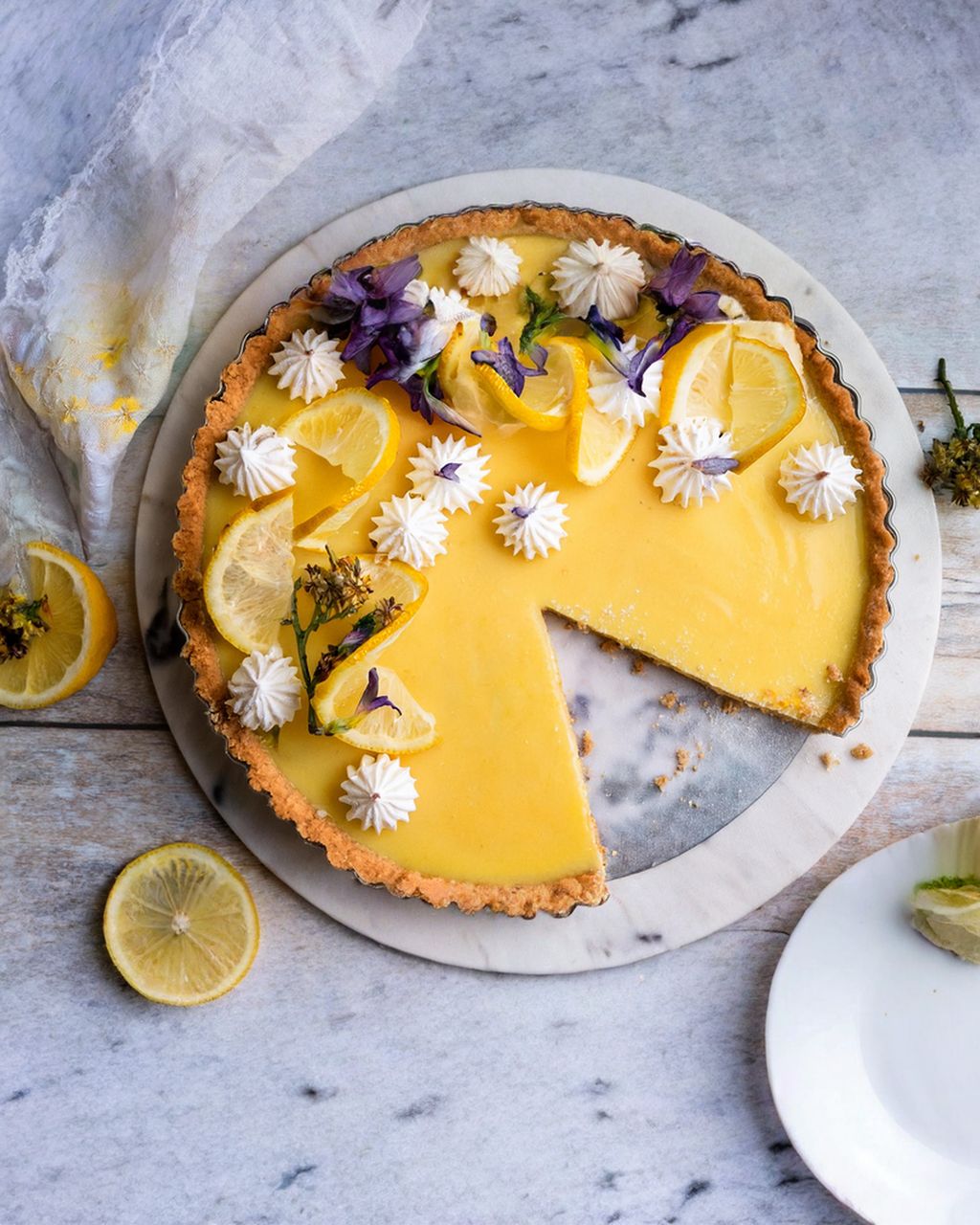
Once you've mastered the chocolate shell, the same pâte sucrée will serve you well for another classic. French lemon tart — tarte au citron — builds on the same crisp pastry, just filled with a sharp, zesty lemon curd instead. It's a natural next step, and a refreshing counterpoint to all that rich chocolate.
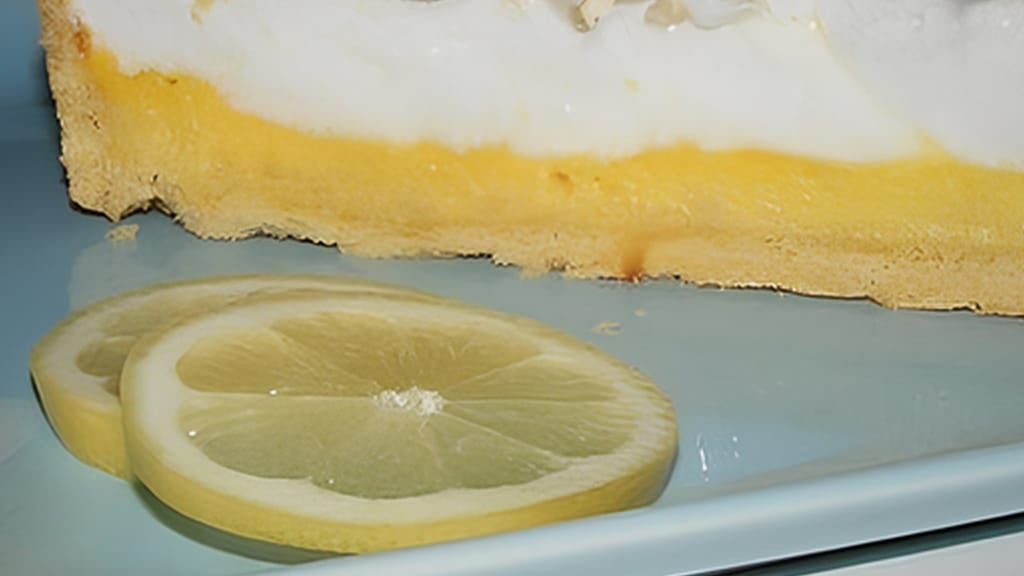
Tarte au citron – french lemon tart
Tarte au citron — French lemon tart on crisp pâte sucrée
Dark chocolate with 55–70% cocoa works best. A lower percentage gives a sweeter, softer filling; a higher one (above 70%) makes it more intense and firmer — in that case, add a bit more cream. Always use real chocolate with cocoa butter, never compound coating or baking chocolate.
Yes. Raw dough keeps wrapped in the fridge for 2–3 days and in the freezer for up to 2 months. You can even freeze it already rolled out and pressed into the tin — just bake it straight from the freezer, adding a few extra minutes. A pre-baked empty shell keeps for a day at room temperature in a dry spot.
Yes. Swap the plain flour for a gluten-free baking flour, or replace most of it with ground almonds — the ganache itself contains no gluten. The dough will be more delicate and trickier to roll, so roll it between two sheets of baking paper and chill it thoroughly.
A finished tart keeps for 2–3 days. It's best stored in a sealed container at room temperature, where the ganache stays silky; in the fridge it lasts longer but firms up and loses its shine. Let it come back to room temperature for at least half an hour before serving.
Egg in pâte sucrée binds the dough and adds colour. You can replace it with 2–3 tablespoons of cold water or cream to bring the dough together; the shell will end up a touch more crumbly and paler. For a vegan version, plant-based butter and a flax 'egg' (a tablespoon of ground flaxseed plus 3 tablespoons of water) work well.
One recipe worth heating the oven for, one tip, and one deal from the shop. Nothing else.